
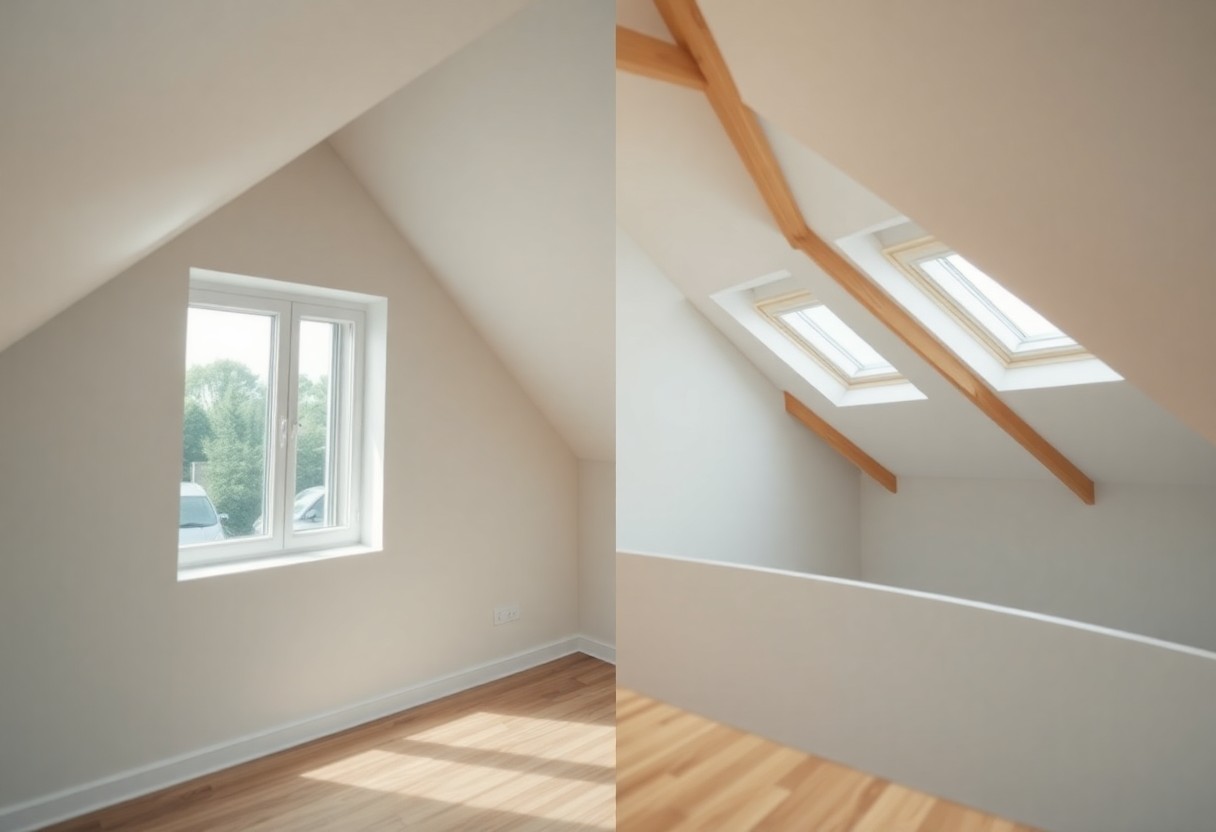
Velux conversions keep your roofline intact and give you excellent natural light, while a dormer creates valuable floor space and headroom; you should weigh cost, planning requirements and disruption. If you need more usable space and are prepared for structural work, a dormer often wins, but be aware of higher expense and potential structural risks; if you prefer lower cost and quicker build with minimal planning, a Velux conversion may suit your needs.
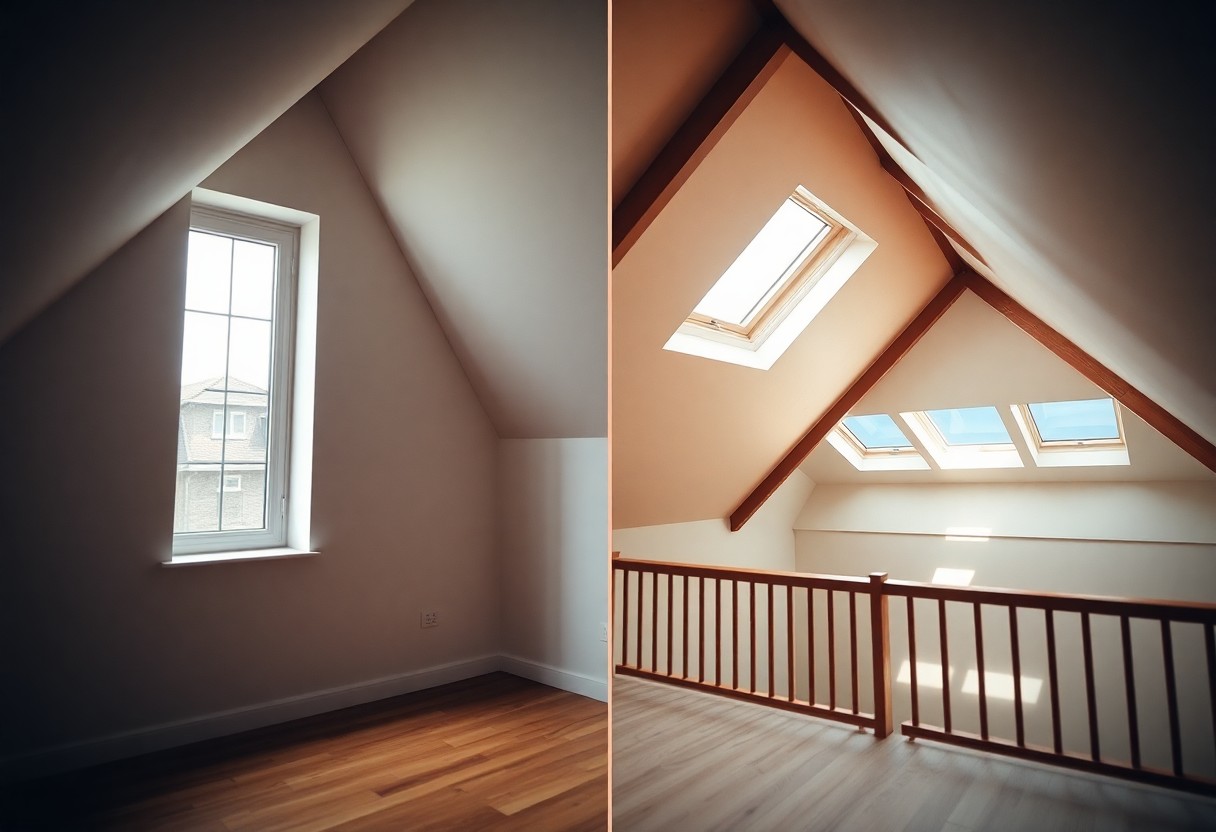
Understanding Loft Conversions
Definition and Purpose
When you commission a loft conversion, you convert underused roof space into a habitable room, typically increasing usable floor area by 20-40% and adding approximately 10-15% to property value. A dormer extends vertical walls to create full-height rooms; a Velux or rooflight conversion preserves the roofline and is often quicker and 20-30% cheaper. You must comply with building regulations for insulation, stair access and fire safety.
Types of Loft Conversions
You can choose from several designs: a dormer for full headroom, a Velux rooflight conversion to retain the roof profile, a mansard for maximum space (often adding 40-60% extra area), a hip-to-gable suited to semi-detached homes, or an L-shaped where two dormers join. Costs and timescales vary: typical projects run from 4 to 12 weeks and £10,000-£60,000 depending on scale and structure.
- Dormer – full-height extension, good for bedrooms and en suites.
- Velux – minimal exterior change, lower cost, faster build.
- Mansard – largest additional volume, often requires planning permission.
- Assume that you will need surveys for structural loading, and factor in party-wall or neighbour notifications.
| Dormer | Creates vertical walls and flat roof; increases headroom and floor plan usability. |
| Velux / Rooflight | Uses roof windows only; retains roofline, lowest cost and shortest build time. |
| Mansard | Steep rear slope and near-vertical wall; maximises space but often needs planning. |
| Hip-to-Gable | Extends the hipped end into a gable, useful for semi-detached or end-terrace homes. |
| L-shaped | Combines two dormers for corner properties or to serve two rooms; more complex roofing. |
You should assess structural impact, headroom (minimum 2.2m recommended over stairs), and access when selecting a type; for example, a typical dormer conversion can add 15-25m² of usable space on a terrace, while a Velux solution might only add light and limited floor area but keep costs down. Contractors often quote in three phases: design, structural work and fit-out – plan for a 10-20% contingency and allow for party-wall agreements.
- Headroom – aim for at least 2.2m where you walk and 2.0m in usable zones.
- Costs – small Velux jobs from ~£8k, average dormer £20k-£40k, large mansard £40k+.
- Timescales – expect 4-12 weeks for most conversions; complex builds longer.
- Assume that you will need a structural engineer’s report and compliance certificates before completion.
| Aspect | Practical implication for you |
| Cost range | £8,000-£60,000 depending on type, size and finish level. |
| Build time | Typically 4-12 weeks; mansard and complex dormers take longer. |
| Planning | Mansard and some external changes may require planning permission. |
| Regulations | Must meet fire safety, insulation and stair access standards; certificates required. |
Dormer Loft Conversions
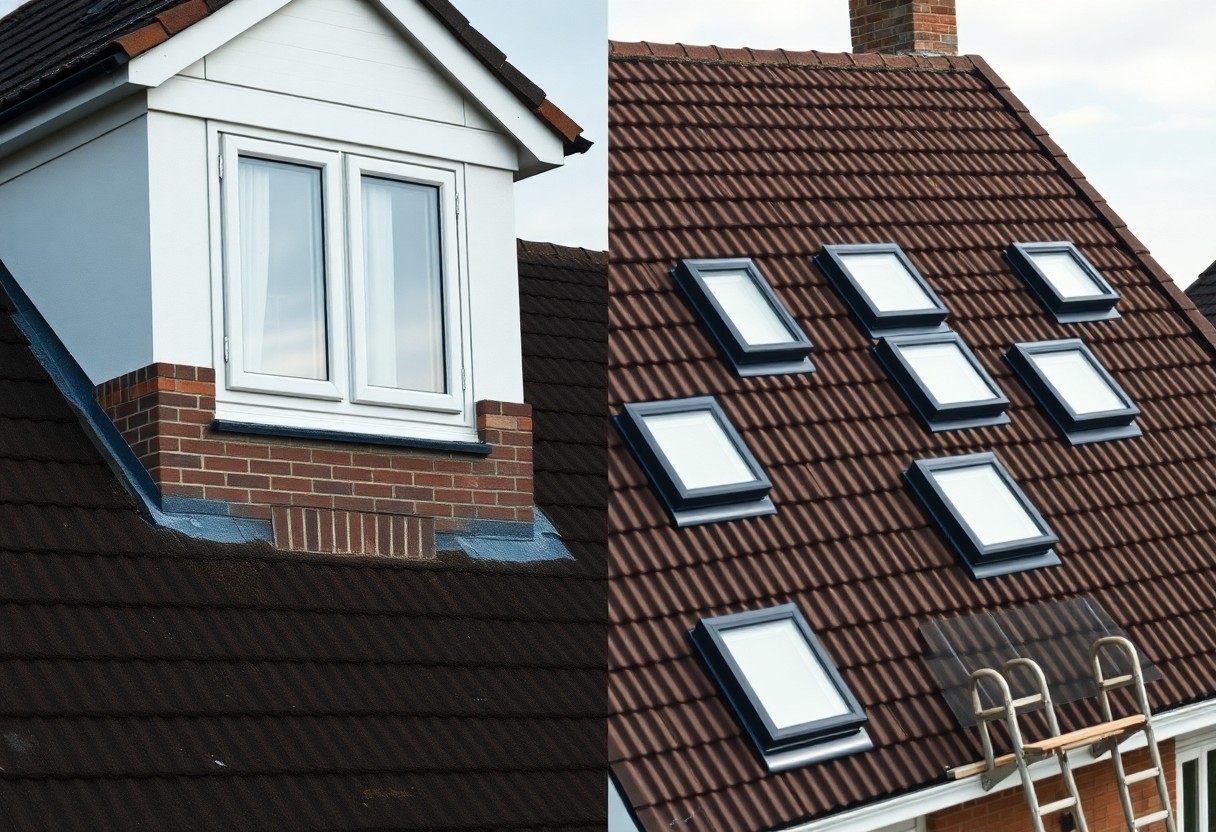
Often chosen to create full-height rooms, a dormer typically increases usable floor area by up to 50%, making it ideal for bedrooms, ensuites or home offices. You should expect structural work, scaffolding and a build cost commonly between £25,000-£45,000 for an average rear dormer; planning permission may be needed outside permitted development, and the Party Wall Act can require neighbour agreements, so factor in disruption and legal checks.
Design Features
Options include flat-roof, gable-fronted, hipped and eyebrow dormers; a 3.0m-wide rear dormer will typically fit a double bedroom plus storage, while integrating dormer windows or Juliet balconies improves light. You should aim for at least 2.2 metres headroom in main circulation to meet comfort and building-regulation expectations, add insulated party walls, and position stairs to minimise lost floor area.
Advantages and Disadvantages
Advantages include creating full-height, easily partitioned rooms that add tangible resale value and allow services like bathrooms; disadvantages are higher cost and visible street impact, plus lengthy on-site works and potential planning or party-wall complications. You must weigh the value uplift against the disruption, structural risk and any loss of roof character.
For example, a rear dormer in a London terrace increased usable space by 48% and boosted market value by c. £60,000, but required a six-week scaffold, a Party Wall Award and an extra £4,000 for reinforced joists-illustrating how the financial gain can be offset by time, neighbour negotiation and structural costs.
Velux Loft Conversions
Velux conversions insert rooflights into the existing slope, so you usually avoid major alterations to the roofline and cut costs; typical projects range from around £10,000-£25,000 and take roughly 3-8 weeks depending on finishes. You should expect improved daylight and ventilation with minimal external impact, but limited headroom and less usable wall space can restrict layouts compared with dormers.
Design Features
You get flush rooflights, a variety of glazing options (double or triple glazed), and electric or manual opening choices; modern units can reach U-values of about 0.8-1.2 W/m²K for high-performance triple glazing. Roof pitch compatibility is broad (typically 15°-90°), and you can combine multiple windows for a bay‑like effect, while internal finishes often include compact en‑suite bathrooms or built‑in storage to maximise space.
Advantages and Disadvantages
Advantages for you are lower cost, quicker build time, and usually permitted‑development status, preserving the external profile and delivering significant daylight. Disadvantages include reduced usable floor area, potential overheating in summer, and the need to reconfigure stair access; structural or party‑wall issues may still arise and add cost or time.
For example, a 19th‑century terraced property with a 40° pitch achieved around 14 m² of head‑height floor after installing three Velux windows and remodelling stairs; the job took six weeks and cost about £18,000. You should assess roof pitch, insulation upgrades, and access early-if you have shallow pitch or need full head‑height across the room, a dormer often becomes the better option.

Key Differences Between Dormer and Velux
You’ll find dormers deliver significantly more usable floor area, often adding an extra 2-6 m² and full-height walls, while Velux conversions keep the roofline and mainly improve light and ventilation. Costs typically differ by a factor of two or more, and dormers carry a higher planning risk and greater disruption. In practice, choose dormer for rooms and en-suites; opt for Velux to minimise cost, time on site and preserve exterior appearance.
Cost Comparison
You can expect a Velux-only conversion to cost roughly £8,000-£20,000 depending on insulation and stairs, whereas a dormer usually falls between £25,000-£60,000 due to structural work, new walls and windows; VAT, scaffold and joinery often push dormer budgets higher. Labour and structural steel are the biggest variables, and unexpected repairs (roof timbers, rainwater goods) can add several thousand pounds.
Cost Comparison: Dormer vs Velux
| Dormer | Velux |
|---|---|
| Typical cost: £25,000-£60,000 | Typical cost: £8,000-£20,000 |
| Build time: 4-8 weeks | Build time: 1-3 weeks |
| Space gain: +2-6 m² usable floor area | Space gain: minimal, light-focused |
| Planning: often required or borderline | Planning: usually permitted development |
| Disruption: high (structural works) | Disruption: low (rooflight installation) |
Space and Accessibility
When you need actual living space a dormer wins: it creates vertical walls, simplifies stair routing and lets you fit wardrobes and an en-suite; expect a clear improvement in usable layout. Velux conversions favour daylight and views but often leave you with restricted headroom and trickier access, meaning you may have to accept a compact room or install steeper, space-saving stairs.
For example, adding a 3 m-wide rear dormer to a typical semi can convert loft void into a double bedroom plus small en-suite, while the Velux alternative usually provides only a single bedroom or office. If your priority is circulation and furniture placement, you’ll likely need the dormer’s flat wall and floorplate rather than several rooflights alone.
Planning Permission and Regulations
When is Permission Needed?
Permitted development often covers loft conversions up to 40 cubic metres for terraced houses and 50 cubic metres for semi‑detached or detached properties. You must apply for planning permission if you exceed those volumes, alter the roofline beyond PD limits, or if the property is a listed building or lies in a conservation area, AONB, National Park or World Heritage Site. Most householder applications are decided within 8 weeks.
Building Regulations Overview
Building Regulations approval is mandatory for loft conversions and covers structural stability, fire safety, thermal performance, sound insulation and means of escape. You submit to local authority building control or an approved inspector, expect stage inspections and require a final completion certificate; without sign‑off you may face remedial work or insurance issues, so secure a building control certificate before occupation.
In practice a structural engineer will typically specify an RSJ or reinforced joists for dormer builds while Velux conversions can often avoid large beams. Standards map to Parts A (structure), B (fire), L (energy/insulation) and K (stairs/access). You should also provision for interlinked mains‑powered smoke alarms and upgraded party‑wall sound insulation-these are common, budgetable items in quotations.
Choosing the Right Option for Your Home
You should assess how much usable floor area you need, how important uninterrupted daylight is, and how much budget and disruption you can tolerate. A Dormer typically gives you more floor space and headroom but involves greater cost and structural work; a Velux conversion is quicker, cheaper and preserves the roofline. Consider resale impact and roof pitch, then match the option to your priorities and timeline.
Factors to Consider
You must weigh usable space, natural light, cost, planning risk and build disruption when choosing between a Dormer and a Velux. Pay attention to roof pitch, existing headroom, party-wall issues and access for scaffolding; these affect feasibility and price. Assume that you prioritise either maximum floor area (Dormer) or minimal impact and cost (Velux).
- Dormer – adds up to 12-20m² usable floor area, often increases value by 5-10%.
- Velux – adds productive space with minimal structural change, typical cost £6k-£15k.
- Dormer planning – may require consent in 30-50% of terrace/semi cases; higher in conservation areas.
- Velux planning – usually permitted development if windows are flush and below ridge height.
- Dormer disruption – build time commonly 6-12 weeks; Velux 1-3 weeks.
Case Studies
You can learn from real projects: a London semi with a Dormer added 15m² for £36k and achieved a £55k uplift; a Manchester terrace used a twin-Velux layout for £9k, adding 8m² and improving valuation by £18k. Timelines varied between 2-10 weeks, and planning was needed in two of five dormer cases.
- 1) London semi – Dormer: +15m², cost £36,000, value uplift £55,000, build 10 weeks, planning granted.
- 2) Manchester terrace – Velux: +8m², cost £9,000, value uplift £18,000, build 2 weeks, no planning required.
- 3) Bristol Victorian – Dormer double-gable: +18m², cost £42,000, value uplift £60,000, build 12 weeks, planning required.
- 4) Leeds mid-terrace – Velux pair: +7m², cost £7,500, value uplift £12,000, build 1.5 weeks, no planning.
You should note patterns: Dormer cases show higher area gain and greater value uplift but longer timelines and higher chance of permission delays; Velux projects are faster, cheaper and less invasive, suitable if you prioritise low disruption. Use local quotes to refine costs and timelines for your property.
- 5) Southampton semi – Dormer: +12m², cost £30,000, ROI ~180% on uplift, build 9 weeks, planning took 6 weeks.
- 6) Newcastle flat – Velux: +6m², cost £6,800, ROI ~150%, build 2 weeks, immediate installation.
- 7) Cambridge terrace – combined Dormer + Velux: +20m², cost £48,000, uplift £75,000, build 14 weeks, higher disruption but maximum space.
- 8) Cardiff loft conversion (loft-to-habitable) – Velux: reduced VAT rate applied where eligible, cost £10,500, build 3 weeks, planning not required.
FAQ
Q: What is the fundamental difference between a dormer loft conversion and a Velux conversion?
A: A dormer loft conversion extends the roofline by adding vertical walls and a flat or pitched roof to create additional floor area and full headroom across part of the loft. A Velux conversion keeps the existing roof structure and installs rooflights (Velux windows) to bring in light and ventilation while retaining the original roof slope; usable floor space and headroom remain more limited than with a dormer.
Q: How do costs and build times compare between the two options?
A: Velux conversions are generally the cheaper and quicker option because they involve less structural alteration, reduced materials and simpler labour – many projects complete in a few days to a few weeks. Dormer conversions involve more structural work, scaffolding and potentially foundations for the new walls, so they typically take longer (several weeks to a few months) and cost more; exact figures depend on size, finishes and location.
Q: Which option provides more usable space, headroom and design flexibility?
A: Dormer conversions provide significantly more usable floor area and headroom, enabling full-height rooms, built-in storage, en-suite bathrooms and more versatile layouts. Velux conversions give natural light and a sense of space but retain roof slope limitations, so usable standing headroom and room shapes are more restricted and less adaptable for larger layouts.
Q: What are the planning permission and building regulation considerations for each?
A: Both types must meet building regulations for insulation, structural safety, ventilation and fire escape. Velux conversions often fall under permitted development where no external change is made other than rooflights, but local rules apply and conservation areas or listed buildings may require consent. Dormer conversions are more likely to require planning permission if they materially alter the roofline or exceed permitted development limits; always check with the local planning authority and obtain building regulation approval.
Q: Which should I choose to add the most value and suit my needs?
A: Choose a dormer if you need significant extra space, full headroom, or a layout that can add a bedroom, bathroom or substantial living area – it typically delivers greater property value uplift but costs more and is more disruptive. Choose a Velux conversion if you want a lower-cost, less invasive project that increases light and usability of the attic for a study, small bedroom or occasional guest room, or if you are limited by planning constraints or wish to preserve the exterior roofline.