
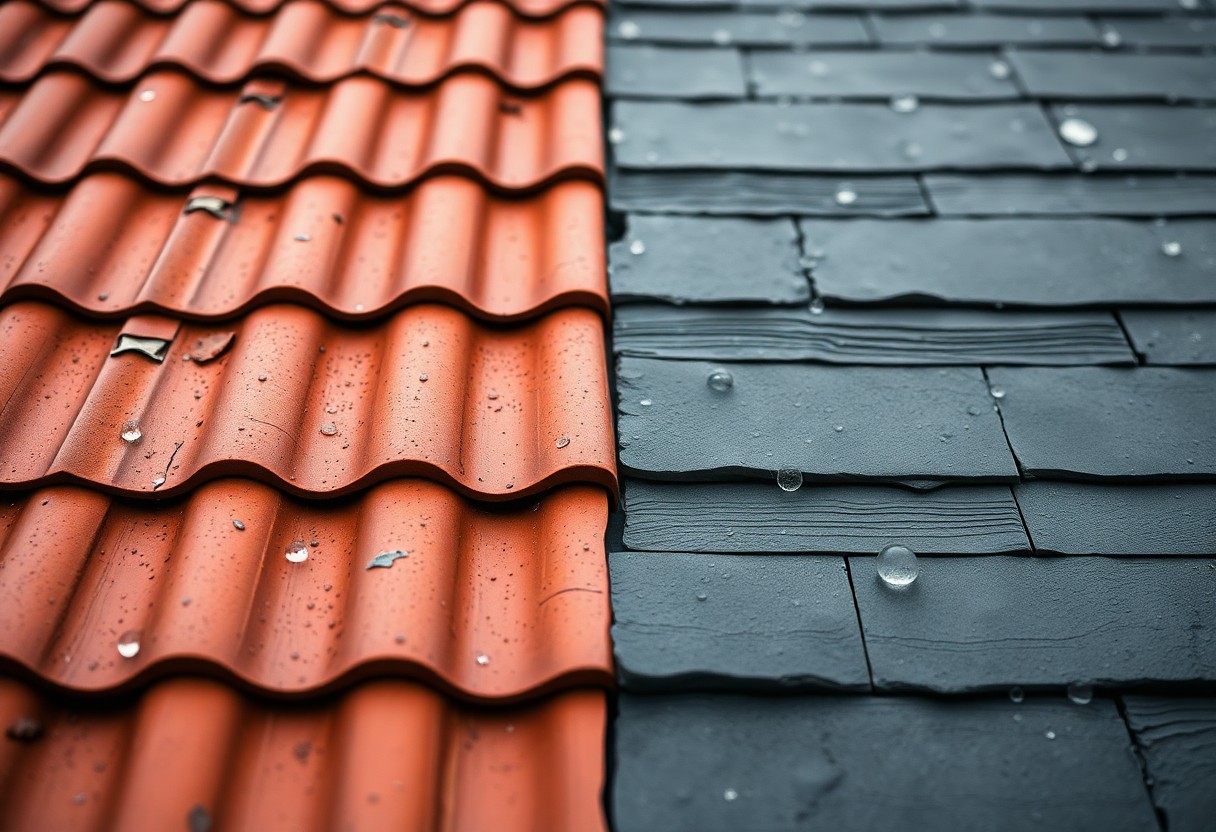
Slate roofs offer exceptional longevity and a distinctive aesthetic, but because they are much heavier and can be brittle during installation they may require reinforcing of your roof structure and specialist installers; by contrast, tile gives you greater affordability and easier repairs with varied styles, so you must weigh your budget, structural capacity and desired lifespan to decide which material best protects your home.
Overview of Tile Roofing
Tile roofing offers long lifespan and strong aesthetic variety, with clay often lasting 75-100 years and concrete typically 30-50 years. You should note tiles are heavy (commonly 40-90 kg/m²), so roof structure and fixings must be assessed before installation. Performance is generally excellent for fire resistance and thermal mass, but tiles can be brittle under impact, requiring careful handling and occasional replacement of broken pieces.
Types of Tile Roofing
You can choose from several common types that suit different budgets, climates and styles:
- Clay tiles – traditional, very durable, slightly more costly.
- Concrete tiles – cost-effective, heavier, versatile profiles.
- Terracotta – classic finish, long-lasting colour.
- Glazed tiles – highly weatherproof and colourfast.
- Interlocking tiles – faster to fix, better wind resistance.
Recognizing which type matches your roof structure, exposure and aesthetic goals will guide the best selection.
| Clay tiles | 75-100 years; excellent fire resistance; brittle in heavy impact or freeze-thaw. |
| Concrete tiles | 30-50 years; more affordable; heavier, often 50-90 kg/m². |
| Terracotta | Traditional appearance; naturally weathered finish and long colour retention. |
| Glazed tiles | High resistance to staining and algae; ideal for coastal or polluted environments. |
| Interlocking tiles | Quicker installation; improved wind uplift performance and reduced maintenance. |
Advantages of Tile Roofing
Tiles give you a durable, low‑maintenance covering with excellent fire resistance and thermal performance; clay tiles can exceed 75 years in service while concrete offers value and versatility. You benefit from wide aesthetic choices-colours, profiles and glazes-plus recyclable materials and strong resale appeal when installed on a suitably reinforced roof.
In practice, you should expect periodic inspections-annual checks after storms-to spot cracked tiles and flashing issues; replacement of individual tiles is straightforward, keeping lifecycle costs lower. For heavy rainfall or coastal exposure, choose appropriate glazes and fixings; structural reinforcement may add to upfront cost but protects longevity. Consulting a structural surveyor and using certified fixings will ensure your tile roof delivers its full lifespan and safety advantages.
Overview of Slate Roofing
Slate roofing offers longevity of roughly 75-200+ years, giving your property a long-term, premium finish. You gain excellent fire resistance and low routine upkeep, yet must manage the significant weight (typically 600-900 kg per 100 m²) and the material’s tendency to crack under impact; these factors raise installation and repair costs. You should engage specialist installers and consider structural reinforcement for older buildings.
Types of Slate Roofing
You can choose natural variants-Welsh slate (dense, durable), Spanish slate (wider colour range) and Vermont slate (often used in restorations)-or opt for reclaimed slate for authenticity, or synthetic slate for lighter weight and lower cost. Perceiving the differences helps you match performance, appearance and budget when specifying your roof.
- Welsh slate – dense, high durability
- Spanish slate – varied colours, widely available
- Vermont slate – used for period restorations
- Synthetic slate – lighter, cheaper installation
- Reclaimed slate – authentic look, variable supply
| Longevity | 75-200+ years depending on source and exposure |
| Weight | Approximately 600-900 kg per 100 m²; structure may need strengthening |
| Cost (installed) | Typically £80-£250 per m², varying by slate grade and labour |
| Maintenance | Low routine care; specialist repairs required for broken slates |
| Fire performance | Non-combustible; excellent fire resistance |
Advantages of Slate Roofing
You gain exceptional durability, outstanding aesthetic appeal and potential uplift to property value; many slates exceed a century of service, demand minimal routine work and provide excellent fire resistance, making them a long-term investment you can justify despite higher initial outlay.
In practice, Welsh and Spanish slates commonly outlast 100 years when installed correctly; you should budget for higher upfront costs-around £80-£250 per m²-but expect lower lifecycle expenditure. You must account for the weight (which can require structural reinforcement) and the material’s brittleness when walked on, yet the ability to reclaim or recycle slates and the premium aesthetic they confer often offset those constraints for conservation projects and high-end builds.
Durability Comparison
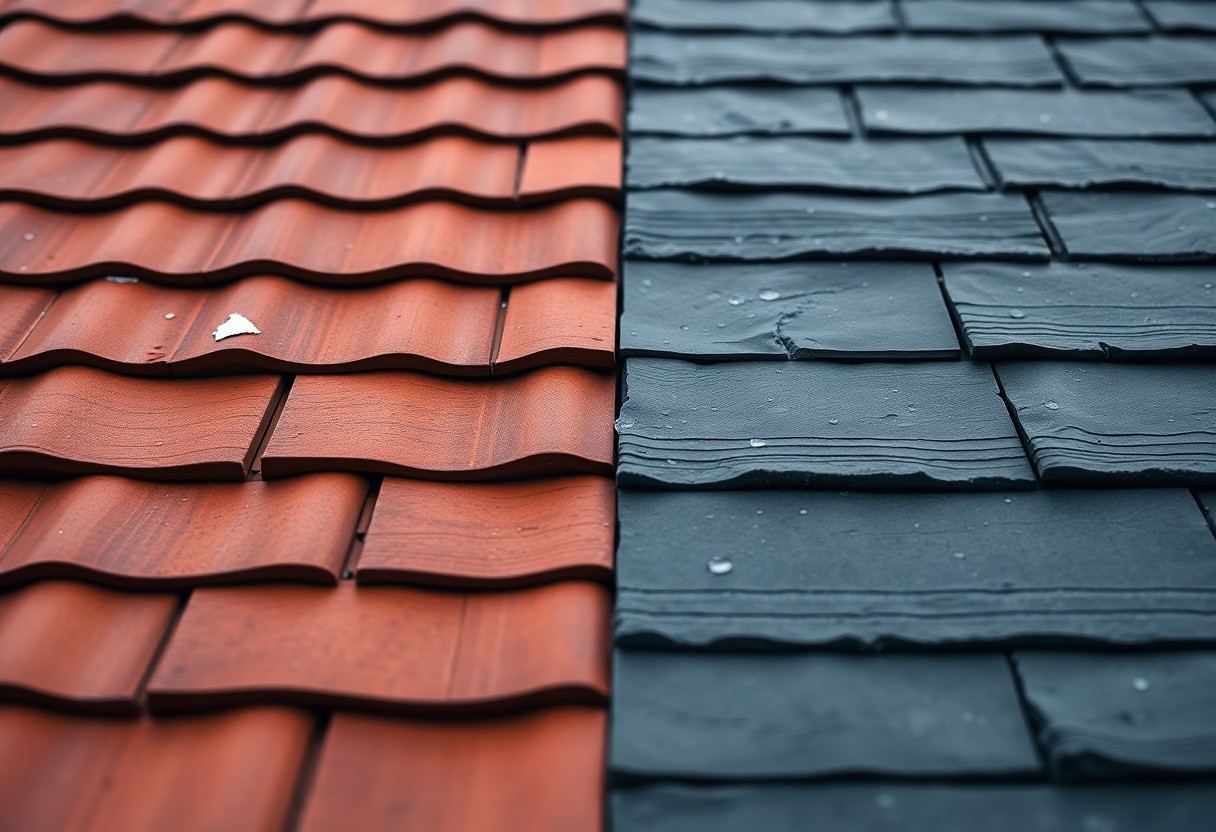
| Tile | Slate |
|---|---|
| Typical lifespan: 50-100 years (clay often longer than concrete). | Typical lifespan: 100-200+ years for high-grade natural slate (e.g. Welsh slate). |
| Weight moderate to heavy; may need roof strengthening for some profiles. | Generally much heavier; structural reinforcement is often required for older frames. |
| Good fire resistance; some profiles more prone to cracking under impact. | Excellent water resistance and fireproof; less porous and more impact-tolerant overall. |
| Maintenance: occasional broken tiles; easy local replacement but watch fixings. | Maintenance: fewer replacements but specialist labour and matching slate can be costly. |
Lifespan of Tile vs. Slate
You should expect roof tiles to last commonly 50-100 years-clay tiles clustering at the upper end-while natural slate routinely reaches 100-200+ years; Welsh slate examples on Victorian buildings often exceed 150 years with minimal intervention, so your choice affects how often you’ll budget for major renewal.
Weather Resistance
You’ll find tiles perform well in warm, dry climates and modern interlocking profiles resist wind uplift to typical design limits, but clay can be brittle in severe freeze-thaw; by contrast, slate’s low porosity and dense structure give superior water and frost resistance, so your risk of moisture-related failure is lower with quality slate.
In practice, hail and impact damage are the common hazards: concrete tiles tolerate impact better than thin clay, yet loose or improperly nailed tiles can be lost in high winds; slate resists water penetration but you must avoid walking on thin slates-improper access is a leading cause of damage-and coastal installations need corrosion-resistant fixings and vigilant mortar maintenance.
Cost Analysis
Initial Costs
On average, concrete roof tiles typically cost around £40-£80 per square metre installed, clay tiles about £60-£120 per square metre, and natural slate usually runs £100-£250 per square metre depending on origin and grade. If you choose slate, you may need structural reinforcement because of the greater weight, which can add roughly £500-£2,000 on a typical detached roof, so factor that into your upfront budget.
Maintenance Costs
Routine upkeep differs: tile roofs need simple inspections and occasional replacement tiles at roughly £10-£30 each, while slate repairs require a qualified slater with labour often £150-£300 per day and slates costing £5-£40 each. If you delay repairs, you risk timber rot and expensive structural work, so you should act promptly when you spot damage.
For context, on a 150 m² roof you might spend about £100-£300 per year on inspections and minor tile maintenance, whereas slate can average £200-£600 annually because of access and specialist labour; moss removal or gutter clearing typically costs £50-£150 per visit, ridge re-bedding £40-£100 per metre, and lead flashing replacement £70-£150 per metre. Given slate’s >100‑year lifespan, your long‑term cost per decade can be lower despite higher initial outlay.
Aesthetic Considerations
When choosing between tile and slate, you balance colour palette, texture and regional character: terracotta and concrete tiles give bold reds, oranges and glazed blues for Mediterranean or contemporary roofs, while natural slate offers subtle greys, greens and purples for period properties. Tiles allow patterned layouts like herringbone or barrel profiles; slate gives slim, uniform courses. If you value longevity, note slate often lasts 75-200 years, while tile typically endures 50-100 years.
Design Options for Tile
You can choose clay (traditional terracotta), concrete (cost-effective) or glazed ceramic; profiles include pantile, Roman, interlocking and flat. Colours range from rustic reds to manufactured greys and blues; sizes commonly 250-350 mm wide. Tiles weigh around 50-80 kg/m², so your roof structure may need reinforcement. Manufacturers like Wienerberger and modern interlocking systems influence appearance and performance, letting you match heritage or contemporary aesthetics.
Design Options for Slate
You’ll find Welsh, Spanish and Brazilian slates in sizes from roughly 250×150 mm to 400×250 mm, with thicknesses typically 3-8 mm. Colours vary from blue-grey to green and purple, giving a refined, understated look suited to conservation areas. Slate is lighter per unit area than some tiles yet can be more expensive upfront; still, its natural cleft texture and narrow courses create a distinctive, high-end finish.
Beyond colour and size, slate offers installation options such as diminishing courses, fishscale patterns and graduated roofs; you can use reclaimed Welsh slate for authenticity or thicker new slate for greater lifespan. Labour rates are higher-expect specialist installs and costs around £80-£150 per m² installed-and you should use experienced roofers because incorrect fixing or inadequate headlap risks leaks.
Environmental Impact
Eco-Friendliness of Tile
You should weigh manufacturing energy against lifespan: clay tiles are fired at roughly 1,000-1,250°C, so production is energy‑intensive and emits CO₂, yet service lives of 50-100 years and widespread recyclability reduce lifetime impact. Typical clay roofs weigh about 40-70 kg/m², giving thermal mass that can lower heating demand, while concrete tiles last 30-50 years. You can often recover tiles for reuse in restoration projects, cutting embodied carbon across multiple lifecycles.
Eco-Friendliness of Slate
As a natural stone, slate commonly endures 100-150 years or more – a very long service life that spreads embodied carbon over many decades; reclaimed Welsh and Spanish slate is frequently reused on listed buildings. Extraction is land‑intensive and produces spoil, and quarrying energy contributes to upfront emissions, but you’ll benefit from low maintenance and exceptional longevity when you choose slate.
Digging deeper, slate’s embodied energy is concentrated in extraction and transport rather than processing, since splitting requires little heat compared with fired tiles; typical roof weights are 60-120 kg/m², affecting structural demands. If you source slate within a few hundred kilometres or buy reclaimed batches you can cut transport and quarrying impacts substantially, and conservation projects show reclaimed slate can deliver operational carbon savings measured in decades versus replacement alternatives.
Summing up
To wrap up, whether tile or slate roofing is better depends on your priorities: slate offers superior longevity and a premium aesthetic but comes at higher cost and weight, while tile provides wider style options, lower initial cost and easier repairs; choose slate if you seek long-term durability and authentic appearance, choose tile if you need cost-efficiency, simpler installation and lighter load-bearing requirements, and consult a roofer to match material to your climate and structure.
FAQ
Q: What are the primary material and appearance differences between tile and slate roofing?
A: Slate is a natural stone product with a thin, flat profile and a highly varied, often elegant appearance that ages with a natural patina. Roof tiles are manufactured (typically clay or concrete) and offer a wider range of colours, shapes and finishes, including interlocking profiles and pantiles. Slate generally provides a more uniform, refined aesthetic common on period properties; tiles can suit traditional or contemporary styles depending on profile and finish.
Q: Which option delivers better longevity and lower maintenance over time?
A: Natural slate usually offers the longest service life when correctly specified and installed, often lasting many decades with minimal routine maintenance apart from occasional replacement slates and regular gutter and flashing checks. Clay tiles also have good longevity but may require more frequent replacement of cracked tiles and moss or lichen management. Concrete tiles are durable but typically have a shorter lifespan than quality slate or clay. All systems require sound underlay and flashings; long-term performance depends heavily on correct installation and periodic inspections.
Q: How do installation cost and whole-life cost compare for tile versus slate?
A: Initial material and labour costs are generally higher for natural slate due to material price and the need for specialist slaters; reclaimed or lower-grade slates may reduce cost. Clay tiles are usually mid-range in cost, while concrete tiles are often the least expensive upfront. Considering whole-life cost, slate can be competitive because of its extended lifespan and lower frequency of replacement, but final economics depend on local labour rates, scaffold and structural reinforcement needs, and long-term maintenance requirements.
Q: Which performs better in different climates – wet, cold, windy or coastal locations?
A: Slate performs exceptionally well in wet and cold climates because it is impermeable and frost-resistant; it also copes well with wind when properly fixed. Clay tiles perform well in hot and temperate climates and are durable where freeze-thaw is not severe; quality clay with low porosity is suitable in colder areas too. Concrete tiles can be more susceptible to freeze-thaw damage if water ingress occurs, so correct specification and maintenance matter. In coastal locations consider salt spray resistance and use appropriate fixings and corrosion-resistant flashings for either material.
Q: What structural, planning and practical considerations should influence the choice between tile and slate?
A: Both options are heavier than lightweight roofing alternatives and require assessment of existing roof structure; slate can be heavier per square metre, and older rafters or trusses may need strengthening. Listed or conservation-area properties often have planning requirements that favour natural slate or specific tile types and may limit substitutions. Availability of skilled installers and matching existing material for repairs should influence choice, as should access for scaffold, leadwork specification for valleys and chimneys, and warranty terms. Factor in resale value and local market preferences when deciding.