
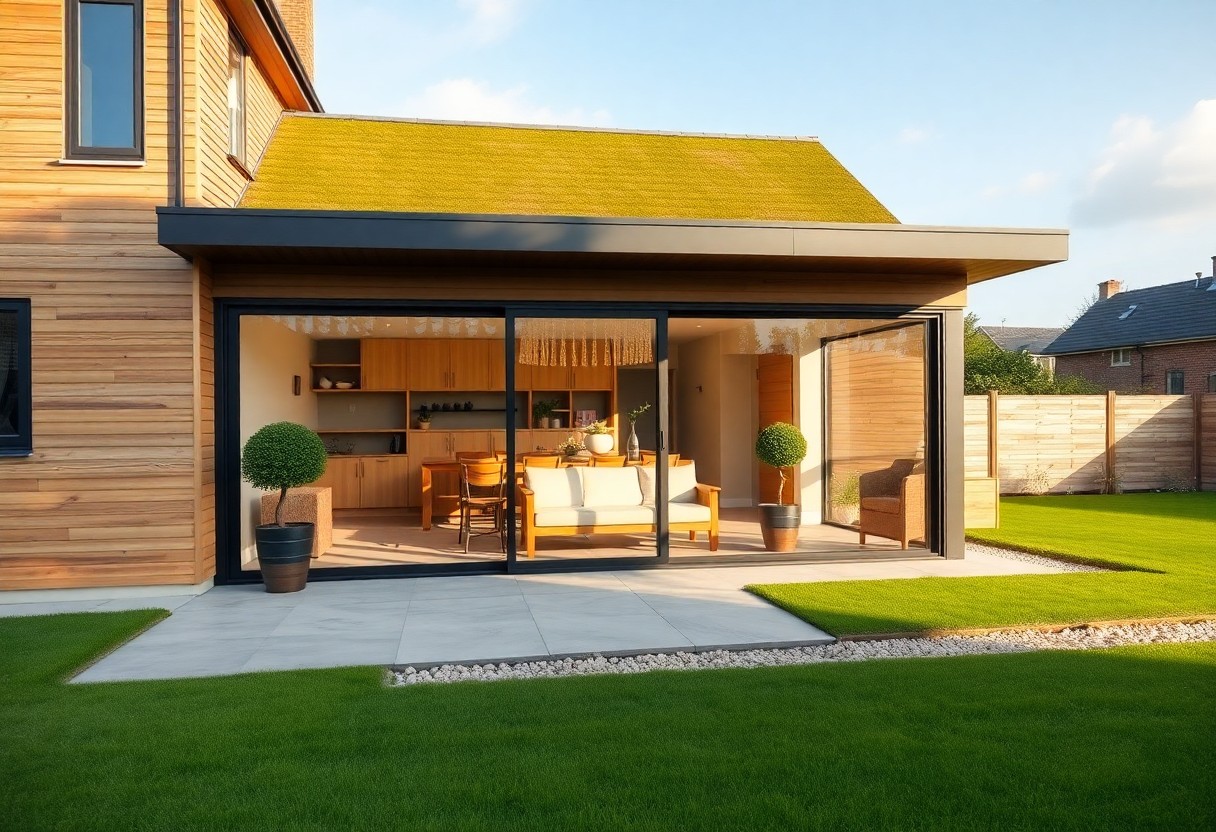
It’s vital you assess site conditions, planning and foundations before proceeding; poor foundations or inadequate drainage can cause structural failure and severe damp. You should prioritise build regulations, quality insulation and ventilation to avoid condensation and mould, while recognising professional design and materials increase value and usable space. Engage qualified builders, check warranties and consider energy efficiency to ensure your garden room performs well and lasts.
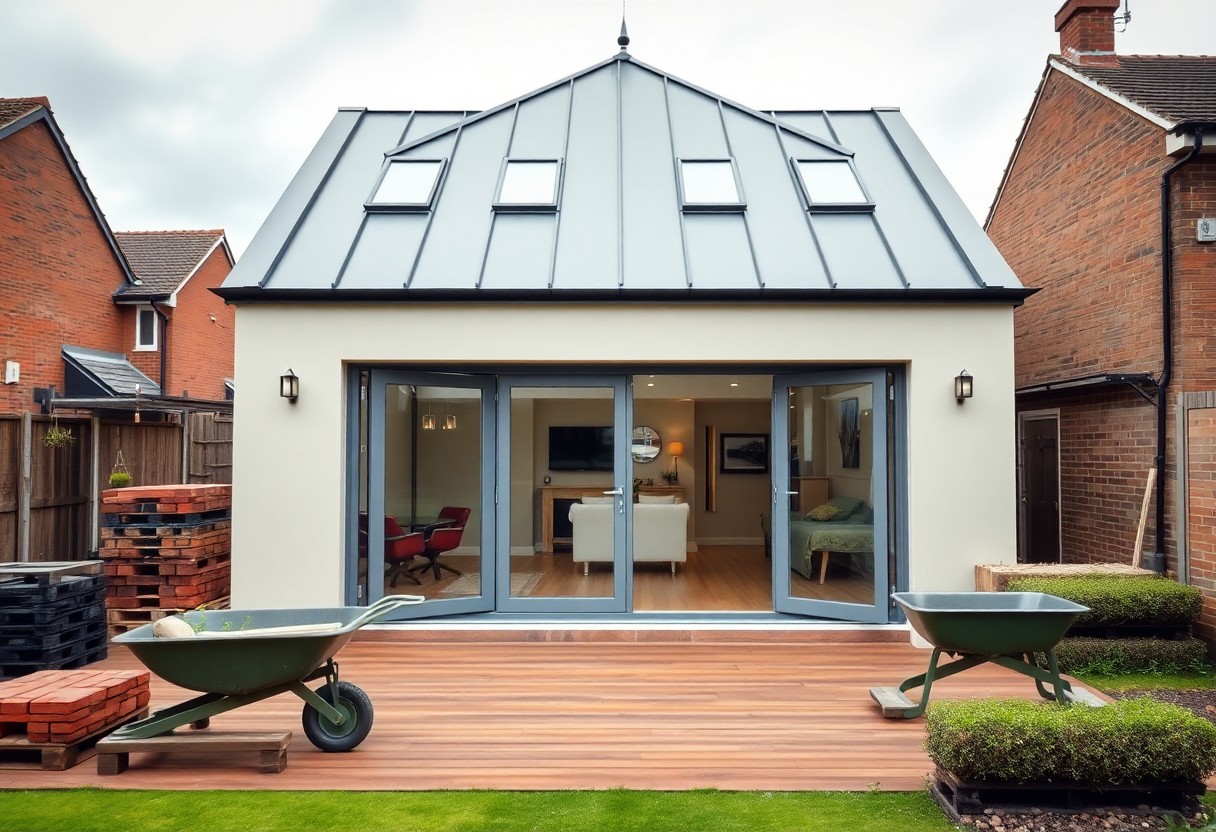
Understanding New Builds
You’ll find that modern new builds typically include a 10-year warranty (NHBC or similar), higher insulation standards and often an EPC A-B rating, cutting heating costs by around 20-40%. Local planning conditions and current Building Regulations shape layout and materials, while developer guarantees and snagging periods define your initial protection. Be aware of site-specific risks such as ground contamination or poor drainage that can affect long-term value, and prioritise detailed surveys and warranty checks before committing.
Types of New Builds
Detached houses usually give more privacy and a larger plot, while semi-detached and terraced homes are often 10-30% cheaper per square metre; flats and apartments suit urban plots and typically incur service charges. Bungalows appeal for accessibility and ageing-in-place, and mixed-use developments blend housing with retail or workspace. Recognizing which type suits your lifestyle depends on plot, budget, maintenance appetite and long-term resale potential.
- Detached
- Semi-detached
- Terraced
- Bungalow
- Apartment
| Detached | Larger plot, higher build cost, greater privacy |
| Semi-detached | Shared wall, mid-range cost, common for suburban sites |
| Terraced | Efficient land use, lower per-m² cost, often in town centres |
| Bungalow | Single-storey living, accessibility benefits, limited expansion |
| Apartment | Compact footprint, lower maintenance but possible service charges |
Benefits of New Builds
You gain modern construction, reduced running costs from improved insulation and mechanical ventilation, and initial low-maintenance years; developers often include a 10-year warranty and snagging remedies, which lowers short-term repair risk. New builds can also qualify for stamp duty reliefs in some schemes and attract buyers looking for contemporary layouts.
In practice, expect utility bills to fall by roughly 20-40% compared with older stock thanks to airtightness, triple glazing and efficient boilers or heat pumps; the first two years are usually covered for defects by the developer, with the remaining eight focused on structural cover under NHBC-style policies. You should factor in potential downsides such as estate management fees, phased local infrastructure build-out and variable developer quality-conduct a thorough snag list inspection, verify warranty terms in writing and check whether the plot is freehold or subject to leasehold constraints or onerous service charges before exchange.
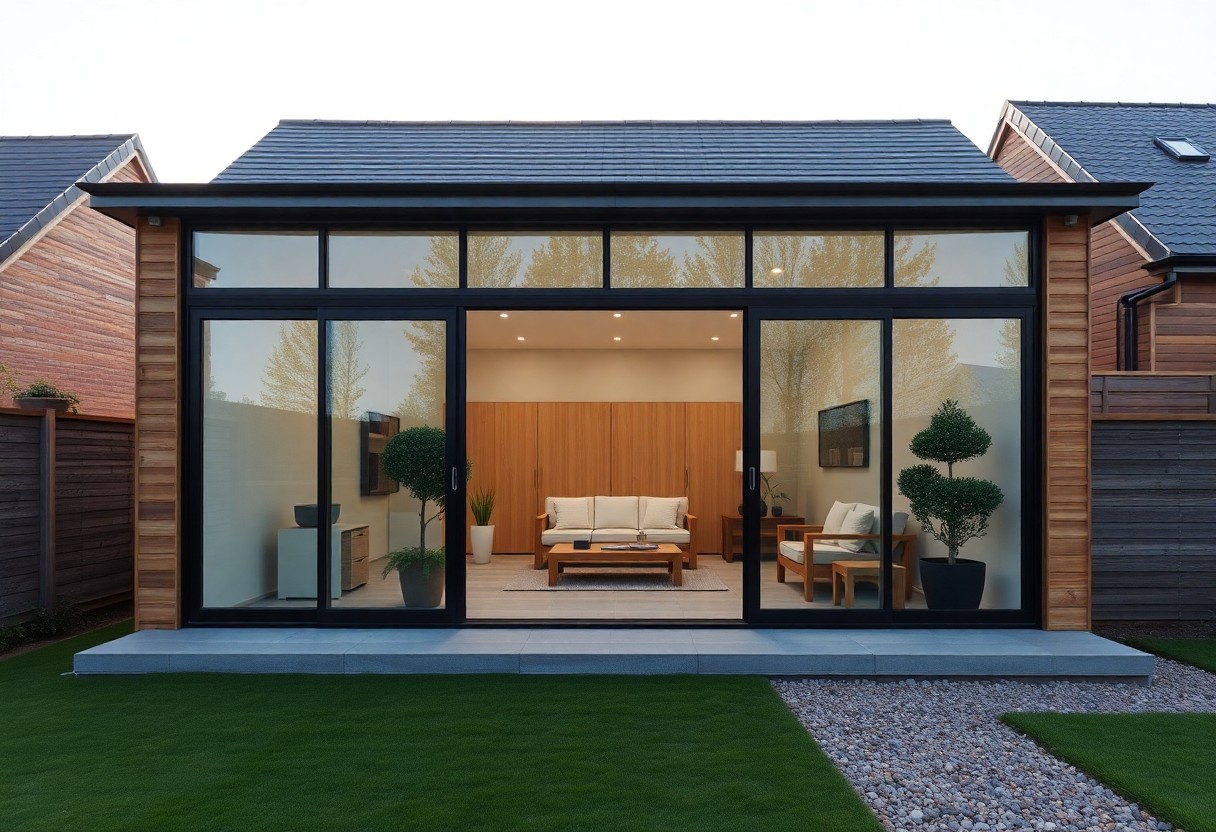
Exploring Garden Rooms
When assessing garden rooms you should compare sizes from compact 6m² pods to spacious 24m² studios, factor in costs (£8,000-£40,000 typical), and check suppliers such as Home – Gardenhouse24 for prefab options. Pay attention to planning limits (eaves under 2.5m and ridge under 4m often fall under permitted development), and treat electrics and structural works as potentially hazardous without professional input; a well-specified room can add 5-10% to property value.
Design Options for Garden Rooms
You can choose timber-frame, SIPs or brick shells, mix full-height glazing with solid walls, or opt for a green roof; glazing of more than 50% boosts daylight but can increase heat loss unless you use triple glazing and good insulation. Typical roof choices are flat with kerb detail, mono-pitch or pitched; finishes range from cladding (£60-£120/m²) to rendered masonry, and built-in services (heating, ventilation) raise costs but deliver year-round comfort.
Uses and Functionality
You’ll find garden rooms used as home offices, studios, gyms or annexe accommodation; a two-person office usually needs ~10-12m², a gym 12-16m², and a guest suite 14-20m². Fit-out crucials include a 16A supply, adequate ventilation and 150-200mm floor insulation for thermal comfort. Note that poor acoustic treatment can make music or gym use problematic, while good design offers flexible, high-value living space.
For deeper planning, allocate budget lines: shell £6,000-£20,000, insulated fit-out £3,000-£10,000, and services £1,000-£5,000; install MVHR or mechanical extract if you expect heavy use, and aim for 45dB sound reduction if the room doubles as a studio. Positioning near boundaries can trigger neighbour disputes or planning scrutiny, so you should check setbacks and use certified installers for electrics and structural ties to avoid safety and compliance issues.
Planning and Regulations
Permitted Development can cover many garden rooms, but limits are specific: up to 50% of your curtilage, maximum heights of 4m (dual‑pitched), 3m (other roofs), and 2.5m if within 2m of a boundary. Conservation areas, listed buildings or Article 4 directions remove PD rights, so you must apply. Local authorities enforce breaches with notices and, in extreme cases, removal orders – compliance protects the value and use of your new build.
Planning Permissions
If your project exceeds PD limits, changes the principal elevation, or proposes a self‑contained dwelling, you need full planning permission; applications typically take about 8 weeks for determination. You can use pre‑application advice from the council to test design constraints; in London and many historic towns you’ll find stricter local plans and neighbourhood policies that often require design statements and heritage impact assessments.
Building Regulations
Building Regulations cover structure, fire safety, insulation (Part L), ventilation (Part F) and electrical safety (Part P); outbuildings under 15m² may be exempt if detached and without sleeping accommodation, but most habitable garden rooms require approval and sign‑off by Building Control. Non‑compliance can lead to enforced alterations and difficulties when you come to sell.
Practically, you’ll choose Full Plans (detailed checks and staged inspections) or a Building Notice for faster start, and you’ll likely need at least foundation and final inspections plus certificates for electrics or gas. Engage a competent person scheme for installations where possible, get airtightness/thermal evidence for Part L compliance, and ensure you obtain the final Building Control sign‑off to avoid retrospective works.
Materials and Construction
Sustainable Building Materials
You can specify cross‑laminated timber (CLT), structural insulated panels (SIPs), hempcrete, reclaimed brick or recycled steel to lower embodied carbon; studies show engineered timber can cut embodied carbon by up to 50% versus concrete. Aim for external wall U‑values around 0.18 W/m²Kmoisture susceptibility and demand rigorous detailing and site testing before use.
Construction Methods
Choose off‑site panelisation or modular systems to compress on‑site time by roughly 30-60% and reduce waste by up to 90%; SIPs and timber‑frame kits often arrive pre‑insulated and air‑tight. For foundations you’ll typically use slab‑on‑grade (150-200mm concrete with insulation) or piled solutions on poor ground. If you opt for traditional blockwork, factor longer programmes and higher on‑site labour; poor detailing can create thermal bridging and condensation risks.
Pay attention to airtightness and services integration: target air permeability below 3 m³/(h·m²) @50Pa for high‑performance garden rooms and specify windows with U‑values near 1.2 W/m²K (double) or ~0.8 W/m²K (triple). Mechanical ventilation with heat recovery (MVHR) often delivers 0.5-1.0 air changes per hour and prevents mould if installed correctly. Expect a modular unit to be craned in and weather‑tight within 2-4 days, with full fit‑out in 2-6 weeks versus 8-12 weeks for traditional builds.
Cost Considerations
Typically new build construction ranges from £1,300-£2,500/m² depending on specification, while garden rooms vary from £7,000 for basic pods to £60,000+ for bespoke high‑end units. You should factor in site works, services and a contingency of 10-15%. For current design and cost drivers see Expert shares 8 garden room trends set to shape 2026, which highlights finishes that influence value.
Budgeting for New Builds
Start with a clear schedule and a fixed‑price tender where possible; a 150m² house at £1,800/m² is about £270,000. You should build a payment plan tied to construction stages and set aside a minimum 10% contingency. If you choose premium finishes expect budgets to rise by 20-35%. Factor in surveys, legal fees and landscaping which can add £5,000-£20,000 depending on scope.
Costs Associated with Garden Rooms
Modular pods often start at £7,000-£12,000, insulated timber or steel‑framed rooms typically cost £15,000-£40,000, and bespoke architect‑led builds can exceed £60,000. You should include foundations (£700-£3,000), electrics and heating (£1,500-£7,000) and high‑performance glazing which may add £2,000-£10,000. Installation time varies from days for kits to 8-12 weeks for bespoke projects.
If you intend to rent or run a business from the garden room, forecast income of £500-£1,000/month, which can reduce payback to under 5 years on a £30,000 unit; however planning or party‑wall issues may add £1,000-£6,000 in delays and fees. You should request supplier case studies and warranties, and compare energy ratings – a high‑spec insulated room can save £150-£400/year on heating.
Enhancing Outdoor Spaces
Landscaping Tips
You can maximise usable outdoor space by combining hard and soft landscaping-aim for a 60:40 soft-to-hard ratio in small gardens under 100 m². Permeable paving reduces surface runoff by up to 30% and suits patios; native plants such as lavender, heather and silver birch cut maintenance and support wildlife. Incorporate a 1-2 m wide path for access to a garden room and zone lighting to 300 lux near steps. The careful choice of materials will extend your maintenance intervals and protect irrigation budgets.
- permeable paving
- native planting
- drought-tolerant species
- patio drainage
- wildlife corridors
Integration with Existing Properties
You should integrate a garden room with minimal impact by keeping a clear service corridor of at least 1 metre from the boundary, routing drainage into the main run with a 110 mm connection, and matching rooflines with appropriate flashings. A common project: a 4×3 metre room attached to a Victorian terrace used an existing soil stack and a soakaway 3 metres from the building, avoiding mains alterations and cutting costs by around 20%.
You should also consider foundations and thermal performance: for rooms up to 20 m² a 150 mm reinforced concrete slab with DPM often suffices, while poor ground may require piled foundations or a raft; adding 120 mm PIR insulation is common to lower running costs. Plan service routes so electrics use separate containment and gas or wet services are pressure-tested to industry standards before handover.
To wrap up
From above, you see that new builds and garden rooms deliver adaptable, energy-efficient space that increases your property’s utility and value; engage qualified professionals, prioritise quality insulation, ventilation and finishes, comply with planning and building regulations, and choose designs that fit your lifestyle to secure long-lasting, marketable results.
FAQ
Q: Do I need planning permission for a garden room or new build?
A: It depends. Many garden rooms fall under permitted development as outbuildings if they meet size, height and distance-from-boundary limits, are single-storey, and are not used as separate dwellings. New builds almost always require full planning permission. Properties in conservation areas, on listed land, or with an existing planning condition may need permission even for modest outbuildings. Building regulations approval is separate and often required for insulated, heated or habitable garden rooms. Check your local planning authority, consider a lawful development certificate for certainty, and allow time for pre-application advice if your scheme is complex.
Q: What foundations and base are needed for a garden room?
A: The appropriate foundation depends on soil type, load, frost depth and the building’s weight. Common options are concrete strip or slab foundations for heavier structures, helical screw piles or concrete pad foundations for lighter timber-framed units, and timber bearers on adjustable supports where minimal ground disturbance is preferred. A level, well-drained base with a damp-proof membrane and insulation under the floor helps prevent cold and moisture ingress. Commission a site survey and follow structural engineer or manufacturer guidance to ensure compliance with building regulations and long-term stability.
Q: How should a garden room be insulated and heated for year-round use?
A: Insulate roof, walls and floor to meet or exceed current U-value requirements for habitable spaces; use continuous insulation layers, sealed junctions and thermal breaks at frames to avoid cold bridges. Install double or triple glazing with appropriate low-emissivity coatings and well-sealed doors. For heating, options include electric underfloor heating, air-source heat pumps, infra-red panels or small wet systems with radiators; choice depends on connection to mains gas, running-cost preferences and available electrical capacity. Provide mechanical ventilation with heat recovery or adequate passive ventilation to control moisture and indoor air quality while retaining energy efficiency.
Q: What utilities and services can be fitted to a garden room and what should I consider?
A: Garden rooms can have electricity, lighting, data cabling, heating, hot water, and plumbing for kitchens and bathrooms. For drainage, options include connecting to the foul sewer or using a packaged treatment plant or cesspit where connection is not feasible; surface water should be directed to soakaways or SUDS-compliant systems. Electrical work must comply with Part P of the Building Regulations and usually requires a certified electrician; gas installations must be Gas Safe‑registered. Plan for trenching, service runs, meter locations and any wayleave agreements; ensure appliances and waste connections meet building-regulations and local authority requirements.
Q: How long does a garden room or small new build take and what are typical costs?
A: Timescales vary: straightforward garden-room kits can be installed in days to weeks once the base is ready; insulated bespoke garden rooms commonly take 2-8 weeks on site plus site-prep and approvals. New-build houses typically require many months to over a year from planning to completion. Costs depend on size, specification, materials, site access and ground conditions. As a guide for the UK market, basic garden rooms can start from several thousand pounds for simple summerhouses, insulated, serviced garden rooms commonly range from about £10,000 to £40,000 or more, while small new-build projects run to tens or hundreds of thousands of pounds. Obtain multiple detailed quotes and include contingency for site works, services and planning compliance.