
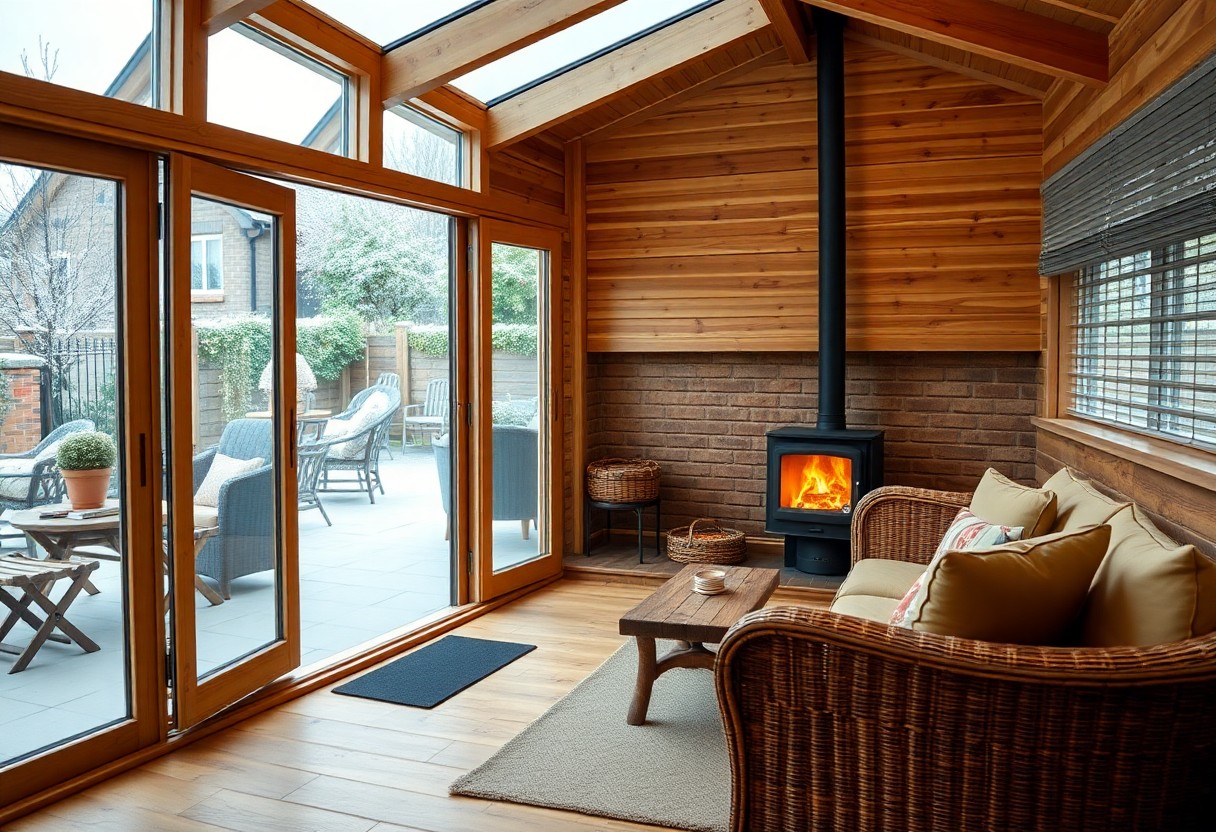
Most garden rooms become usable all year when you address insulation, efficient heating and good ventilation; you should weatherproof the envelope, manage condensation and mould risk, and choose energy-efficient glazing and heating to cut bills and ensure comfort. Prioritise airtight seals, appropriate insulation levels for your climate, and maintenance to keep your space safe, dry and inviting through every season.
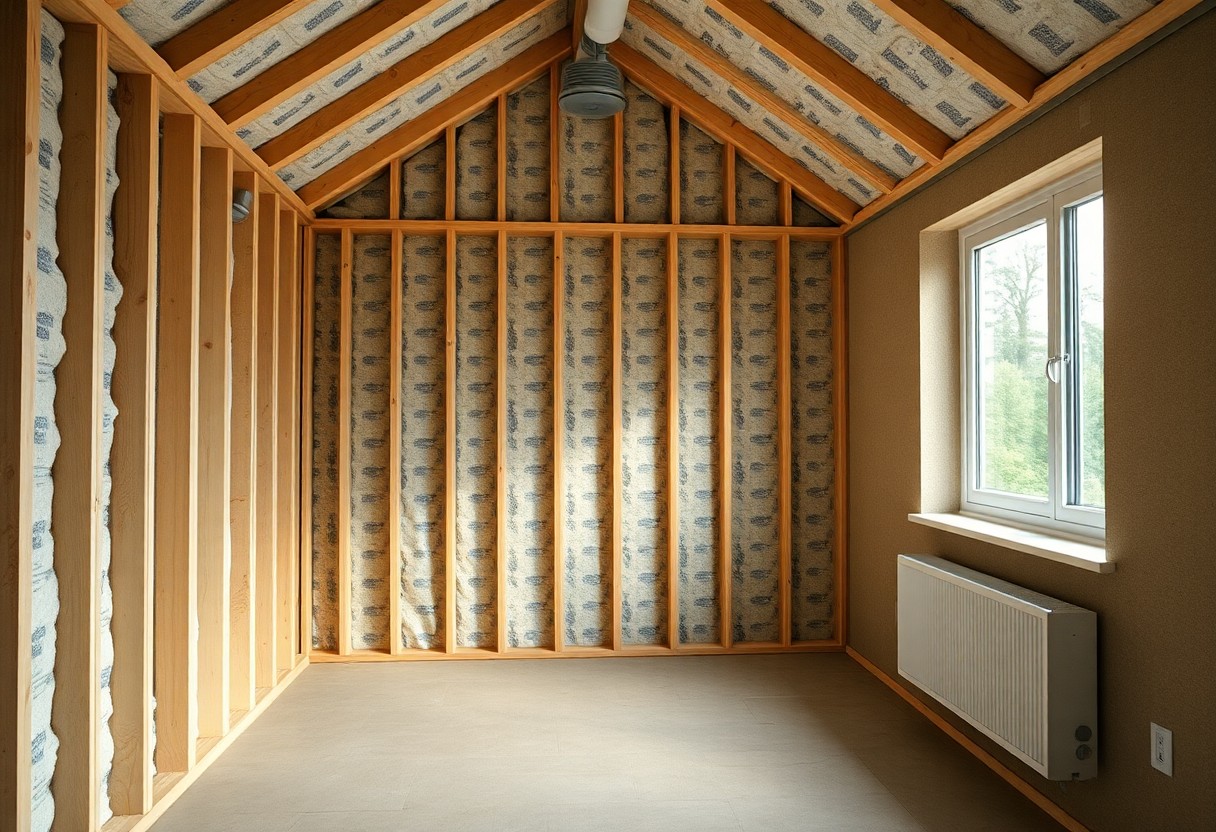
How-to Make Your Garden Room Insulated
You should treat walls, roof and floor as one thermal envelope: aim for continuous insulation to cut drafts and heat loss. For a well-insulated garden room, target U‑values between 0.18-0.30 W/m²K depending on use, using combinations like 100mm PIR in walls, 150mm mineral wool in the roof and 120mm underfloor boards. Seal all joints, add a vapour control layer on the warm side and plan services to avoid thermal bridging.
Choosing the Right Insulation Material
You can choose rigid PIR for slim, high-performance fills (λ≈0.022 W/m·K), mineral wool for cost-effective thermal and acoustic performance (λ≈0.035 W/m·K), or sheep’s wool if you want breathable, eco-friendly insulation. Spray polyurethane foam suits irregular cavities but often requires professionals and can be flammable if improperly installed. Balance thickness, budget and damp-sensitivity when selecting materials for your project.
Installing Insulation Effectively
When installing, you must keep insulation continuous and avoid compressing batts, since compression reduces thermal performance. Use airtightness tape on board joints, expanding foam for gaps around frames, and fit a vapour control layer on the warm side to prevent interstitial condensation. Leave a 25mm service void for cables and use sealed grommets where you have services penetrating the vapour barrier.
For stud walls you should fit rigid boards tightly between studs or overlay with foil‑faced PIR, then tape all laps; for floors you can install 120-150mm insulation between joists and finish with a 22mm tongue‑and‑groove screed. In pitched roofs combine 150mm between rafters with an additional 50mm overboarding for conversion spaces. Test airtightness with a blower door if available and consider mechanical ventilation (MVHR or trickle vents) to control humidity and avoid condensation problems.
Tips for Heating Your Garden Room
You can aim for a steady 18-21°C by combining insulation, draught‑proofing and a controllable heat source; adding a room thermostat and timer saves fuel and keeps comfort consistent. Consider a 1.5kW electric radiator (≈£0.30/hour at 20p/kWh) for quick warmth or an infrared panel for targeted heating. Balance ventilation to prevent damp while retaining heat; avoid overloading sockets with multiple high‑draw devices. Perceiving how each measure affects running costs helps you choose the right mix for year‑round use.
- insulation
- draught‑proofing
- room thermostat
- electric radiator
- infrared panel
| Insulation | Reduce heat loss by 25-40% and lower running costs |
| Double glazing | Lower U‑value, less condensation and better comfort |
| Underfloor heating | Even warmth across floor area; efficient with good floor insulation |
| Electric radiator | Fast heat delivery; 1.5kW ≈ £0.30/hour at 20p/kWh |
| Air‑source heat pump | COP 3-4, significantly lower running cost than resistance heating |
Types of Heating Systems to Consider
Electric radiators, underfloor water or electric systems, infrared panels and air‑source heat pumps each fit different budgets and insulation standards; a 2kW electric radiator will warm roughly 20m² quickly, while underfloor heating delivers gentle, consistent heat but needs thicker floor build‑up. Gas or LPG boilers remain an option if you have fuel supply, and heat pumps give better seasonal efficiency despite higher install costs. This helps you match system choice to your usage patterns and installation constraints.
- electric radiator
- underfloor heating
- infrared panel
- air‑source heat pump
- LPG boiler
Energy Efficiency Tips
Upgrade to 100-150mm of cavity or floor insulation, fit double or triple glazing, and seal gaps with magnetic or foam draught excluders around doors and windows; these fabric improvements cut losses substantially. Use a programmable or smart thermostat, zone heating so you only warm occupied parts, and timers to avoid unnecessary run time. After these steps you can often reduce heating bills by 10-30% depending on the starting fabric and your usage pattern.
- draught excluders
- double glazing
- programmable thermostat
- zone heating
- timers
Fit thermostatic radiator valves (TRVs) on radiators, consider reflective panels behind emitters to push heat into the room, and use controlled ventilation or a small heat‑recovery unit to avoid moisture while retaining warmth; a basic whole‑room heat‑recovery ventilation can recover 50-70% of heat from extracted air. Generate some on‑site power with PV panels to offset electric heating where feasible. After installing smart controls and improving the room fabric, monitor consumption for 6-8 weeks to fine‑tune settings and verify savings.
- TRVs
- reflective panels
- heat‑recovery ventilation
- PV panels
- smart controls
Factors to Consider for Ventilation
When planning ventilation for your garden room you must assess airflow, humidity, sources of moisture and the interaction with insulation and glazing; choose between passive vents, extractor fans or an MVHR unit based on occupancy and use. You should check window positions to avoid cold bridges and surface condensation, and consult practical guides such as How to Make a Garden Room Work All Year Round for real examples. Recognizing how ventilation choices affect energy demand and comfort is key.
- Airflow – target appropriate air changes for the room size
- Humidity – keep RH below 50-60% to limit mould
- Condensation – manage with warm surfaces and ventilation
- Trickle vents & window vents – provide background supply
- Extractor fans/MVHR – handle peak moisture and recover heat
Importance of Proper Ventilation
You’ll prevent rapid mould growth-spores can colonise damp surfaces within 48 hours-by keeping relative humidity below 50-60% and ensuring regular air exchange. You also reduce CO2 and VOC build‑up; levels above 1000 ppm affect concentration, so aim below 800-1000 ppm for work use. Combining ventilation with adequate insulation and thermal breaks avoids cold spots that cause surface condensation and damage to finishes.
Methods to Improve Airflow
Adopt a layered approach: fit window trickle vents for continuous background supply, add extractor fans rated 60-100 m³/h for wet activities and consider an MVHR unit to recover up to 90% of heat. You should orient inlet and extract points to create cross‑flow and use intermittent boost fans or window opening during high occupancy.
For a practical example, a 3×4 m garden room (~30 m³) aiming for 0.5 air changes per hour needs about 15 m³/h continuous ventilation; increase to 60-100 m³/h when cooking or drying clothes. In practice combine low‑rate trickle vents (typically 3-10 l/s) with a peak extractor fan and position extractors close to moisture sources. An MVHR will maintain temperature while exchanging air, and you should monitor conditions with a hygrometer and CO2 meter to fine‑tune vent sizes and fan run times.
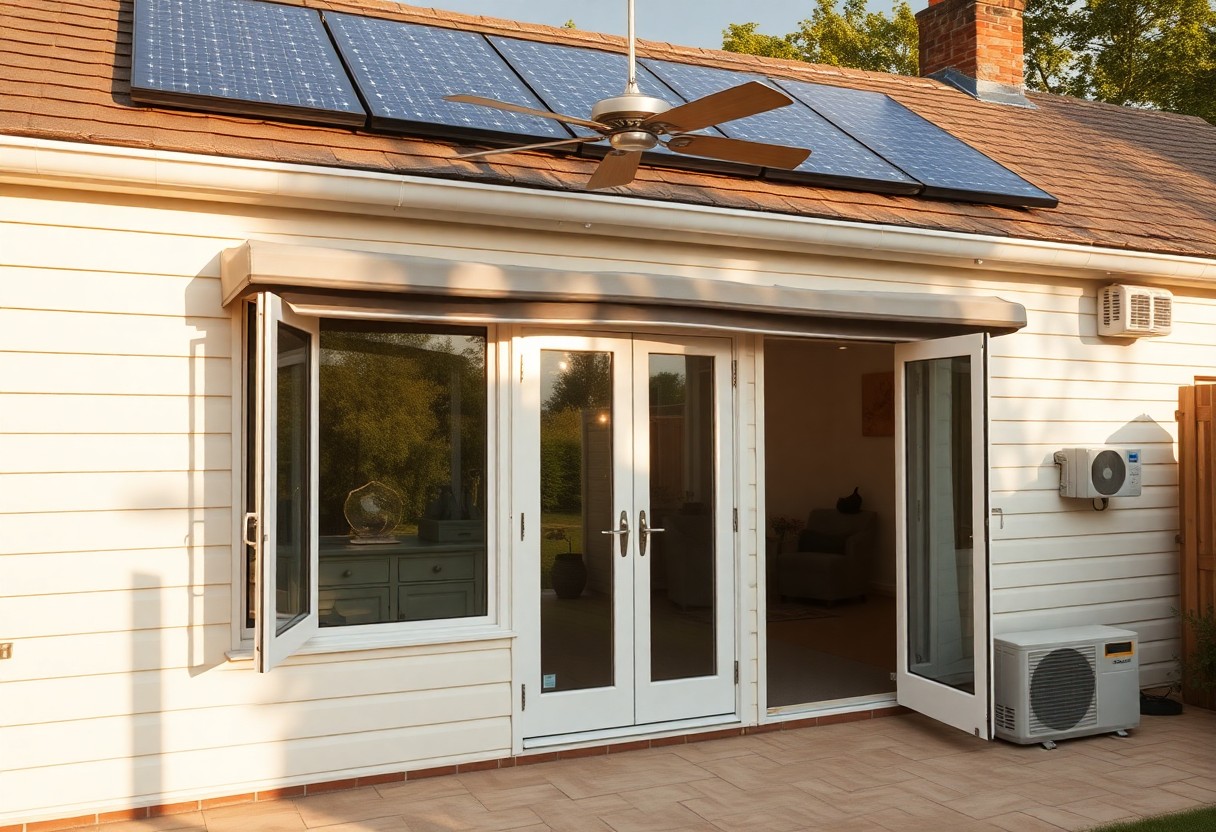
How-to Maintain Comfort During Summer
You should focus on ventilation, insulation and thermal mass to avoid your garden room overheating. Use cross-ventilation with trickle vents and roof vents or a mechanical extractor rated 200-400 m³/h to expel hot air, and combine that with exposed thermal mass such as a concrete slab to absorb daytime heat; night-time purge ventilation can shave several degrees off internal temperature.
Cooling Solutions for Warm Days
Ceiling and portable fans can lower perceived temperature by around 2-3°C, while a correctly sized inverter air‑to‑air unit of 2.5-3.5 kW will cool rooms of roughly 15-30 m² efficiently and can double as heating (COP 3-4). Evaporative coolers work well in dry summers but struggle in high humidity; fit a dehumidifier if condensation becomes an issue and keep electrical loads within circuit limits.
Shading and Blinds Options
External shading such as awnings, shutters or louvred roofs can cut solar gain by up to 80%, especially important for west‑facing glazing that receives intense late‑afternoon sun. Internal blinds reduce glare and give privacy but typically block only 30-60% of heat, so pair them with external solutions or reflective films for best results.
Consider external roller shutters or motorised awnings (£300-£1,200) for high reduction in heat; aluminium venetian blinds and reflective solar fabrics can reduce heat gain by 70-90%. Pergolas with deciduous climbers give seasonal shading, and automated sensors timed to sun position prevent overheating without you being present; smaller internal blackout blinds cost from about £50-£200 and help when combined with external shading.
Tips for Electrical and Lighting Setup
Install a dedicated electrical consumer unit with 30 mA RCD protection and separate circuits for sockets and lighting; use 2.5 mm² cable for power and 1.5 mm² for lighting, favour low‑energy LED lighting (typically under 10 W per fitting) and smart controls to adapt to seasons, and position sockets to avoid splash zones. For layout ideas see 30 Insulated Garden Room Ideas for Year‑Round Use. Recognizing professional installation and regular testing protects your garden room.
- Fit a 30 mA RCD and label circuits clearly
- Use IP‑rated fittings and sockets for exterior walls (IP44/IP65 as required)
- Install separate circuits for high‑load appliances and heating
- Choose dimmers, timers and smart controls to reduce consumption
Lighting Innovations for Year-Round Use
You can combine warm 2,700-3,000 K LED strips for cosy evenings with 4,000 K task lighting for daytime work, install dimmable circuits and zone controls to shift ambience by season, and add PIR sensors or daylight harvesting to cut energy use; many modern LEDs draw under 10 W yet deliver 800-1,600 lumens, so you maintain comfort without hefty running costs.
Ensuring Safety with Electrical Outlets
Place at least two double sockets on separate circuits for flexibility, keep sockets at least 300 mm from windows or water sources, and use outdoor‑rated, sealed IP44 or higher sockets where moisture is possible; ensure all outlet circuits are RCD‑protected to reduce shock risk and to safeguard sensitive equipment.
Ensuring Safety with Electrical Outlets – more detail
Have an electrician registered with NICEIC/NAPIT install isolators and fused connection units for heaters and kettles, run a dedicated circuit for appliances over 3 kW, test your RCD monthly and commission an EICR every 5-10 years as appropriate, and fit surge protection for AV equipment to prevent damage from transient spikes – these steps mitigate the most common electrical hazards.
How-to Personalize Your Garden Room
You can personalise by zoning with rugs and screens, choosing a colour palette that ties to the garden and adding task lighting at 300-500 lux for work areas while keeping 2,700-3,000K warm LEDs for relaxation. Use artwork, plants and textiles to set mood; for high-humidity sites install a dehumidifier if relative humidity exceeds 60%. Prioritise insulation and ventilation to avoid damp, then add built-in storage to keep the room flexible and clutter-free.
Choosing Furniture for All Seasons
Start with pieces that switch roles: a 2-3 seater sofa bed, fold-away dining table or modular sofas that reconfigure for guests. Pick materials like teak, powder-coated aluminium or synthetic rattan with quick-dry cushions for summer, and layer with wool throws and thick rugs for winter. Opt for items with raised legs to prevent moisture transfer and weatherproof materials for any outdoor-exposed furniture to extend lifespan and comfort year-round.
Decor Ideas for Multi-Use Spaces
Introduce flexible fittings such as a wall-mounted fold-down desk, sliding screens or a fold-away bed to create clear zones without permanent walls. Combine storage benches, pegboards for tools and baskets to switch between office, studio and guest uses in seconds. Use layered lighting-ambient, task and accent-to change ambience fast; consider dimmable circuits and smart bulbs for effortless control.
For example, convert a 10-12 m² garden room using a 120 cm wall bed, a 120×60 cm fold-down desk and vertical shelving to free up floor space; add two storage benches giving ~100 litres each for linens and gear. Install dimmable 3,000K LEDs and a 1,500W electric panel heater for quick warmth in winter. These choices keep the space multi-functional, tidy and comfortable throughout the year.
Conclusion
Ultimately you can make your garden room usable all year round by combining high-quality insulation and draught-proofing, efficient heating (underfloor or electric), double-glazed windows and adjustable shading, controlled ventilation and moisture management, robust weatherproofing, layered lighting and durable, flexible furniture; maintain regular servicing and seasonal tweaks to keep comfort, efficiency and longevity.
FAQ
Q: How can I insulate my garden room effectively for winter and summer?
A: Insulate walls, roof and floor to the same standard as the main house where possible – use rigid PIR boards or closed‑cell spray foam for limited cavity depth, or mineral wool in stud walls with a vapour control layer on the warm side. Insulate the roof with high‑performance quilt or rigid board and consider a warm roof construction to avoid cold bridges; add insulation under the floor or use insulated ground sleepers with a moisture barrier. Fit insulated external doors and use double or triple glazed windows with thermally broken frames and low‑e glass to reduce heat loss and solar gain. Seal all gaps and draughts with proper tape, seals and air‑tight membranes to improve comfort and reduce heating demand.
Q: What heating and cooling systems are best for year‑round use?
A: A reversible ductless heat pump (air‑source) offers efficient heating and cooling in one system and is often the best choice for all‑season comfort. Underfloor heating (electric mats or wet system) provides even warmth and pairs well with tiled floors; wall‑mounted radiators or electric panel heaters are simple alternatives for smaller rooms. For extra character and heat, a wood‑burning stove or multi‑fuel stove can be used if the structure and local regulations permit. Use thermostats, programmable timers or smart controls to regulate temperature efficiently and add ceiling or portable fans and external shading to keep the space cool in summer.
Q: How can I prevent condensation and maintain good air quality throughout the year?
A: Provide continuous background ventilation via trickle vents in windows, purpose‑made wall vents or a mechanical ventilation with heat recovery (MVHR) system to control humidity without losing heat. Fit extract fans in any wet areas and consider a small dehumidifier if moisture levels remain high during colder months. Ensure the building has a vapour control layer on the warm side of insulation and adequate external drainage and damp‑proofing to avoid rising damp. Avoid excessive indoor moisture sources (drying clothes indoors, overwatering plants) and promote cross‑ventilation when conditions allow.
Q: Which glazing and shading options help keep the room comfortable in winter and summer?
A: Install high‑performance double or triple glazing with low‑emissivity coatings and gas fills to trap heat in winter and reduce unwanted heat loss; consider solar control glazing for south‑facing elevations to limit summer overheating. Use external shading (awnings, blinds, louvres) to cut solar gain before it reaches the glass; internal heavy thermal curtains or insulated blinds add night‑time thermal protection. Rooflights and skylights should be specified with good U‑values and fitted with blinds or external overhangs to manage direct sun. Planting deciduous trees or using pergolas with seasonal screens provides passive, low‑energy shade.
Q: What electrical, lighting and interior choices make the garden room practical year‑round?
A: Install a dedicated electrical circuit with RCD protection and sufficient capacity for heating, lighting and any appliances; have fixed points for internet and TV if you plan to use the room as a workspace or media room. Use layered LED lighting: warm ambient lights (2700-3000K) for winter comfort, task lighting for work areas and dimmers for flexibility. Choose flooring that tolerates temperature swings – engineered wood, luxury vinyl or tiles with underfloor heating are good – and add rugs and washable soft furnishings for insulation and comfort. Select modular, multi‑use furniture, storage solutions to declutter, and water‑resistant finishes for low maintenance and long‑term usability.