
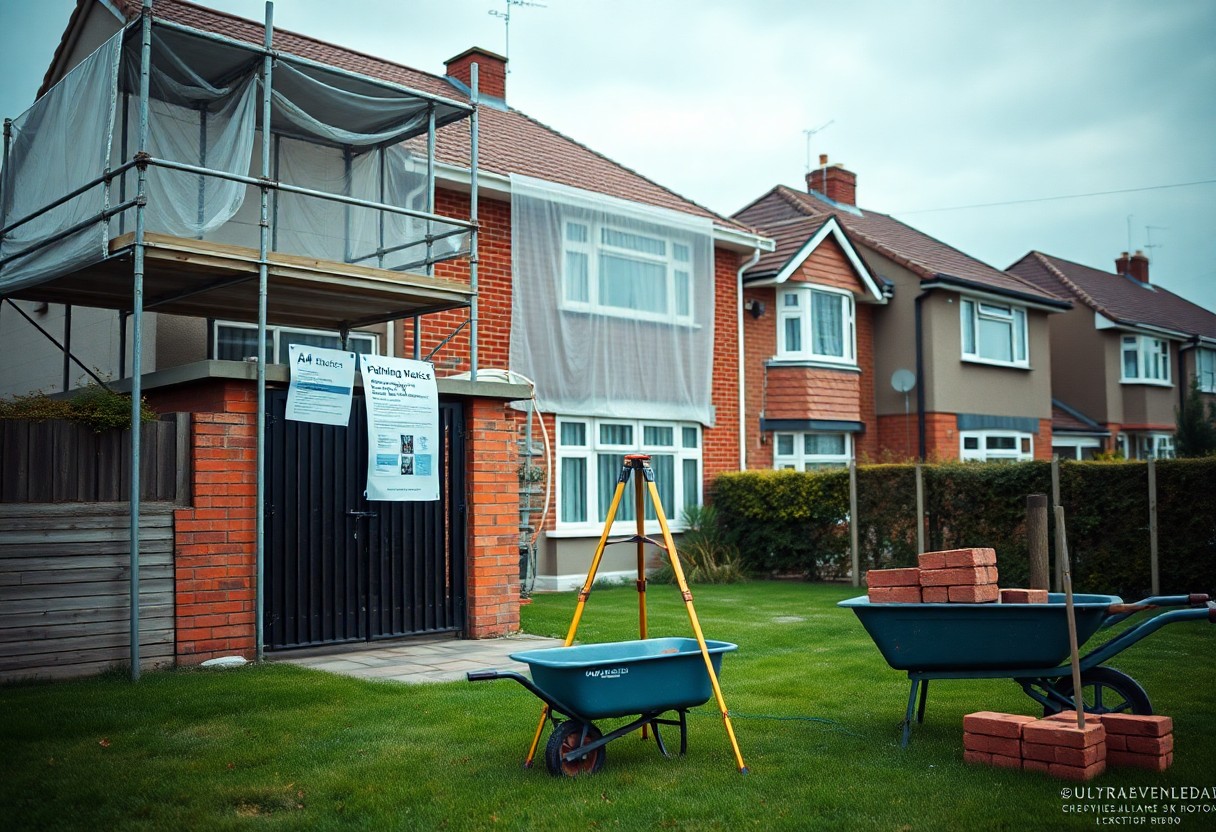
It’s imperative that you check whether your extension falls within permitted development rights or needs formal planning permission, because failing to obtain permission can result in enforcement notices and costly alterations. You should consult your local planning authority and review neighbour consultation requirements, site constraints and conservation area rules; a well-prepared application with accurate drawings and clear justification greatly increases the chance of approval. Keep records of decisions and seek professional advice if in doubt to protect your property and investment.
Understanding Planning Permission
What is Planning Permission?
Planning permission is the local authority’s formal approval for development that goes beyond permitted development rights, such as extensions in conservation areas or to listed buildings. If you exceed those rights, you must apply; most householder applications target a decision within 8 weeks. Councils can serve enforcement notices, require demolition and, in some cases, pursue prosecution – so getting consent is a matter of legal compliance and risk management.
Importance of Planning Permission for Extensions
Failing to secure permission can cost you money and time: lenders may decline mortgages, insurers may void cover, and buyers often request retrospective regularisation before completing a sale. Planning status also affects property value and neighbour relations, particularly where overshadowing or loss of amenity is alleged. For extensions that exceed permitted development or are in protected areas, make an application to avoid enforcement notices and long delays.
Applications for retrospective permission are frequently refused, leaving you to remove works or face prosecution for unauthorised changes to listed buildings. You should submit scaled drawings, site plans and a design and access statement where required; councils may consult neighbours and expect mitigation for privacy or flood risk. Planning conditions can limit materials, height or openings, so securing permission preserves the use and saleability of your extension.
Types of Extensions
You can pursue single-storey, multi-storey, rear, wrap-around or conservatory options; each has different planning triggers, impacts and cost profiles. Permitted development often covers modest single-storey rear works (commonly up to 6m for terraced/semi and 8m for detached properties under neighbour consultation schemes), while taller or multi-level builds usually need full planning and structural design. The table below breaks these down by type and typical planning constraints.
- Single-storey
- Multi-storey
- Rear
- Wrap-around
- Conservatory
| Single-storey | Often managed under permitted development; common limits cited are 6m (terraced/semi) and 8m (detached); keep heights around 3-4m to reduce risk of refusal. |
| Multi-storey | Usually requires full planning, party wall agreements and structural calculations; expect longer lead times and greater costs for foundations and insulation. |
| Rear | Depth and roof form drive neighbour impact; a two-storey rear addition of 2.5-3.0m depth is a common consented design in Victorian terraces. |
| Wrap-around | Combines side and rear works, increasing footprint and likelihood of planning permission due to changes to the street scene and boundary impacts. |
| Conservatory | Often treated as an outbuilding if separate, but glazed lean-to conservatories attached to the house can be PD if under prescribed height and size; check thermal performance expectations. |
Single-Storey Extensions
You should expect simpler approvals for small single-storey builds, with many falling under permitted development; typical acceptable depths are around 3-6m depending on house type, roof height kept to under 4m, and neighbours consulted under the larger home extension rules – if you push beyond these figures you will likely need full planning and detailed drawings.
Multi-Storey Extensions
You will usually face full planning applications for multi-storey works because they alter rooflines and massing; common issues include overlooking, daylight loss and structural foundation upgrades, so plan for additional reports (e.g. structural engineer, daylight study) and longer timelines of 3-6 months for consent.
Design choices matter: a typical two-storey rear extension adding 2.5-3.0m depth on a terrace will commonly require elevation drawings, neighbour notifications, and may trigger party wall procedures; The impact assessment often determines whether planning is granted.
Permitted Development Rights
Under Permitted Development (PD) you can carry out many small extensions without a full planning application; for example, single‑storey rear additions are commonly allowed up to 3m for terraced/semi‑detached and 4m for detached houses under the standard Class A limits. You must still meet conditions on height, materials and the proportion of curtilage covered, and an Article 4 direction or location in a conservation area will remove these rights – in which case you must apply for planning permission.
Overview of Permitted Development
For householders PD typically covers single‑storey rear and side extensions, small porches (often up to 3m²), loft conversions that don’t increase roof height and certain outbuildings; you can often alter windows and rooflights under PD too. You’ll need to check Class A-E of the General Permitted Development Order for exact limits, and many councils publish clear examples and checklists showing when you can proceed without a full application.
Limitations and Restrictions
PD is bounded by specific limits: maximum heights (single‑storey extensions usually not above 4m), the extension must not cover more than half the land around the original house, and works cannot be within a listed building or many protected areas such as national parks, AONBs, World Heritage Sites or conservation areas. Carrying out work in breach of PD can lead to an enforcement notice requiring removal or alteration – a serious risk to your budget.
More detail on restrictions: larger single‑storey rear extensions can sometimes proceed via a prior approval route – commonly up to 6m for terraced/semi and 8m for detached properties – but you must submit plans, a site plan and neighbour impact statements; local authorities will assess loss of light, outlook and privacy and may refuse. Also note that many Article 4 directions and local planning policies will refuse PD where cumulative development would harm character or amenity, so always check with your council first.
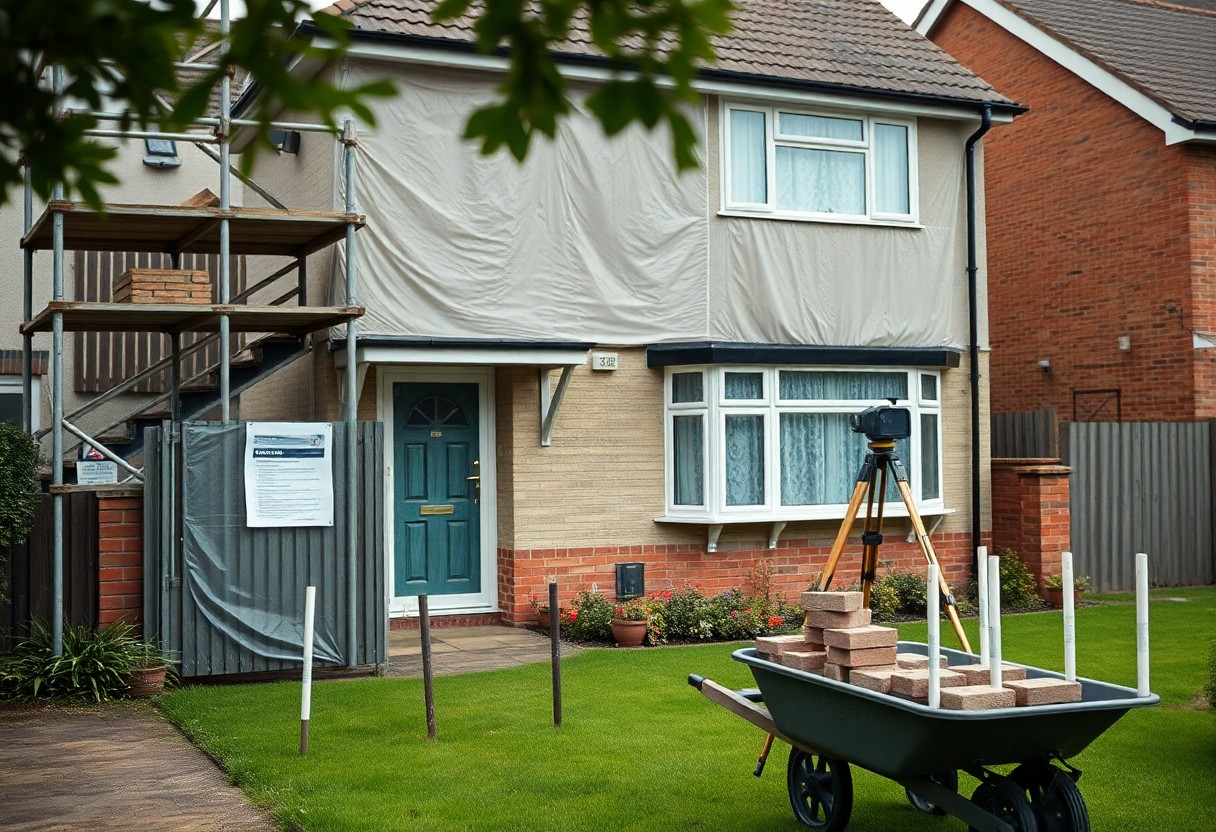
Preparing Your Application
Required Documentation
You should assemble a full set of documents: a site location plan (1:1250), block plan (1:500), and scaled floor plans and elevations (1:50 or 1:100), plus an ownership certificate (A-D) and clear photographs of the existing property; fees are typically around £206 for a householder application and listed or major works may need a Design & Access Statement. After uploading PDF plans, check the council’s file-format and sizing rules.
- Site location plan (1:1250)
- Block plan (1:500)
- Floor plans & elevations (1:50 or 1:100)
- Ownership certificate (A-D)
- Design & Access Statement (if applicable)
- Photographs of existing property
Tips for a Successful Application
You should seek pre-application advice from the local planning authority (often £50-£200), consult neighbours early and supply high-quality, annotated drawings; councils aim to determine householder applications within 8 weeks. Provide materials samples, shadow or daylight studies where relevant, and address potential overlooking proactively to reduce objections. After revising drawings to reflect officer feedback, submit a clear cover letter summarising changes.
Use a concise example: a semi-detached extension in Birmingham gained approval in six weeks after a £120 pre-app and a minor redesign to reduce ridge height; the daylight study and annotated elevations resolved neighbour concerns. Provide finished floor levels and precise boundary relationships-planners respond well to measurable data and clear dimensions. After approval, keep the stamped plans and decision notice for building-control and contractor briefs.
- Pre-application advice
- Neighbour consultation
- Scaled, annotated drawings
- Daylight/shadow study
- Materials samples
- Stamped decision notice
The Decision-Making Process
When you submit an application the local planning authority aims to decide most householder cases within 8 weeks and major schemes within 13 weeks. Officers handle around 90% of applications under delegated powers, while contentious proposals go to committee. Site visits, consultee responses and policy tests are synthesised into a report that forms the basis of the decision; if you start works without consent you risk enforcement action.
How Applications are Reviewed
Your application is first validated for correct plans and documents, then publicised with a typical neighbour consultation period of at least 21 days. Officers consult highways, conservation, ecology and drainage where relevant, carry out a site visit and assess the scheme against the NPPF and local plan. Decisions follow officer recommendation or committee determination, and you should expect conditions or refusal reasons clearly set out in the officer report.
Common Reasons for Approval or Refusal
You will often be approved where design, scale and materials respect the host property and wider street scene, and where neighbour impacts are minimal. Refusals frequently cite unacceptable loss of privacy, overshadowing, harm to listed buildings or conservation areas, highway safety concerns, or failure to mitigate ecological and flood risks. Clear evidence and pre-application discussion significantly improve your chances.
For example, many councils use the 45° rule to judge daylight impact and expect rear-to-rear window separations of about 21 metres; highways objections commonly cite inadequate visibility splays such as 2.4 x 43m for 30mph roads. You should commission timely surveys (e.g. bat or heritage statements) where relevant, and note that planning conditions can require landscaping, drainage or mitigation measures to make a proposal acceptable.

Appeal Process
After a refusal you can appeal to the Planning Inspectorate using one of three procedures: written representations, a hearing or a public inquiry. You normally have six months from the decision date to lodge an appeal. Inspectors focus on the local plan, national policy and tangible harm to neighbours; for example issues like loss of privacy or highway safety often sway outcomes. Avoid starting any works, as an enforcement notice could follow and carry legal and financial risks.
When to Appeal a Decision
You should appeal when you can show a clear error in the planning officer’s interpretation of policy, new evidence (such as a BRE daylight report) or procedural failings in the decision. If refusal cites scale, propose amended drawings showing reduced ridge height or set‑backs; if it cites heritage impact, submit a heritage statement and mitigation. Acting promptly matters because of the six‑month time limit and the weight of fresh technical evidence.
Steps to Take for an Appeal
Start by reading the decision notice and officer report, then collate plans, photographs, survey reports and neighbour statements. Choose the most appropriate procedure-householder appeals often use written representations-then submit the appeal via the Planning Portal. Consider instructing an agent or chartered town planner to prepare a focused statement addressing policy points; strong, proportionate evidence often changes outcomes.
When preparing your evidence, include scaled drawings, contextual photos, a planning statement referencing specific local plan policies and any technical reports (ecology, flood risk, transport or BRE daylight). Provide a concise chronology and rebut the council’s reasons point by point. If you expect a hearing or inquiry, prepare a statement of common ground and a list of witnesses; for written representations, ensure your statement is tightly argued and supported by numbered, dated appendices to aid the inspector’s assessment.
To wrap up
Following this, you should understand how permitted development rights, local authority policies and neighbour consultation affect extensions; you must check whether your project needs full planning permission, listed‑building consent or building regulations approval, submit accurate drawings and timely applications, and consider design, scale and impact to boost the likelihood of approval. Engaging a planning consultant or architect early helps you navigate conditions and appeals efficiently.
FAQ
Q: When will I need planning permission for an extension?
A: Planning permission is required where an extension falls outside permitted development rights, changes the use of the building, affects a listed building, or where the local planning authority has removed permitted development rights by an Article 4 direction. Factors that commonly trigger the need for full planning permission include excessive height, significant increases in footprint, prominent front or side extensions, and works that materially alter the character of the area. Always check with your local planning authority before starting work.
Q: What are permitted development rights for house extensions and what limits apply?
A: Permitted development rights allow many small extensions without a full planning application provided specific size, height and siting limits and design conditions are met. Typical restrictions cover maximum additional volume, projection from the rear, overall height, ridge height relative to the existing building, and proximity to boundaries. Limits and conditions vary by property type and location; some councils use prior approval procedures or remove rights in sensitive areas, so confirm the exact thresholds with the planning portal or your local authority.
Q: How do conservation areas, listed buildings and Article 4 directions affect extension proposals?
A: Extensions to listed buildings almost always require listed building consent and usually planning permission; proposals must preserve or enhance historic character. Conservation areas impose stricter scrutiny and may restrict permitted development rights, with councils applying higher design standards. Article 4 directions withdraw permitted development rights in a defined area, meaning works that would otherwise be permitted require an application. Consult the local authority conservation officer early for pre-application advice.
Q: What responsibilities do I have towards neighbours and when is a Party Wall Award needed?
A: You must consider impacts on neighbours such as loss of light, overlooking, boundary treatments and construction noise. Planning applications include neighbour consultation by the council, but separate legal duties may apply under the Party Wall etc. Act 1996 for works to or near shared walls or boundary structures; this requires serving notices and possibly obtaining a Party Wall Award before work commences. Engaging neighbours early and providing drawings, construction timetables and contact details reduces the chance of disputes.
Q: What is the planning application process, typical timescales and next steps after permission is granted or refused?
A: Submit a householder or full planning application with drawings, design and access statements where required; councils validate and consult neighbours before determining the proposal. Statutory determination is usually eight weeks for householder applications and up to 13 weeks for major proposals, though timescales vary. If permission is granted it may include conditions and you must also comply with building regulations; if refused you can amend and resubmit, request a review, or appeal to the Planning Inspectorate within the prescribed timescale. Pre-application advice from the council can speed decisions and reduce the risk of refusal.