
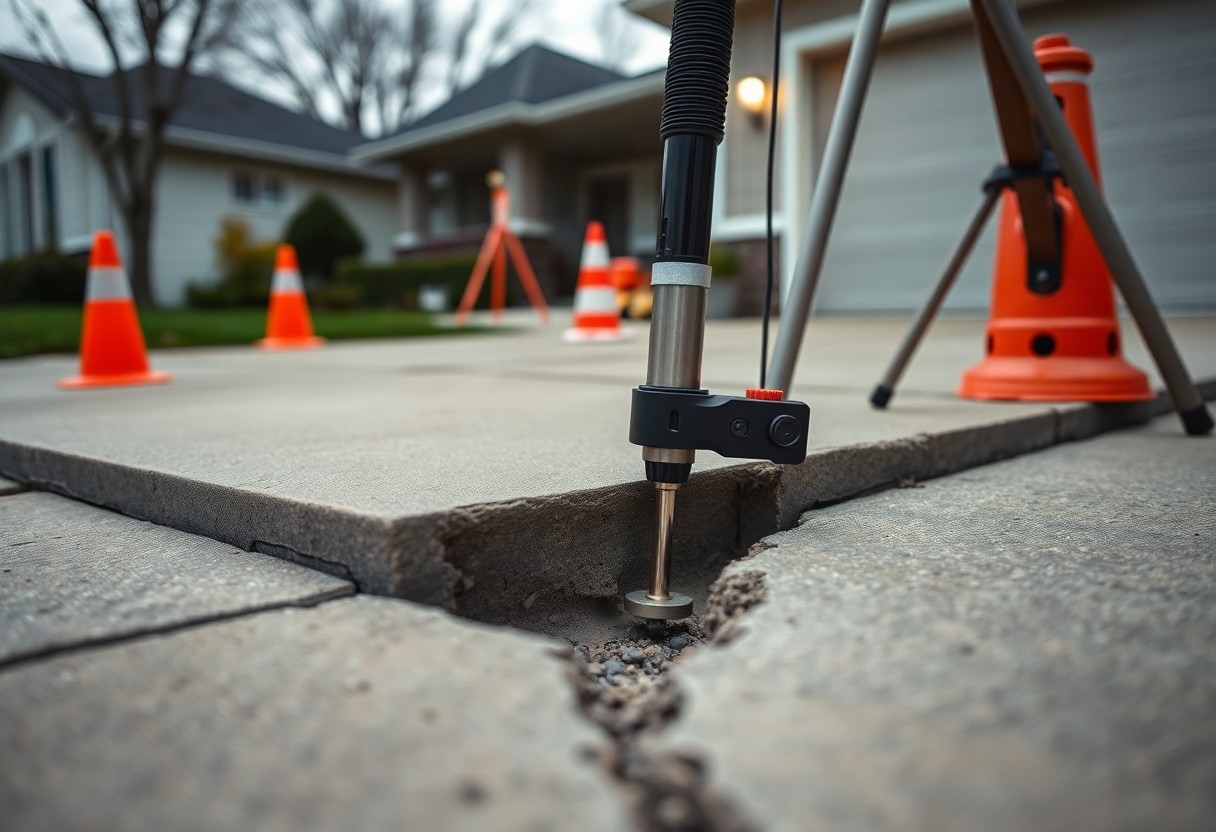
Maintenance starts with you assessing settlement, checking for pooling water, cracks and whether services or the sub‑base are affected; identify any trip hazard and risk of collapse, then choose partial lifting, re‑levelling with compacted stone or full replacement to restore durability and prevent further sinking. Ensure your drainage is corrected and consider a structural or utility inspection if voids or heavy subsidence are present, because those are the most dangerous issues to address.
Understanding Sunken Driveways
You will often spot a sunken driveway by uneven joints, standing water or 25-75 mm of visible sag; these signs indicate failing sub-base or water erosion, which can accelerate to >100 mm in a single season if left. You should assess nearby drains, trees and vehicle loading to judge repair type. Perceiving early settlement lets you choose targeted repairs – patch, recompact or full rebuild – and avoid more expensive structural work.
Common Causes of Sunken Driveways
Your driveway typically sinks because of poor compaction during installation, washout from drainage failures, collapsed services or root decay and tunnelling under the pavement; domestic vehicles concentrate loads that expose weak spots within 1-5 years. You may also see settlement where excavations or utility trenches were backfilled inadequately, creating voids that collapse under repeated traffic. Perceiving these origins helps you target the correct remedial method quickly.
- sunken driveway
- poor compaction
- drainage failure
- tree roots
Factors Influencing Driveway Integrity
The longevity of your driveway depends on sub-base depth (commonly 150-300 mm for domestic use), compaction to ~95% relative density, surface material and drainage gradient of at least 1% (1:100) away from structures; heavier vehicles (vans ~2-3 tonnes) cut design life if the base is undersized. You must check soil type and nearby vegetation when planning repairs. Perceiving these factors directs whether you stabilise, reinforce or replace the pavement.
- sub-base depth
- compaction
- drainage gradient
- vehicle loading
Soil behaviour is decisive: clay expands and contracts with moisture, causing cyclical movement, while sandy gravels drain well but need thicker, well-compacted bases; for example, a 200 mm MOT Type 1 sub-base compacted to 95% is standard in many UK driveways, whereas clay sites often require geotextile separation or 50-100 mm extra depth. You should also factor in surface runoff from roofs and drives – poor diversion increases scouring risk. Perceiving the site-specific soil and water behaviour prevents repeated failures.
- soil type
- geotextile separation
- MOT Type 1 sub-base
- surface runoff
How to Assess Damage
Inspecting Your Driveway
Start by walking the surface and measuring depressions with a straight edge and a metre rule; probe suspicious areas with a screwdriver to find soft spots. Check for ponding that lasts more than 24 hours, cracked edges, and broken joints near downpipes or gullies. Note the area size and depth – a depression over 25 mm (1 in) beneath tyre line often signals subbase failure and higher repair urgency.
Identifying Severity of Sunken Areas
Classify damage as shallow (<25 mm), moderate (25-75 mm) or severe (>75 mm) based on depth and affected area; an area over 0.5 m² at 25-75 mm typically needs partial excavation. Expect simple resurfacing for shallow faults, partial relay for moderate subsidence, and full rebuild for severe (over 75 mm) depressions, especially where vehicle loading exceeds 50 mm of deflection.
For example, a 1 m² depression at about 60 mm usually indicates failing subbase from poor drainage; contractors often remove the area, lay a 150-200 mm compacted Type 1 subbase with geotextile, add 50 mm bedding, then relay surface material. You can test drainage by pouring a bucket of water-if it stands over 24 hours the subgrade likely needs correction before any resurfacing.
Preparation for Repair
Survey the sunken area and measure depth with a spirit level and straightedge; repairs are typically needed when settlement exceeds 25 mm or covers more than 1 m². Expose a 150-300 mm test pit to inspect the subbase and drainage, note tree roots or washout, and plan for a dry weather window of at least 24-48 hours for compaction and curing; arrange access and any necessary permits before you start.
Tools and Materials Needed
You’ll need a shovel, pick, breaker for concrete removal, a plate compactor (3-6 kN), hand tamper, spirit or laser level, tape measure and wheelbarrow. Materials include MOT Type 1 aggregate for subbase (compact in 50-100 mm layers), 20-40 mm coarse stone for bedding, geotextile membrane, 100 mm perforated drainage pipe if required, and sand/cement (1:6) or resin for final surfacing.
Safety Precautions
Wear PPE-steel-toe boots (EN ISO 20345), gloves, eye protection, an FFP2 dust mask and hearing protection for noisy tools. Arrange a utilities survey and use a cable-avoidance tool (CAT); always hand-dig within 500 mm of marked services. If you detect live services or gas smells, cordon off the area and stop work immediately to prevent serious injury.
Manage manual handling by using mechanical aids for loads over 25 kg and team lifts for heavy flags; keep your back straight and bend at the knees. Maintain a 2-metre exclusion zone around powered equipment, test machines daily and use lower-impact compaction near structures to avoid vibration damage. If in doubt about any service location, contact the utility operator before proceeding.
Repair Techniques
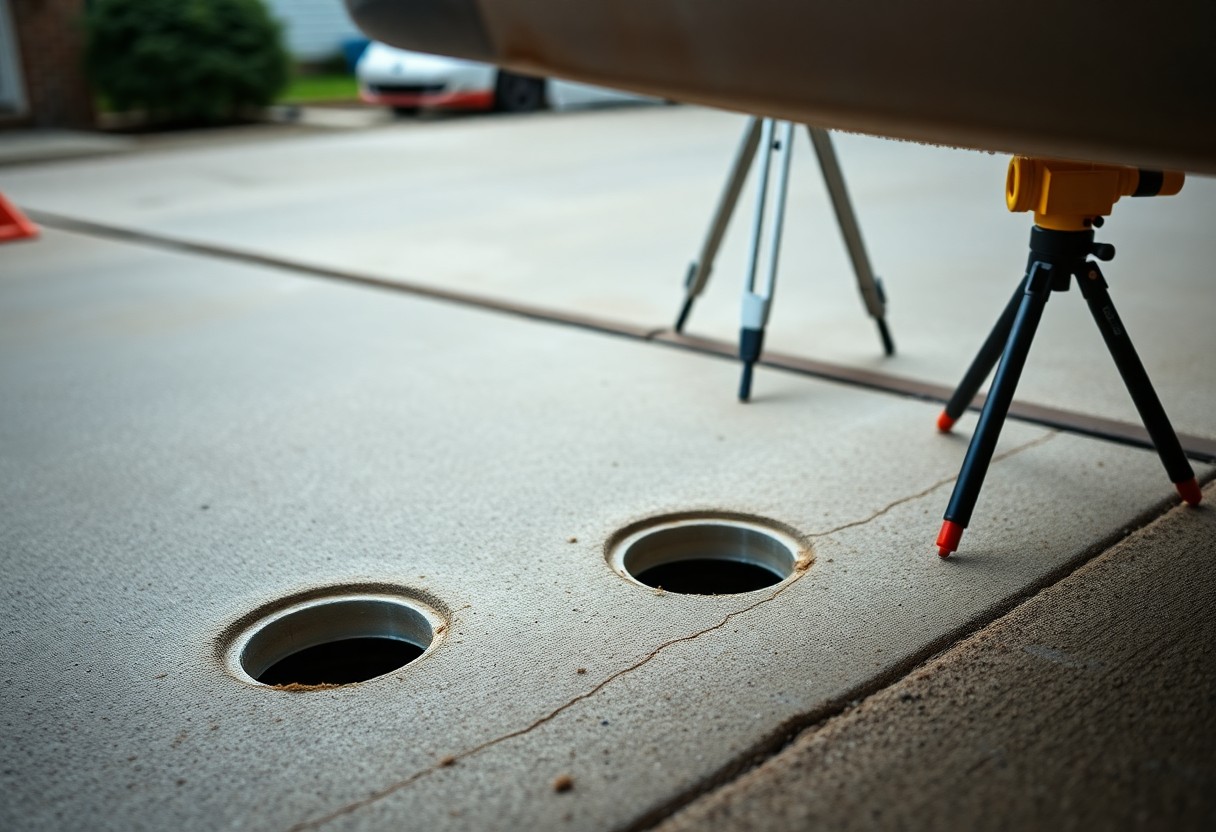
When addressing sunken driveways you’ll choose between polyurethane foam injection, traditional mudjacking, or full-depth replacement. Polyfoam typically lifts slabs within 15-30 minutes and is lightweight, ideal for voids up to about 200 mm. Mudjacking uses cementitious grout and suits larger plates but can add weight and re-settle. Full replacement is best when the sub-base is contaminated; expect to re-lay 75-150 mm of compacted MOT Type 1 aggregate. Assess void size and long-term performance before deciding.
Raising the Sunken Sections
You can inject foam through 20-30 mm drilled holes to lift slabs rapidly or lift and relay individual panels. Foam lifts of 25-200 mm are common; for relay, excavate to a sound sub-base, replace with 75-150 mm of MOT Type 1 in 50 mm layers compacted with a plate compactor, then bed slabs on a 40 mm cement screed. Always locate utilities before drilling or excavation to avoid dangerous strikes.
Filling Gaps and Cracks
You should use polymeric sand for gaps under 6 mm and flexible mortar or silicone for wider joints; clear debris with a pressure washer and allow the surface to dry. Polymeric sand sets in 15-30 minutes after water activation, whereas silicone cures in 24-48 hours. Prioritise sealing to prevent further undermining and water ingress that accelerates settlement.
When dealing with deeper voids you should insert a foam backer rod so the sealant depth is roughly half the joint width, reducing tensile stress on the filler. For hairline cracks widen to 3-6 mm with a grinder before filling to ensure adhesion, and use a primer on very porous concrete. Proper preparation and correct cure times typically extend the interval between major repairs and markedly reduce surface water penetration.
Maintenance Tips
Regular maintenance limits further subsidence and reduces trip hazards, so you should clear gutters, surface drains and remove vegetation that retains moisture. Schedule surface top-ups for small depressions and monitor heavy-vehicle routes, since repeated concentrated loads can cause failure within months. After each major storm or winter thaw you must inspect for pooling, erosion and any loss of subbase compaction.
- Sunken driveway: if you spot minor dips, patch with compacted Type 1 MOT to prevent pooling.
- Drainage: you should fit channel or French drains and maintain a fall of 1-2% to divert water.
- Subbase: when re-laying, ensure you compact the subbase to at least 95% Proctor to avoid repeat subsidence.
- Compaction: use a plate compactor for 50-100 mm layers; if you skip this, rapid failure is likely.
- Resurfacing: plan budgets of £300-£1,200+; resurfacing can give your driveway a longer lifespan.
Preventative Measures
You can prevent recurrence by ensuring proper drainage with a 2-3% fall, installing at least a 150 mm compacted subbase, and avoiding repeated parking of heavy vans in one spot. Use reinforced surfacing where loads exceed 3 tonnes to spread weight, and fill 10-20 mm depressions promptly to limit water ingress and freeze-thaw damage.
Regular Inspections
Carry out inspections at least every 6 months and after heavy rain or frost to identify subsidence early; you should measure dips greater than 10 mm and note cracks wider than 5 mm. Use a 2 m straightedge to find hollows and photograph changes to track progression, acting quickly to stop small faults becoming extensive.
When you spot progressive movement – more than 40 mm across a 1 metre run or repeated edge collapse – arrange a professional assessment, because continued use can lead to structural failure or vehicle damage. Take measurements, log dates and include photos; expect site-visit costs from £80-£250 and repairs from around £150 for localised patching up to £1,200+ for subbase replacement depending on size and access.

Professional Help
If DIY fixes have failed or your drive supports frequent vehicle loads, you should involve a pro; engineers will assess subgrade strength, drainage and utility conflicts, often using CCTV, soil tests or a trial pit. Firms may recommend polyurethane foam injection for voids under 1m³ or full excavation when sub-base is contaminated; expect initial site surveys from £150-£400 and repair estimates ranging from a few hundred to several thousand pounds depending on scope.
When to Consider Experts
If settlement exceeds about 25-50mm, you notice continuous ponding, cracks wider than 5mm or edges crumbling under vehicle weight, call an expert. Also involve professionals if trees are within 5m, services run beneath the drive, or the affected area is over 10m²; these situations often require structural assessment, drainage redesign or council consents rather than a simple top-up.
Choosing a Reputable Contractor
You should prioritise firms registered with bodies like TrustMark or the Federation of Master Builders, carrying at least £5m public liability insurance, and able to produce local references with before/after photos. Ask for written quotes that specify sub-base depth (commonly 100-150mm compacted for residential drives), material types (MOT Type 1, geotextile) and a clear warranty of 2-10 years.
Request a site visit to compare two or more detailed quotes, check online reviews on Google/Trustpilot and verify past jobs within a 10-20 mile radius when possible. Make sure the contract lists method statements (excavation depth, compaction standard such as 95% Proctor), disposal of spoil, start/completion dates and staged payments rather than large upfront sums to protect your interests.
Final Words
Hence you should diagnose the cause, regrade or lift slabs, replace or grout base material, compact the subbase and improve drainage; for extensive subsidence hire a qualified surveyor or contractor to protect your property and ensure long-term stability.
FAQ
Q: What commonly causes a driveway to sink?
A: Sinking usually results from water washing away or softening the sub-base, poor initial compaction, tree root movement, frost heave or prolonged loading from heavy vehicles. Drainage failures – blocked gullies, broken pipes or poor surface falls – allow water to concentrate beneath the surface and weaken the base. Inadequate edge restraint or poor-quality fill materials also increase the risk of localised collapse.
Q: How do I assess whether the repair is a DIY job or needs a professional?
A: Inspect the size, depth and rate of movement: small, shallow depressions (tens of millimetres and not spreading) that do not affect structural elements can often be tackled by competent DIYers. Large settlements, widespread cracking, upheaval near foundations, exposed services or persistent drainage failure indicate structural problems that require a professional survey and contractor. If there is any doubt about underground utilities or property stability, engage a qualified contractor or structural engineer for a proper assessment before starting work.
Q: What DIY methods work for small sunken areas on asphalt, concrete or paving?
A: For shallow asphalt depressions, clean the area, cut back ragged edges, fill with a compacted layer of Type 1 MOT stone if needed, then apply a hot or cold asphalt repair product and compact. For paving slabs, lift affected slabs, add or replace compacted sharp sand or Type 1 sub-base, re-bed slabs on a cement-sand mortar or resin and re-point joints. For concrete, small hollows can be repaired with a polymer-modified repair mortar after removing loose material and priming; always compact new sub-base layers and allow appropriate curing times.
Q: What professional repair options are available for major subsidence?
A: Contractors can undertake slab lifting (hydraulic grout or resin injection) to raise and stabilise paved or slabbed areas, or fully excavate and rebuild sections with a properly engineered sub-base and edge restraints for severe cases. For asphalt, resurfacing over a re-compacted, correctly profiled base or full-depth reclamation may be required. Professionals also address root problems, drainage upgrades and any bearing or settlement issues identified by structural surveys.
Q: How can I prevent my driveway from sinking again after repair?
A: Ensure a well-compacted, suitable sub-base (Type 1 MOT or engineered aggregate) and firm edge restraints during repair, maintain clear surface falls and functional drainage to remove water away from the sub-base, and avoid prolonged parking of heavy vehicles in one spot. Keep gullies, channel drains and downpipes clear, control nearby tree roots if they are a factor, and carry out periodic maintenance such as re-pointing, sealing or resurfacing to protect the wearing course.