
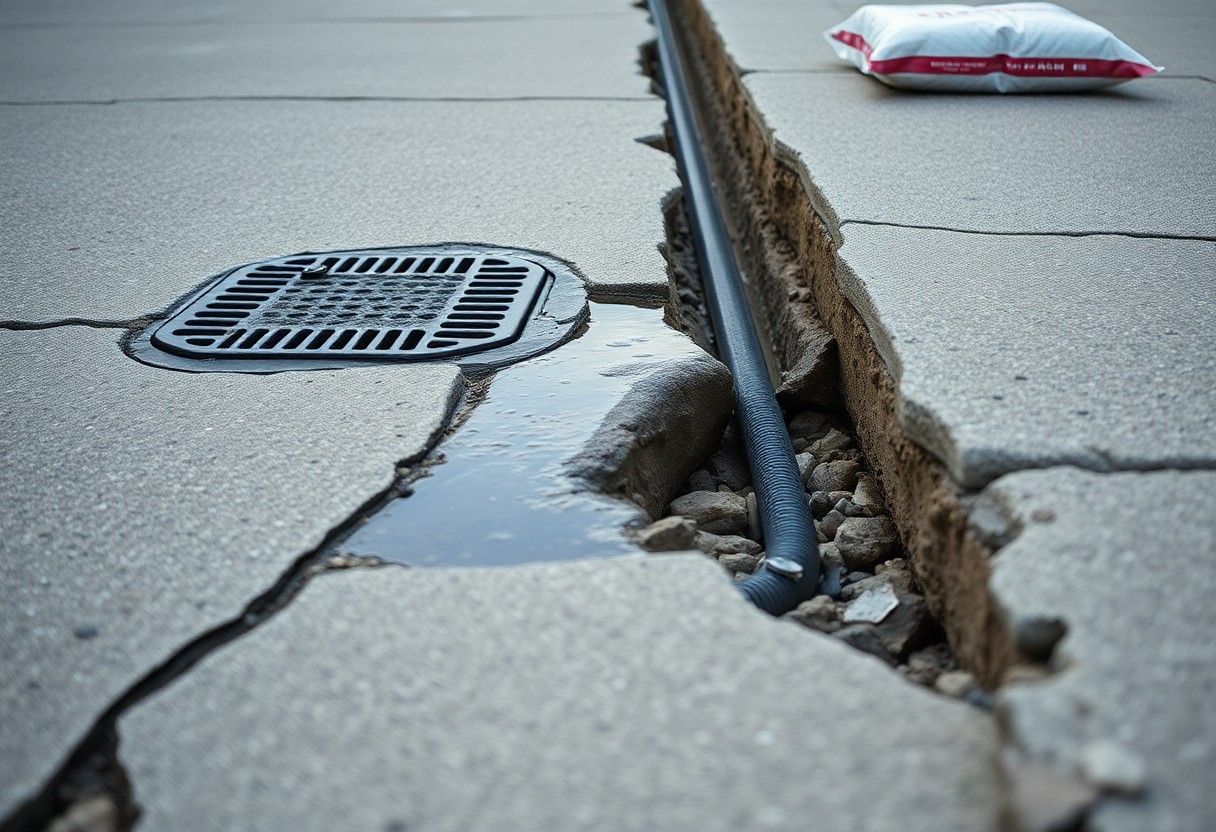
It’s important that you identify common driveway drainage issues early to prevent flooding and structural damage, and this guide shows ten typical problems with practical fixes so you can apply effective, long-term solutions that protect your property, preserve kerbs and surfaces, and reduce costly repairs.
Standing Water
Standing water on your driveway signals drainage failure and can damage surfacing, sub-base and nearby foundations; it also increases slip risk and attracts pests. You should address pooling promptly by regrading, installing channel drains or a French drain, and ensuring runoff is directed away from structures to protect your property and reduce recurrent maintenance.
Poor grading
If your driveway lacks a consistent fall, water will collect along low spots and edges; this accelerates surface deterioration and risks water ingress to your home. You can correct the pitch by regrading, adding a skim of compacted material or fitting edging that redirects flow, and check levels after heavy rain to confirm the slope works.
Blocked drains
Blocked channels and gullies cause rapid backing-up of water and localised flooding; common culprits are leaves, silt and sediment buildup around grates. You should clear debris regularly, use drain rods or a pressure wash, and replace damaged grates to restore flow and prevent overflow into garages or gardens; timely clearing avoids larger structural problems.
Inspect drains after storms, removing surface debris then probing with a rod; if water remains stagnant, flushing with a hose or hiring a jetting service can remove deeper blockages. Root intrusion and collapsed runs require CCTV surveys and professional repair, so schedule inspections annually and act quickly when you spot slow drainage.
Eroded Soil
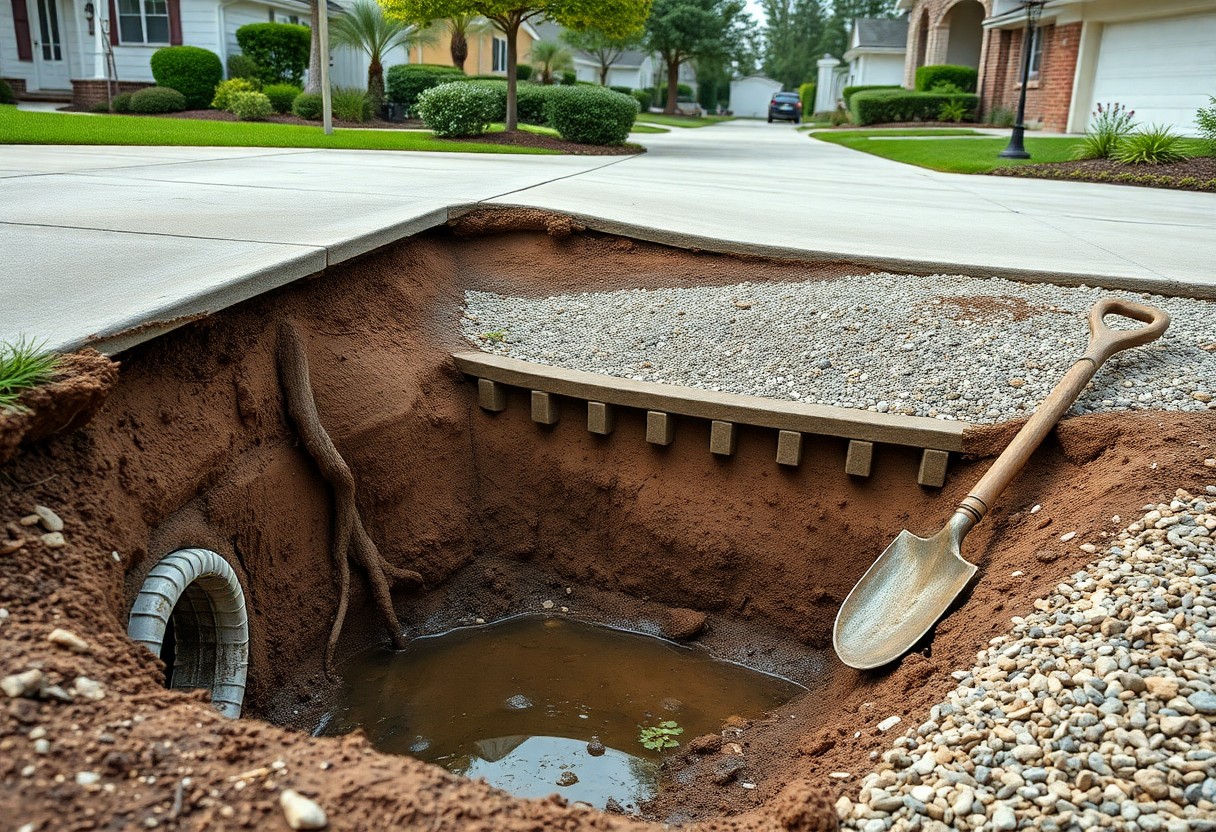
You should be aware that eroded soil beneath and beside your driveway weakens the base, causing settlement and cracks; this can lead to severe structural failure if left unchecked. Simple fixes – regrading, compaction, geotextile and fresh aggregate – will stabilise the area and extend your driveway’s life.
Heavy rain
Heavy rain washes fine material from the subgrade, leaving voids beneath your surface; intense downpours greatly increase erosion risk. Install adequate surface drains, improve slope and use permeable materials to disperse flows so your driveway remains stable during storms.
Unmanaged runoff
Unmanaged runoff channels water along your driveway edges, scouring soil and forming gullies; this is a common cause of progressive collapse. You should divert flows with swales, French drains or kerbs to halt continual soil loss and keep drainage away from foundations.
For better protection, combine solutions: grade surfaces away from the driveway, fit a lined trench drain and plant deep‑rooting vegetation; vegetation reduces surface erosion while drains control concentrated flows. Carry out regular post‑storm inspections so you can repair small losses before they become costly failures.
Cracked Driveway
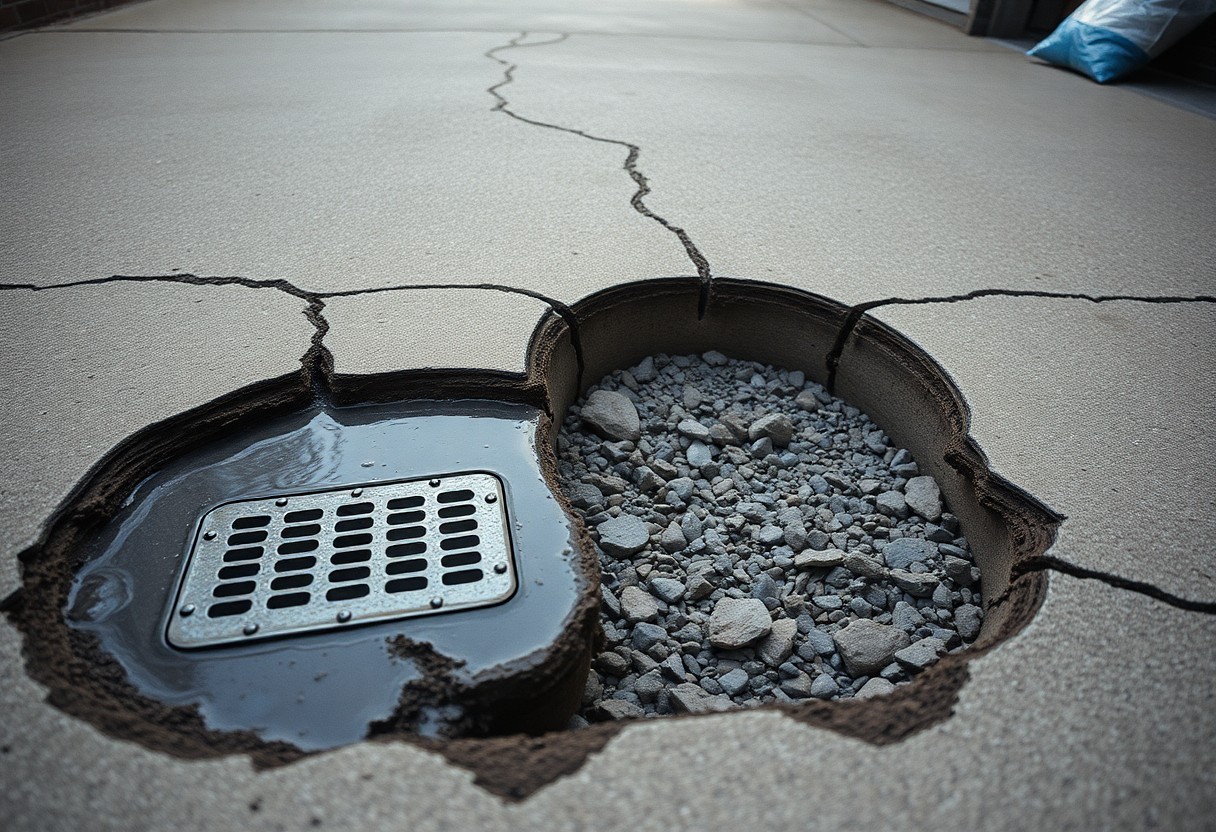
Cracked driveways often stem from stress, poor drainage or freeze-thaw cycles, and they let water reach the sub-base, causing further deterioration; if you ignore them they can widen into potholes and create a trip hazard. You should assess cracks early and seal or repair them to prevent costly replacement and to keep your driveway structurally sound.
Thermal expansion
Thermal expansion makes materials expand and contract with temperature swings, which can open hairline cracks into larger splits; you may notice edges lifting or joints widening. To limit damage you should use flexible sealants and provide adequate control joints so the surface can move safely, reducing the risk of surface failure.
Weak base
A weak or poorly compacted base allows the surfacing to settle unevenly when wet or under load, producing cracks, ruts and potential collapse; this increases the chance of structural failure and accelerated erosion. You should ensure proper compaction and drainage to restore the base and prevent recurring damage.
For a lasting repair you should strip the failed area, install a well-graded stone sub-base with geotextile where needed, and compact in layers to the correct density; occasionally full-depth reconstruction is the only reliable fix. Engaging a professional for milling, correct material specification and drainage improvements will give you a permanent, safe surface and avoid repeated patching costs.
Puddling Problems
Puddling occurs when water collects on your driveway surface instead of draining away, leading to slippery surfaces, accelerated wear and potential basement seepage; you should assess surface level and drainage routes and consider solutions like regrading or installing channel drains to restore proper flow and protect your driveway.
Improper slope
If your driveway slope directs water toward the house or creates low spots, puddles form and can cause structural damage over time; you can fix this by regrading to a correct gradient, adding a compacted aggregate base, or hiring a contractor to correct the pitch and ensure consistent runoff.
Surface cracks
Surface cracks allow water to penetrate the base, widening gaps and creating depressions that hold water; these openings increase the risk of freeze-thaw damage and should be sealed promptly with suitable fillers or resurfacing to halt deterioration.
For surface crack repair, clean out debris, apply a quality crack filler or hot pour sealant, and consider partial resurfacing for extensive damage; while you can tackle small repairs yourself, deep or recurring cracks often indicate base failure and warrant professional assessment to prevent ongoing undermining and safety hazards.
Clogged Gutters
When your gutters clog, water pools on the driveway edge and soaks into foundations, causing surface damage and potential structural issues; you must clear blockages promptly to avoid flooding and undermined foundations. Fit gutter guards and maintain a regular schedule to keep water flowing and protect your driveway and home.
Leaf buildup
Leaves collect in gutters and downpipes, creating a mat that traps water; if you leave it, the pooled water can spill onto your driveway, freeze in winter and produce slippery ice patches or cause driveway-edge erosion. Remove leaf debris regularly and consider installing gutter guards to reduce maintenance.
Infrequent cleaning
If you only clean gutters occasionally, small blockages become compacted, reducing flow and increasing the risk of overflow during heavy rain; you should adopt a seasonal cleaning routine to prevent blockages, overflow and long-term water damage.
Make a cleaning plan: inspect gutters in spring and autumn and after storms, run a hose from the top to test flow and clear downspouts with a rod if needed. If accessing gutters puts you at risk, hire a competent tradesperson-falls from ladders cause serious injury-and fit gutter guards to lengthen intervals between cleanings and protect your driveway from repeated water exposure.
Overflowing Gutters
If your gutters overflow they spill water onto the driveway, causing pooling, staining and potentially structural damage to paving and foundations. Leaves, debris and poor slope are common causes; you should clear blockages, install gutter guards and ensure downpipes are unblocked. Regular maintenance and correct fall will reduce risks and keep water away from your property, a relatively simple prevention that avoids costly repairs.
Mispositioned drains
When drains are too far from runoff or set lower than surrounding surfaces, your driveway will collect water instead of diverting it. You should assess drain placement after heavy rain; relocating channels, adding a linear drain or regrading the approach can stop recurring pooling. Proper positioning protects paving and lowers the risk of slip hazards and surface deterioration.
Downspout issues
Downspouts that are blocked, disconnected or terminate on the driveway will concentrate flows, causing erosion, staining and frozen patches in winter. You should check for leaks, ensure connections are secure and make sure outlets discharge well away from drive surfaces. Left unaddressed, downspout problems can cause serious foundation and paving damage.
Extend downspouts with rigid pipe or a buried drain to a soakaway or surface water sewer to prevent surface discharge; flexible extensions and splash blocks are quick fixes but may shift. A properly routed downpipe will prevent erosion, reduce pooling and can be connected to rainwater harvesting for a positive outcome. For underground connections or repeated failure, you should call a professional to avoid hidden damage.
Flooding Near Home
When water pools by your driveway it can quickly threaten your property; you should assess slopes, blockages and surface runoff to protect foundations. Standing water raises the risk of structural damage, mould growth and electrical hazards, so prompt action is imperative. Simple fixes like regrading, adding channels or improving surface permeability can significantly reduce flood risk and preserve your home’s value.
Insufficient swales
If your driveway lacks well-shaped swales, surface water will travel uncontrolled toward your home; you should consider reshaping shallow channels to guide runoff away. Planting grass or gravel in swales helps filtration and slows flow, while correct grading prevents overflow. Maintaining vegetation and clearing debris keeps swales functional and reduces erosion and pooling, lowering flood likelihood.
Lacking drainage systems
Without dedicated drainage like channel drains, French drains or soakaways, water can collect and seep into foundations, causing long-term issues. You should evaluate where water gathers and choose systems that suit soil type and volume. Installing the right drainage dramatically reduces standing water and structural risk, improving safety and longevity of your driveway and home.
Options include French drains for sub-surface flow, channel drains across slopes, permeable paving to increase infiltration and soakaways for dispersal; in heavy cases a sump pump may be needed. You should have a professional inspect soil percolation and advise on drainage capacity, and regular maintenance-clearing debris and checking outlets-will keep systems effective and dependable.
Driveway Sinking
Your driveway sinking often signals a failed base or water undermining the soil beneath; uneven settlement can damage vehicles and block drainage. You should investigate soft spots, visible cracks and pooling after rain. Addressing the subgrade and providing proper drainage prevents further subsidence and preserves surface material, saving you time and expense later.
Soil compaction
Poor compaction beneath your driveway allows gradual settlement as traffic forces air from mixed soils; insufficient base compaction is a common cause of sinking. You can remedy this by excavating to the correct depth, laying a well-graded aggregate, and compacting in layers with a plate compactor or roller. Proper compaction and a quality base can prevent sinking for decades.
Water movement
Water running along or under your driveway can wash away fines and weaken the base, producing voids and sudden drop-ins; uncontrolled runoff is one of the most dangerous drivers of sinking. You should check falls, gutters and nearby drains, and consider channel drains or perimeter drains to intercept flow before it undermines the pavement.
Beyond surface runoff, water may percolate and follow subsoil layers or freeze-thaw cycles can heave and then collapse your base; persistent saturation leads to progressive loss of strength and increased settlement. You should install sub-surface drains, create a positive fall away from the drive, or use permeable surfacing and soakaways to manage volumes and protect your base long term.
Unstable Gravel Driveway
If your gravel driveway shifts, ruts or washes away after rain, poor drainage and an inadequate sub-base are usually to blame; you risk vehicle damage and undermined surfaces. Improve drainage, lay a firm sub-base, install edge restraints and compact with a plate compactor. Using a binder or stabiliser can significantly reduce migration and extend the lifespan of your driveway.
Loose materials
If stones migrate and your surface feels loose, you should re-grade, add angular stone with fines, lay a geotextile if needed and compact thoroughly. Loose gravel causes tracking, clogged drains and uneven wear; a stabiliser or resin-bound dressing can be highly effective at holding particles in place and reducing maintenance.
No edging
When your driveway lacks edging, gravel will spread into borders and soft verges and rain will wash the profile away, creating weak edges that fail under load. Install robust edge restraints-kerbs, metal or timber edging, or stone edgings-to retain material, channel water and provide immediate stability that lowers upkeep.
Choose edging fixed into a concrete haunch or compacted sub-base so it resists vehicle movement; match the edging height to your gravel depth and ensure a slight fall toward drains. Properly installed edging not only prevents spread but can protect drainage lines and prevent edge collapse under repeated vehicle loads, saving you time and repair costs.
Poor Vegetation Control
If you neglect plants near your driveway, they will trap debris and impede drainage, creating pools of water that accelerate wear; blockages and structural damage are the likely outcomes. You should adopt a regime of pruning, clearing gutters and installing barriers to keep roots and leaves away, with regular maintenance preventing costly repairs.
Root intrusions
Your driveway drains and paving are vulnerable when roots seek moisture, often causing cracks, upheaval and blocked pipes; roots can lift paving and cause pipe ruptures. You should cut invasive roots, fit root barriers, and consult an arborist for long-term control to protect your drainage.
Weeds causing blockages
Weeds in joints and channels trap silt and leaves, leading to rapid clogging and poor runoff; you should remove growth promptly, use joint sealants or polymeric sand, and apply targeted weed control to keep water flowing freely-prevented by sealing joints.
For more effective control, you should regularly brush or pressure wash channels, apply appropriate herbicides sparingly to avoid chemical runoff, and consider geotextile underlays in gravel areas; combined measures like regular clearing and pressure washing significantly reduce reoccurrence.
To wrap up
On the whole, you can prevent most driveway drainage issues by keeping gutters and channels clear, grading the surface away from your property, installing appropriate drainage channels or soakaways, sealing cracks promptly and upgrading surfacing where needed; consult a qualified civil engineer or drainage contractor for persistent pooling or structural concerns to protect your driveway and adjoining foundations.
FAQ
Q: Why does water pool on my driveway and how can I stop it?
A: Pooling commonly results from an insufficient fall, blocked outlets or an impermeable surface. Fixes include re-profiling the driveway to provide a shallow fall away from buildings (typically around 1-1.25%), installing a linear channel drain tied into a storm sewer or soakaway, replacing impermeable surfacing with permeable paving or resin-bound surfaces over a drained sub-base, and creating a sub-surface soakaway of crushed stone wrapped in geotextile if connection to mains drainage is not available.
Q: What causes water to enter garages or thresholds and what are the remedies?
A: Ingress at thresholds is usually caused by the driveway sitting higher than the garage entrance, poor fall away from the opening or lack of an effective drainage channel. Remedies include installing a recessed channel drain or threshold drain across the garage entrance, raising the doorstep or installing a kerb upstand, improving the driveway fall so water runs away from the threshold, and fitting a waterproof membrane to the garage floor and joint details to prevent seepage.
Q: My channel drains and gullies keep blocking or overflowing – what should I do?
A: Blockage is often due to leaf and silt build-up, inadequate gully capacity or collapsed pipe runs. Carry out regular rodding and jetting of gullies and drains, fit leaf guards and debris traps at inlets, inspect and replace collapsed or undersized pipework, and add inspection chambers at changes of direction to facilitate maintenance. Where frequent clogging persists, consider upsizing the channel or adding a second run to improve capacity.
Q: How do I repair erosion, joint washout and sub-base failure on a paved driveway?
A: Erosion and joint washout stem from poor edge restraints, inadequate compaction or insufficient sub-base and drainage. Repair by removing affected surfacing, replacing and compacting the sub-base with a suitable granular material (eg, Type 1), installing robust edge restraints or kerbs, relaying paving with correct jointing sand or resin, and installing geotextile beneath the sub-base to prevent migration. For long-term prevention, ensure surface runoff is collected by drains rather than allowed to scour joints and edges.
Q: What can I do about tree-root damage, oil contamination and frost heave on a driveway?
A: For tree-root uplift, consult an arboriculturist, install root barriers or use a flexible, suspended paving system over a reinforced sub-base; avoid severing major roots without professional advice. For oil contamination, remove and replace contaminated aggregate or paving, clean surfaces with suitable degreasers and fit an oil interceptor or petrol separator on runoff that enters drains; sealing or replacing the surface with impermeable or filtered permeable materials will prevent reoccurrence. For frost heave and sinking, improve drainage and compaction of the sub-base, use well-graded granular materials and ensure water is removed from beneath the surface so freeze-thaw cycles cannot build up pressure in the sub-grade.