
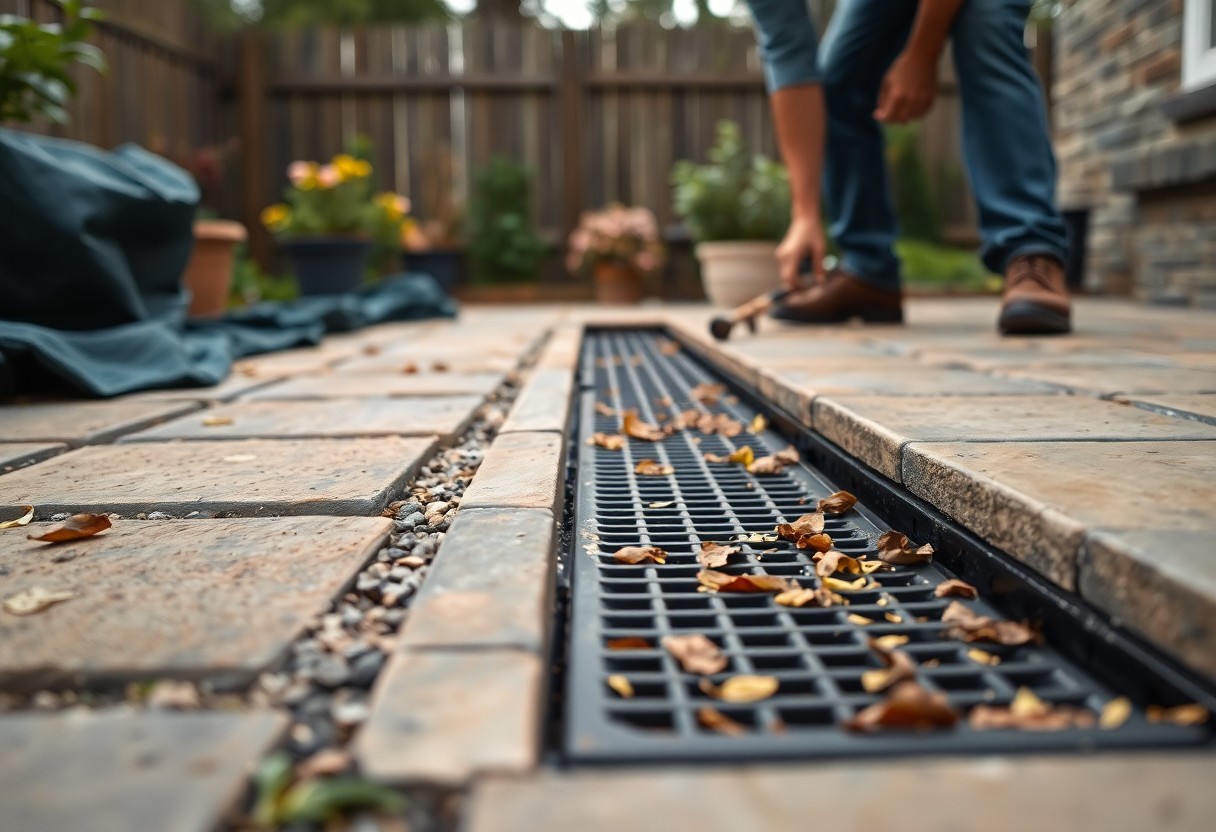
Many gardens suffer from poor drainage due to compacted clay, poor grading or blocked drains, and you need to act swiftly to protect plants and structures. Identify causes such as heavy soil or clogged downpipes and consider solutions like regrading, French drains, soakaways or raised beds. Standing water causes root rot, mosquito breeding and structural damage, while improved drainage boosts plant health and reduces maintenance, so plan interventions that suit your site.
Understanding Garden Drainage Issues
When your garden fails to drain, water sits where it harms roots and structures; a 1 m² area receiving 50 mm of rain delivers 50 litres, easily saturating compacted soil. Clay subsoils may have infiltration rates under 1 mm/hour while sandy soils commonly exceed 20 mm/hour, so soil type, slope and impermeable surfaces determine run-off. You should assess porosity and local topography to choose effective fixes rather than guesswork.
Common Causes of Poor Drainage
Heavy clay, repeated trampling and construction compact the soil, reducing pore space and causing surface water to persist; impermeable patios and poorly graded areas channel extra runoff into low spots. Blocked or broken drains, a raised water table after prolonged winter rain and dense thatch on lawns also promote soggy ground. You can often spot the cause by comparing permeable and paved areas after a storm.
Signs Your Garden Has Drainage Problems
Persistent puddles after moderate rain, muddy soil that stays wet for more than 48 hours and lawns dominated by moss are clear signs you have drainage issues; plants may wilt despite wet soil or show yellowing, root rot or dieback. You may also notice foul odour, sinkage or standing water close to foundations which indicates a major problem needing prompt action.
Carry out a simple percolation check by digging a 30 cm hole, filling it with water and timing the fall; if the level drops less than 25 mm in 24 hours infiltration is poor and options like subsoiling, a French drain or a soakaway should be considered. Mapping wet patches after a 20-50 mm storm helps pinpoint recurring low spots and avoids accidental damage to buried services when you dig.
Soil Types and Their Impact on Drainage
Soil texture governs pore size and flow: clay particles are under 0.002 mm and create tiny pores that hold water and slow percolation, while sandy particles (0.05-2 mm) produce large pores and rapid drainage; loam balances these properties so many garden plants thrive. You should match plant choice and interventions to texture-compacted clay risks waterlogging and root rot, while very free-draining sand can cause drought stress. The drainage behaviour of your soil dictates your remediation steps.
- soil types
- clay soil
- sandy soil
- soil amendment
- drainage solutions
| Aspect | Typical details |
| Soil categories | Clay, silty loam, loam, sandy loam, sand – most UK gardens are loam or clay-dominated |
| Particle size | Clay <0.002 mm; silt 0.002-0.05 mm; sand 0.05-2 mm |
| Hydraulic behaviour | Clay drains slowly (low permeability); sand drains rapidly (high permeability) |
| Common problems | Clay: standing water, compaction; Sand: rapid drying, nutrient leaching |
| Typical fixes | Improve structure with organic matter, use grit or raised beds, install French drains for persistent ponding |
Clay Soil vs. Sandy Soil
If you have clay, you will see slow infiltration and surface pooling after 10-30 mm of rain because pore throats are tiny; that creates a high risk of prolonged waterlogging. Sandy sites let 20-100 mm of rain per hour pass through quickly, so you must expect rapid drying and more frequent watering. You can test texture by feeling or using a simple jar test to quantify proportions before picking remedies.
Amending Soil for Better Drainage
You can improve heavy soils by incorporating 20-40% coarse organic matter – compost, well-rotted bark or leaf mould – and adding sharp grit or washed gravel at 10-30% by volume for urgent cases; avoid fine builder’s sand which binds with clay and makes a concrete-like mix, and note that deep cultivation to 15-30 cm helps redistribute amendments. The appropriate amendment mix depends on your soil test and drainage goals.
For persistent problems, combine amendments with structural solutions: create 30-60 cm-deep raised beds filled with a loam-based blend (50% topsoil, 30% compost, 20% grit) or install a simple gravel-filled trench or perforated pipe (French drain) to carry water away from foundations; when treating >50 m² consider professional soil surveys and, for garden-scale fixes, apply at least 2-5 cm of top-dressed organic matter annually to maintain improved porosity and nutrient-holding capacity.
Designing an Effective Drainage System
You should begin by mapping soil type, slope and existing low spots, then combine surface and subsurface measures tailored to your plot. For lawns and borders a fall of at least 1:100 (1%) helps runoff, while soakaways must sit no closer than 5 metres from foundations. Standing water against walls can increase the risk of subsidence on clay soils, so route flows to mains drains, soakaways or rain gardens sized at 5-10% of hard-surfaced catchments.
Surface Drainage Solutions
You can install linear channel drains and permeable surfacing to intercept water at source. Channel drains are typically 100-150 mm wide and suit drives and patios; position them at thresholds and grade to a fall of at least 1%. Alternatively, create a rain garden sized at 5-10% of the roof or paved area to detain runoff, using native moisture-tolerant plants and shallow detention of 10-30 cm to slow flows.
Subsurface Drainage Options
You may choose a French drain or perforated land drain to lower the water table: standard practice uses a 100 mm perforated pipe laid in 20-40 mm clean stone at depths of 300-600 mm, wrapped in geotextile and graded about 0.5-1% to a soakaway or sewer. In heavy clay go deeper and ensure outlets are frost-free and accessible for maintenance to avoid long-term siltation and root ingress.
For installation dig a trench 300-500 mm wide, bed the pipe on 50-100 mm of stone, then surround it with 100-150 mm of 20-40 mm clean aggregate and wrap the assembly in geotextile to prevent silt ingress. Fit inspection chambers every 10-15 metres and terminate at a soakaway sited at least 5 metres from your home; these measures protect performance and make rodding or jetting straightforward if blockages occur.
Maintenance Tips for Garden Drainage
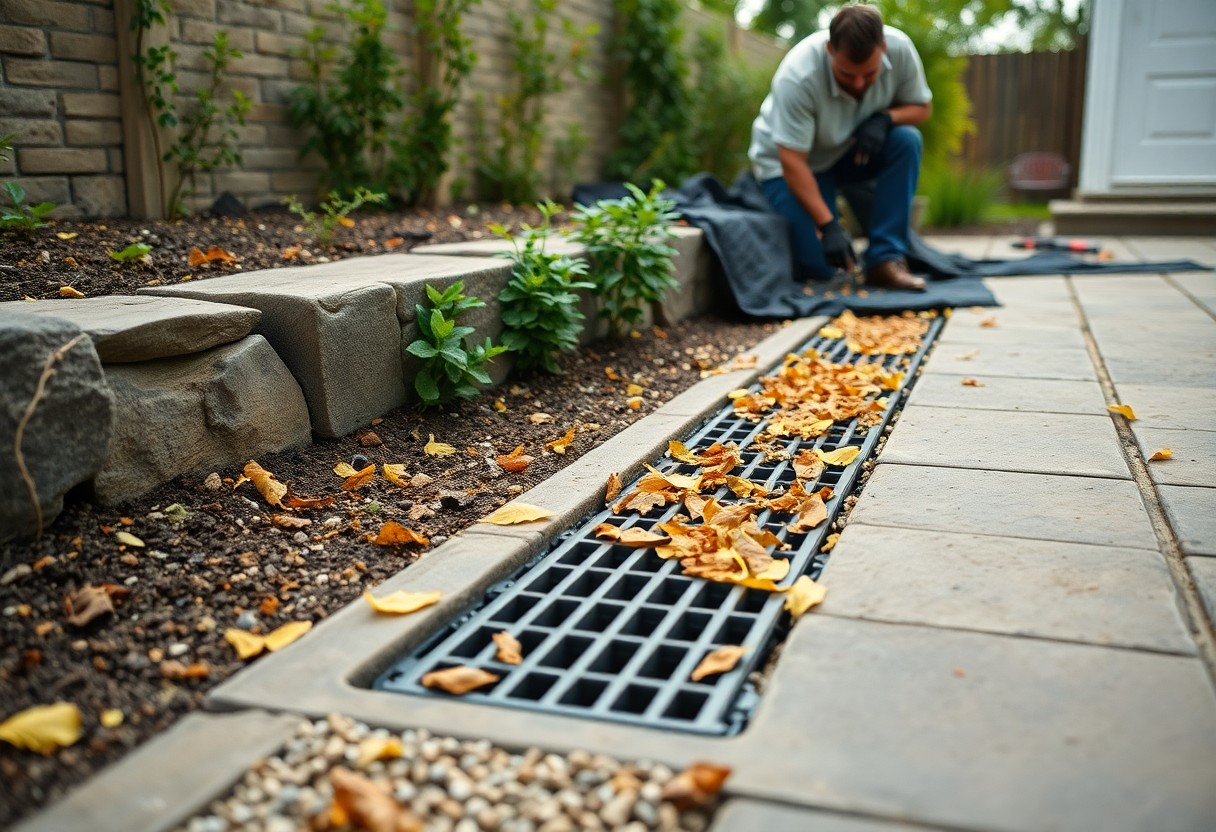
Maintain your garden drainage by scheduling routine checks, keeping soil levels and gradients appropriate, and preventing blockages with simple tools; practical measures such as clearing silt from channels and ensuring a functioning soakaway will reduce ponding and root damage. Use a checklist for monthly tasks and log repairs to track performance over time.
- Inspection: monthly visual checks of gutters, gulleys and channels
- Cleaning: remove leaves and silt, use drain rods where needed
- Protection: fit leaf guards and grit traps
- Repair: address collapsed pipes or poor falls within 48-72 hours
- Professional survey: CCTV every 2-3 years for buried drains
Regular Inspection and Cleaning
Inspect after heavy rain and at least once a month; you should clear debris from gulleys, unblock surface channels, and test gullies by pouring a bucket of water to check flow. Use a drain rod or pressure wash for stubborn silt, avoid corrosive chemicals, and call a specialist if water returns within minutes or foul odours appear.
Seasonal Considerations
In autumn clear leaves weekly during peak fall, and in winter protect exposed pipework from frost with insulation and check for ice blockages after deep freezes; adjust checks in spring for thaw-related subsidence and during summer drought assess soil compaction that reduces infiltration.
Assume that you clear gutters every 1-2 weeks during heavy leaf fall, fit leaf guards, insulate vulnerable pipework, create or repair a rain garden before the wet season, and schedule a professional inspection in late autumn to safeguard your garden drainage systems.
Plants That Tolerate Poor Drainage
Suitable Species for Wet Areas
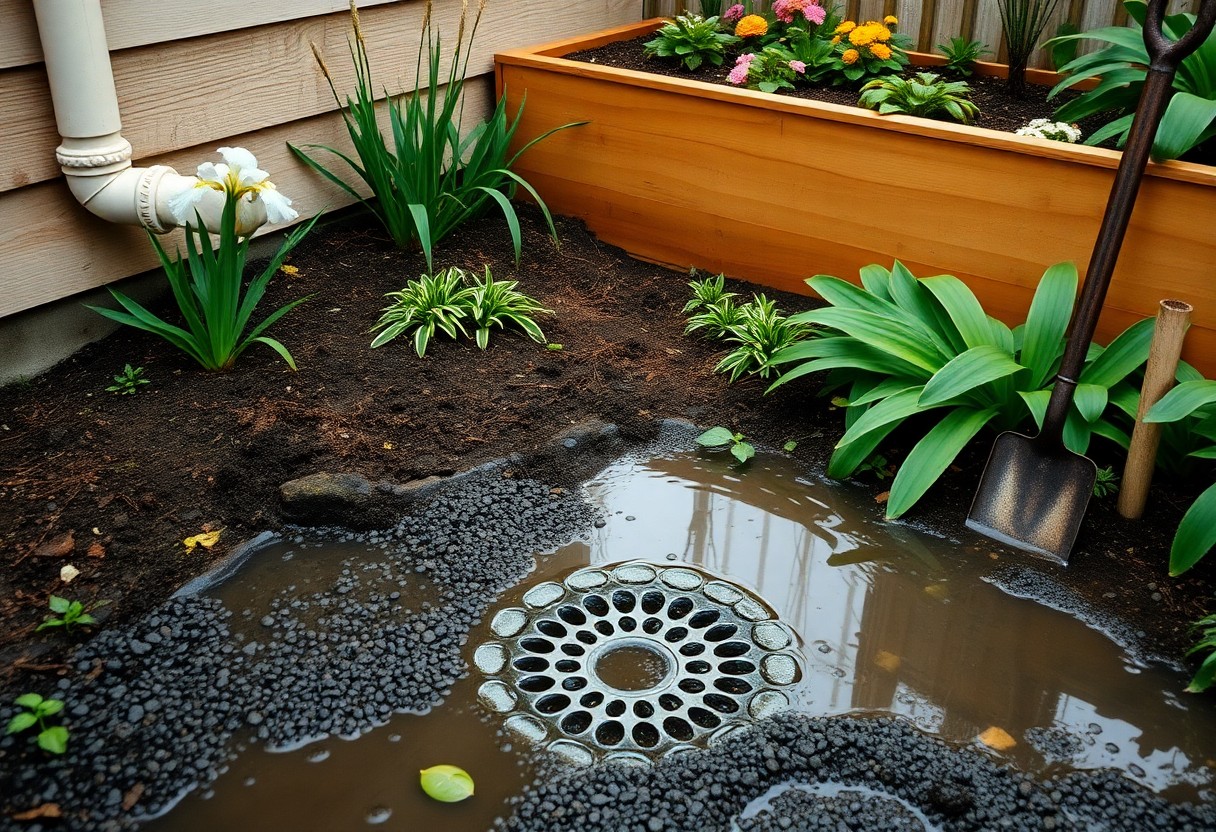
Examples you can plant include marginal species such as Iris pseudacorus (60-120 cm tall), Caltha palustris (10-40 cm) and sedges (Carex spp.), with Juncus effusus forming dense tussocks. Trees and shrubs like Salix (willow) and Alnus glutinosa (alder) tolerate permanent wetness and help stabilise banks. Space sedges 20-30 cm apart, herbaceous clumps 30-60 cm, and trees 2-4 m; avoid Lythrum salicaria in confined sites as it can spread aggressively.
Incorporating Drainage-Friendly Flora
Design features you should use include creating marginal shelves 15-30 cm deep to hold emergent plants and planting sedges at ~3-5 per m² to form a dense mat. Combine deep-rooters such as willow with moisture-loving perennials like astilbe and Rodgersia so roots draw down excess water year-round. Over time this mix reduces standing water and improves soil structure, while boosting biodiversity and filtering runoff.
When establishing beds, dig out 30-50 cm of soil and set gentle grades so water pools where intended; you might add a 5-10 mm gravel layer to encourage lateral flow. Plant shrubs 1-2 m apart and stagger clumps of 6-10 sedges or rushes to avoid gaps, mulching lightly with well-rotted compost for root health. Monitor for aggressive colonisers and control by cutting or removal in spring to keep the system functioning.
Professional Help for Severe Drainage Issues
When problems outstrip patching and temporary trenches, bring in professionals who use CCTV surveys, soil infiltration tests and level surveys to pinpoint causes such as a clay pan or collapsed land drain. Repairs commonly involve installing a 100 mm perforated pipe in a 300-500 mm gravel trench, building a soakaway or fitting a sump pump. Expect quotes from £500 to £10,000 depending on scope; prompt action prevents structural damage and long-term loss of use.
When to Call a Landscaper
Persistent pooling for more than 24 hours, new lawn subsidence, repeated DIY failures or water tracking towards your foundations are signs you should call a landscaper. They can regrade your garden to a 1-2% fall, install French drains, permeable paving or soakaways, and advise on planting changes. If water threatens paths, patios or the building fabric, expect professional intervention typically costing £500-£5,000 depending on complexity.
Understanding Drainage Systems
Surface drains, sub-surface land drains, soakaways and SUDS elements work together; a common fix is a 100 mm perforated pipe laid in a gravel-filled trench 300-500 mm deep with a fall of about 1:100-1:50. You should note that soakaways require adequate percolation and that correctly installed French drains and soakaways frequently cure chronic ponding within weeks, restoring usable garden areas.
You can verify site suitability with a percolation test: dig a 300 mm hole, fill with water and time the fall – drainage under 24 hours usually indicates a workable soakaway. Use geotextile to prevent silt ingress, choose 20-40 mm clean gravel and size pumps at around 1,500-3,000 litres/hour where regular pumping is needed. Maintain systems by annual jetting and CCTV checks every 5-10 years to avoid blockages and collapse.
To wrap up
Considering all points, you should assess soil type, slope and blocked outlets to pinpoint causes of garden drainage problems; addressing them may involve regrading, installing French drains or soakaways, improving soil structure with organic matter, unblocking and rerouting gutters, and scheduling maintenance or a professional survey to protect your plants, paths and property.
FAQ
Q: What are the common causes of waterlogging in a garden?
A: Waterlogging is commonly caused by heavy clay or compacted soils that do not allow water to percolate, a high water table, poor site gradient or negative fall towards the house, blocked or undersized drains and gutters, large areas of impermeable surfacing (patios, drives), and prolonged or heavy rainfall. Root obstruction from tree roots and damaged buried pipes can also impede drainage and create persistent wet patches.
Q: How can I improve drainage in heavy clay or compacted soil?
A: Improve clay or compacted soil by increasing organic matter (well-rotted compost or leaf mould) to enhance structure and porosity, and by avoiding working the soil when it is very wet. Where practical, perform deep aeration or subsoiling to relieve compaction, or create raised beds to lift planting into free-draining soil. For larger problems, install a subsurface drainage solution such as a French drain or perforated pipe leading to a soakaway, and consider planting deep‑rooting species to help break up heavy layers over time.
Q: When should I choose a French drain, a soakaway or a channel drain?
A: Choose a French drain (gravel-filled trench with perforated pipe) to intercept and convey groundwater along a linear route, for example behind a retaining wall or across a soggy lawn. Use a soakaway (pit filled with stone) to dispose of concentrated roofwater or diverted surface run-off where subsoil is free-draining and there is enough distance from foundations. Fit channel drains (surface gulley drains) where surface water collects on hard landscaping such as patios or driveways. Sizing, siting and fall are important; consult building regulations and consider professional advice for systems that handle significant volumes or are close to structures.
Q: How do blocked or inadequate gutters and downpipes affect garden drainage and what fixes work best?
A: Blocked or undersized gutters cause overflow at the eaves, concentrating water at the base of walls and saturating adjacent soil. This leads to surface erosion, basement or cellar damp and saturated planting beds. Fixes include regular cleaning, fitting leaf guards, increasing gutter/downpipe capacity, extending downpipes away from foundations to soakaways or drainage channels, installing rainwater harvesting or diversion into permeable areas, and ensuring clear falls on all runs so water is carried away effectively.
Q: What landscaping and planting strategies help manage persistent wet areas?
A: Use a combination of engineering and planting: create rain gardens or swales to capture and slow run-off, use permeable paving and gravel drives to reduce runoff, and introduce raised beds for sensitive plants. Select moisture-tolerant species (e.g. iris, astilbe, meadowsweet, willow, alder) for permanently wet spots, and establish deep-rooted shrubs or trees where appropriate to improve uptake. Maintain lawn aeration, avoid compaction by limiting heavy traffic on wet ground, and schedule regular maintenance of drains and gutters to keep engineered solutions functioning.