
cost estimates for a new kitchen vary from around £5,000 for a basic refit to £50,000+ for a bespoke scheme, so you should set a clear budget and include design, appliances, labour and contingency for issues; hidden problems such as rewiring or asbestos can be dangerous and costly, while sensible choices can be a positive… How Much Does a New Kitchen Cost?
cost estimates for a new kitchen vary from around £5,000 for a basic refit to £50,000+ for a bespoke scheme, so you should set a clear budget and include design, appliances, labour and contingency for issues; hidden problems such as rewiring or asbestos can be dangerous and costly, while sensible choices can be a positive investment that increases your home’s value.

Factors Influencing Kitchen Costs
Costs swing widely: a basic refit may be as little as £5,000, while bespoke open‑plan schemes commonly exceed £40,000-£60,000. You should assess layout changes, appliance specification and finishes, because moving plumbing or removing walls can add thousands; replacing floors and extending services compounds the spend. Examples show a mid‑range 20 m² refit often totals three figures in the tens of thousands. Knowing these variables helps you plan a realistic budget.
- Size
- Type of materials
- Labour and installation
- Appliances
- Design complexity
- Location
Size of the Kitchen
Smaller kitchens (around 5-8 m²) often cost £5,000-£10,000 for a full mid‑range refit, while open‑plan spaces of 20-30 m² can run £20,000-£50,000+ because of extra cabinetry, longer worktops and additional flooring. You pay more per square metre when services need extending or bespoke joinery is required, and doubling the floor area frequently increases the project cost by more than double due to increased labour and materials.
Type of Materials
Material choice drives large swings: laminate worktops can start at £50-£150, solid‑wood doors add £150-£400 per unit, and engineered stone or granite worktops commonly cost £300-£600+ per linear metre. You can mix affordable carcasses with premium surfaces to control spend while achieving a high‑end look.
Cabinet carcasses matter: stock MDF keeps costs down, whereas bespoke hardwood, tall units or integrated tall appliances raise both material and fitting time; soft‑close fittings and dovetailed drawers typically add £100-£300 per run. You’ll also face extras such as upstands, edging and splashbacks, and specifying integrated high‑end appliances can add £2,000-£10,000 to the total.
Labour and Installation Fees
Labour and installation commonly account for 25-40% of the total cost, covering fitters, plumbers, electricians and plasterers. You may be charged per day (typically £150-£350) or per job; complex works like moving gas, rerouting drains or structural alterations push labour costs up rapidly. You should also budget for skip hire, scaffold and snagging time, which add several hundred to a few thousand pounds.
Project management can add an extra 5-10%, and unforeseen works-rot, asbestos removal or relocated sewer connections-can incur £500-£5,000 more depending on severity. You should obtain itemised labour quotes and confirm whether suppliers include installation, since retailer‑bundled installs may be cheaper than separately contracted bespoke fitters.
Average Cost Breakdown
On average, your new kitchen splits roughly: cabinetry and worktops 30-40%, appliances and fixtures 10-20%, labour 20-35%, plumbing/electrics 5-10%, and finishing/contingency 5-10%. For a £15,000 project that equates to ~£4,500-£6,000 on cabinets, £1,500-£3,000 on appliances, and labour £3,000-£5,250. High-end projects shift these proportions-bespoke cabinetry and premium appliances can push cabinetry above 45% of the budget.
Cabinets and Countertops
Cabinets and worktops define both use and value: flat-pack units commonly cost £2,000-£5,000, mid-range fitted kitchens £6,000-£12,000 and fully bespoke carpentry £12,000+. Laminate worktops are typically £50-£150, solid wood £300-£800 and quartz or granite £400-£2,000 depending on run length and complexity. Given their impact on layout and resale, expect to spend 30-40% of your budget here.
Appliances and Fixtures
Appliances and fixtures usually account for 10-20% of your spend: a basic appliance suite (oven, hob, fridge-freezer, dishwasher) can be £800-£1,500, mid-range £2,000-£4,500 and premium over £5,000; taps, sinks and lighting add £200-£1,000. If you have gas appliances, they must be fitted by a Gas Safe engineer, which can add fitting charges of £100-£300 per item.
Energy ratings matter: switching to A++/A+++ appliances can reduce running costs by about £50-£150 a year per major item, potentially offsetting higher purchase prices over time. Integrated units save space but often cost 10-20% more and complicate future replacement. Extraction and ducting typically range £150-£600, while electrical upgrades or extra circuits can add £300-£1,200. Prioritise energy-efficient models and qualified installation to avoid safety, warranty and long-term cost issues.
Budgeting for a New Kitchen
Setting a Realistic Budget
Begin by mapping costs: cabinets and joinery often take 30-40% of your spend, labour around 25-35%, appliances 10-15% and worktops 10-15%. Plan realistic ranges: a basic fitted kitchen typically costs £5,000-£10,000, mid-range £10,000-£20,000 and bespoke schemes £20,000+. Always include a 10-20% contingency for surprises such as rewiring or structural work to avoid painful overruns.
Financing Options
Consider staged funding: use savings, a personal loan, 0% retailer finance, or remortgaging. Retailers often offer 0% finance for 12-36 months on major purchases; personal loans typically range around 4-15% APR depending on credit, while some credit cards charge over 20% APR. You should compare total interest, arrangement fees and early repayment charges before deciding.
For example, financing a £12,000 kitchen with a 5‑year personal loan at 7% APR would be about £237 per month, totalling roughly £14,200 paid and ~£2,200 in interest; 0% deals avoid interest but can include deferred fees. If you remortgage or take a secured loan you may get lower rates but accept the risk to your home. Get written quotes and run a repayments comparison before you commit.
Cost-Effective Remodeling Tips
When updating your kitchen, target high-impact, low-cost changes: refacing doors often costs 50% less than replacements and swapping handles can refresh a room for under £200. Combine a repaint with energy-efficient LED lighting to save on running costs; labour typically represents 20-35% of your project. Avoid DIY gas work as it risks safety and compliance. After you audit salvageable appliances and surfaces you can typically reduce the total spend by 10-30%.
- Cabinet refacing – replace doors not carcasses to save up to 50%.
- Laminate worktops – cost from £30-£200 per metre versus quartz from £200+ per metre.
- Appliance resale – sell or refurbish existing ovens and hoods to recoup costs.
- Lighting upgrade – LED downlights cost £20-£50 each and cut energy bills.
- Labour planning – schedule trades to avoid idle days and extra charges.
DIY vs. Hiring Professionals
You can save roughly 20-40% by doing painting, simple tiling and cabinet assembly yourself, but always hire qualified trades for electrics, gas and structural changes because mistakes can cost thousands. Typical electricians in the UK charge around £200-£300 per day or £25-£45 per hour; plumbers and gas engineers are comparable. Get written quotes and factor in your time, skill level and the cost of potential rework before choosing DIY.
Choosing Affordable Alternatives
Opt for laminate or timber veneers instead of stone to shave thousands; laminate worktops start around £30-£200 per metre while quartz often exceeds £200 per metre, and refacing cabinets can save you up to 50%. You can also select mid-market appliances that balance warranty and price, typically cutting initial outlay by about 20% versus premium brands.
Compare lifespans to calculate true value: laminate commonly lasts 10-15 years with good care while quartz and granite often exceed 25 years, so work out cost per year – for example a £400 laminate over 12 years is ~£33/year versus a £3,000 stone option at £120/year. You should test samples in your kitchen lighting to avoid costly colour mismatches and obtain at least three quotes for supply and fitting.
Regional Cost Variations
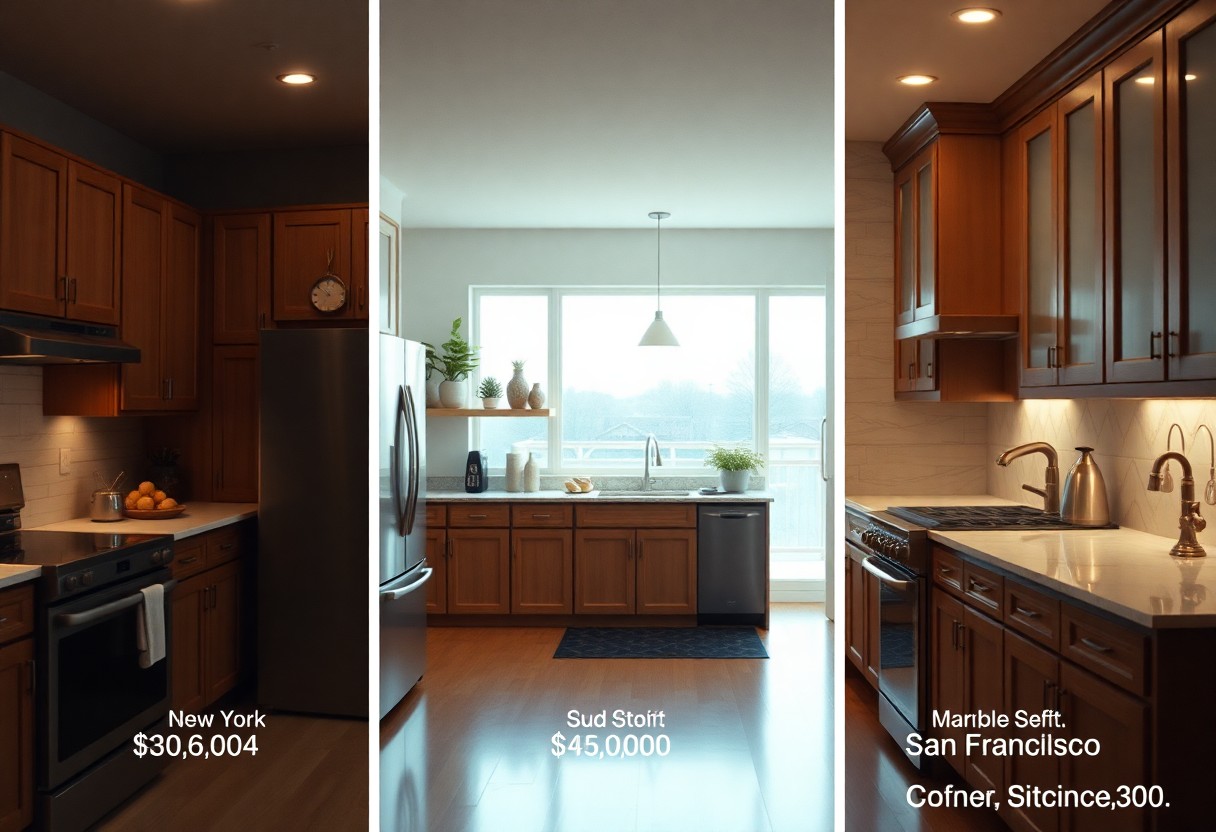
Costs swing significantly by location: in London and the South East you often pay 15-35% more for labour and services than in provincial towns, while remote Highlands or islands can incur hefty delivery premiums. If you’re budgeting, expect labour and trades to be the biggest variable, with day rates differing by up to £100-£150; this alone can add £2,000-£6,000 to a typical mid-range fit-out depending on project length and access.
Urban vs. Rural Pricing
In major cities like London, Manchester or Birmingham, you’ll face higher permit, parking and labour charges; installers in London commonly charge around £200-£300 per day versus £120-£180 in rural areas. A mid-range £15,000 kitchen in a market town can reach £18,000-£20,000 in the capital primarily because of higher labour and logistical costs, so factor 10-30% uplift for urban projects.
Regional Material Costs
Material prices vary with local supply and demand: oak cabinetry or hardwood worktops often cost more where timber mills are scarce, while laminate and locally manufactured units remain cheaper. Quartz worktops typically range £800-£2,000 for a standard kitchen, granite £500-£1,500 per job, and delivery to remote sites can add £300-£800, so check local availability before committing.
Further, you should consider regional availability and lead times: reclaimed timber or local stone can reduce costs by around 10-30% and support faster delivery, whereas ordering imported cabinetry may add 4-12 weeks plus expedited shipping fees if you need it sooner. Local trades often have better rates on familiar materials, so sourcing near you can both cut price and risk of delays.
Planning Your Kitchen Layout
Measure your space precisely and map zones for cooking, prep, storage and dining; accurate measurements cut costly surprises. You should sketch appliance positions, note plumbing and electrics, and factor relocation costs – moving services typically add £500-£2,000. If you skimp on planning you risk expensive changes later, so use floor plans or a designer to save time and avoid costly mistakes.
Importance of Flow and Functionality
Efficient flow reduces steps and the time you spend cooking; aim for a work triangle with legs of 1.2-2.7 metres and a total length between 4-7.9 metres. You should place sink, hob and fridge to minimise cross‑traffic and ensure at least 1.2 metres of circulation space in busy zones. Avoid locating a hob next to flammable window treatments – that is dangerous and increases fire risk.
Common Layout Designs
Galley suits narrow rooms and maximises workspace on two parallel runs; L‑shape favours open‑plan living and dining adjacency; U‑shape gives abundant storage; single‑wall fits studios; islands and peninsulas add prep space and seating. Islands generally need about 1.2 metres clearance each side or circulation becomes restricted. Match layout to room size, traffic patterns and how you use the kitchen daily.
For example, a 3.5×2.4 metre galley can accommodate two 600mm‑deep runs with a 1.2 metre central walkway, while an island usually requires a room at least 3.4 metres wide. If you cook daily for four, provide a continuous 600mm of worktop either side of the hob and dedicated tall units for pantry storage. Adding an island with services often costs £1,500-£6,000 but greatly boosts workspace.
Summing up
Upon reflecting, you should budget from roughly £5,000 for a basic replacement to £30,000+ for a high‑end bespoke kitchen, with typical mid‑range projects around £10,000-£20,000. Your final cost depends on size, layout changes, materials, appliances and labour, so factor in a 10-20% contingency for surprises; sensible choices on finishes and appliances help control spend while protecting resale value.
FAQ
Q: How much does a new kitchen typically cost in the UK?
A: A straightforward kitchen refresh can cost from around £2,000-£7,000. A new fitted kitchen typically ranges from £5,000-£20,000 depending on size and specification: basic fitted kitchens from about £5,000-£10,000, mid-range £10,000-£20,000, and high-end or bespoke installations from £20,000-£50,000+.
Q: What are the main cost components and typical price ranges?
A: Major components are cabinets and doors (often 30-40% of the total), worktops, appliances, labour, and trades (plumbing, electrics, plastering, tiling, flooring). Typical ranges: cabinets and doors £1,500-£10,000+, worktops (laminate £100-£500; solid wood £300-£1,500; quartz/granite £800-£2,500+), appliances (per item £200-£2,000+), fitting labour and trades combined £1,000-£6,000+. Add VAT (usually 20%) and any designer fees or delivery charges.
Q: What hidden or extra costs should I plan for?
A: Allow for contingency of 10-20% for unexpected issues (damp, rot, uneven floors). Structural alterations (removing walls, beam installation) can cost several thousand pounds and may need structural engineer reports and building control. Re-routing gas, water or electrics, and upgrades to consumer units add cost. Waste removal, scaffold hire, floor preparation, and decorator finishing are additional. Permissions or party-wall agreements may be needed for major works.
Q: How can I reduce the total cost without sacrificing quality?
A: Keep existing layout and plumbing positions to avoid expensive pipe or waste moves. Choose off‑the‑shelf or standard-sized units rather than bespoke, and opt for economical worktops like good‑quality laminate. Buy appliances in sales or as appliance packs, and limit structural changes. Get multiple quotes, hire an experienced fitter for efficiency, and plan a realistic schedule to avoid costly delays.
Q: How long will a kitchen project take and how are payments usually structured?
A: Timings: a cosmetic refresh may take 1-2 weeks; a full refit typically 3-8 weeks; major structural or bespoke projects can take 8-12 weeks or more including lead times. Payment is often staged: a deposit on order (commonly 20-50%), further payments on delivery of units or milestones, and a final payment on completion. Check warranties, written quotes with itemised costs, and agree a timeline and snagging procedure before work starts.