
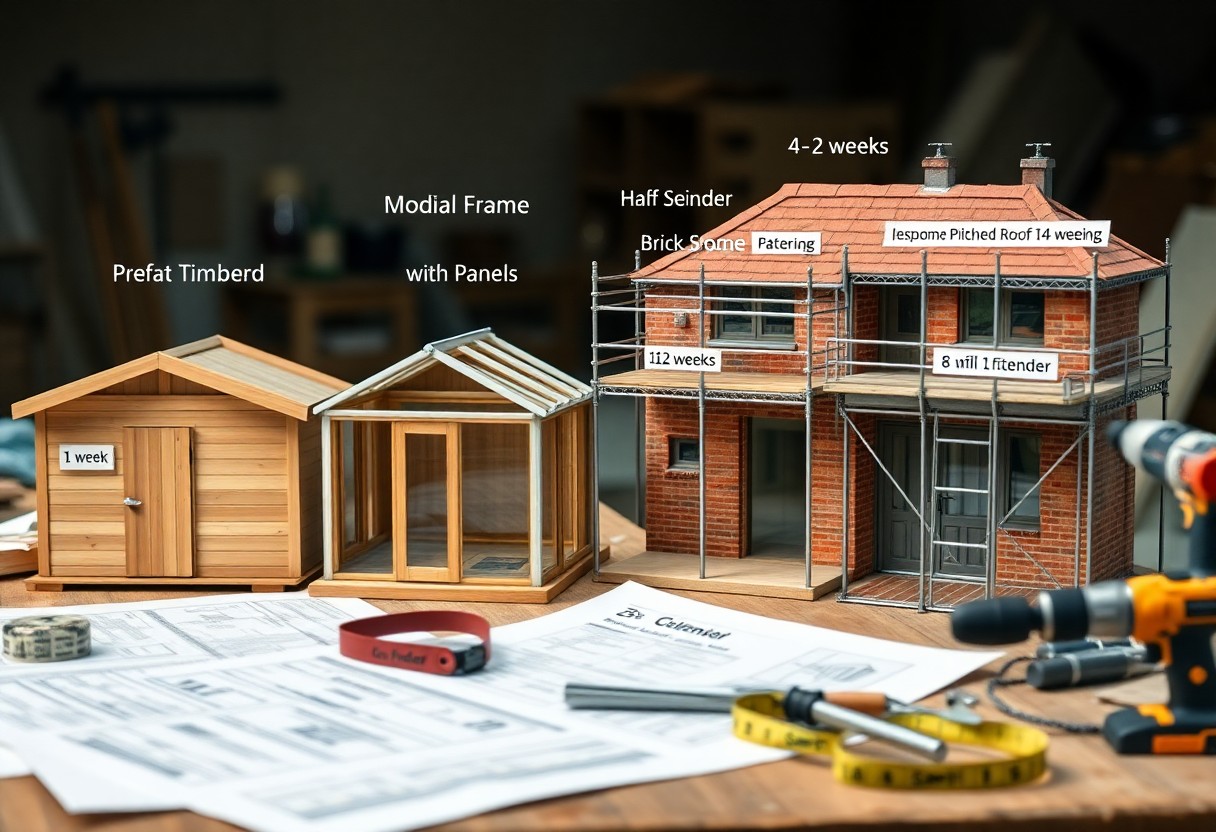
You can typically expect a garden room to take 2-8 weeks from groundwork to finish; size, foundations, insulation and bespoke features can extend this. If your project involves electrics or plumbing or requires planning permission, professional installers are safer because poor work can be dangerous. Choosing prefabricated panels and clear schedules speeds delivery and yields a high-quality, usable living space that enhances your home.
Factors Influencing Construction Time
Several variables shape your build schedule: site preparation, access, trades availability and finishing level. Typical on‑site times span 2 days for modular installs up to 12 weeks for bespoke projects, while foundations and utilities commonly add 1-3 weeks. Weather and supplier delays often cause further slippage. Recognizing that planning, design and supply chain issues commonly shift schedules, you should allow contingency time.
- Design Complexity
- Permitting and Regulations
- Materials Used
Design Complexity
When you pick a simple pre‑fab pod, on‑site assembly can be 1-3 days, whereas architect‑led, bespoke rooms frequently require 6-12 weeks for manufacture and fit‑out. Complex rooflines, large glazed façades or integrated services increase survey, specialist labour and testing time, and adding en‑suite plumbing or underfloor heating typically tacks on an extra 2-4 weeks.
Permitting and Regulations
If you need planning permission or building‑control approval, expect varied lead times: minor works may clear in 2-8 weeks, while full applications, listed‑building or conservation‑area cases often take 8-12 weeks or longer. You should factor potential consultation delays and conditional approvals into your programme.
Building‑control inspections and compliance certificates are often issued in stages; routine inspections can be booked within 1-2 weeks, but complex structural calculations or drainage approvals can extend approvals by several weeks. Failing to secure required approvals risks enforcement notices or costly remedial work, so you should submit accurate drawings, appoint competent installers and allow extra time for replies and minor revisions.
Materials Used
Your material choices directly affect lead times: standard timber frames and common cladding typically arrive within 1-3 weeks, whereas specialist steel sections, bespoke glazing or hardwoods can take 6-10 weeks from order to delivery. Off‑the‑shelf components speed progress; custom finishes extend it.
Supply‑chain factors amplify this: manufacturers often run batch schedules, so ordering early can shave weeks off wait times. Seasonal demand, import delays and minimum order quantities may push lead times beyond quoted dates, and you should plan for longer lead times on bespoke items to avoid site idling and extra labour costs.
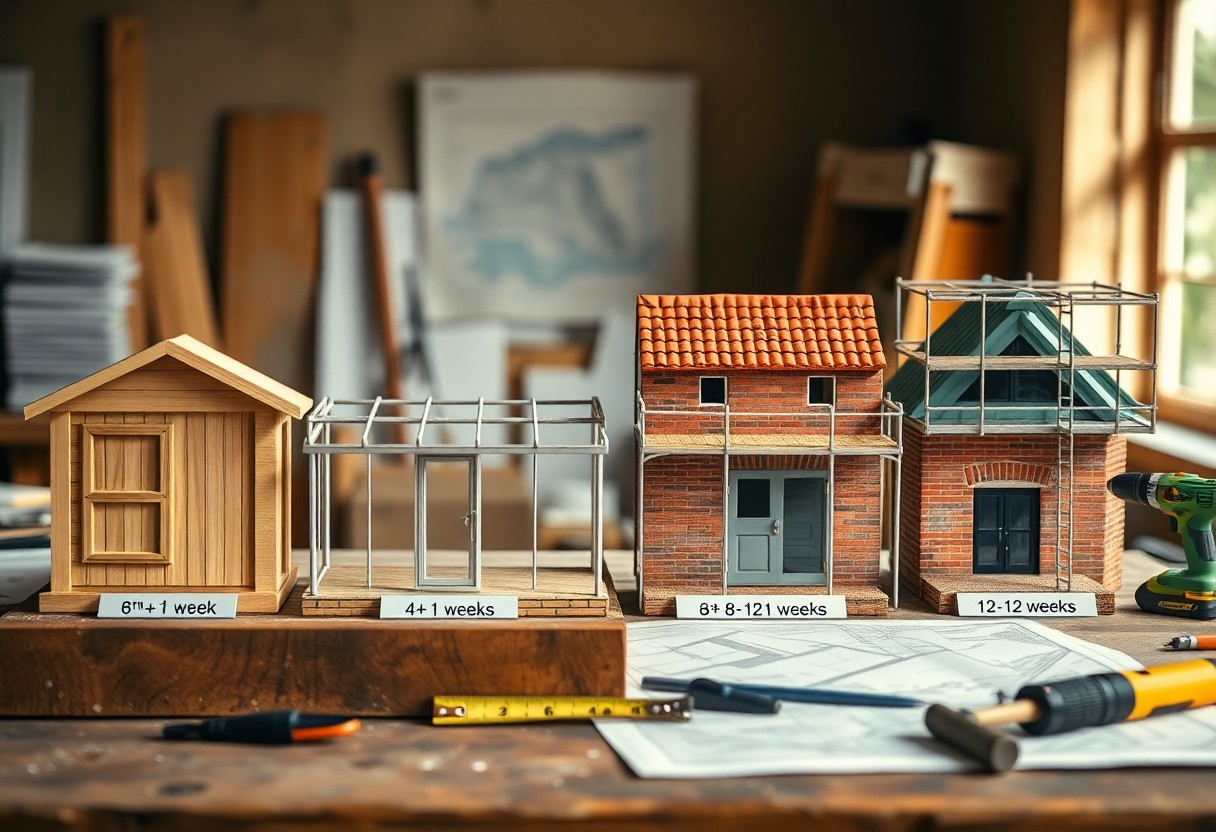
Typical Timelines for Different Styles
Timelines depend on style and scope: prefabricated units often have factory lead times of 2-12 weeks and can be installed on-site in 1-3 days, while custom projects typically need 2-8 weeks for detailed design, 4-12 weeks for planning/building regs and 4-16 weeks on-site. Groundworks commonly add 1-3 weeks, and planning consent can extend schedules by months. For instance, a 3‑metre pod was delivered in five weeks and fitted in a day; a bespoke 6×4 metre studio took 18 weeks. Expect site-related delays.
Prefabricated Garden Rooms
Factory-built panels reduce on-site work: typical lead times are 2-10 weeks for basic models and 6-12 weeks for high-spec units, with installation usually taking 1-3 days for a 3×3 metre unit. You should allow 1-2 days for base preparation if using a concrete pad, though some suppliers include this. Delivery can be held up by access problems; access issues are the most common delay. Main benefit is fast installation and predictable costs.
Custom-Built Garden Rooms
Bespoke builds require full site surveys, structural drawings and coordination of trades; you can expect 2-8 weeks for design and approvals, then 6-16 weeks on-site depending on complexity. A 6‑metre by 4‑metre bespoke studio commonly takes 12-18 weeks; one project where poor ground conditions added three weeks and £3,000 illustrates risk. Greater flexibility comes with higher lead times and the need to budget for unforeseen groundworks.
On-site sequencing typically follows foundations, frame, roofing, services, insulation and finishes; you should plan trade windows and allow a contingency of 10-20% or at least 2-4 weeks for weather or hidden issues. Contracts with staged payments tied to milestones protect you, and a fixed-price agreement helps control costs. In one case unknown drainage required a four-week dig and cost an extra £4,200, so factor in a time and cost contingency and insist on detailed site surveys.
Seasonal Considerations
Best Time of Year to Build
If you can choose, aim for late spring to early autumn (May-September). Ground is drier so foundations and drainage work faster, deliveries are more reliable and trades are more efficient; you can often cut the schedule by about 1-2 weeks versus winter. For a typical 3×3 m garden room, prefab assembly can take 2-3 days while groundwork and finishes usually total 1-4 weeks.
Weather Impacts on Timeline
Heavy rain hampers excavations and prolongs concrete curing, which needs an initial strength gain over roughly 7 days, so wet periods create knock-on delays. Frozen ground pushes groundwork out, high winds above 30 mph can stop crane lifts for panels, and persistent humidity risks timber movement that affects final fit.
To limit weather delays you can opt for screw piles instead of poured foundations, use temporary covers and heated curing blankets, or schedule groundwork in drier months; expect winter builds (Nov-Feb) to typically add 2-4 weeks, while summer work may reduce total time by up to 25%.
Project Management and Scheduling
Importance of Planning
Plan a detailed schedule that maps tasks, lead times and inspection windows; for example, allow 4-6 weeks for bespoke glazing, 1-2 weeks for foundations, and a 10-15% time buffer for unforeseen issues. Use a simple Gantt chart to sequence groundworks, electrical first-fix and cladding, and book building control visits early so you avoid overlap and idle labour costs. When you pre-order long-lead items you often shave off weeks from the build.
Common Delays and How to Avoid Them
Expect delays from weather, supply chain problems and unexpected ground conditions; heavy rain can halt external works for several days to two weeks, while bespoke windows commonly have 6-8 week lead times. Mitigate risk by pre-ordering, booking inspections in advance and holding a 10-15% contingency in your schedule and budget so you aren’t forced into costly rush charges.
For greater protection, commission a basic ground investigation (£300-£500) to identify drainage or buried services that can add 1-3 weeks and thousands of pounds if missed. Choose local suppliers to cut transit delays, arrange temporary on-site storage for materials, and agree clear milestones with contractors-include liquidated damages or a completion bonus in contracts to align incentives. In one case study a homeowner who pre-ordered cladding and windows saved four weeks; another who skipped a soil survey faced a £2,000 drainage fix and a three-week delay.
DIY vs. Professional Builders
Time Expectations for DIY Projects
If you tackle the build yourself, a simple 3x3m garden room typically takes between 8-20 weeks working evenings and weekends (10-20 hours/week), while full‑time DIY can shorten that to about 3-8 weeks. You must factor in material lead times of 2-6 weeks, site preparation, drainage and potential planning delays. Structural work and electrics often require qualified input; if you attempt them unauthorised you risk safety issues and costly rework-avoid uncertified electrical or load‑bearing alterations.
Advantages of Hiring Professionals
Engaging a professional team usually reduces on‑site time to 1-6 weeks: modular systems often take 1-3 weeks on site after a 2-6 week factory lead time, while bespoke projects run 6-12 weeks. Contractors coordinate trades, secure building‑regulation compliance and provide warranties, so you gain predictable schedules and fewer hidden costs. You also benefit from project management, inspections and certified electrics and insulation, which lower the chance of delays or safety issues.
For example, a reputable installer delivered a 4m×3m insulated garden room in 10 days on site following a 4‑week factory build and supplied a 10‑year guarantee; the same DIY effort often exceeded cost and time estimates after remedial work. You should weigh typical professional costs (£8,000-£25,000 depending on specification) against the risk of mistakes, potential fines for non‑compliance and the long‑term value of warranty and energy efficiency.
Tips for a Smoother Build Process
Allow realistic timelines: a typical timber-framed garden room takes 4-8 weeks from groundwork to finish, factory-built pods often install in 2-4 weeks, while bespoke builds with plumbing, electrics and foundations can stretch to 8-16 weeks. You should schedule deliveries, site access and a 1-2 week contingency for bad weather, and request phased milestones in contracts. Unexpected groundworks and planning delays are common causes of overruns.
- Garden room
- Build time
- Planning permission
- Foundations
- Insulation
- Contractor
- Utilities
- Permits
Preparation and Research
You should check permitted development rights and consult planning if your design exceeds 2.5m height or sits within 2m of a boundary, commission a topographical or drainage survey for sloping sites, and obtain three written quotes. Budget a 10-15% contingency; for a 12m² basic room expect about £6,000-£10,000, while high-spec fit-outs commonly reach £15,000+. Early decisions on finishes cut delays.
Communication with Contractors
Set clear milestones, a payment schedule and a signed contract with drawings and start/completion dates, and agree a retention of 5-10% until snagging is complete. Hold weekly site checks, collect photographic progress and demand proof of insurance and Public Liability cover to reduce disputes and schedule slippage.
Require formal change orders for variations and price them before work proceeds, since an unpriced change can add 3-7 days and £200-£1,500 depending on the trade. Use a single communication channel (email plus a shared folder or a builder app) so you can track decisions and invoices; a Surrey build I inspected saved ten days by finalising finishes in week one. Highlight no written contract as the most dangerous omission and retain final payment until defects are fixed. This gives you clear recourse and keeps the project on schedule.
Final Words
Upon reflecting on timescales, you should expect a simple off-site or modular garden room to be erected in 1-3 weeks once materials arrive, whereas bespoke or brick-and-mortar rooms – including foundations, internal finishes and any planning permission – commonly take 4-12 weeks; your site access, utilities and the weather can extend that timeframe.
FAQ
Q: How long does it typically take to build a small garden room from start to finish?
A: For a small, prefabricated garden room on a prepared site the on-site build can take 2-7 days for installation and basic finishes. If a concrete slab is required the groundworks and curing add about 7-14 days. Allow 2-6 weeks overall to include site preparation, installation of electrics and heating, and internal finishes; times extend if bespoke joinery or specialist services are needed.
Q: What is the timeline for a bespoke brick or timber-framed garden room?
A: A bespoke build on traditional foundations typically takes 4-12 weeks on site depending on size and complexity. Groundworks and foundations usually take 1-3 weeks, the main build 2-6 weeks, and internal fit-out a further 1-3 weeks. Complex designs, high-end finishes, or late changes can push this toward 3-4 months.
Q: How long do planning permission and building regulations affect the schedule?
A: Planning permission (when required) commonly takes around 8 weeks for a decision, though consultations or amendments can extend this. Permitted development rights remove the need for planning in many cases, shortening lead time. Building regulations approval can take several weeks for plans approval; inspections are required during the build and a final certificate is issued once works comply. Allow an extra 4-12 weeks in the programme to cover approvals, party wall agreements and any neighbour negotiations.
Q: Which site and supply factors most influence build duration?
A: Key factors are ground conditions (poor ground, high water table or contamination add time), access for deliveries and machinery, the choice of foundation (concrete slab versus piled or screw foundations), availability of trades and materials, and utility connections (electricity, drainage and broadband). Weather and seasonal constraints (for example, ecological survey windows) also affect scheduling and can cause delays of days to months.
Q: How can I shorten the build time without compromising quality?
A: Choose a high-quality modular system to reduce on-site time; have site surveys, utility quotes and approvals organised before mobilisation; select standardised finishes to avoid manufacturing lead times; appoint an experienced contractor with a clear programme; pre-order long-lead items; and schedule inspections and utility connections early. Good site access and clearing away potential obstructions also speed work and reduce labour delays.