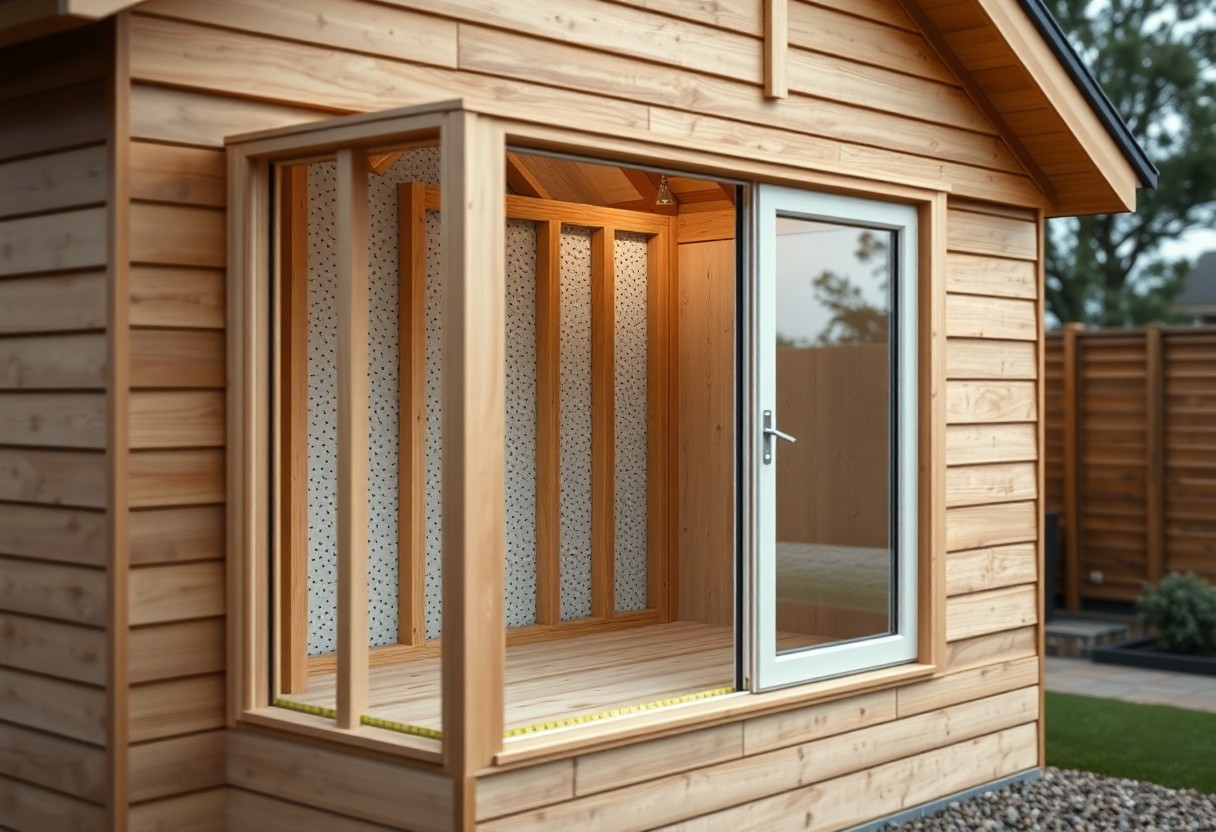
Many garden rooms can lose heat rapidly, so you should select insulation that balances thermal performance, moisture control and fire safety. For reliable results you should consider PIR boards or mineral wool for high thermal resistance, closed-cell spray foam for sealing joints, and vapour barriers to prevent condensation and mould. Be aware of fire risk… Best Insulation for Garden Rooms
Many garden rooms can lose heat rapidly, so you should select insulation that balances thermal performance, moisture control and fire safety. For reliable results you should consider PIR boards or mineral wool for high thermal resistance, closed-cell spray foam for sealing joints, and vapour barriers to prevent condensation and mould. Be aware of fire risk with some materials and choose products with appropriate UK fire ratings to protect your comfort and lower your energy bills.
Importance of Insulation in Garden Rooms
Proper insulation reduces heat loss through walls, roof and floor; for instance, upgrading from no insulation to 100mm mineral wool (λ≈0.04 W/mK) gives an R-value around 2.5 m²K/W, cutting heating demand by roughly 30-50% depending on airtightness. You also reduce condensation and the risk of mould, protecting timber and finishes-preventing condensation-related decay-while improving acoustic privacy and extending the months the space is comfortable to use.
Energy Efficiency
PIR boards are highly effective: at λ≈0.022 W/mK a 50mm board yields R≈2.27 m²K/W, so using PIR in the roof and walls can help you achieve U-values in the region of 0.18-0.25 W/m²K on compact garden rooms. You can often recover the cost within 3-6 years when replacing electric heating; sealing joints and avoiding thermal bridges is important to realise those savings.
Comfort and Usability
Good insulation stabilises internal temperatures so you can use the room year-round without constant heating; for example, a 3×4m studio insulated to U≈0.2 W/m²K will hold heat far longer than an uninsulated space. Warmer surfaces cut surface condensation and reduce mould risk, while internal linings and acoustic layers improve speech privacy-making the room both usable and healthier for work or leisure.
Choose insulation based on how you use the room: if you heat intermittently, combine thicker, high-performance insulation (e.g., 100mm PIR or 100-150mm mineral wool) with airtight detailing and mechanical ventilation with heat recovery (MVHR) to avoid stale air. You should insulate the floor (rigid board under screed) and specify double‑glazed windows with U≈1.4-1.6 W/m²K to prevent cold feet and draughts; these measures keep temperatures even and lower humidity-related issues.
Types of Insulation Materials
When choosing insulation for your garden rooms, compare R-value, moisture performance, installation difficulty and cost; you should weigh long‑term energy savings against upfront price. Use the table and bullet points below to match each material to your build, and note any health or fire considerations before you install.
| Fiberglass | Affordable, R-value ~2.2-2.7/inch, can irritate skin and lungs during installation; fits stud cavities well. |
| Foam Board | Rigid panels, moisture resistant variants, R-value ~3.8-5/inch, needs sealed joints to avoid thermal bridging. |
| Spray Foam | Expands to seal gaps, closed‑cell R ~6-7/inch, requires professional application due to chemical fumes. |
| Mineral Wool | Non‑combustible, good acoustic performance, moisture tolerant, slightly higher cost than fibreglass. |
| Cellulose | Made from recycled paper, good for lofts and cavities, treated for fire resistance but can settle if not installed properly. |
- Compare R-value per inch for space-limited walls.
- Consider moisture resistance for timber frames and damp sites.
- Assess installation: DIY-friendly versus requiring professional contractors.
- Factor in long‑term energy savings and waste or recyclability.
Fiberglass Insulation
You can fit fibreglass batts into stud wall cavities to get reliable insulation at low cost; they typically give an R-value of about 2.2-2.7 per inch, perform well when cut to size, and require a vapour control strategy in cold climates, while you protect your skin, eyes and lungs during handling because fibres are an irritant.
Foam Board Insulation
You’ll find foam board handy for external sheathing or internal lining where space is limited; closed‑cell varieties deliver higher R-values (around 3.8-5 per inch) and good moisture resistance, but you must tape and seal joints to prevent air leakage and thermal bridging.
Because you’re aiming for a tight envelope, note that foam boards need precise detailing at reveals and services: cut panels square, seal with compatible tapes or membranes, and if used externally, protect from UV; manufacturers state closed‑cell boards also add some structural rigidity and resist water absorption better than open‑cell foams.
Spray Foam Insulation
You can achieve an almost airtight barrier with spray foam; closed‑cell variants offer high R-values (~6-7 per inch) and act as a water and vapour barrier, but installation produces chemical fumes and off‑gassing, so professionals and proper cure times are crucial.
When you choose spray foam, compare open versus closed cell: closed cell is denser and better for external sheathing and ground‑level walls, while open cell is cheaper and more vapour‑permeable; installation errors can cause trapped moisture or poor adhesion, so always check installer references and on‑site curing conditions.
After comparing R-value, moisture behaviour, installation complexity and cost, choose the insulation that best matches your garden room layout, ventilation strategy and long‑term energy goals.
Comparing Insulation R-Values
Common materials and R-value per 100 mm (m²·K/W)
| Material | Approx. R-value per 100 mm (m²·K/W) |
|---|---|
| PIR (rigid foam) | 4.5 |
| Phenolic foam | 4.8 |
| Expanded polystyrene (EPS) | 2.8 |
| Mineral wool (glass/rock) | 2.5 |
| Sheep’s wool / hemp | 2.6 |
| Aerogel blanket | ≈6.0 |
Understanding R-Value
You need R-value to compare how well materials resist heat flow; it’s expressed in m²·K/W and rises with thickness and lower thermal conductivity. For instance, 100 mm of PIR gives about R 4.5, while 100 mm of mineral wool is nearer R 2.5. Values are additive across layers, so combining a 50 mm PIR (R ≈ 2.25) with 50 mm mineral wool adds to overall resistance.
Selecting the Right R-Value for Your Needs
Your intended use dictates targets: for a year‑round garden room aim for roof R 4-6, walls R 2.5-4 and floors R 2-3 to cut heating demand and avoid cold bridges. In practice, a well‑insulated roof at R 5 can halve energy loss compared with R 2.5. Pay attention to ventilation and vapour control to prevent condensation and mould when you increase insulation levels.
When space is limited you can choose higher‑performance boards: for example, 60 mm PIR (≈R 2.7) often replaces 100 mm mineral wool while keeping internal floor space. Costs rise with performance-phenolic and aerogel are pricier-so weigh installation thickness, budget and long‑term energy savings; using a U‑value target for the whole assembly helps you pick the right combination of materials for your garden room.
Installation Techniques for Optimal Insulation
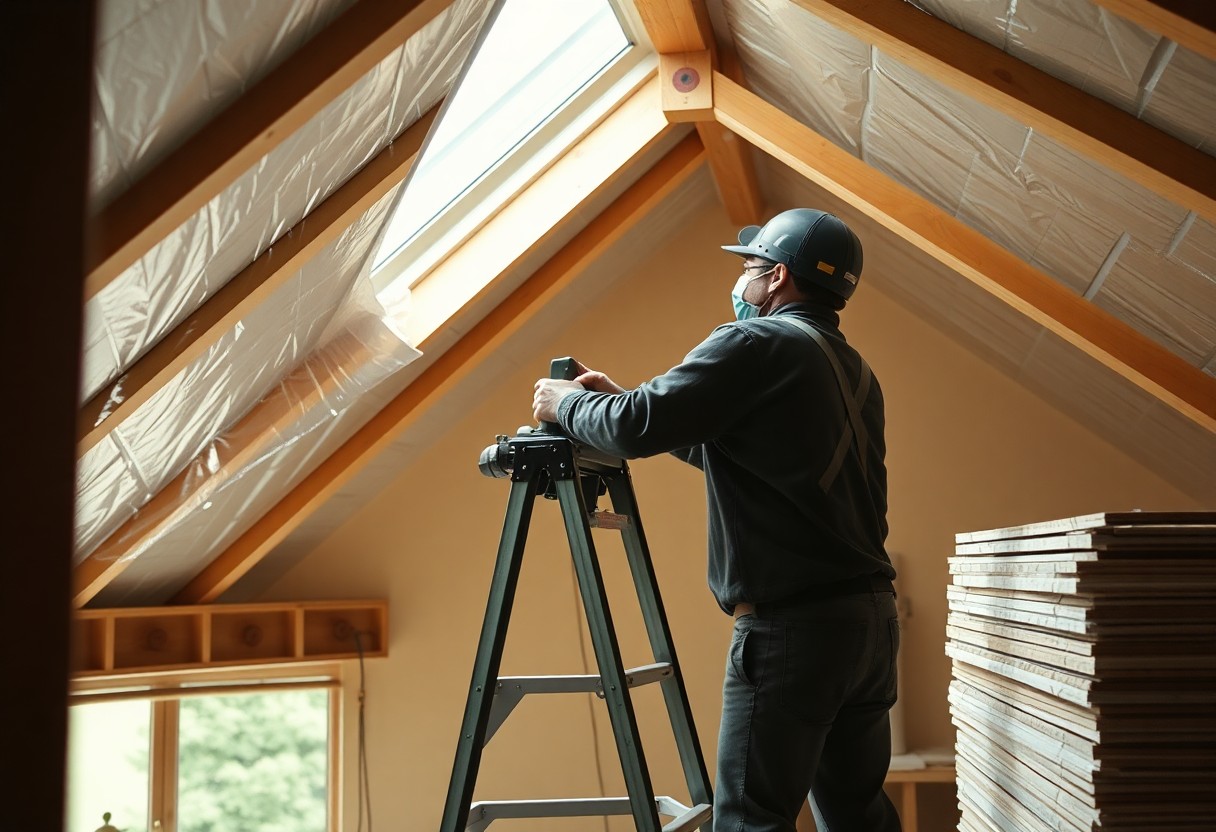
You must seal joints, avoid gaps and ensure a continuous layer of insulation to hit performance targets; for example, a well-installed roof with 200mm of mineral wool can reach around 0.13 W/m²K, while walls aim for 0.18 W/m²K. Use a taped vapour control layer on the warm side, stagger joints and thermally break timber studs to reduce thermal bridging. Assume that you prioritise airtightness and correct detailing to prevent condensation and long-term decay.
- continuous insulation
- vapour control layer
- thermal bridging
Professional vs. DIY Installation
If you have carpentry experience you can fit insulation yourself to save labour – typical professional installation for a 3x3m garden room costs roughly £700-£2,000 depending on materials – but improper fittings often leave gaps and cold spots. Professionals provide guarantees, airtightness testing and complex detailing around windows and services; for loft conversions or hybrid wall systems you should weigh risk versus savings. Assume that you choose a pro when warranties, tight tolerances or intricate junctions matter most.
- professional installation
- DIY insulation
- airtightness testing
Tips for Effective Installation
Cut insulation to fit snugly, avoid compressing PIR or mineral wool and keep fixings to a minimum to preserve thermal performance; place mechanical services within a 25-50mm service void to prevent penetrations through the insulation layer. Use foil tape on joints and continuous membranes around openings, and ventilate the roof void at 5-10mm per metre run where specified. Assume that you check U-values and follow manufacturers’ installation guides to meet declared performance.
- PIR
- mineral wool
- service void
For more detail, seal around window reveals with low-expansion spray foam or compressible foam strips and fit airtight membranes with a minimum 100mm overlap at junctions; mechanical fixings should be staggered at roughly 300mm centres for batt insulation and packer-backed to prevent sagging. Install continuous external insulation where possible to eliminate stud-related bridging – case studies show external boards can cut heat loss by over 20% compared with internal-only upgrades. Assume that you test for draughts and measure temperatures after completion to validate results.
- window reveals
- external insulation
- draught testing
Cost Considerations
Budgeting for Insulation
When planning your spend, factor in material costs and installation: mineral wool commonly ranges £3-£6/m², PIR boards about £15-£25/m² and spray polyurethane foam £20-£40/m². For a typical 12m² garden room, expect materials of £40-£480 depending on choice, plus fitting costs of roughly £200-£600; larger depth or vapour control layers add another £50-£150. you should budget for waste, trims and airtightness detailing as these often add 10-20% to the bill.
Long-term Savings vs. Upfront Costs
Choosing higher-performance insulation raises upfront spend but can cut running costs significantly: upgrading to a U‑value around 0.15 W/m²K can reduce heating demand by roughly 30-50%, saving an estimated £150-£350 per year for a small room. Depending on how you use the room, payback periods typically fall between 3 and 10 years depending on usage and fuel prices. Also consider that poor vapour control risks mould and timber decay, which can double remedial costs and negate any short-term savings.
For example, achieving ~0.15 W/m²K usually needs about 90-100mm of PIR (λ≈0.022 W/m·K) but around 150-200mm of mineral wool (λ≈0.035 W/m·K); that difference affects room size and finish costs. In one install case study, a 3×4m room upgraded from 0.4 to 0.15 W/m²K using PIR paid back in ~4 years thanks to heavy use; using thicker mineral wool delayed payback by 2-3 years but offered better acoustic dampening. You should factor lifecycle, maintenance and resale value when you calculate return.
Maintenance and Longevity of Insulation
Signs of Wear and Tear
You should inspect for sagging, compressed layers, damp patches and a persistent musty smell that signal wet insulation or mould; degraded vapour barriers and rodent damage can cut performance significantly, sometimes by up to 30%. Also watch for cold spots along junctions that indicate thermal bridging and reduced comfort. Knowing the signs lets you prioritise repairs before costs rise.
- moisture
- mould
- compressed insulation
- rodent damage
- thermal bridging
Regular Maintenance Tips
You should carry out visual checks twice a year and after heavy storms, keep eaves clear and ensure intact vapour barriers and sufficient ventilation; certify any electrics near insulation to reduce fire risk and consider targeted replacement with closed-cell spray foam where moisture recurs. Knowing simple routines can extend insulation life by a decade.
- inspection
- ventilation
- vapour barrier
- electrical safety
- replacement
Practical tasks you can do include sealing PIR board joints with foil tape, re-fixing torn breather membranes, and replacing flattened loft rolls-flattened batts may lose up to 50% of their R-value; arrange a thermal-imaging survey every 5-7 years to detect hidden cold spots. If you find condensation on timbers, dry and ventilate within 48 hours to prevent rot. Knowing timely action prevents structural decay.
- foil tape
- thermal imaging
- collapsed batts
- ventilation
- rot prevention
Final Words
So you should prioritise high thermal performance and moisture control when insulating your garden room: rigid PIR or polyiso boards give excellent U-values for walls and roof, mineral wool or sheep’s wool add soundproofing and breathability for cavities, and underfloor insulation prevents heat loss; seal all gaps, install appropriate vapour control or breathable membranes depending on construction, and consider professional installation to ensure longevity, energy efficiency and compliance with building regulations.
FAQ
Q: What are the most effective insulation materials for a garden room?
A: Effective options include PIR (polyisocyanurate) boards, mineral wool (glass or rock wool), sheep’s wool, cellulose (blown-in recycled paper) and spray polyurethane foam. PIR boards give a high thermal resistance in a thin profile, making them ideal where space is limited. Mineral wool is non-combustible, provides good thermal and acoustic performance and is cost-effective for stud walls and lofts. Sheep’s wool and cellulose are more sustainable, offer good moisture buffering and sound absorption, and are easier to handle, though they usually require slightly greater thickness to match PIR performance. Spray foam delivers excellent air-sealing and insulation in one application but must be installed by trained contractors and combined with appropriate vapour control and ventilation strategies.
Q: How thick should insulation be to make a garden room comfortable year‑round?
A: Target U-values depend on intended use, but for a year‑round habitable garden room aim for wall U-values around 0.18 W/m²K and roof/floor values around 0.13-0.18 W/m²K. Achieving these typically requires approximately 80-120 mm of PIR boards, 150-200 mm of mineral wool or cellulose in cavities or between joists, and similar depths for sheep’s wool. Exact thickness varies with the product’s thermal conductivity and the construction detail; using continuous external insulation can reduce thermal bridging and allow thinner overall build-ups. Use manufacturers’ U-value data or an accredited U-value calculator to determine precise thicknesses for your build-up.
Q: How should I manage moisture, condensation and ventilation when insulating a garden room?
A: Control of moisture and ventilation is imperative. In timber-framed or stud constructions use a suitable vapour control layer (VCL) on the warm side of the insulation to prevent warm, moist air entering the insulation cavity, and ensure external membranes are vapour-permeable where appropriate to allow drying to the outside. For lightweight insulated garden rooms include controlled ventilation – trickle vents, extract fans or a mechanical ventilation with heat recovery (MVHR) if airtightness is high – to remove indoor humidity. Avoid sealing insulation against damp surfaces; ensure adequate cavity drainage, correct detailing at junctions and that roofs and floors have suitable breathable barriers or VCLs depending on the insulation type and structure.
Q: What about fire safety, acoustic performance and environmental impact of different insulations?
A: Mineral wool is non-combustible and offers excellent acoustic damping, making it a safe, sound‑reducing choice. PIR and XPS boards have high thermal performance but are combustible and require appropriate fire-stopping, fire-rated plasterboard and compliance with regulations. Sheep’s wool and cellulose are treated to improve fire resistance and provide good acoustic and moisture-regulating properties while having lower embodied carbon. Spray foams vary in formulation; some have higher global warming potential blowing agents and require careful selection. Balance fire performance, acoustic needs, sustainability and whole-life cost when choosing a product, and follow product certifications and fire-rating guidance for walls, floors and ceilings.
Q: Can I install insulation in a garden room myself, and what about building regulations or planning requirements?
A: Many insulation tasks are suitable for competent DIYers, such as fitting mineral wool between joists or installing PIR boards with careful sealing. However, specialised products like spray foam or works requiring structural alterations, airtightness detailing or electrical/plumbing changes are best left to professionals. Check local building regulations and permitted development rules; if the garden room is used as a home office or living space it may need to meet thermal and fire safety requirements similar to an extension. Engage with suppliers or a qualified designer to produce U-value calculations, thermal bridging details and ventilation strategies to ensure compliance and long-term performance.