
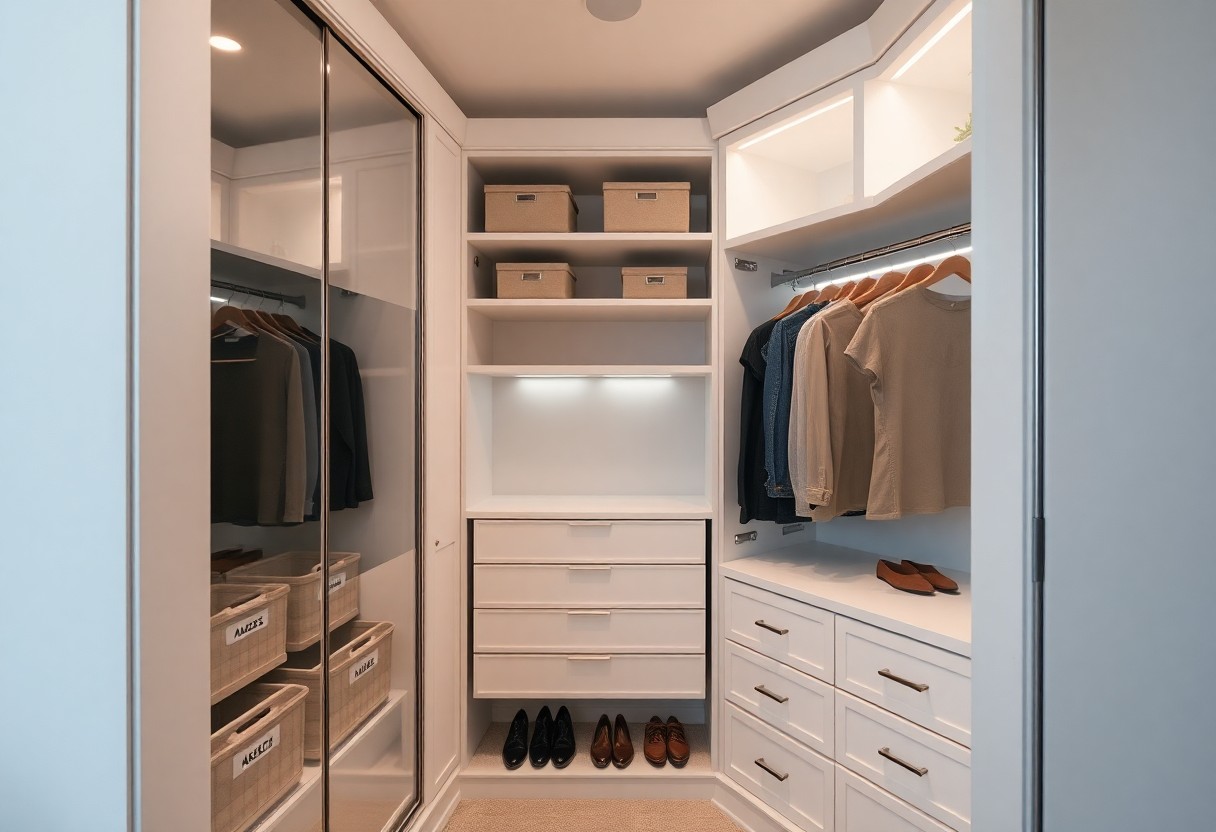
Just implement smart, space-saving systems so you can maximise your space by using vertical shelving, under-bed drawers and wall hooks; combine aesthetics with function through multi-functional furniture like ottomans and fold-down desks; be mindful to avoid overloading shelves or blocking exits, which can create hazards; declutter by rotating items seasonally and using clear boxes and labels to keep your belongings accessible and organised.
Maximising Vertical Space
You can reclaim floor area by working upwards: fit storage to ceilings commonly between 2.4-2.6 m, add tiers of shelving 30-40 cm deep, and stack boxes in labelled, uniform sizes so they slot neatly. For example, four 30 cm shelves across a 2 m wall create roughly 2.4 m² of usable shelf face, freeing room for furniture or circulation.
Wall-Mounted Shelves
Install floating or bracketed units fixed into studs and use adjustable brackets to adapt heights for books, plants or dishes. Aim for shelf depths of 30-40 cm for general storage; heavier items should sit on lower shelves with supports rated around 20-30 kg per linear metre. Use plywood or solid oak for long spans to avoid sagging.
Overhead Storage Solutions
Ceiling-mounted racks, loft ladders and pulley hoists let you store seasonal gear, luggage or bikes above head height; these systems are ideal for items you use infrequently. Typical overhead racks carry between 50-200 kg depending on fixings, so reserve them for bulky but lighter items and secure loads with straps to prevent shifting.
Measure joist positions first-UK joists are often at 400mm or 600mm centres-and fix racks into timber or use masonry anchors where needed. Fit a stable step ladder rated for your weight and hire a professional if loads exceed 100 kg or if you’re unsure about structural anchors to avoid collapse.
Multi-Functional Furniture
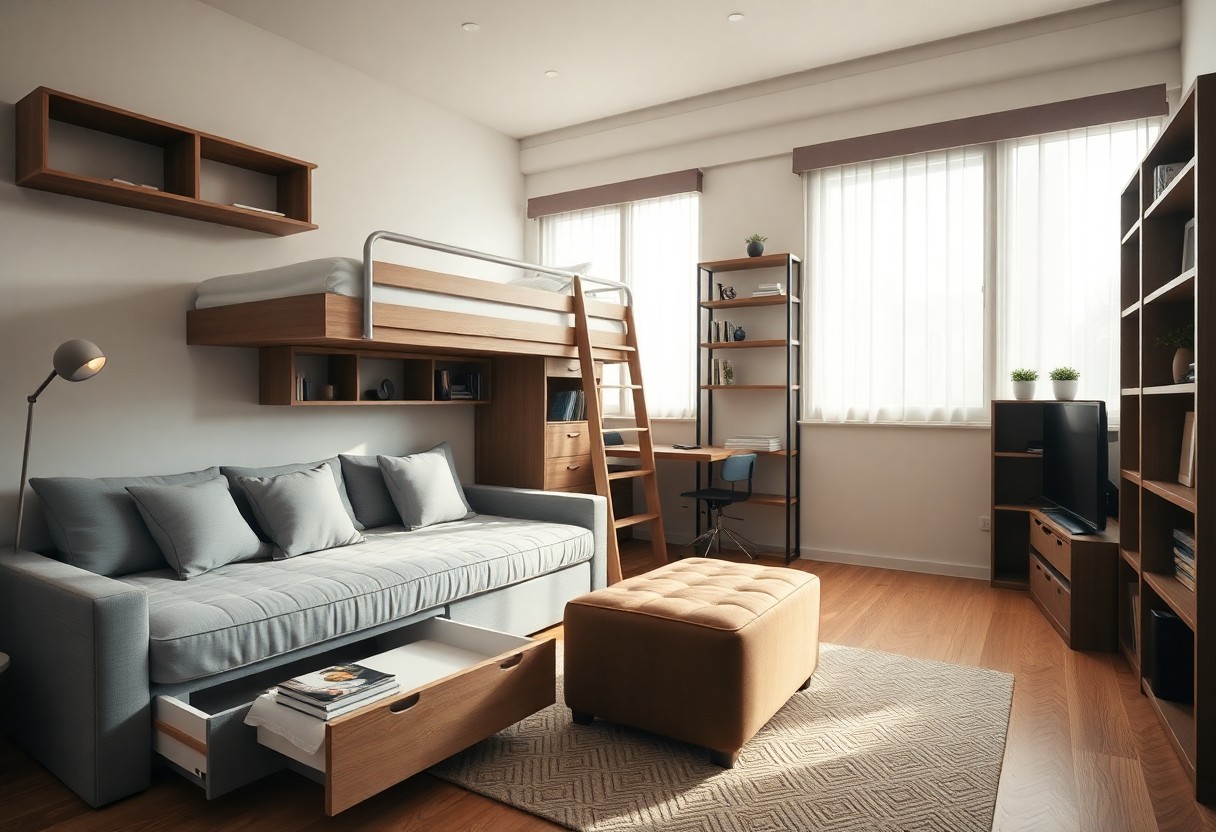
You can combine seating, sleeping and storage in one footprint: a storage ottoman, lift-up sofa or bench with drawers can reclaim tight space in studios and one-bed flats. Many ottomans hold about 30-80 litres and some sofas include under-seat compartments up to 120 litres. For practical layouts and product ideas see Small storage ideas all over your home. Prioritise sturdy construction and check weight ratings.
Storage Ottomans
Use ottomans as coffee tables, extra seats and concealed storage; typical capacities run 30-80 litres, letting you stash throws, magazines or children’s toys. Many designs lift on hinges for easy access; some have removable lids for stacking. If you plan to sit on them regularly, pick a model with a solid frame and a minimum weight rating of 120 kg to avoid damage.
Sofa Beds with Storage
Opt for sofa beds with integrated storage to house bedding and free closet space; many European models offer compartments of 80-120 litres and mattress thickness options from 8-15 cm for comfort. You’ll gain a guest bed without extra furniture, but verify mechanisms-gas lifts and slatted bases differ in longevity and weight limits.
Measure your room and choose a sofa bed whose folded depth and bed width match circulation; common sizes are single (90×190 cm) and double (140×190 cm). Test how quickly the mechanism opens-many modern units convert in under 30 seconds-and note the storage volume for duvet sets and pillows. If you store bedding long-term, use breathable bags to avoid damp and check the manufacturer’s warranty and weight rating.
Creative Closet Organization
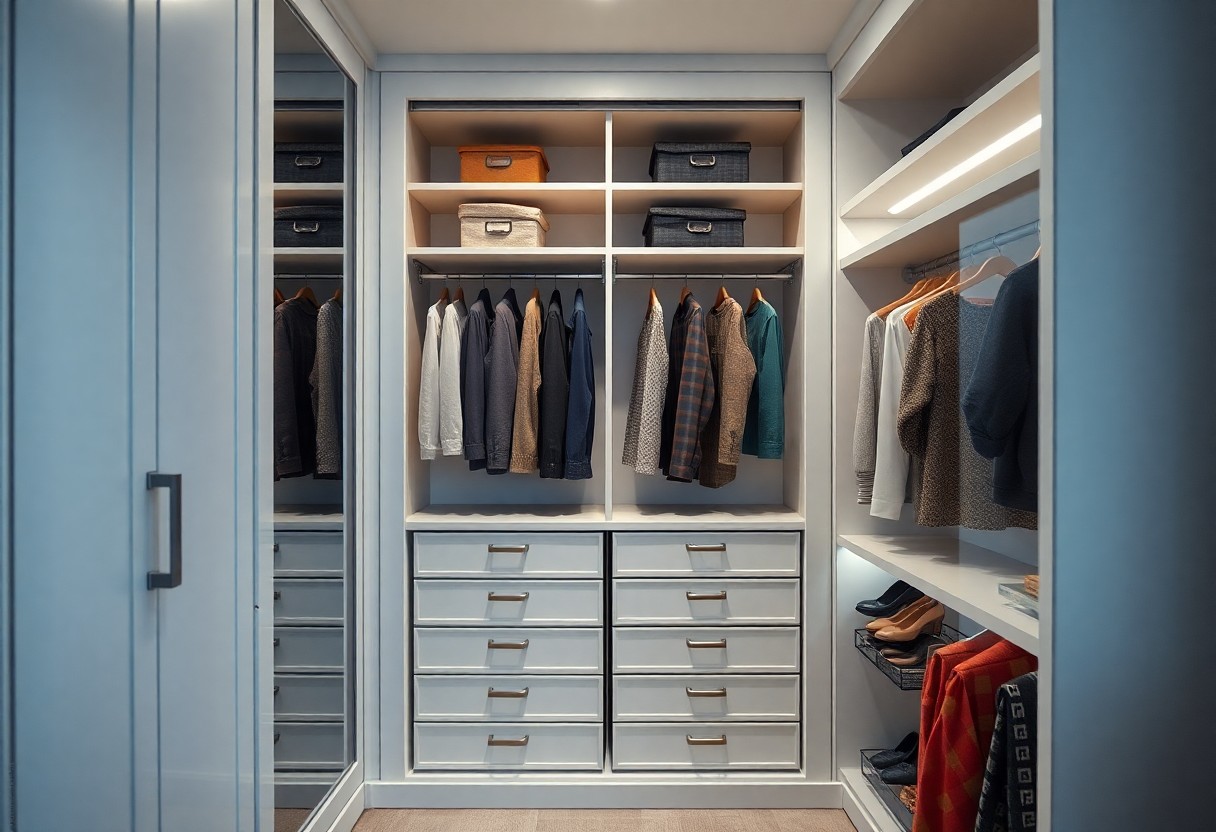
Double up on function by installing a second hanging rod 90-110cm below your main rail to separate shirts from trousers and instantly increase capacity by roughly 40-50%. Shelf risers and clear bins keep seasonal items accessible, while slimline velvet hangers at 4mm save width compared with plastic. If you use labelled boxes for shoes and accessories, you cut morning search time; however, avoid overloading top shelves as heavy boxes can topple and cause injury.
Utilising Vertical Hangers
Hang cascading or tiered hangers to stack items vertically-3‑ to 5‑tier hangers let you store multiple garments in the space of one, often boosting closet capacity by up to 50%. You should allocate longer outer tiers for coats and inner tiers for shirts to prevent creasing. Try metal multi‑hook hangers for jeans and scarves, and reserve slimline 4mm hangers for delicate tops to maximise usable rail length.
Drawer Dividers
Fit adjustable dividers to segment drawers into 3-6 compartments so you can fold items vertically and see everything at a glance; the KonMari approach typically increases visible storage by about 30-40%. Choose acrylic or bamboo dividers for smooth slides and wipeable surfaces. You ought to keep frequently used items forward and bulkier pieces in deeper sections to prevent creasing and spills.
Measure each drawer before buying dividers: for a 60cm‑wide drawer, create three 20cm compartments for underwear, socks and accessories. Use 2-3cm lower divider heights than drawer depth to allow easy access, and secure lightweight dividers with removable adhesive strips if they shift. For best results, combine fixed partitions for structure with removable inserts so you can reconfigure when seasons or storage needs change; avoid overcrowding as overstuffed drawers cause creases and reduce longevity of fabrics.
Nooks and Crannies
You can squeeze significant storage from tiny gaps by fitting slim shelves (10-15 cm deep) along corridors, using corner rotating shelves, or installing recessed medicine-cabinet‑style units behind thin walls; a well‑designed scheme can reclaim up to 20% of your usable floor area. Try labelled clear boxes on ledges and hooks behind doors. For inspiration and dozens of quick, pictorial ideas consult Small Space Storage Solutions, then adapt sizes to your exact voids.
Under-Stair Storage
You can convert under-stair voids into pull-out drawers, wine racks, or coat cubbies, often gaining about 0.5-1 m³ of space in a typical mid‑terrace stairwell. Install full‑height cupboards with 30-40 cm deep drawers for shoes and brooms, or bespoke shelving for toys. If you plan structural changes, do not alter load‑bearing elements without a builder; instead use screw‑fix fittings and soft‑close runners for longevity.
Utilising Attics and Basements
Attics often provide long, shallow storage runs-use raised shelving and labelled tubs to exploit roof eaves, while basements suit bulk items if you control moisture; aim for 40-50% relative humidity with a small dehumidifier in damp seasons. Insulate and ventilate attics to prevent condensation and keep boxes on shelves at least 10 cm off the floor in basements to avoid water damage; treat timber floors and check access for safe lifting.
For heavier or infrequently used items, fit shelving rated to 100-200 kg per shelf and use pallet crates for even weight distribution; consider adding a simple loft ladder with locking hatch for safer access. Label zones (seasonal, tools, archives), install LED strip lighting with motion sensors, and fit moisture indicators in basements to spot rising damp early-these small steps turn under‑used spaces into organised, long‑lasting storage.
Innovative Kitchen Storage
You can dramatically increase usable space by swapping fixed shelves for modular inserts and vertical systems; for example, installing narrow pull-outs (typically 150-300 mm wide) and magnetic solutions frees benches and drawers, with a 300 mm pull-out often holding 8-12 bottles or several baking trays. Choose full-extension runners and soft-close hardware to improve access, and position units to exploit the often-overlooked 200-400 mm of vertical clearance between countertops and wall cabinets.
Pull-Out Cabinets
Opt for pull-out cabinets with full-extension sliders and adjustable shelves so you access the back without kneeling; narrow pantry pulls of 150-300 mm width are ideal for oils, vinegars and cleaning sprays, while wider 400-600 mm units suit pots and pans. You should fit anti-tilt stops and soft-close dampers to protect fragile items and reduce noise, and consider a unit that holds 4-6 baking trays vertically to save shelf depth.
Magnetic Spice Racks
Magnetic spice racks mount jars to the underside of cabinets or the fridge, freeing an entire drawer and keeping frequently used spices within arm’s reach; most systems use neodymium magnets (typically N42-N52) and glass jars of about 40-60 ml. You can arrange labels facing out and group spices by cuisine to speed cooking, and choose clear jars so you identify contents at a glance.
When installing magnetic spice racks, fix a metal strip or adhesive backing rated for the jar weight and stagger jars to avoid collisions; a 300 mm strip commonly holds 6-8 standard spice jars. Be aware that strong neodymium magnets can affect electronic devices and pose a hazard to children, so mount them out of reach and away from pacemakers or credit cards, and test pull strength before loading to ensure safe daily use.
Outdoor Storage Solutions
Garden Storage Benches
You can choose a waterproof cedar bench 120cm long to seat two while hiding cushions, garden toys and tools; gas‑strut lids prevent slam injuries and lockable catches deter theft, and a slim 30cm‑deep design along a fence keeps lawn space free while breathable liners prevent mould in damp months. This combines seating and discreet storage.
- garden bench storage
- deck storage bench
- waterproof bench
Shed Organisation Tips
Measure your shed and install shelving up to 2m high to use vertical space, fit metal units rated to 150kg per shelf for heavy items, hang frequently used tools on a pegboard at eye level and store chemicals in a lockable cabinet away from children; secure heavy items low to avoid tipping. This reduces search time and prevents damage.
You should zone the shed: heavy equipment on bottom shelves, a 75-90cm workbench for potting tasks, and seasonal items above 1.8m to keep the floor clear; anchor shelving to studs or the floor with brackets to prevent tip‑overs and use clear, labelled boxes for quick identification. Fit a 60×90cm pegboard for hand tools, add magnetic strips for blades, install a folding ramp for wheeled items and ventilate to avoid condensation; store lawn chemicals in original labelled containers inside a locking unit for safety. This creates an efficient, safe system that extends tool life.
- shed shelving
- pegboard organisation
- locking unit
- metal shelving 150kg
Summing up
Hence you should maximise vertical space, use multifunctional furniture, fit wall-mounted shelves, under-bed storage and hooks, and choose clear containers and labelled baskets to streamline belongings; by tailoring storage to your routine and measuring carefully you will create a neat, flexible home that feels larger and works harder for you.
FAQ
Q: How can I maximise storage in a very small living room?
A: Prioritise vertical and hidden storage. Install floating shelves and tall, slim bookcases to use wall space; wall-mount the TV to free floor area. Choose multifunctional furniture such as storage ottomans, sofas with under-seat storage and coffee tables with drawers. Use baskets on lower shelves, fit corner units and pick furniture on legs so you can store boxes underneath. Measure before you buy to avoid oversized pieces and keep the layout minimal to maintain good flow.
Q: What are the best bedroom storage solutions for limited space?
A: Make the most of under-bed space with drawers or low-profile storage boxes, or invest in a bedframe with integrated drawers or a storage ottoman. Optimise wardrobe space with adjustable shelving, a second hanging rail and slimline hangers; add drawer organisers for smaller items. Fit over-door hooks or organisers, wall-mounted bedside shelves and use vacuum bags or labelled boxes on high shelves for out-of-season clothing.
Q: How can I make the most of kitchen storage in a small flat?
A: Free up worktop and cupboard space with wall-mounted rails for utensils and magnetic knife strips; install floating shelves for frequently used items and a pegboard for pots and mugs. Use pull-out organisers for base units and under-sink areas, shelf risers, drawer dividers and a lazy Susan for awkward corners. Store dry goods in uniform, transparent containers and use the inside of cupboard doors for spice racks or foil holders to maximise every inch.
Q: What types of multi-purpose furniture work best in tiny homes?
A: Opt for sofa beds, extendable or folding dining tables, nesting tables and storage benches. Murphy (wall) beds or fold-down desks free daytime space, while coffee tables with lift tops and ottomans with lids offer concealed storage. Modular units that can be reconfigured and pieces with built-in compartments provide flexibility as your needs change.
Q: How do I keep storage organised so a small home feels spacious rather than cluttered?
A: Adopt zoned storage by assigning specific places for keys, mail, shoes and daily items. Use matching containers and labels to create visual order, group like items together and declutter regularly by donating or recycling what you no longer use. Keep surfaces clear by favouring vertical and concealed storage, and establish simple daily habits such as a single spot for outgoing items to prevent accumulation.