Over time you may spot cracked flaunching, mortar loss or leaning stacks; assess whether targeted repairs can extend your chimney’s life and save costs, or if persistent water ingress, severe structural movement or a risk of collapse and fire hazards require a full rebuild to protect your home and occupants. Understanding Chimney Structure You’ll find… Chimney Repairs – When to Repair vs Rebuild
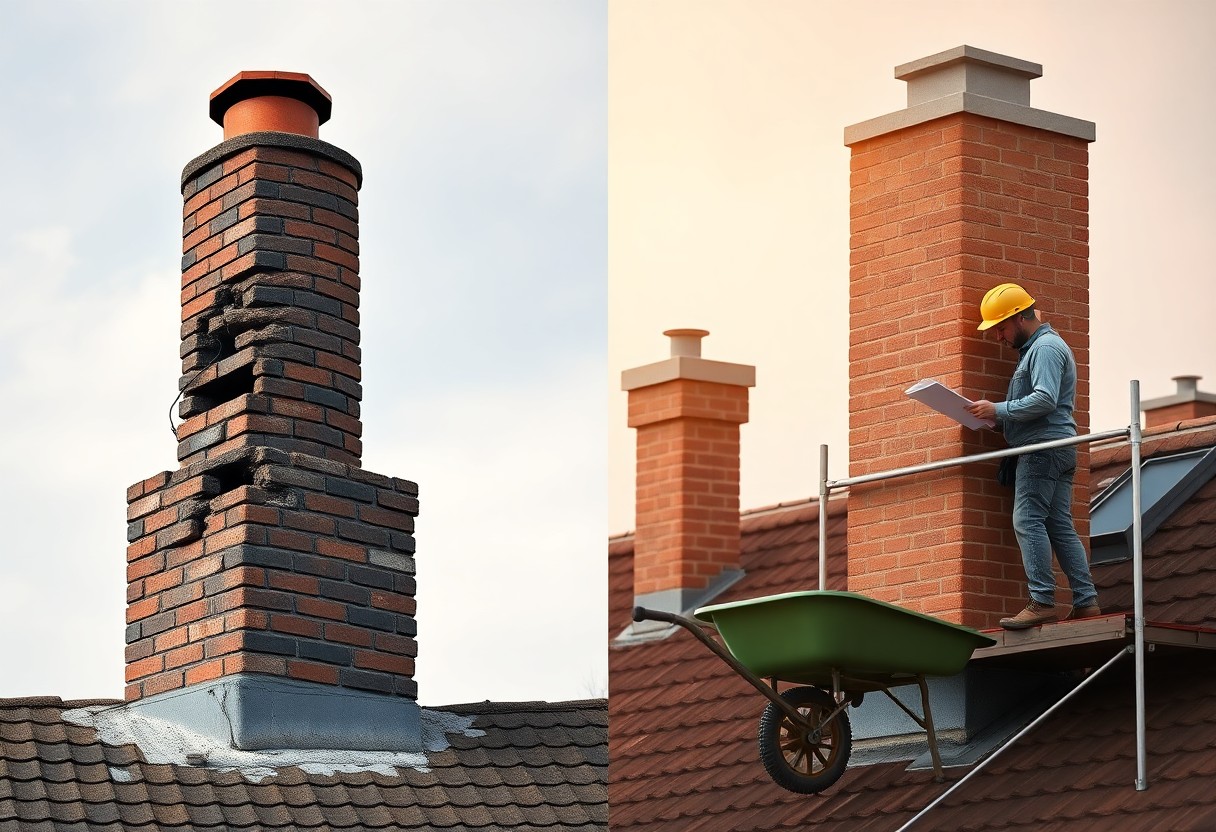
Over time you may spot cracked flaunching, mortar loss or leaning stacks; assess whether targeted repairs can extend your chimney’s life and save costs, or if persistent water ingress, severe structural movement or a risk of collapse and fire hazards require a full rebuild to protect your home and occupants.
Understanding Chimney Structure
You’ll find a chimney is a layered assembly: the external stack, internal flue(s), clay or stainless-steel liners, pots, crown and cap, plus flashing where it meets the roof. Domestic flue diameters typically range from 150-200 mm, and Victorian terraces often contain 2-4 flues in one stack. Water ingress and frost accelerate mortar and brick decay, while damaged liners substantially raise the risk of carbon monoxide and fire.
Components of a Chimney
Your chimney’s main components are the visible stack, internal flue(s), liners (clay, cast iron or stainless steel), chimney pots, crown and cap, plus flashing and mortar joints. The damper controls draught, the throat links to the firebox and the hearth supports the opening. Material quality and maintenance dictate lifespan: well-built brickwork with a sound liner can exceed 100 years, whereas poor mortar and absent liners shorten service life markedly.
Common Issues Faced
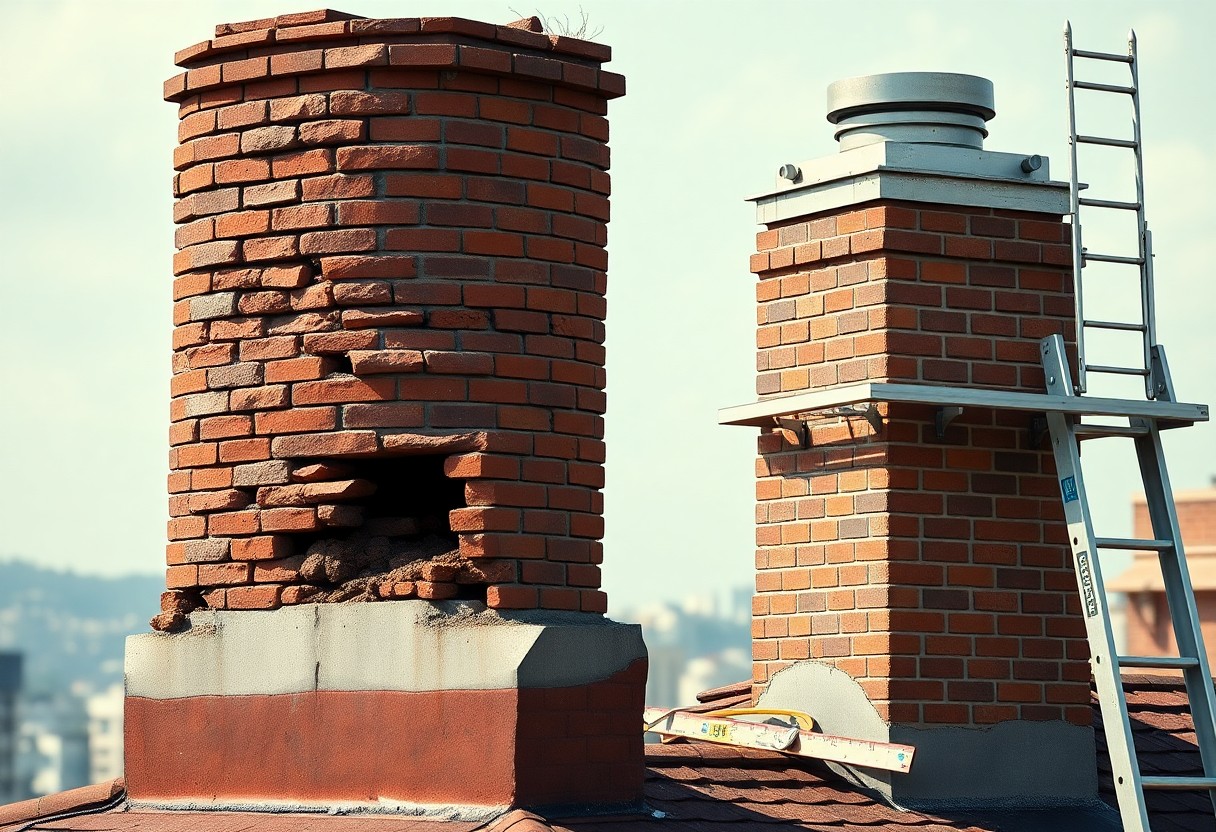
You typically encounter mortar erosion, spalling bricks, cracked or missing liners, blocked flues and failing flashing; creosote and soot buildup is frequent with solid-fuel appliances. A leaning stack or missing pots signals structural movement, and damaged liners significantly increase the risk of fire and carbon monoxide exposure. Inspections often reveal one to three defects per chimney on average.
Signs demanding attention include persistent soot in rooms, smoke backflow, water stains, recessed mortar joints over 10 mm, spalled bricks or a visibly leaning stack. For example, a 1920s terrace survey found mortar loss across 40% of joints and cracked liners, leading to a full rebuild rather than piecemeal repairs. You should prioritise works when defects compromise structural integrity or pose health and fire hazards.
Signs Your Chimney Needs Repair
You’ll spot the need for work when everyday symptoms appear: spalling bricks, mortar joints eroded beyond roughly 10 mm, a cracked crown, rusted flashing or a damaged cap, persistent damp or staining on internal walls, and any evidence of animals nesting. Cracked flue liners or visible separation from the roofline indicate a higher risk of heat transfer and even structural collapse, so prioritise inspection and remedial action rather than delay.
Visual Indicators
When you inspect the stack, look for vertical cracks, bricks flaking, mortar joints missing, and vegetation growth between courses. If the chimney leans or there’s a gap exceeding about 25 mm between chimney and roof, that signals foundation movement. Also check flashing for corrosion and the crown for spalling; a missing cap or grille often allows birds and rodents to create obstructions that accelerate wear and water ingress.
Performance-Related Symptoms
Smoke spilling into the room, persistent odours, sluggish fires and glass that blacks up quickly all point to draft problems or blockages. Excessive soot or a hard, shiny layer of creosote-especially deposits thicker than 3 mm-increases fire risk. Any sign of smoke in living space or elevated carbon monoxide readings demands immediate professional assessment to safeguard your family.
More detail: a partial flue obstruction from a bird nest or masonry fall can reduce effective flue area by over 50%, markedly worsening backdraughts. If you routinely need to open a window to ventilate smoke, or ashes contain unburnt fuel after a burn, those are practical indicators of poor draft. Get the flue liner checked-modern stainless or clay liners must be intact; a cracked liner allows hot gases into the chimney structure, raising the chance of a chimney fire and rapid masonry deterioration.
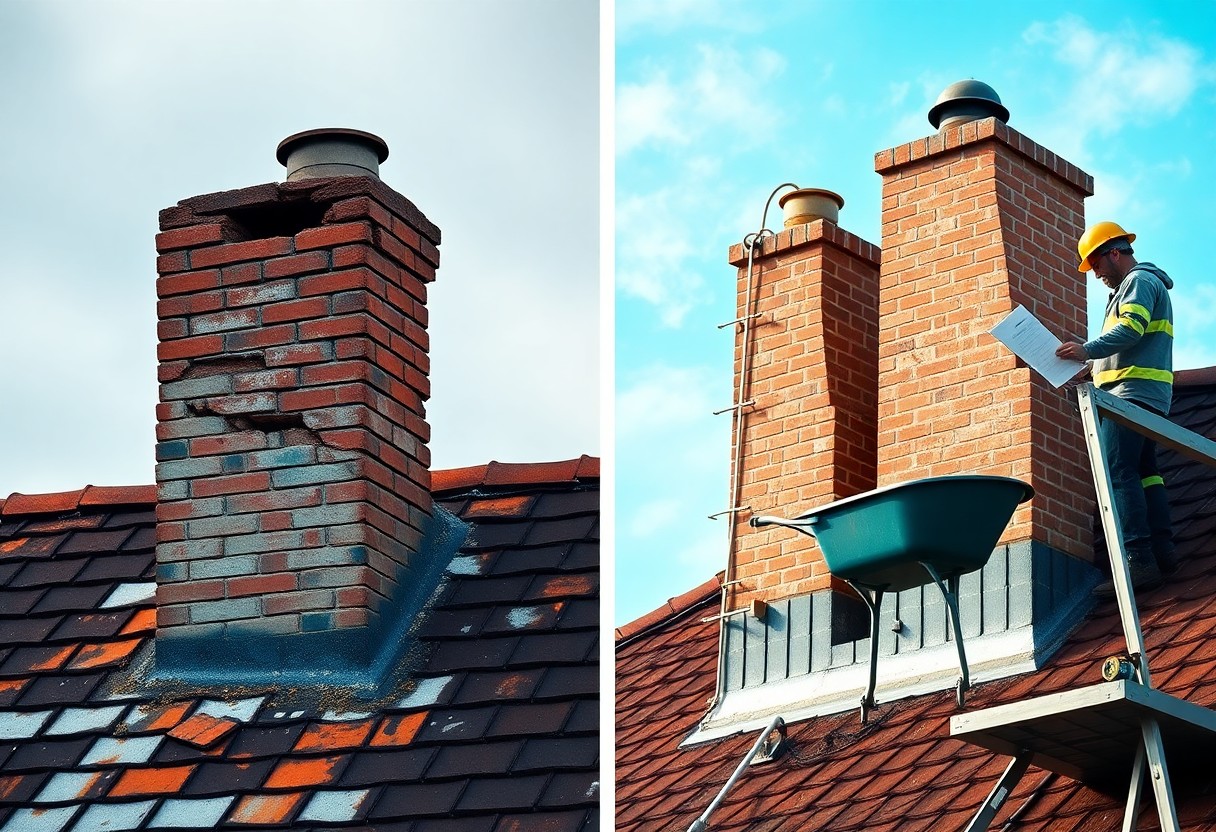
Assessing Damage Severity
When you inspect the stack, quantify deterioration: mortar loss over 50%, brick spalling across more than 20% of faces, visible flue-liner cracks or a lean exceeding 25mm at the top all push toward rebuilding. Surface hairline cracks, isolated frost damage or flashing gaps often indicate repairable issues. For practical perspectives and owner experiences see Repair or rebuild chimney | Hearth.com Forums Home.
Minor Repairs
You can often fix hairline cracks, repoint up to 25-30% of joints, replace individual spalled bricks or patch crowns without major upheaval. Typical works include flashing replacement, small crown repairs and stainless flue relining for local liner defects; costs commonly run from around £200 to £1,200 depending on access and scope. Insist on documented before/after photos and a warranty of at least 12 months so you can verify the work.
Major Structural Concerns
If the stack shows stair-step cracking across multiple wythes, widespread mortar loss, separation at the stack-to-roof junction, or a pronounced lean, you face a structural issue. These defects carry high collapse risk and increased carbon-monoxide danger, so you should favour rebuilding when more than half the vertical stack needs replacement or movement is ongoing. Obtain a structural assessment before proceeding.
Engineers use plumb-bobs, straightedges and crack gauges to measure movement; if inspection reveals >25mm displacement, vertical separation between wythes or foundation settlement, you will likely need a full strip and rebuild from roof level, often with new stainless or clay liners and improved flashing. Rebuild costs typically range £2,000-£7,000 for an average two-storey house depending on height and access, with scaffolding and access lifts often accounting for 30-50% of the bill. In conservation areas or for listed buildings you must factor in specialist materials and planning consent; temporary propping and exclusion zones can mitigate immediate hazards while you arrange permanent works.
Repair Options
Types of Repairs
You will commonly see targeted fixes: repointing restores mortar joints and can extend service life by 20-30 years, flue lining (stainless steel) contains combustion gases for roughly 20-30 years, crown repair stops water entry, brick replacement removes spalled units and preserves integrity, and cap installation prevents downdraught and moisture. Small cracks under 3mm are often sealed; wider movement needs assessment. Knowing these typical lifespans helps you weigh repair against rebuild.
- Repointing
- Flue lining
- Crown repair
- Brick replacement
- Cap installation
| Repair | When to choose / Typical lifespan |
| Repointing | When mortar erodes; restores weatherproofing, often 20-30 years |
| Flue lining | If liner is cracked or missing; stainless liners commonly last 20-30 years |
| Crown repair | Where crown is cracked or delaminating; prevents water ingress and freeze damage |
| Brick replacement | For spalled or salt-damaged bricks; preserves structural integrity |
Professional vs DIY Repairs
You can undertake straightforward tasks such as replacing a chimney cap or patching small mortar joints to save on labour, and DIY can cut costs for minor work. Yet interventions affecting the flue or structure frequently fall under building regulations, and mistakes may cause carbon monoxide hazards or void insurance. You should assess your skill, tools and access before attempting any repair.
For example, a simple cap swap or local repointing of under 1m² is a realistic DIY job, while replacing a damaged liner, correcting a leaning stack or repairing widespread salt decay generally needs a competent installer or structural surveyor; professionals can spot hidden deterioration and comply with regulatory requirements. If you spot vertical cracks wider than about 10mm, bulging, or a pronounced lean, get an expert assessment-these signs often lead to a rebuild decision rather than a patch.
When Rebuilding is Necessary
If your chimney shows widespread masonry failure, significant leaning or a fractured crown, you will likely need a rebuild rather than repairs. Inspectors generally recommend rebuilding when mortar loss exceeds about 60%, when flue tiles are shattered, or when the stack poses a collapse risk. In many cases a full rebuild restores structural integrity and longevity-expect a new stack to last 50+ years with proper maintenance.
Situations Requiring Rebuilds
Severe foundation settlement, multiple vertical cracks through the stack, or damage from a chimney fire commonly force a rebuild; for example, a stack displaced more than 25mm over its height or with collapsed flaunching is rarely salvageable. Vehicle impact, extensive frost spalling across over half the brick faces, or chronic flue collapse that allows smoke and gases into your home are all situations where rebuilding is the safe option.
Cost Considerations
Expect a full external rebuild in the UK to range from roughly £2,000-£10,000 depending on height, materials and access, while partial rebuilds or re-lining might be £800-£3,000. Time on site typically runs from one to five days; complex or listed-building work adds both time and expense. Delaying necessary rebuilds can increase both safety risk and eventual cost.
Several factors push the price: scaffolding and access can add £500-£2,000, stainless-steel flue liners cost £300-£1,200, and specialist stonemasons or listed-building consents increase labour and paperwork. If you require rapid work or emergency stabilisation, premium mobilisation charges apply, so obtain three quotes and factor in scaffold hire, waste removal and any planning or conservation requirements when budgeting.
Choosing a Professional
You should prioritise contractors with at least 5 years’ chimney experience, public liability insurance of £5 million and a written estimate that separates repair from rebuild costs. Compare guarantees-most range from 2-10 years-and check independent reviews. For a practical comparison of repair lifespans and replacement scenarios, consult Chimney Repair vs. Replacement in Chicago to see cost and timeline examples.
What to Look For
Request a borescope or camera survey (typically £70-£150) to reveal hidden flue damage and assess lining condition; flue cracks wider than 3 mm often indicate the need for relining or rebuild. Check for appropriate scaffolding and a method statement, plus whether the contractor recommends stainless-steel relining for modern appliance use and offers photographic before-and-after evidence.
Questions to Ask
Ask for a fixed-price written quote, the exact warranty length, evidence of £5 million insurance, three recent references and whether they subcontract trades. Also check proposed timescales-simple repairs may be a day, rebuilds several days to two weeks-and whether disposal and scaffold costs are included.
Probe technical choices: if relining is suggested, ask which material and grade (316 for coastal exposure), the liner diameter relative to appliance requirements, and ventilation adjustments. Request a clear breakdown of labour, materials and permit or planning needs, and verify site re-instatement standards with photographic evidence from similar jobs.
Summing up
Now you can weigh the cost, extent of damage, structural safety and lifespan to decide whether to repair or rebuild your chimney; minor mortar joint decay, isolated flue or crown damage often warrants repair, while severe structural cracks, leaning stacks, large-scale spalling or persistent water ingress usually require a rebuild to ensure safety and longevity; consult a qualified chimney specialist for an inspection and written estimate.
FAQ
Q: What signs indicate my chimney needs repair rather than a full rebuild?
A: Localised problems such as loose or missing mortar joints, a few cracked or spalling bricks near the top, damaged flashing or a deteriorated chimney crown can usually be repaired. Flue liner damage can often be fixed by relining rather than rebuilding the stack. If the chimney is squarely plumb, shows no significant leaning, and the masonry below the roofline and the foundation are intact, targeted repairs like repointing, replacing a crown or flashing, repairing bricks and installing a new flue liner will typically suffice. Arrange an inspection by a qualified chimney professional to confirm scope and safety before proceeding.
Q: When is a chimney rebuild necessary instead of carrying out repairs?
A: Rebuilding is generally required when there is widespread structural failure: the chimney is noticeably leaning or has separated from the house, multiple courses of brick are crumbling or missing, there is major cracking through several brick courses, the foundation has failed, or the flue is collapsed. Recurrent failures after repeated repairs, or damage extending below the roofline that affects the chimney’s stability, also indicate a rebuild is the prudent option. A structural engineer or experienced chimney specialist should assess the extent of deterioration and advise whether partial or complete rebuilding is needed.
Q: What do repairs and rebuilds typically cost and how long do they take?
A: Costs vary with size, height, access, materials and location. Minor repairs such as repointing, flashing replacement or crown repairs often range from a few hundred to a couple of thousand pounds and can usually be completed in a day or two. Partial rebuilds (rebuilding the stack above the roof or replacing several courses) commonly range from around £1,000 to £4,000 and take several days. A full rebuild of the chimney stack can range from a few thousand to over £10,000 for tall or complicated chimneys and may require a week or more. Obtain written quotes and timescales from reputable contractors; unexpected issues can extend both cost and duration.
Q: Are there acceptable temporary fixes and when should they be used?
A: Temporary measures include waterproof covers or flashing patches, sealing hairline cracks with suitable mortar or sealant, and fitting a temporary chimney cap to prevent water ingress. These actions are appropriate to protect the structure and contents while you arrange permanent repairs, or to delay work until weather or budgets allow. Temporary fixes are not a substitute for structural repair: if the flue is damaged or the chimney poses a safety risk, appliances should not be used until a proper repair or relining is completed.
Q: What should I ask a contractor and which regulations or permissions might apply?
A: Ask for proof of relevant qualifications and insurance, written references or examples of similar work, a detailed written estimate outlining labour, materials and timescale, the mortar and brick types to be used (lime mortar is often preferable for older chimneys), and any guarantees. Confirm whether a structural engineer will be involved for major work. Building Regulations and building control notification may be required for structural or flue alterations; planning permission may be needed for listed buildings or some conservation areas. If the chimney adjoins a neighbour’s property, the Party Wall etc. Act may apply. For gas appliances, ensure any flue work is checked by a Gas Safe registered engineer. Obtain a written contract before work starts.