

Most homeowners weigh whether to hire an architect for an extension; you should consider that an architect can manage planning permission and building regulations, reduce structural risks such as load-bearing alterations or party wall disputes, and deliver better design and increased property value while controlling costs and timelines.
Many homeowners ask whether you need an architect for your extension; if your project affects load-bearing walls, rooflines or listed features, mistakes can lead to structural failure and enforcement penalties, so assess complexity, site constraints and party-wall issues – an architect brings design skills to maximise space and value, navigates planning permission and building regulations, and can save you time and money while reducing risk and delays.
Understanding Extensions
Types of Extensions
You often choose between modest single‑storey rear additions, a side return to open up a kitchen, or larger wrap‑around and double‑storey builds that add significant floor area; single‑storey projects commonly cost £20k-£60k while a double‑storey can exceed £80k depending on finishes and site constraints. You must consider party‑wall issues and neighbour access when basements or deep excavations are proposed, as these involve structural risk and higher fees. After you assess budget, planning risk and disruption you can decide whether to appoint an architect.
- Rear extension
- Side return
- Wrap‑around
- Double‑storey
- Basement
| Rear extension | Typical cost £20k-£60k; often permitted development if under 4m single‑storey |
| Side return | Low footprint increase, commonly £15k-£40k; improves circulation and light |
| Wrap‑around | Combines rear and side works; £50k+; may need planning and neighbour consent |
| Double‑storey | Adds 50-100% floor area; costs from £80k; involves structural calculations |
| Basement | High risk and cost £100k+; party‑wall and groundwater issues common |
Common Reasons for Extensions
You typically extend to create a larger kitchen‑diner, add a home office, or provide a downstairs bedroom; surveys show over 40% of homeowners extend to improve liveability and increase market value. You should weigh the cost, likely planning requirements and neighbour impact before committing, and consider whether an architect will protect your investment and manage structural complexity.
You will often face decisions about finishes, insulation standards and whether to prioritise floor area or daylighting; for example, a 3-4m rear extension can add 15-25m² of usable space, boosting value by an average of 5-15% in many UK areas. You should also factor in disruption-typical build times range from 8 weeks for simple projects to 6-9 months for complex, multi‑storey works-and the potential need for specialist consultants for drainage, party‑wall awards and structural design.
Understanding Extensions
Types of Extensions
You can choose from several common forms: a single-storey rear extension for open-plan living, a double-storey to add bedrooms, a side return to reclaim narrow space, a wrap-around combining rear and side works, or a basement for major extra floor area. Typical build costs vary – for example a 20m2 single-storey might cost £30k-£50k depending on finishes and foundations. Knowing how each type affects light, cost and planning will guide your decision.
- single-storey
- double-storey
- side return
- wrap-around
- basement
| Extension Type | Typical cost / notes |
|---|---|
| Single-storey | £1,200-£2,500 per m2; 20m2 example £30k-£50k; quicker build, lower disruption |
| Double-storey | £1,700-£2,800 per m2; adds significant value but needs structural design |
| Side return | Often 8-15m2; efficient use of narrow plots, planning sometimes simpler |
| Basement | From £40k upwards; complex engineering, high risk of unexpected ground issues |
Common Challenges
When you proceed, expect issues like party wall negotiations taking 2-8 weeks, party wall surveyor fees of £500-£1,500, and the need for a structural engineer if you alter load-bearing walls. Neighbour objections can delay planning applications by months; if your house is listed or in a conservation area, planning permission is likely. You should budget a contingency of at least 10-20% for unforeseen costs.
In practice, many projects hit problems with drainage, hidden asbestos or poor ground that require additional works – a common example is finding made ground beneath Victorian properties, which can add £5k-£20k. You will benefit from early surveys and a clear specification to limit variations; engaging an architect early reduces the chance of late-stage budget overruns and design rework, and helps manage your programme and neighbour relations effectively.
The Role of an Architect
An architect organises design, technical drawings, planning submissions and site oversight so your extension meets Building Regulations and local planning expectations. You’ll get coordinated structural and services information, party wall liaison where needed and contract administration during construction. Many architects follow the RIBA Plan of Work (eight stages), which helps control timescales and budgets, reducing the risk of planning refusal, structural issues or expensive cost overruns that can derail a project.
What an Architect Can Provide
Feasibility studies, measured surveys and scaled drawings (commonly 1:100 site plans and 1:50 technical details) give you clear options. You’ll also receive planning statements, 3D visualisations to test layout and light, detailed specifications for builders, tender packs to compare quotes and a full Building Control submission where required. That documentation means you can tender accurately and expect fewer on-site changes or disputes.
Benefits of Hiring an Architect
You’ll gain better use of space, improved natural light and often higher resale appeal; for example, reconfiguring a 3m by 4m rear extension into an open-plan kitchen-diner can increase usable living space by around 25-30% without enlarging the footprint. Architects also help you optimise budgets and materials, which can lead to lower lifecycle costs and fewer defects after handover-clear savings compared with unmanaged projects.
Beyond aesthetics, an architect mitigates risk: they vet contractors, manage the contract and oversee quality checks so your build stays on schedule and within budget. Expect clearer cost control – many schemes plan a 10% contingency and architects help keep change orders to a minimum – and stronger chances of planning approval through pre-application advice and accurate submissions, protecting your investment and timelines.
Role of an Architect
An architect turns your brief into measurable outcomes, following the RIBA Plan of Work 0-7, producing planning drawings, technical details and coordinating structural engineers and building control. They use tools like BIM to spot clashes before site work begins and flag planning constraints or party wall issues early; this is where you avoid costly delays and hidden structural surprises that can add thousands to a budget and push your programme out by weeks or months.
Design Expertise
When you need spatial solutions an architect balances daylight, orientation and flow to boost usability; for example, architects commonly reconfigure a 20-30 m² rear extension to increase usable living space without enlarging the footprint. They produce concept sketches, 1:50 plans and 1:20 construction details, advise on materials and compliance for listed or conservation-area properties, and model how rooflights or folding doors will affect thermal performance and planning views.
Project Management
Architects act as your single point of contact during procurement and on site, running tenders (often inviting 2-4 contractors), preparing contract information, and administering the construction programme so you hit milestones. They manage consultants, track costs against a budget and issue variation orders; this reduces the risk of budget overruns and helps you hold contractors to a fixed-price agreement where possible.
On site they typically perform weekly or fortnightly inspections, maintain a site diary and manage change control: if, for instance, rotten joists appear, the architect instructs a structural engineer, negotiates the variation and updates the programme-such unforeseen works might add a few thousand pounds and several weeks. Their documentation also supports building-control sign-off and warranties, protecting your safety and long-term value.

Alternatives to Hiring an Architect
Besides an architect, you can use a chartered architectural technologist, a design-and-build contractor or pre-drawn stock plans; CIAT-regulated technologists specialise in detailing and can be cheaper than architects. Design-and-build firms often provide a single contract and fixed-price quotes, while stock plans cut design time. If you value control, weigh the trade-offs between bespoke design and lower fees; each route affects planning, Building Regulations and long-term value.
Using a Contractor
Choose a reputable design-and-build contractor and you get design, site management and a single warranty; many firms offer fixed-price quotes and stage payments. You might save 10-20% on professional fees compared with architect-led projects, but expect more standardised layouts. Check references, request a detailed schedule of works, confirm public liability and employer’s liability insurance, and ensure the contractor handles Building Regulations submissions or liaises with building control.
DIY Extensions
Taking on your own extension can cut costs, particularly labour which often represents a large share of the budget, but it demands time, planning and skills. You must follow Building Regulations, obtain necessary approvals and serve any Party Wall notices. Structural work and drainage are high-risk and frequently require a structural engineer; mistakes can cost thousands. Balance potential savings against safety and warranty implications.
You can sensibly DIY demolition of non-loadbearing partitions, decorating, flooring and landscaping, while never attempting gas work or mains electrical installations unless qualified. Hire a Gas Safe engineer for boilers and a registered electrician for circuits or use a competent person scheme for certification. Expect the programme to lengthen – a modest single-storey extension commonly takes months rather than weeks when you’re juggling work, permits and subcontractors.
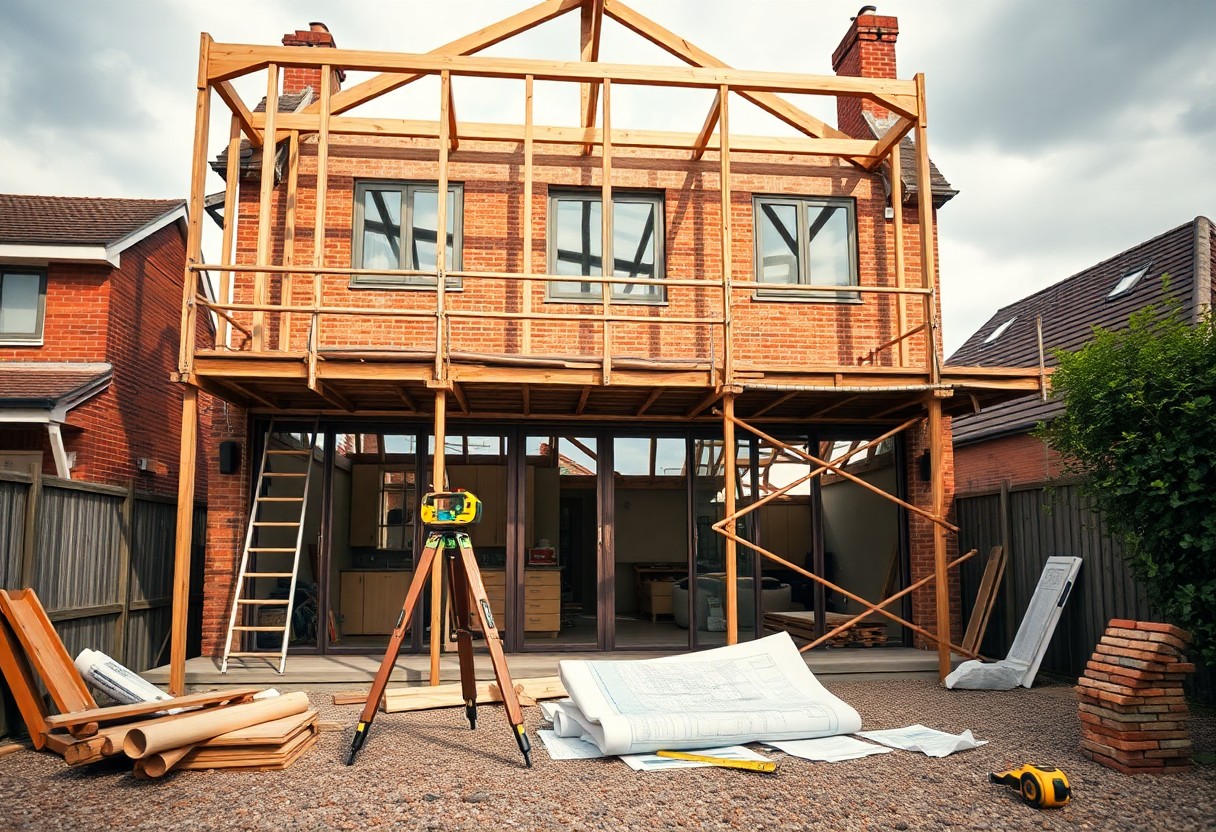
When You Might Need an Architect
If your extension involves significant structural change, unusual site constraints or listed building work, you should hire an architect. For example, multi-storey additions, basement excavations or extensions adding more than 30m² often need detailed drawings, structural calculations and party wall arrangements. An architect coordinates consultants, with fees commonly ranging from 5-12% of construction costs, and helps you avoid costly enforcement or redesign.
Complex Projects
You need an architect when works are multi-storey, involve basements, large floor-area increases or complex roof alterations. A two‑storey side extension that doubles your footprint, a basement under a terrace or major internal restructuring removing load‑bearing walls demands structural design, monitored site details and specialist contractors. Architects provide construction-stage information, reduce unforeseen risks and can save you significant sums on rectification-often more than £10,000 on tricky builds.
Regulatory Compliance
When planning, building control and conservation rules intersect, an architect ensures compliance with Building Regulations-Part A (structure), Part B (fire) and Part L (energy)-plus planning permission, listed building consent and Party Wall etc. Act 1996 requirements. Missing approvals exposes you to enforcement notices, fines or demolition orders, so you should use an architect to prepare drawings, specifications and liaise with authorities.
Householder planning applications are typically decided within 8 weeks, but listed building or conservation area consultations can add months; party wall awards and neighbour negotiations often take 4-8 weeks. You’ll also need Building Control inspections at foundation, drainage, damp‑proof course and final stages, plus SAP or U‑value calculations for Part L. Engaging an architect early streamlines these processes and reduces the risk of costly delays or retrospective works.

Legal and Regulatory Considerations
When planning your extension you must factor in planning permission, Building Regulations, Party Wall Act agreements and any local Article 4 directions or conservation area/listed status. Many householder planning decisions are determined within 8 weeks, and failing to obtain the correct approvals can lead to enforcement action or orders to reverse work, potentially costing thousands. Compliant design, however, protects value and avoids delays when you sell or refinance.
Planning Permissions
You can often rely on permitted development for modest single-storey rear extensions-commonly up to 4m for detached houses and 3m for others-but exceeding limits, altering rooflines or working in a conservation area usually triggers a householder application. Decisions are typically made in 8 weeks, fees are around £200-£250, and neighbour objections can materially affect the outcome, so check your local planning authority early.
Building Regulations
Building Regulations cover structure, fire safety, insulation, drainage and ventilation, so you’ll need approval for new foundations, structural openings, drainage connections and new heating or electrical work. Use local authority building control or an Approved Inspector; inspections are done at key stages (foundations, DPC, first fix, pre-plaster, completion). Non-compliance can force remedial work and jeopardise mortgages or insurance, so factor compliance into your budget.
For example, inserting an RSJ to create an open-plan space requires structural calculations, on-site checking and sign-off; undersized or poorly installed steel can cause movement and remedial bills of several thousand pounds. Part L (energy) and Part F (ventilation) demand upgraded fabric and ventilation standards, and you’ll often need improved glazing and insulation to meet current targets. Engaging a professional early avoids costly rework and inspection failures.

Alternatives to Hiring an Architect
DIY Approaches
You can tackle small extensions yourself by using permitted development rights, submitting a planning application, arranging structural calculations from an engineer and managing builders. For a 20-30 m² single‑storey extension this can shave off the architect’s fee, often 5-15% of build cost. However, handling technical drawings and building‑reg compliance alone increases the risk of non‑compliant work and delays; you’ll need to invest time in the Planning Portal, party‑wall agreements and rigorous contractor checks.
Design-Build Firms
Design‑build firms deliver both design and construction under a single contract, giving you a single point of responsibility and often a fixed price. They suit projects where speed matters – a typical single‑storey 20-30 m² extension can be completed in 8-12 weeks on site. You should check whether in‑house designers are RIBA‑trained, examine past case studies and confirm how variations are priced, because integrated teams can prioritise programme over bespoke design detail.
Many design‑build firms offer fixed‑price JCT minor works or bespoke contracts, with staged payments and warranties; you should ask about a 10‑year NHBC or insurance‑backed warranty. Procurement options include competitive tendering or direct appointment to reduce mobilisation time. Insist on a clear schedule of works, detailed specifications and a variation clause – change orders commonly add 5-15% to the contract sum – and request client references plus at least three comparable job photographs.
Cost Considerations
When you weigh up costs, architects typically charge either a percentage of construction cost (commonly 5-12%) or fixed fees for small jobs (£1,000-£5,000). You should also budget for planning applications (£206-£462 depending on council), structural engineer reports (£500-£2,000) and a professional contingency of 10-15%. VAT at 20% often applies to contractors, so a £30,000 build can become ~£36,000 once VAT and extras are included.
Budgeting for an Architect
When you request a quote, expect staged fees: initial concept £400-£1,500, planning drawings £1,000-£3,000 and full services at around 8-12% of build cost. You should ask for a written scope tied to RIBA stages; some firms charge day rates (£300-£700/day). To limit surprises, agree deliverables and caps on variations before work starts.
Overall Costs of Extensions
Typical build costs vary: modest single‑storey rear extensions often fall between £1,200-£2,000/m², while high‑spec projects reach £2,500-£3,500/m². A 25m² single‑storey extension therefore ranges roughly £30,000-£87,500 excluding professional fees. You should factor site work, drainage and finishes when comparing quotes.
For example, a 20m² extension at £1,500/m² costs £30,000; add architect and engineer fees at ~10% (£3,000), party wall costs £1,000-£5,000 and a recommended contingency of 10-20%, pushing the budget to around £36,000-£42,600. You must allow for planning delays and unexpected groundworks-those are often the most expensive surprises.
Cost Considerations
When assessing costs, plan for three main items: design fees, statutory charges and unforeseen structural works. Architect fees commonly fall between 5-15% of build cost, planning applications typically cost £200-£462 depending on your council, and party wall matters or structural surprises can add £1,000-£20,000. You should factor building regulations approvals and a contingency of at least 10-15% into your budget to avoid budget shocks.
Budgeting for an Architect
Fee models vary: you can expect percentage fees, fixed sums or hourly rates. Typical hourly rates are £60-£150; fixed fees for a small single-storey extension often sit between £2,000-£10,000. For example, a 20m² rear extension costing £40,000 with an architect fee of 8% would be about £3,200. You should also budget for measured surveys (£300-£700) and planning drawings.
Evaluating Value
Measure value by savings and risk reduction, not just fees. You can get design that trims construction time and materials, commonly saving 5-15% of build costs, while preventing planning refusals or disputes which can cost months and £1,000s. You’ll often recoup professional fees through reduced contractor change orders and improved resale appeal where daylight, circulation and thermal performance are optimised.
You might brief an architect on a £50,000 project; their redesign could cut labour by 12% (≈£6,000) while adding a small sitting bay that estate agents value at an extra £12,000 on sale. You could also avoid a potential party wall award of around £8,000 by resolving neighbour access at the planning stage. Such outcomes show how fees translate into direct financial gains or significant avoided costs.
Making the Right Decision
You’ll need to balance design ambition against practicalities: an architect brings detailed drawings, planning support and spatial optimisation, which can reduce wasted spend; a modest single‑storey extension typically costs between £20,000-£60,000, while complex projects rise above £100,000. If you value a distinctive layout or face site constraints, professional input often pays off; if work is minor and permitted, you might manage with a competent contractor and clear briefs.
Assessing Your Needs
Start by listing functions, space required and maximum budget, then check site limits: distance to boundaries, existing foundations and party‑wall implications. You’ll want a clear timeline-many extensions complete in 8-24 weeks-and an assessment of whether changes to the roofline or façade will trigger planning permission. Get a measured survey early to avoid surprises and to brief any professional you hire.
Factors to Consider
Weigh up structural complexity, site access and local authority constraints: structural work, conservation area status and neighbour consent often add time and cost, while simple rear infill tends to be quicker. Professional drawings reduce the risk of contractor variations, and a good spec can save 5-15% on build costs. Recognizing the greater legal and safety implications of major alterations guides whether you engage an architect.
- Architect
- Planning permission
- Building regulations
- Budget
- Contractor
For example, a 20m² rear extension on a semi‑detached property often completes in 10-14 weeks and can add 10-15% to usable living space; hiring an architect reduced a client’s structural overspend by £4,000 through smarter load‑bearing detailing. When you compare fees against potential savings from efficient design, site‑specific challenges and long‑term value uplift become clearer. Recognizing these measurable impacts helps you decide the level of professional input required.
- Site constraints
- Project timeline
- Cost savings
- Value uplift
- Neighbour consultations
Making the Decision
Assessing Your Project
You should map the scope: a single-storey rear extension under about 30-40m² may qualify for permitted development, while multi-storey work, listed buildings or changes to party walls will almost certainly need specialist input. Consider structural complexity, roof junctions, damp-proofing and services reroutes; if your build involves major structural alterations, new foundations or complex loft conversions, you will likely benefit from an architect’s detailed drawings and site coordination.
Weighing Pros and Cons
Balance your budget against risk: architects commonly charge around 5-12% of construction costs but can reduce overspend through better detailing and tendering. You will save on contractor disputes and unexpected structural costs if you use an architect, yet you may accept higher upfront fees. For straightforward, small projects you might manage without one; for anything affecting structure, access or party walls, professional input often pays off.
Pros and Cons of Hiring an Architect
| Pros | Cons |
|---|---|
| Improved design quality and usability | Higher upfront fees (typically 5-12% of build cost) |
| Accurate technical drawings reducing contractor errors | Longer lead time for design and consent |
| Help obtaining planning permission and building regs | Additional coordination meetings and decisions for you |
| Better cost control via detailed specifications | Perceived loss of direct control over design choices |
| Access to trusted consultants and contractors | Fees for surveys or specialist reports may add up |
| Greater chance of maximising property value | Not always necessary for very small, simple works |
| Professional management reduces dispute risk | Selection of the wrong architect can harm budget and outcome |
When you weigh these points, run quick scenario maths: on a typical £60,000 extension, architect fees of 5-10% equal £3,000-£6,000, which can be offset by avoiding a single structural mistake that might cost >£5,000 to remedy. If your project includes party wall notices, listed status or complex services, prioritise professional input; for basic, under-30m² rear extensions with straightforward foundations, you might reasonably proceed without one.
FAQ
Q: Do I legally need an architect for a domestic extension?
A: In most cases you are not legally required to appoint an architect for a domestic extension in the UK. Many small extensions fall under permitted development and can be delivered using drawings from a draughtsperson or a builder. However an architect is often necessary or highly advisable where planning permission is required, where the property is listed or in a conservation area, where complex structural or fire-safety issues arise, or where you want professional representation during planning and building-control negotiations.
Q: What services does an architect provide for an extension?
A: An architect can offer a full range of services: site appraisal and feasibility studies, concept design and planning-stage drawings, detailed technical drawings for building regulations, specification of materials and finishes, coordination with structural engineers and other consultants, tendering and contractor selection, contract administration on site and quality control, and assistance with building-control inspections. They also advise on energy performance, daylighting, accessibility and integration with the existing building to reduce costly changes on site.
Q: Can a builder, draughtsperson or design-and-build firm replace an architect?
A: A builder or draughtsperson can produce working drawings and deliver straightforward extensions, and design-and-build firms offer a single-point service that can be efficient. They may be appropriate for simple projects with limited scope. An architect brings independent design expertise, statutory knowledge, impartial advice on cost and procurement, and professional accountability under the Architects Registration Board (ARB) and professional bodies such as RIBA. For complex briefs, sensitive contexts or where design quality and long-term value matter, an architect will usually add measurable benefit.
Q: How much does hiring an architect typically cost and how are fees structured?
A: Architect fees vary with the scope and complexity of the project. Common structures are a percentage of construction cost (often around 5-15% for domestic work), fixed lump-sum fees for defined stages, or hourly/day rates for limited services. For a modest single-storey extension a fixed fee might start in the low thousands, whereas larger or more complex projects attract higher percentages or larger fixed sums. Additional costs such as planning application fees, structural engineer reports, site surveys and party-wall surveyors are separate. Ask for a detailed fee proposal that lists services included and excluded to compare offers accurately.
Q: When should I engage an architect during the extension process?
A: Engage an architect as early as possible – ideally at the feasibility stage or before you finalise purchasing a property if the extension is a key part of the decision. Early involvement helps test options, identify constraints (planning, party-wall, drainage), provide reliable cost guidance and reduce the likelihood of late changes. If budget is tight you can appoint an architect for discrete stages (concept and planning only) and then decide whether to retain them for technical design and site administration.
Final Words
Presently you should weigh the complexity of the project, planning constraints and your confidence in managing design and contractors when deciding whether to hire an architect. An architect offers design expertise, handles planning applications, ensures building regulations compliance and coordinates contractors, often improving efficiency and value; for small, straightforward extensions you may manage without one, but for bespoke, constrained or structurally complex works professional input is advisable.