
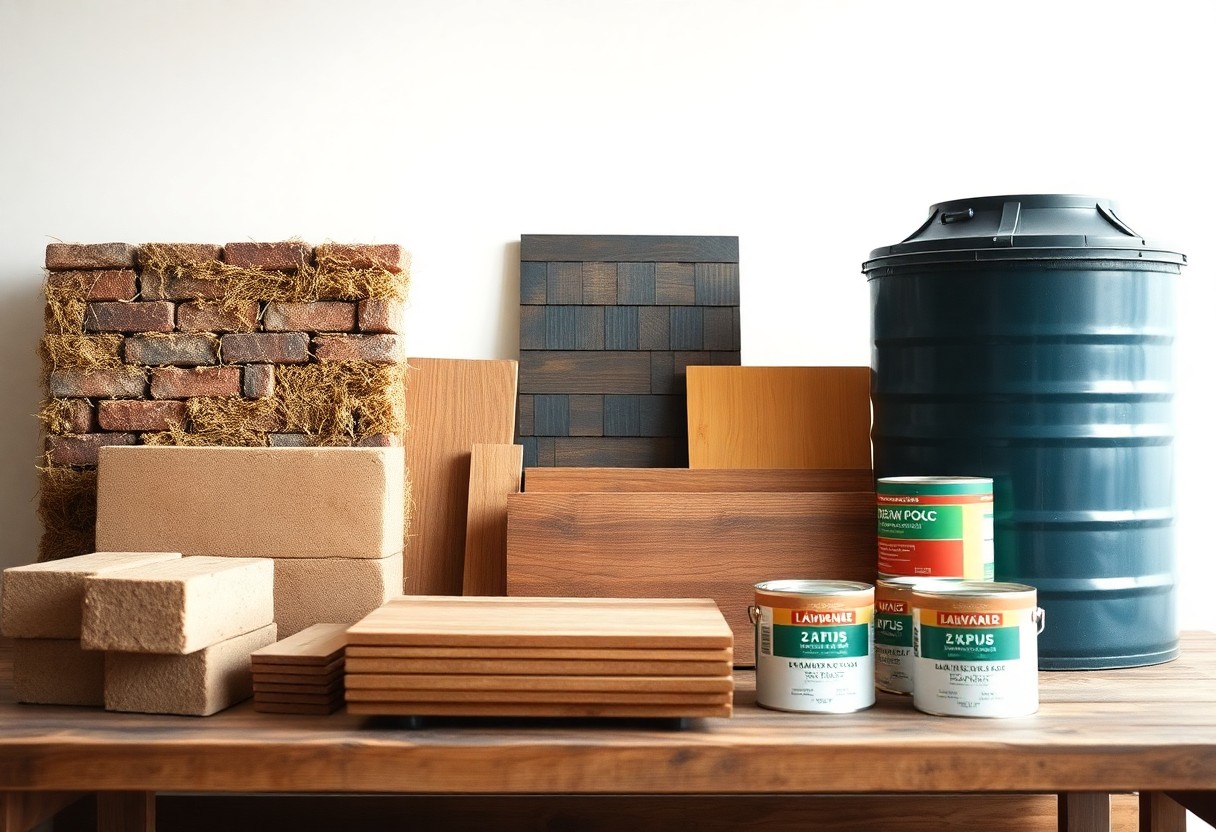
You can significantly reduce your home’s environmental impact and long‑term costs by choosing materials that balance performance, health and sustainability. Prioritise low‑emission, non‑toxic materials to protect indoor air quality, avoid chemicals that harm occupants, and select durable, recycled or rapidly renewable options for energy efficiency and reduced waste. Your choices influence carbon footprint, maintenance bills and resale value, so assess lifecycle impacts, certifications and local supply chains.
Benefits of Eco-Friendly Building Materials
By choosing materials like cross‑laminated timber, recycled steel and sheep’s wool insulation, you cut embodied carbon and operating energy; Passivhaus projects often show up to 90% lower heating demand. Using reclaimed timber or recycled aggregates can halve embodied emissions in walls and foundations, while long‑lasting products reduce maintenance and lower lifecycle costs over decades.
Environmental Impact
Given that buildings and construction account for roughly 39% of global CO2 emissions, you can reduce your home’s share by selecting low‑embodied‑carbon materials. Cross‑laminated timber stores about 0.9 tCO2 per m3, recycled steel cuts production emissions versus new steel, and specifying local materials reduces transport emissions; lifecycle assessments often show 30-60% lower carbon for well‑chosen assemblies.
Health Benefits
When you specify natural, low‑emission materials, your indoor air quality improves and health risks fall. Conventional paints and composite boards emit VOCs and formaldehyde, linked to irritation and asthma; low‑VOC paints and no‑added‑formaldehyde panels can cut initial VOC peaks by over 90%. Breathable insulations like wool or hemp regulate humidity, lowering mould risk and creating a healthier living environment.
Pairing low‑emission materials with proper ventilation and moisture control multiplies health gains. You should fit MVHR to maintain consistent fresh air and reduce pollutant peaks; studies show MVHR plus airtight construction lowers energy and indoor pollutants simultaneously. Also, choosing breathable finishes like lime plaster stabilises relative humidity within the 40-60% range, which diminishes dust‑mite and mould growth and reduces respiratory symptoms.
Types of Eco-Friendly Materials
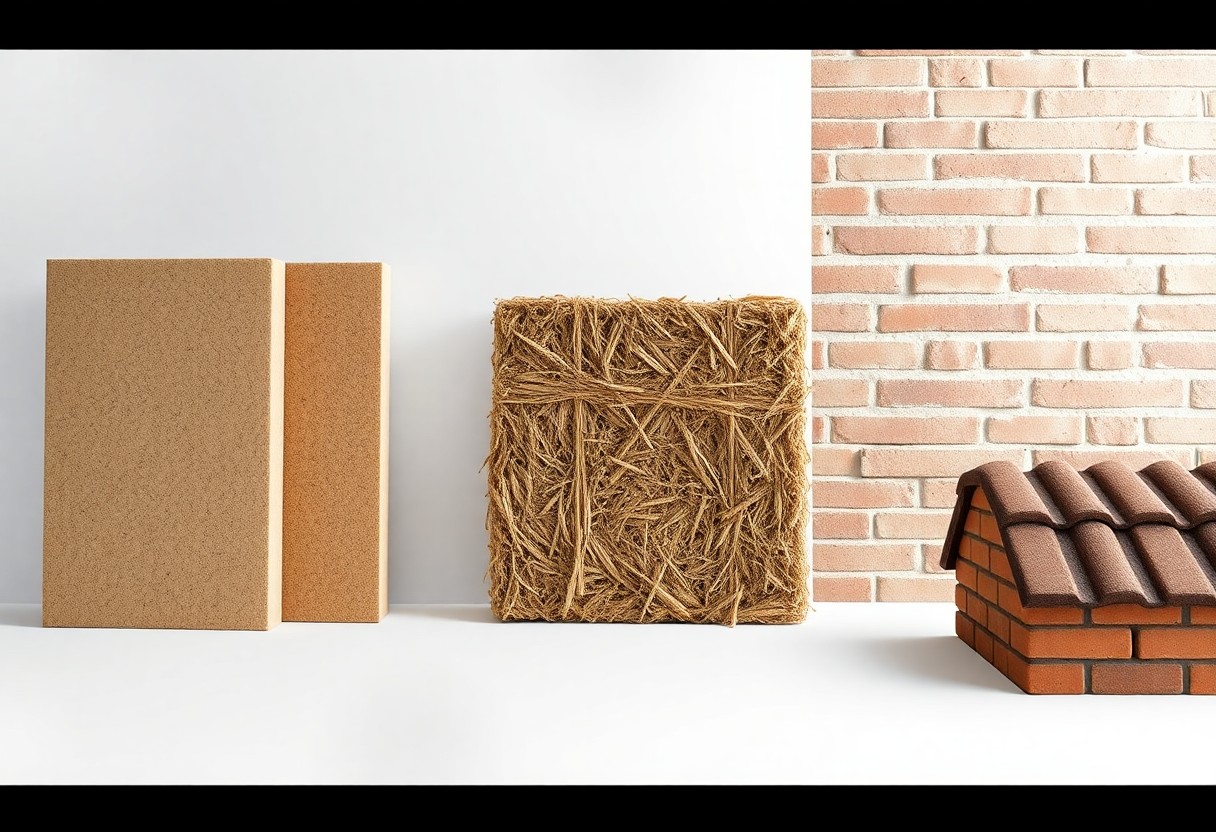
You should focus on a mix of renewable, recycled and low‑embodied‑carbon options when specifying eco-friendly materials; for example, sustainable wood like FSC‑certified CLT, recycled steel with high scrap content, and natural insulants such as sheep’s wool all cut lifecycle impacts while meeting performance targets. Many studies show embodied carbon reductions of up to 50% versus concrete or steel alternatives, and volatile organic compounds (VOCs) remain a key indoor‑air risk to manage. After
- Sustainable wood (FSC, CLT, engineered timber)
- Recycled materials (steel, glass, reclaimed brick)
- Natural insulation (cellulose, wool, cork)
- Low‑VOC finishes (paints, sealants)
- Low‑embodied carbon concrete alternatives (geopolymers, lime)
| Material | Primary benefit / note |
| Sustainable wood | Carbon storage, rapid renewability, CLT enables tall timber construction |
| Recycled steel | High strength, reduces energy use and emissions by roughly 60% vs virgin steel |
| Recycled glass | Low energy to remelt for tiles and aggregate, reduces landfill |
| Cellulose insulation | High recycled content, ~R‑3.5/inch thermal performance, good airtightness when dense‑packed |
| Low‑carbon concrete | Blended cements or geopolymers cut embodied CO₂ versus Portland cement |
Sustainable Wood Products
You can specify sustainable wood such as FSC‑certified timber, Cross‑Laminated Timber (CLT) and engineered beams to lower embodied carbon; CLT panels speed construction and store biogenic carbon, while certified sourcing prevents deforestation and supports biodiversity. Suppliers often provide Type III environmental product declarations (EPDs) so you can compare lifecycle emissions, and engineered products typically reduce material waste on site, improving efficiency for your build.
Recycled Materials
You should prioritise recycled materials like reclaimed brick, recycled‑content steel and glass to cut embodied energy; recycled steel can use around 60% less energy than primary production and reclaimed brick avoids quarrying impacts. Pay attention to material certifications and contaminant histories to ensure structural integrity and indoor‑air safety.
For greater detail, use recycled steel for structural framing where possible-projects report significant CO₂ savings when scrap content exceeds 80%; recycled glass performs well as aggregate or tiles, reducing virgin sand demand; and reclaimed brick can lower costs while preserving character. However, some recycled plastics may contain additives or contaminants, so require testing and suitable end‑use selection to prevent off‑gassing or leaching in habitable spaces.
Insulation Options
You should evaluate insulation options by thermal performance, embodied impact and moisture behaviour: dense‑packed cellulose (~R‑3.5 per inch), sheep’s wool, cork and hemp fibre combine low embodied energy with breathability, while rigid PIR/XPS foams offer high R‑values but can have high global warming potential blowing agents. Prioritise breathable systems to reduce condensation and improve indoor comfort.
When detailing, address thermal bridging and airtightness-continuous external insulation with natural boards can cut heating demand by over 20% in retrofit scenarios. Choose insulation with verified recycled content or natural fibres and check fire performance; for instance, sheep’s wool resists ignition and can absorb ~30% of its weight in moisture without losing thermal capacity, making it effective in variable climates.
Certifications and Standards
When you choose materials, prioritise recognised schemes-LEED, BREEAM, Passive House and Energy Star-to verify performance; for product ideas see 7 green building products to explore in 2024. Certified choices often cut your home’s operational energy by around 20% and reduce embodied impacts through credits for recycled content, low-VOC finishes and responsible sourcing.
LEED Certification
LEED scores projects on a 110-point scale: Certified (40-49), Silver (50-59), Gold (60-79) and Platinum (80+). You can target material credits such as MR: Building Product Disclosure and Whole-Building LCA in LEED v4, earning points by specifying reclaimed timber, high-recycled-content steel or third‑party EPDs to improve your project’s rating.
Energy Star and Other Ratings
Energy Star labels appliances and homes for verified efficiency, while Passive House demands heating demand ≤ 15 kWh/m²·yr and BREEAM awards classes (Outstanding ≥85, Excellent ≥70, Very Good ≥55). You should use these benchmarks to compare product performance and set measurable targets for energy and indoor air quality.
Certification relies on testing: Energy Star homes require third‑party verification including blower door and duct‑leakage tests, HERS and SAP provide performance indices (HERS 100 = typical new home, HERS 0 = net zero), and BREEAM uses weighted categories-so you can specify tests and scores in contracts to ensure compliance.
Cost Considerations
When you weigh materials, expect an upfront premium of 5-30% for options like reclaimed timber, insulated concrete formwork or triple glazing, but lifecycle analysis often shows energy and maintenance savings of 10-30% over 10-20 years; compare product lifespans, maintenance cycles and embodied carbon, and consult resources such as Top 10 Sustainable Building Materials for Eco-Friendly … to price alternatives accurately.
Initial Investment vs. Long-term Savings
You’ll often pay more up front for high-performance materials-SIPs, heat pumps and high‑efficiency glazing can add 10-50% to initial costs-but they commonly reduce energy bills by 20-40%, yielding payback periods typically between 5-15 years; quantify expected annual kWh savings, maintenance differences and resale value to decide whether the lifetime return meets your budget and mortgage horizon.
Incentives and Rebates
You should factor in grants, tax credits and utility rebates which can lower upfront costs substantially; many schemes cover a percentage of installation or offer fixed grants-often £500-£5,000 or up to 25-30% of eligible costs-so check eligibility early and include potential rebate amounts in your cash‑flow and payback calculations.
Administrative details matter: applications typically require pre‑approval, certified installers and retention of invoices and product specifications, and you can often stack multiple incentives (local grants plus utility rebates plus tax credits); utilities may provide immediate point‑of‑sale rebates (£100-£1,500), while national incentives frequently arrive as tax reliefs or rebate cheques-confirm timelines, caps and whether the incentive applies to new builds or only to retrofits before you commit.
Design and Aesthetics
You should prioritise material honesty and proportion: exposed cross‑laminated timber beams and lime plaster create warmth while reducing finishes, and orienting glazing to the south maximises passive gain. Aim for an average daylight factor of around 2% in living spaces to support wellbeing, and combine biophilic elements-living walls, natural textures-with careful detailing to avoid condensation. Use colour and texture to express sustainability without sacrificing the refined, modern aesthetic you want.
Integrating Eco-Friendly Materials
Start by specifying FSC‑certified timber or reclaimed oak for flooring, pair a CLT frame with breathable hemp‑lime insulation, and choose low‑VOC paints to reduce indoor pollutants. You can achieve low heat loss with triple glazing at U‑values near 0.8 W/m²K, and select recycled steel or geopolymer concrete for structural elements to cut embodied carbon. Ensure vapour control and detailing to prevent mould and rot where materials meet.
Trends in Eco-Friendly Home Design
Passivhaus and net‑zero strategies are mainstreaming: Passivhaus can cut space‑heating demand by up to 90%, while net‑zero targets encourage integrated PV, battery storage and heat pumps. Offsite modular timber construction is growing rapidly, since it can reduce onsite labour and shorten build time by up to 50%, and advanced materials like hempcrete and recycled composites are entering mass housing schemes. Always assess fire and moisture performance when adopting new systems.
Recent projects illustrate these trends: Brock Commons (18 storeys, CLT) demonstrated tall timber viability, and BedZED influenced UK sustainable neighbourhood design with mixed renewables and orientation strategies. With the UK’s legal net‑zero by 2050, you should favour suppliers offering FSC certification and lifecycle data, and run moisture modelling during design to avoid long‑term defects that negate environmental gains.
Case Studies and Examples
You can judge performance from real projects where eco-friendly building materials for new homes delivered measurable savings, lower embodied carbon and reduced build times; the following examples give you specific metrics so you can compare outcomes and trade-offs directly.
- 1) BedZED, Sutton, London (2002) – 82 dwellings; used reclaimed timber, high insulation and solar; monitored studies reported a c.45% reduction in household ecological footprint and heating savings >30% compared with local averages.
- 2) Hockerton Housing Project, Nottinghamshire (1998) – 5 earth-sheltered homes; off-grid systems (PV and wind); mains energy use cut by around 80-90% and annual running costs reduced to near zero for some utilities.
- 3) Typical Passivhaus certified new build – heating demand <15 kWh/m²·yr; you can expect space‑heating reductions of up to 90% versus conventional stock and airtightness ~0.6 ACH50.
- 4) Cross‑laminated timber (CLT) mid‑rise (UK projects) – build programme shortened by c.30%, dry construction reduced site waste by >40% and embodied carbon commonly 30-60% lower than reinforced concrete alternatives.
- 5) Hempcrete residential builds (France/UK trials) – thermal buffering and vapour‑open walls; operational heating needs typically fall by 20-40%, with very low embodied carbon and improved indoor humidity control.
- 6) Low‑carbon concrete mixes (GGBS/fly ash) in new foundations – embodied CO₂ reductions up to c.50% versus OPC; typical cost impact 0-10% and strength comparable for foundation use.
Successful Eco-Friendly Home Projects
You can learn from flagship schemes: BedZED (82 homes) proved community‑scale low‑carbon design, Passivhaus examples routinely achieve heating demand under 15 kWh/m²·yr, and small off‑grid schemes like Hockerton cut mains energy by c.80-90%, showing how eco-friendly building materials combine with design to deliver measurable savings.
Lessons Learned from Innovative Builders
You should expect trade‑offs: higher upfront costs commonly 5-15% for high‑performance fabric and certifications, but lifecycle savings, lower maintenance and reduced energy bills frequently pay back within 5-12 years; also avoid high‑VOC finishes and ensure mechanical ventilation to prevent poor indoor air quality, a dangerous oversight.
Practical steps you can take include specifying airtightness targets (aim for ≤0.6 ACH50 for Passivhaus), insulation U‑values (walls ~0.15 W/m²K, roofs ~0.10 W/m²K), third‑party material certification, and post‑completion monitoring; doing so reduces performance gaps, helps you verify embodied carbon reductions and ensures your new homes meet predicted energy and comfort outcomes.
Final Words
Drawing together the benefits of timber, recycled steel, low-VOC finishes and high-performance insulation, you can significantly reduce your home’s environmental footprint while improving indoor air quality and long-term running costs. By prioritising certified, locally sourced materials and working with informed designers and builders, your choices will deliver resilience, efficiency and enduring value to your new home.
FAQ
Q: What are the best low‑embodied‑carbon structural materials for new homes?
A: Opt for sustainably sourced timber certified by FSC or PEFC and consider engineered timber products such as cross‑laminated timber (CLT) which offer high strength with lower embodied carbon than steel or conventional concrete; reclaimed or salvaged masonry and timber reduce demand for new materials and the embodied carbon of recycled steel is lower than virgin steel though still energy‑intensive; alternative binders such as geopolymer concrete and rammed earth provide durable, thermally massive options with lower CO2 emissions when sourced locally; always check third‑party environmental product declarations (EPDs) and perform a whole‑life assessment to compare trade‑offs between durability, maintenance needs and upfront carbon.
Q: Which insulation materials are most eco‑friendly and how do they compare in performance?
A: Natural and recycled insulants such as sheep’s wool, cellulose (recycled paper), hemp, cork and wood‑fibre boards offer low embodied energy, good moisture buffering and non‑toxic performance; sheep’s wool and wood fibre perform well in hygrothermal terms, cellulose gives excellent thermal and acoustic performance, and cork is durable and rot‑resistant for specialised uses; mineral wool and recycled glass can be lower cost and recyclable but have higher manufacturing energy than natural options, while PIR/PUR foams give high thermal resistance per thickness but score poorly for embodied carbon and end‑of‑life impacts-choose systems that suit the wall/roof build‑up, ensure correct vapour control and air‑tightness detailing, and check declared thermal conductivity and fire performance for compliance.
Q: Are there sustainable options for cladding and roofing that suit UK climates?
A: Yes-responsibly sourced timber cladding (thermally modified or Accoya) and reclaimed brick or stone provide low‑impact, long‑lasting façades; metal roofs made from recycled aluminium or steel are lightweight and recyclable, while fibre‑cement cladding has durability though requires careful sourcing; green roofs (extensive sedum or biodiverse assemblies) improve insulation, stormwater retention and biodiversity and perform well in UK rainfall patterns, and in situ or prefabricated vegetated systems reduce urban heat and surface runoff-assess life expectancy, maintenance and local planning restrictions when selecting.
Q: What low‑emission finishes and internal materials should be used to improve indoor air quality?
A: Use low‑VOC or VOC‑free paints, water‑based stains and natural finishes such as lime or clay plasters and vegetable oils (linseed) which off‑gas far less than solvent‑based products; select engineered timbers with low formaldehyde emissions (CARB Phase 2 or E1 certified) and non‑toxic adhesives and sealants; check product emissions testing (CE marking, AgBB or similar) and eco‑labels, prioritise breathable finishes in solid‑wall systems to manage moisture, and combine with adequate ventilation strategies to maintain healthy indoor air quality.
Q: How should I balance cost, availability and performance when specifying eco‑friendly materials for a new build?
A: Take a whole‑life costing approach rather than focusing solely on purchase price-compare embodied carbon and operational savings from better insulation or airtightness, source materials locally to reduce transport emissions and support supply chains, and consider hybrid solutions where high‑performance eco materials are used where they give most benefit (eg. high‑quality insulation and low‑emission finishes) while standard products are used elsewhere to control budget; verify contractor experience with specific materials, factor in maintenance and replacement cycles, and explore grants, supplier warranties and prefabrication options to reduce waste, labour time and long‑term running costs.