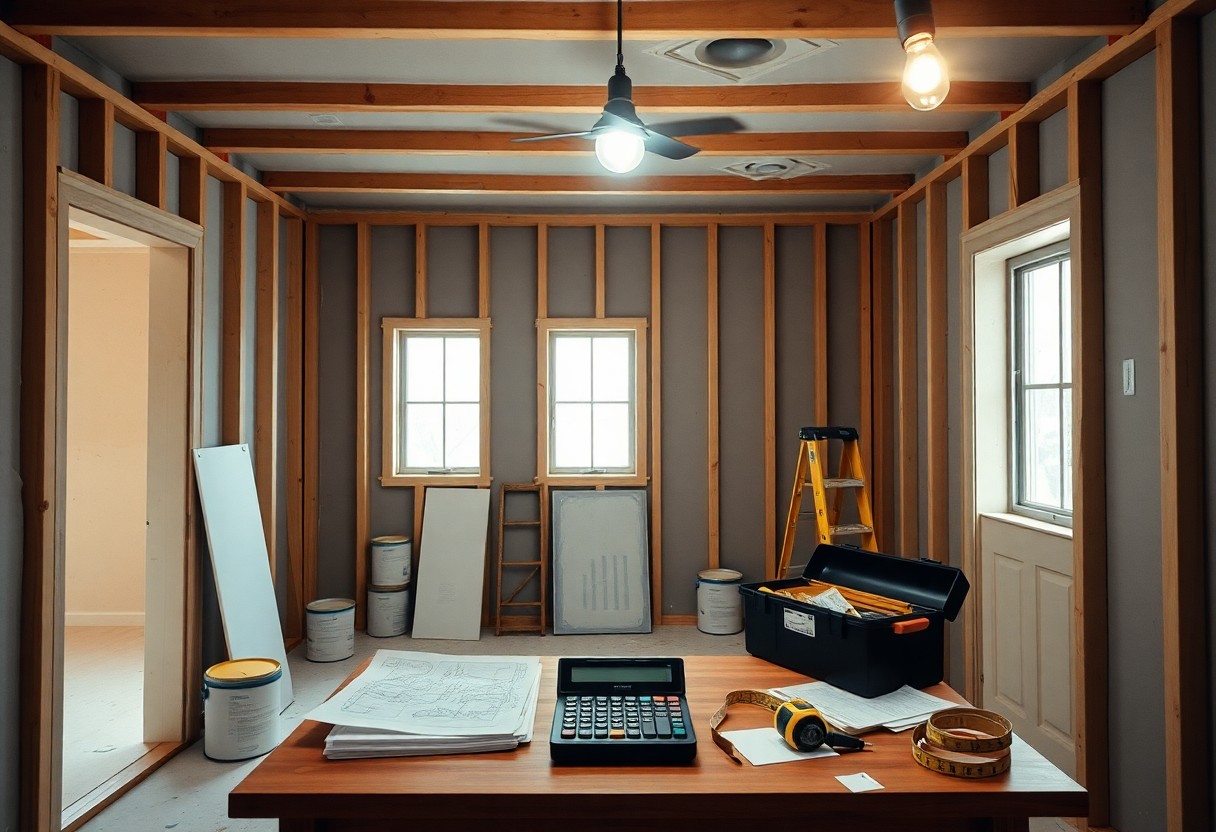
There’s typically a wide cost range for a full house renovation-generally £50,000-£250,000 depending on property size, finishes and structural work; you must allow a 10-20% contingency for unexpected issues like hidden damp or structural repairs, secure necessary permits to avoid fines, and consider that a high-quality renovation can significantly increase your property’s value, though finishes… How Much Does a Full House Renovation Cost?
There’s typically a wide cost range for a full house renovation-generally £50,000-£250,000 depending on property size, finishes and structural work; you must allow a 10-20% contingency for unexpected issues like hidden damp or structural repairs, secure necessary permits to avoid fines, and consider that a high-quality renovation can significantly increase your property’s value, though finishes and location determine your return on investment.
Understanding Renovation Costs
You should expect wide variance: a full house renovation in the UK can be as low as £20,000 for basic cosmetic work and exceed £150,000 for full strip-outs and structural remodelling, with average rates around £700-£1,500 per m²; structural alterations, services upgrades and high-end finishes usually dominate the bill, so you should budget a 10-20% contingency for surprises.
Factors Influencing Costs
Location, scale and existing condition directly change what you pay: labour in London typically runs 20-40% higher, specialist trades and scaffolding add fixed sums, and concealed defects such as rot or steel repairs can push costs sharply higher. The overall mix of these factors can easily double your initial estimate if you don’t plan for them.
- Labour rates
- Material quality
- Scope of works
- Structural issues
- Planning & permits
- Accessibility
- Contingency
Average Cost Breakdown
A practical split you can use for estimates is roughly 30% for structural and alterations, 25% for kitchens and bathrooms, 15% for services (electrics/plumbing), 20% for finishes and fittings, and 10% for design, permits and contingency; you should assign both fixed costs (fees, permits) and percentage-based allowances.
For example, a 100 m² mid-terrace might cost ~£25k for a cosmetic refresh, £50-80k for a medium refurb and £100-140k for a full gut and rebuild; kitchens frequently range £8k-30k and bathrooms £4k-12k, so you should obtain multiple detailed quotes to compare scope and allowances.
Planning Your Renovation Budget
Break your numbers down into categories: allocate roughly 35-45% for structural and major works, 20-30% for kitchens and bathrooms, 10-15% for finishes, and allow 8-15% for professional fees, with a dedicated contingency of 10-20%. For a £150,000 overhaul that means planning for £15,000-£30,000 contingency and expecting design/permits to eat 8-12% of the total. You should price sample rooms (kitchen £10k-£30k, bathroom £3k-£10k) to validate totals.
Setting Realistic Expectations
Accept that older properties routinely add time and cost: permit delays of 4-12 weeks or hidden damp and joist rot can push schedules. You should plan staged sign-offs and allow 15-25% longer than contractor estimates for complex work; for example, a full kitchen replacement often runs 8-12 weeks, not the quoted 4-6. Use phased spending to capture trade discounts and supplier lead-time savings.
Contingency Funds
Set aside at least 10-20% of your total budget, and increase to 15-25% for Victorian or pre-1950s homes. For a £200,000 project that’s £20,000-£50,000. You must treat this as a separate, untouchable reserve for unexpected items like structural repairs, rotten timbers or asbestos, not for scope-creep extras like luxury upgrades.
Hold contingency in a separate account and release funds only with documented quotes; track spends against line items and require contractor sign-off. Typical surprises include rewiring (£3,000-£8,000), RSJ or structural beam installations (£1,500-£6,000), and asbestos removal (£500-£5,000+ depending on extent). You should log every drawdown and update forecasts monthly so you spot trends and avoid depleting the reserve prematurely.

Cost-Saving Strategies
Target the two biggest levers: labour and materials. Labour often accounts for 30-40% of a full renovation, so doing finishes like painting or tiling yourself can save significant sums, while hiring specialists for structural, electrical and gas work avoids costly rework. You should prioritise tasks that match your skills, factor in time vs. saved cost, and always budget a contingency of at least 10-15% for unforeseen issues.
DIY vs. Hiring Professionals
If you take on cosmetic work you can reasonably cut costs by 20-40% compared with contractor quotes, but tradespeople deliver speed, correct compliance and guarantees; typical skilled-trade rates in the UK vary around £30-£60 per hour or £150-£300 per day. You must hire Gas Safe or NICEIC-registered engineers for gas and mains electrical work – attempting those yourself risks safety, legal liability and failed insurance claims.
Sourcing Materials Wisely
Seek out ex-display kitchens, seconds outlets, auctions and reclamation yards to reduce spend – buying in bulk or negotiating trade discounts can shave 10-25% off costs. You should compare unit prices (e.g. flooring per m²), order samples to check quality, and factor delivery and storage; cheaper materials can be smart, provided you avoid visibly damaged or damp-affected items.
For example, purchasing an ex-display kitchen and sourcing worktops from a seconds supplier saved one homeowner ~£5,000 on a mid-range refit; you should check warranties, return policies and compatibility before buying. Prioritise robust materials in wet areas, inspect reclaimed timber for rot, and combine small orders into a single delivery to cut courier fees – these practical steps help maintain quality while lowering your overall bill.
Renovation Financing Options
You can mix funding routes-self-funding, remortgaging, unsecured loans, bridging finance, credit cards for small items, and government schemes-to match project scale and risk. For example, small projects under £10,000 are often suited to personal loans or savings, while structural works near £50-150k usually use a remortgage or two-stage funding. Watch for high APRs on unsecured credit and prefer secured options when you need longer terms to keep monthly payments lower.
Loans and Mortgages
Secured remortgages and homeowner loans generally offer the lowest rates-recent typical fixed mortgage rates ranged around 2-6%-whereas personal loans often sit between 3-15% APR depending on credit. Bridging loans can cost 0.5-1.5% per month, so use them only short-term. For instance, a £50,000 personal loan at 8% over 10 years repays roughly £606/month, illustrating how term and rate change affordability.
Grants and Incentives
There are targeted grants you can apply for: the Disabled Facilities Grant can provide up to £30,000 for necessary adaptations, the Boiler Upgrade Scheme offers around £5,000 towards low-carbon heating, and the ECO scheme may fund insulation or heating for eligible households. Eligibility is often means-tested or need-based, and these funds are non-repayable, so they can substantially reduce your capital requirement if you qualify.
Application paths vary: your local council handles DFGs and usually requires an occupational therapist assessment and two or three contractor quotes; processing commonly takes 3-6 months. Do not start work before approval, as that can void funding. You can combine grants with a remortgage or loan, but lenders typically request grant award letters and detailed cost breakdowns before releasing funds, so plan paperwork and timelines from the outset.
Common Renovation Projects
Typical projects you’ll encounter include kitchens, bathrooms, full rewires, loft conversions and structural changes; market surveys show kitchens and bathrooms account for over 50% of budgets. For real-life spending comparisons see What did you end up spending for a full renovation? How much did it run you? and expect wide variance-minor updates from £5,000 to full refurbs exceeding £80,000.
Kitchen Remodel
You can budget a typical kitchen remodel at roughly £10,000-£40,000 depending on scope; new cabinets and appliances cost £6,000-£15,000, bespoke joinery and structural changes push prices up, and relocating gas or electrical services raises complexity-hire registered installers for gas and electrics to avoid serious safety risks and failed inspections.
Bathroom Upgrade
You should expect a bathroom upgrade to sit between £4,000 and £15,000 for a standard refit; tiling, waterproof membranes and ventilation dominate costs, while converting to a wet room or adding an en suite can double budgets-poor waterproofing leads to mould, rot and costly repairs.
When you dive deeper, moving soil stacks or altering drainage can add £1,000-£3,000, and full replumbing often costs £2,000-£6,000; consider underfloor heating (£500-£1,500) and an RCD-protected electrics upgrade-case studies show airtight waterproof membranes and correct falls prevent long-term failures and save money over time.

Regional Cost Variations
Expect wide regional swings: labour, materials, transport and permit fees can make projects vary by 20-40% from one area to another; in some pockets you may pay even more for rush trades or restricted access. For a detailed national breakdown consult How Much Does It Cost to Renovate a House? 2025 Guide, which separates typical costs by region and job type.
Urban vs. Rural Differences
In cities you’ll typically face higher labour rates (often 20-40% above rural levels), parking and access charges, and stricter conservation rules that add time and cost; out in rural areas, material delivery surcharges and fewer specialist trades can still push budgets up, so your total cost depends on whether site constraints or distance are the bigger factor.
Local Market Trends
You’ll notice short-term swings driven by trade availability and material prices: areas with high renovation demand often see trades backlogs that add 5-15% to quotes, while neighbourhoods with active development can inflate supply costs and lead times, affecting your final schedule and budget.
For example, if you’re refurbishing a 100 m² Victorian terrace, a busy London borough quote might land around £120-£200k due to labour premiums and planning delays, whereas the same brief in a northern city could be closer to £80-£130k; you should get multiple local quotes and check recent completed-project costs in your area to calibrate your allowance.
Summing up
To wrap up, a full house renovation can vary widely-typically from £50,000 for minor overhauls to £250,000+ for extensive work-depending on size, finish level, structural changes and location; you should obtain detailed quotes, prioritise a clear scope, set your contingency budget, and engage reputable contractors to control cost and timing.
FAQ
Q: How much does a full house renovation typically cost overall?
A: A full house renovation in the UK varies widely by scope and finish. Rough guide by standard of finish: basic refurbishment £400-£700 per square metre, mid-range £700-£1,200 per square metre, high-end £1,200-£2,500+ per square metre. As examples, a 100 m² property could cost roughly £40k-£70k (basic), £70k-£120k (mid-range) or £120k-£250k+ (high-end). These figures include major elements such as kitchens, bathrooms, new electrics and heating but exclude major extensions or extensive structural rebuilds, which add substantially to cost.
Q: What are the main cost drivers I should expect?
A: Key cost drivers are: kitchen (£8k-£30k+ depending on units and appliances), bathrooms (£3k-£15k each depending on fittings), structural work (from a few hundred to tens of thousands for walls or foundations), new electrics and rewiring (£3k-£10k+), heating and plumbing upgrades (£3k-£12k+), windows and doors (£300-£1,000+ each), roofing (£5k-£20k+), internal finishes (plastering, flooring, decorating) and professional fees (architects 5-12% of build cost, structural engineer fees variable). Labour typically accounts for a large share (often 30-50% of the project cost) and VAT at 20% applies to most materials and trades.
Q: What hidden or unexpected costs should I allow for?
A: Allow for unforeseen issues uncovered once work starts: damp or timber rot repair, asbestos removal, outdated foundations or services, party wall agreements, and additional drainage work. Professional fees (surveys, structural calculations, building control fees), contingency (commonly 10-20% of build cost), skip hire and storage, and potential temporary accommodation or extended living costs if the house is uninhabitable should also be budgeted for.
Q: How long does a full house renovation take and how does timeframe affect cost?
A: Typical timescales: a light/full interior refurbishment 8-12 weeks, a comprehensive renovation including structural work 3-6 months, major structural projects or those with extensions 6-12 months or more. Longer projects increase labour charges, on-site management time and may require interim accommodation or storage, all of which add cost. Delays from materials lead times, planning approvals or weather can inflate budgets, so fixed timetables and early ordering of long-lead items reduce risk of extra expense.
Q: What practical ways are there to reduce overall cost without sacrificing quality?
A: Prioritise work that adds value and keep disruptive changes to services (plumbing/electrics) to a minimum to save money. Obtain multiple, detailed quotes; use reputable local trades recommended by others; buy standard-size windows and off-the-shelf fittings; salvage and refurbish where feasible; phase the project to spread cost; manage or co-ordinate trades yourself if confident; and lock in key prices for materials early. Invest in a clear specification and professional estimate to avoid change orders, and set a contingency to handle surprises without compromising quality.