
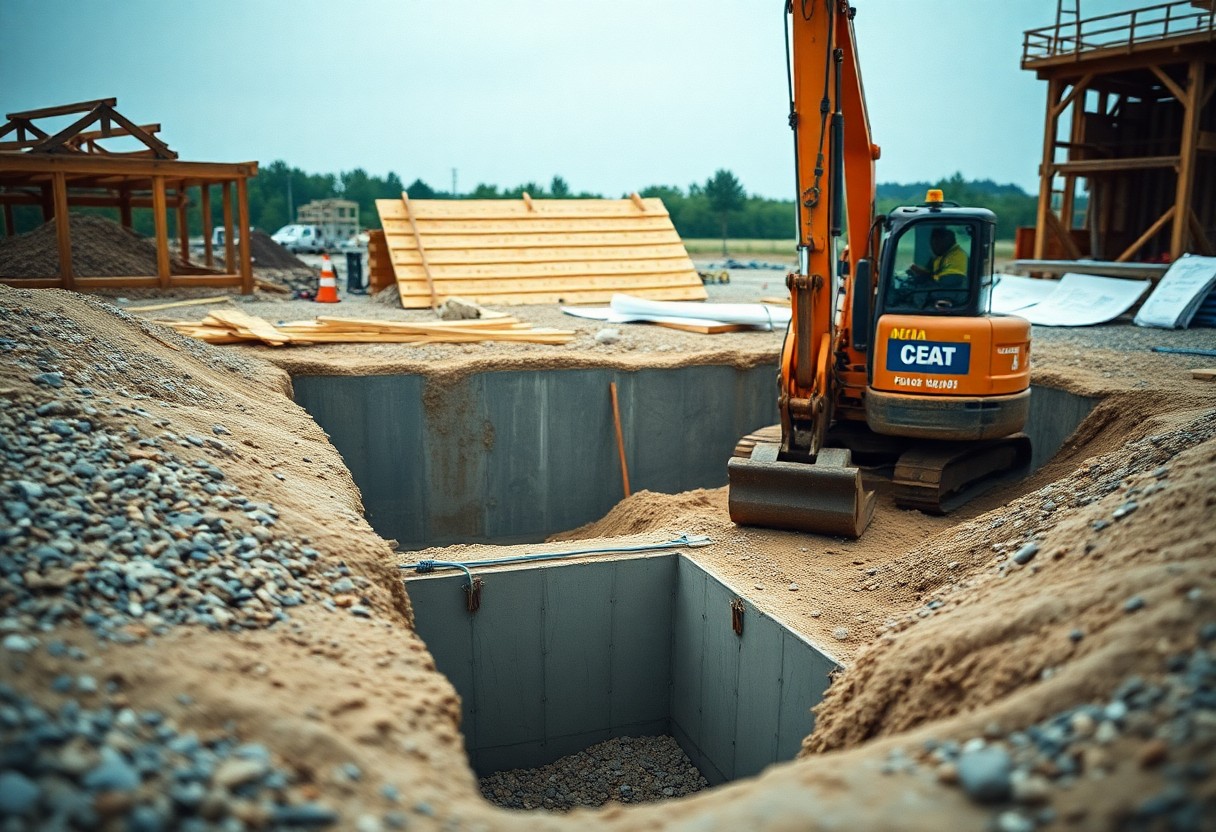
Just to get you started, groundworks are the preparatory, below-ground construction tasks that set the base for any build; they include foundations, drainage and service connections, require careful planning and often involve deep excavations and live utilities that can be hazardous, and when done correctly they ensure structural safety and longevity, so you should understand the scope, risks and regulatory requirements before your project begins.
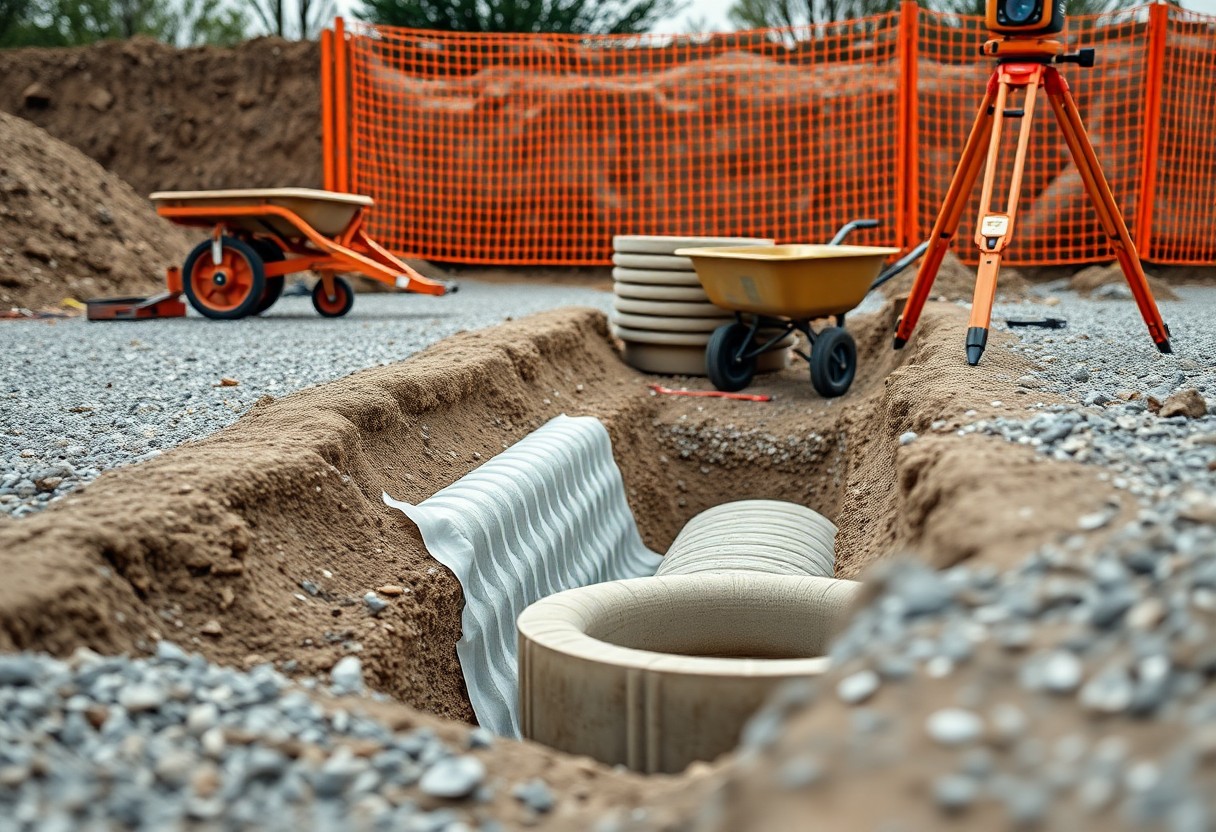
Understanding Groundworks
Definition and Importance
You’ll oversee groundworks to prepare the site-clearing, earthworks, temporary works and services-so your structure rests on reliable foundations, since poor preparation raises the risk of settlement, water ingress and costly remedial work. This stage relies on soil reports, compaction targets and adherence to building regulations to protect structural integrity and programme timelines.
- Groundworks – site clearance, earthmoving and temporary support
- Foundations – transfer building loads into the ground
- Drainage – control groundwater and surface water
- Utilities – ducts, services and connection points
- Compaction – achieve specified density to reduce settlement
| Site clearance | Removal of vegetation, topsoil and obstructions to expose suitable subsoil |
| Earthworks | Cut and fill operations to form finished levels and berms |
| Temporary works | Shoring, propping and access arrangements to keep you and the team safe |
| Drainage | Perimeter and subsoil drains to protect foundations from water |
| Utility trenches | Planned routes for water, gas, electric and telecoms with correct bedding |
Common Types of Groundworks
You will commonly choose between strip foundations for load-bearing walls, pad foundations beneath concentrated loads, raft slabs for weak soils and piled solutions where depths of 10-30 metres transfer loads to competent strata. This choice balances structural requirements, site constraints and overall cost implications.
- Strip foundations – continuous footings under walls
- Pad foundations – isolated bases for columns or piers
- Raft slabs – full-area slabs to spread loads on poor soil
- Pile foundations – driven or bored piles to reach firm strata
- Ground beams – tie foundations together and span weak spots
| Strip | Shallow trench filled with concrete; common on stable sites |
| Pad | Compact concrete block under point loads, often 500-1200mm wide |
| Raft | Concrete slab, typically 150-300mm thick, spanning poor-bearing areas |
| Pile | Bored or driven elements transferring loads to deep strata |
| Ground beam | Reinforced beams linking pads or piles to distribute loads |
You should consider cost and programme: piled solutions can be 2-5 times more expensive than shallow foundations but are imperative when competent strata lies deep; for domestic extensions, shallow strip or pad foundations remain common and usually meet regulations when soil is suitable. This assessment often requires a geotechnical report and designer input before you start excavation.
- Piled solutions – higher cost, used when necessary to reach bearing stratum
- Shallow foundations – economical for good ground, widely used in UK housing
- Raft slabs – reduce differential settlement on variable soils
- Ground investigation – boreholes and trial pits to guide foundation choice
- Design coordination – structural engineer and geotech input to avoid surprises
| Piled (example) | Driven precast piles or bored CFA piles to depths of 10-30 metres where required |
| Strip (example) | Typical domestic strip 600-900mm wide and 225-450mm deep depending on loads |
| Pad (example) | Concrete pads under point loads, often coordinated with ground beams |
| Raft (example) | Slab-on-grade, reinforced, often 150-300mm thick with edge beams |
| Investigation | Soil reports, percolation tests and contamination checks to inform design |
Step-by-Step Guide to Groundworks
| Overview |
You move through survey, excavation, formation and final reinstatement in a defined sequence; for example a 50m strip foundation typically requires 0.9-1.2m excavation, 150-300mm of compacted hardcore and a C25/30 concrete pour. You should programme plant, labour and inspections so that tasks such as drainage, DPM and service crossings are completed before backfilling, minimising rework and downtime on site. |
| Initial Planning and Design |
Initial Planning and DesignYou commission a site investigation (trial pits or boreholes) to establish soil type, CBR and water table; specify foundations (strip, raft or piles) based on loads and a calculated settlement limit, and check for services using utility records and CAT scans. You also submit drawings for planning and set out tolerances, typically ±10mm for foundations and ±25mm for drainage runs. |
| Implementation Procedures |
Implementation ProceduresYou begin with site clearance and setting out, then excavate to formation level using appropriate plant (1.5-3t mini-excavators for tight sites, 8-13t for larger sites) and install temporary drainage; provide shoring for trenches deeper than 1.2m and bench slopes where required, compact hardcore to design density and place DPM and blinding before pouring concrete. Sequencing matters: first verify formation levels with the engineer, then lay 150-300mm of well-graded hardcore compacted to ≈98% Proctor for footings or sub-bases; next place a 50mm blinding and reinforcement (mesh or bar, cover typically 50mm) and pour C25/30 concrete for strip foundations or base slab. Manage groundwater with sumps and pumps if the water table is within 1m of formation, and carry out compaction tests, cube tests and engineer inspections at staged intervals; for poor ground (CBR <2%) you should consider ground improvement or piled solutions. Finally backfill in layers, compacting to spec, and protect completed works from frost and heavy rain for at least 7 days after casting to ensure adequate curing and strength development. |
Key Factors to Consider in Groundworks
When planning groundworks you must survey site access, existing utilities and expected loads; urban projects often find services within 300-600 mm of the surface. You should quantify excavation volumes, temporary works and traffic management to estimate costs and programme impacts. For example, a 50 m trench at 1 m deep typically yields 50-75 m3 of spoil depending on battering and trench width. This guides how you prioritise excavation, safety and cost.
- Site access
- Soil bearing capacity
- Drainage
- Utilities
- Programme & budget
Soil Types and Conditions
Different soils demand different treatments: clay swells and heaves, sand drains well but has lower bearing capacity, silt can fluidise when disturbed and peat compresses dramatically. You should expect bearing capacities from around 50 kPa for soft organic soils to over 300 kPa for dense granular materials or rock, and plan foundation type and dewatering accordingly. Perceiving how each type affects foundation choice and dewatering strategy will reduce late-stage changes.
- Clay
- Sand
- Silt
- Peat
| Soil Type | Impact on Groundworks |
|---|---|
| Clay | High swelling/shrinkage; may need piled foundations or deep strip footings |
| Sand | Good drainage; lower lateral stability, may need compaction or stone columns |
| Silt | Prone to liquefaction when saturated; careful excavation and dewatering required |
| Peat/organic | Very low bearing; often requires removal, replacement or piled foundations |
Environmental Considerations
You must assess contamination, groundwater flows and protected habitats early to avoid statutory delays; brownfield sites commonly need a Phase I report and about 30% require Phase II sampling. Sites with landfill gas risks demand monitoring and potential mitigation such as gas membranes or venting systems. Engagement with regulators and local ecology officers will reduce change orders and planning conditions.
You should commission a site-specific risk assessment and, where indicated, four weeks of gas monitoring with boreholes at typical depths of 1-3 m; mitigation options include gas protection membranes, piling to reach competent strata or in‑situ stabilisation. If you encounter contamination above screening values, factor in remediation costs-removal, treatment or encapsulation can add 10-25% to groundworks budgets on impacted sites.
Tips for Successful Groundworks
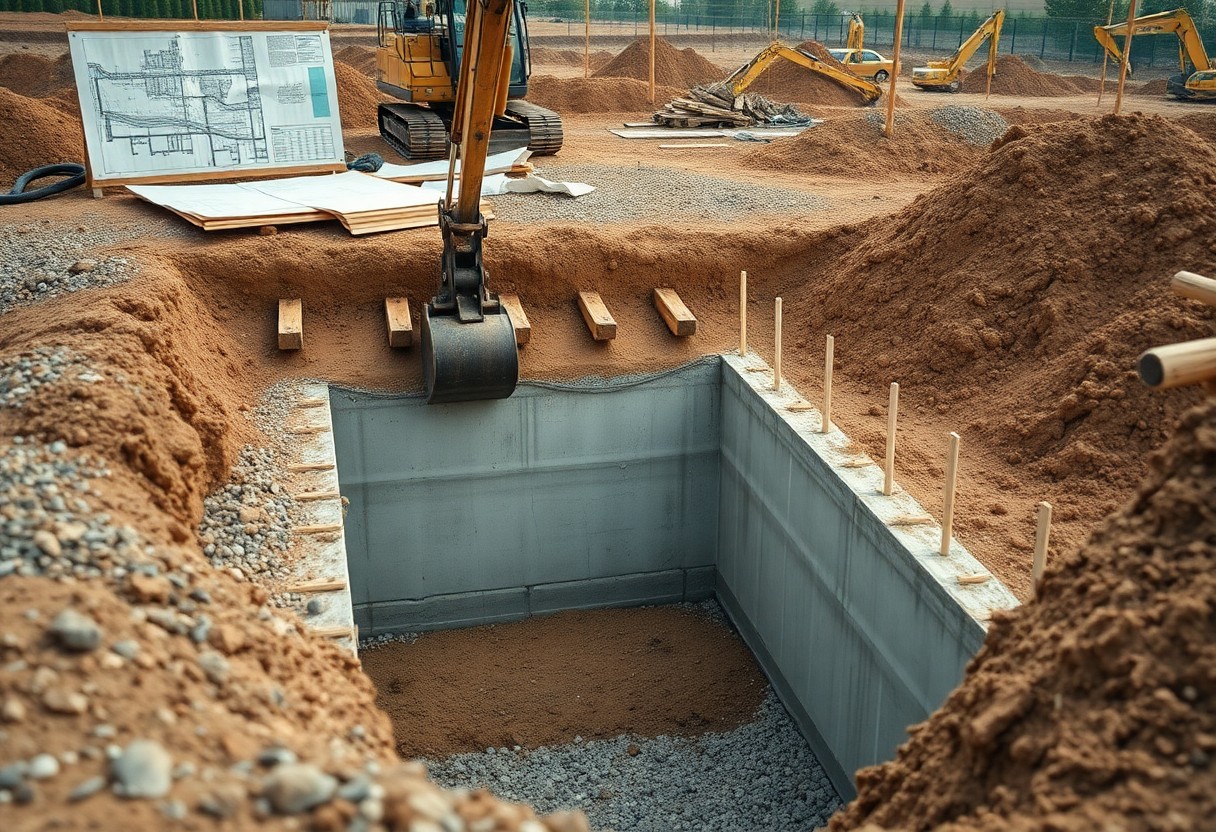
You should prioritise a detailed site survey, accurate level and soil reports, and a permit check before any groundworks start. Commission a geotechnical report specifying bearing capacity and groundwater level to avoid surprises during foundation design. Plan for proper drainage and compaction schedules, agree testing regimes (CBR, Proctor, plate tests) and factor in a minimum 10% contingency and weather delays. Assume that you have obtained utilities plans and considered shoring where depths exceed 1.2 m.
- Obtain a site survey and soil/groundwater report.
- Locate underground utilities with plans and CAT scanning.
- Design foundations to suit bearing capacity and frost depth.
- Provide adequate drainage and consider SUDS for runoff control.
- Follow planned compaction passes and verify with testing.
- Allow contingency for bad weather and unforeseen obstructions.
Tools and Equipment
You will need a mix of plant and hand tools; for most domestic jobs a 2.5‑tonne mini‑digger, 1 m³ cement mixer and a plate compactor speed up work. Also include a laser level, site dumper, breaker and trench shoring where required, plus PPE (boots, helmet, hi‑vis, gloves). Check for underground utilities before digging and use CAT scanning; shoring and bracing are imperative for excavations over 1.2 m depth.
Hiring Professionals vs. DIY
You can save labour by doing minor landscaping or shallow trenches yourself, but complex tasks such as piled foundations, underpinning or intricate drainage should be handed to specialists. Contractors often include plant hire and waste removal; typical domestic groundwork quotes range from £1,500-£7,000 depending on scope. Verify that professionals hold at least £5m public liability and appropriate insurance, since DIY mistakes can cause structural failure or void your home insurance.
When you compare contractors you should ask for a written method statement, a CDM‑compliant risk assessment and proof of experience with similar soil conditions; obtain at least three quotes and two recent references. On‑site durations commonly run 2-5 days for strip foundations and 3-4 weeks for larger extensions. Also insist on signed structural calculations, waste transfer notes and a warranty, and plan a 10-20% contingency for hidden obstructions.
Pros and Cons of Different Groundwork Approaches
Pros vs Cons by Approach
| Approach & Pros | Cons |
|---|---|
| Strip foundations: Economical for low-rise housing; simple excavation and formwork; common widths ~600mm for load-bearing walls. | Not suitable on very soft or reclaimed ground; risk of uneven settlement requiring underpinning later. |
| Raft foundations: Spreads loads across the footprint, often avoids deep excavation on clay; good for extensions and poor soils. | Heavier concrete volume can increase cost; requires high-quality ground preparation and waterproofing on high water table sites. |
| Piled foundations: Transfers loads to firm strata at 10-30m depth; ideal for tall buildings or very weak ground. | Significantly more expensive and noisy; plant mobilisation and vibration can be problematic in built-up areas. |
| Screw piles: Rapid installation (often minutes per pile), immediate loading, minimal spoil – good for limited-access sites. | Capacity limited compared with bored piles; performance varies with local strata and requires specialist design. |
| Trench-fill foundations: Faster than traditional strip with less formwork; useful for domestic projects to reduce labour. | Quality control of concrete pour is necessary; poor consolidation can lead to voids and future settlement. |
| Pad foundations: Cost-effective for isolated point loads (columns, piers); small excavations and quick to construct. | Unsuitable where loads are close together or on compressible ground without additional measures like rafts or piles. |
| Compacted hardcore with suspended slab: Cheaper for non-load-bearing areas, good for service runs and thermal breaks when insulated. | Requires careful compaction and adequate thickness; poor compaction leads to settlement and slab cracking. |
| Contiguous secant piles (basements): Enables deep excavations in confined urban sites and controls groundwater. | High cost and specialist workmanship; temporary works and monitoring add programme time and expense. |
Advantages of Groundworks
You secure a reliable structural platform, integrate drainage and service routes, and reduce long‑term maintenance risks; for example, correctly designed groundwork can mitigate subsidence and moisture ingress and is a key factor in meeting Building Regulations, often extending a building’s service life beyond 60 years.
Potential Challenges and Limitations
You can face unexpected ground conditions, contamination, or high water tables that force a switch to deep foundations; piling often costs 2-5× more than strip solutions and can add weeks to a programme while requiring specialist plant and permits.
A proper site investigation is necessary: typically you’ll commission a desk study plus 2-4 trial pits or boreholes to 1-3m (domestic) or deeper for complex sites; without this you risk programme delays and additional costs ranging from thousands to tens of thousands of pounds to remediate unforeseen issues.
Final Words
Considering all points, groundworks form the imperative preparatory stage of any build, covering site clearance, excavation, foundations, drainage and service connections; by understanding these tasks you can better plan budgets, timelines and contractor selection, ensure compliance with regulations and safeguard the stability and longevity of your project-engage competent professionals, check permits and inspections, and prioritise clear contracts and site safety.
FAQ
Q: What are groundworks?
A: Groundworks are the preparatory and structural works carried out at the start of a construction project to make the site safe and ready for building. They include site clearance, excavation, formation of foundations (strip, raft or piled), laying sub‑bases and hardcore, installing drainage and sewer connections, backfill and compaction, and any ground stabilisation required. Groundworks form the sub‑structure that supports the building and the external hard landscaping that provides access and drainage.
Q: Which specific tasks are typically included in a groundworks package?
A: Typical tasks are site survey and site set‑out, topsoil stripping and waste removal, excavation for foundations and trenches, installation of footing systems (shallow footings, raft slabs or piling), supply and laying of hardcore and blinding, installation of drainage, soakaways or attenuation systems, sewer and utility service connections, damp‑proof membranes, concrete slab construction, retaining walls, temporary works such as shoring and dewatering, and external surfacing like hardstanding, kerbs and paving. Specialist tasks can include underpinning, piling, soil stabilisation, and contamination remediation.
Q: What is the usual sequence or stages of groundworks on a small to medium project?
A: Stages begin with a site survey and ground investigation (geotechnical report), then design and approvals. On site: set‑out and site clearance, temporary works and access formation, excavation to formation levels, construction of foundations or piling, installation of drainage and utilities, laying of sub‑base and concrete slab construction, backfilling and compaction, and finally external hard landscaping. Throughout there are inspections and tests (compaction tests, concrete cube tests, drainage checks) before handover. Weather, site access and unforeseen ground conditions often affect the programme.
Q: Who carries out groundworks and what approvals or regulations apply in the UK?
A: Groundworks are delivered by civil engineering or specialist groundworks contractors and subcontractors (piling, drainage, utility companies). Projects require compliance with Building Regulations, planning conditions, CDM (Construction (Design and Management) Regulations), and often party wall agreements. Permits or licences may be needed from the local highways authority for access or skips, from the Environment Agency for certain discharges or contaminated land work, and from statutory undertakers for service connections. Competent operatives, appropriate insurance, method statements and risk assessments are mandatory for safety and compliance.
Q: How much do groundworks cost and how long do they take?
A: Costs vary widely by scope and ground conditions: a small domestic extension groundworks package might range from a few thousand pounds to around £10,000, whereas full groundworks for a new house can be £8,000-£40,000 or more depending on piling, drainage complexity and access. Timescales depend on size and complexity: simple garden foundations or drainage can take days to a couple of weeks; a typical house foundation and sub‑structure works often take 2-6 weeks; larger or complex sites with piling, remediation or poor access can take several months. Major cost and time drivers are ground conditions, extent of excavation or piling, access, statutory connections and unforeseen contamination or archaeological finds.