

Investment in proper groundworks protects your property and reduces future repair bills by addressing subsidence, drainage failures and structural faults early; by ensuring stable foundations and effective water management you avoid costly emergency repairs and devalued resale prices, and you save thousands over the lifetime of the building through lower maintenance, insurance premiums and increased longevity of assets.
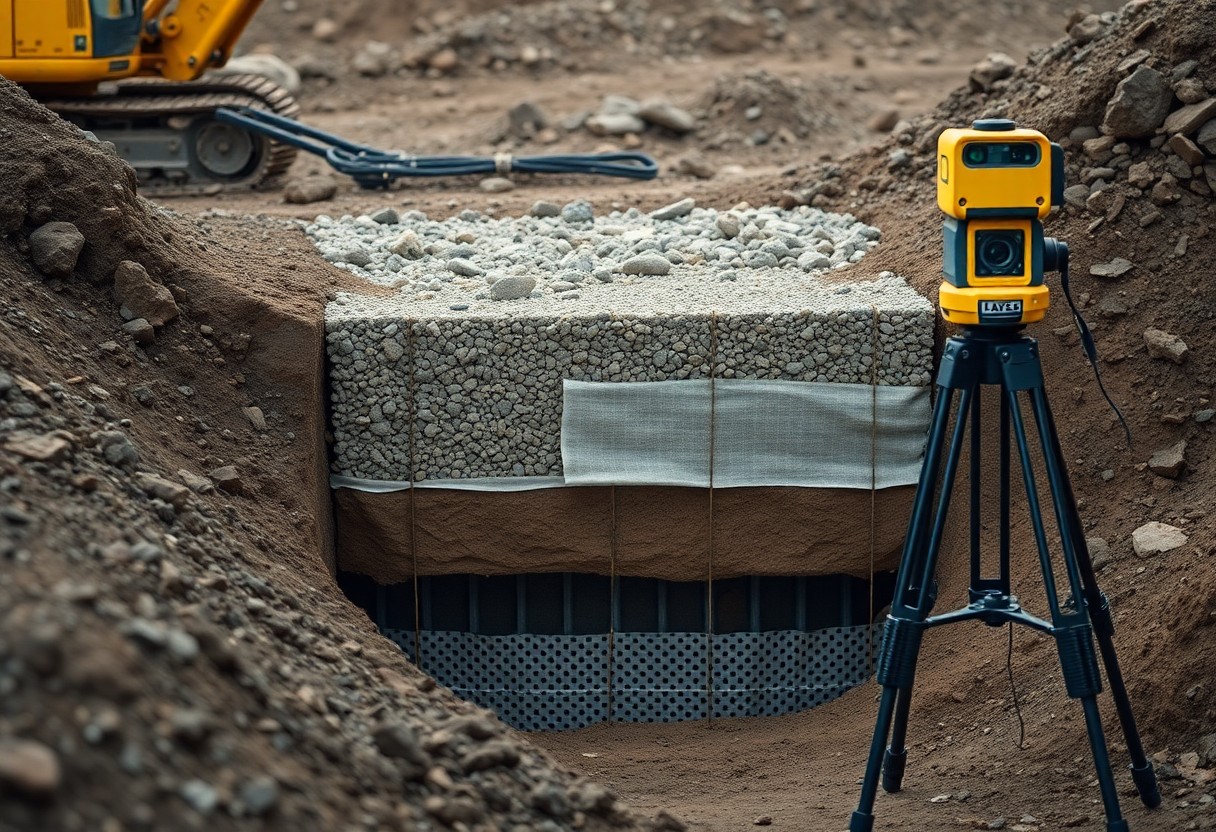
Understanding Groundworks
Groundworks determine long‑term performance by preparing the subsoil, foundations, drainage and service routes so your build performs as intended; accurate site investigation (trial pits or boreholes to 1.5-3 metres) and correct specification typically prevent repeat excavation and repairs that can cost thousands.
Definition of Groundworks
You should view groundworks as the preparatory operations beneath the structure: excavation, foundations, drainage, retaining walls, backfilling and service trenches; common domestic strip foundations are often ~450 mm wide with depths of 600 mm-1 m depending on soil, and compaction to 95% Standard Proctor is frequently required by specifiers such as BS 8004.
Importance in Construction
Proper groundworks control settlement, water ingress and load transfer so your superstructure stays sound; failure on substructure elements often shows as cracking or movement within years, with poor drainage and incorrect backfill causing the most frequent problems.
For example, a missing land drain or inadequate SUDS provision can create persistent groundwater pressure that leads to repeated damp problems and costly repairs, while misclassified soils or under‑compacted fills increase settlement risk; by following BS EN 1997‑2 site investigation guidance, using appropriate ground improvement or piling where required, and designing drainage to cope with local runoff you reduce the chance of structural failure and expensive underpinning or re‑foundation works.
Cost Implications of Poor Groundworks
Defective groundworks escalate both direct costs and hidden losses for you: immediate repairs, ongoing maintenance and reduced resale value. Foundation repair bills commonly run between £5,000 and £30,000, while drainage and damp remediation can add another £1,000-£10,000. In severe cases your property’s market value may fall by up to 20%, and surveyors or lenders could flag issues that delay sales or remortgages.
Immediate Financial Impact
When defects appear during or shortly after construction you face immediate bills for rectification and delays. Typical rework for incorrect footings or poor backfill ranges from £2,000-£20,000, labour costs often rise by 15-30% due to extended programmes, and site delays of 3-12 weeks can trigger penalty clauses. Exposed services or unstable trenches present dangerous safety liabilities that increase insurance and compliance costs overnight.
Long-Term Consequences
Over years, ground movement and moisture lead to structural issues that demand expensive remedial action. Subsidence or chronic settlement may require underpinning at £8,000-£40,000, persistent damp can rot timber, and insurers may impose higher premiums or even refuse cover, exposing you to significant out-of-pocket liability and reduced resale prospects.
Further, you’ll incur monitoring and repeat repairs: periodic structural surveys cost around £500-£1,200, joist replacements for rot typically range £3,000-£15,000, and long-term waterproofing or reinstatement works can compound initial losses. Mortgage lenders sometimes demand remedial certificates before lending, so unresolved groundworks can result in mortgage refusal or enforced expensive repairs prior to sale.
Benefits of Proper Groundworks
When you invest in correct groundworks, you cut future repair bills and downtime; for example, a well-graded subbase and effective drainage can reduce maintenance costs by up to 20% over a 30-year lifecycle. You gain predictable load-bearing performance, less settlement and lower insurance risk, as explained in The Importance of Groundworks in Construction.
Structural Integrity
You ensure long-term stability by specifying correct bearing strata, backfill compaction to 95-98% Standard Proctor, and appropriate concrete grades such as C25/30 with designed reinforcement; this prevents differential settlement and the danger of load redistribution that can lead to structural failure, especially on clay or made ground where moisture variation can cause up to several centimetres of movement.
Enhanced Durability
You extend service life by controlling water, using suitable materials (sulphate-resistant cement where needed), and ensuring proper concrete cover and DPMs; these measures limit corrosion, freeze-thaw damage and chemical attack, keeping structural elements performing for decades rather than years.
More specifically, installing a 150mm compacted Type 1 subbase beneath slabs, a 1200g DPM under suspended floors, and perimeter drainage sized to handle peak roof run-off often prevents moisture ingress that causes rework. You’ll also benefit when reinforcement has a minimum cover (commonly 50mm in ground contact) and when drainage falls are 1:100 or steeper; projects that adhere to these standards typically avoid costly remediation such as underpinning or replacement, which can escalate into five-figure sums on domestic extensions and considerably higher on commercial schemes.
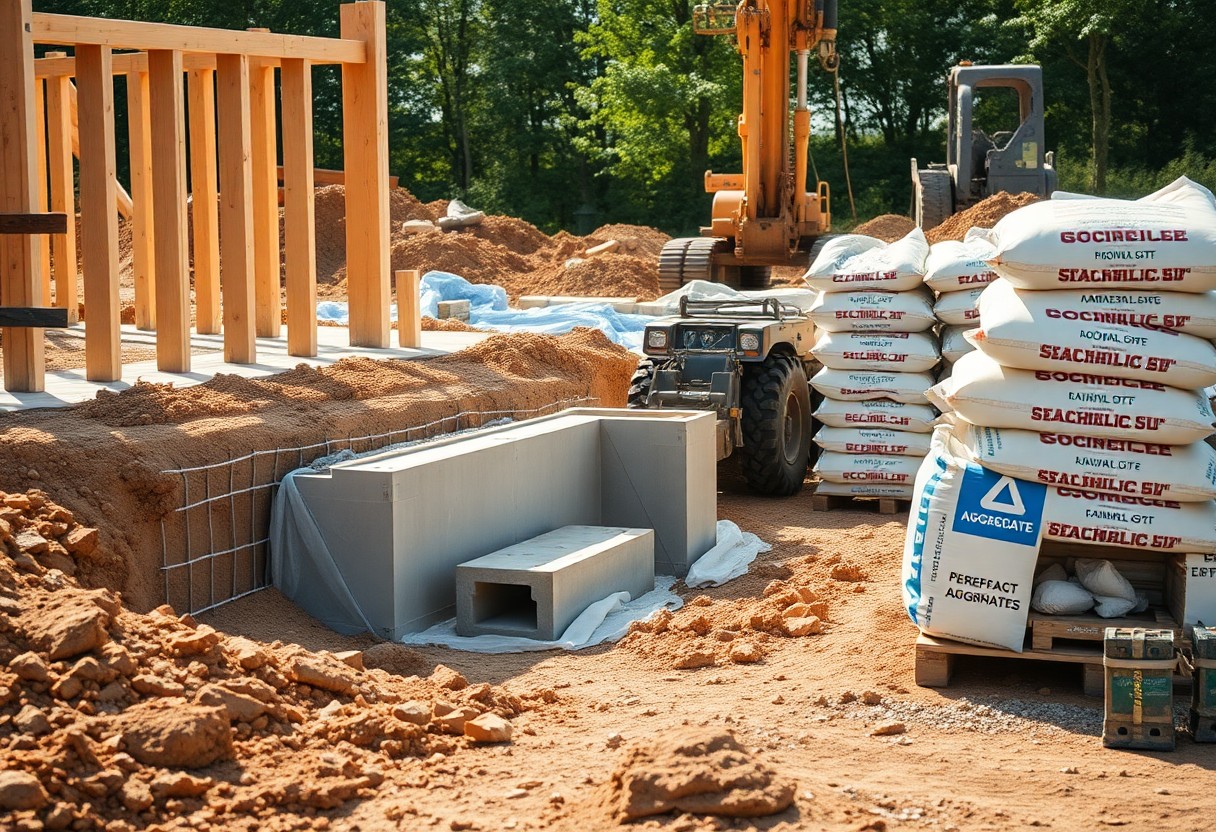
Factors Influencing Groundwork Costs
Costs are driven by site access, soil type and the extent of services required; for example, excavation typically ranges from £50-£150 per cubic metre depending on ground conditions and complexity. Any additional works such as contamination remediation, deep underpinning or extensive drainage can increase the budget by 20-60%.
- Site access
- Ground type
- Contamination
- Drainage
- Materials and labour
- Design complexity
Site Conditions
When your site contains soft clays or peat, engineers may specify piled foundations; each pile can cost about £100-£300, so a small dwelling needing 20 piles adds £2,000-£6,000. If you face a high water table, dewatering pumps and tanking can add several hundred to a few thousand pounds per week. Past industrial use often means contamination, raising groundwork budgets by 20-60%.
Materials and Labor
Materials and labour dominate your costs: ready-mix concrete typically costs £90-£120 per cubic metre, bulk aggregate around £10-£40 per tonne, and groundworker rates commonly sit between £150-£250 per day. Choosing recycled aggregates can cut material bills by up to 20%, whereas using inferior products risks long-term settlement and expensive repairs.
You should budget for plant hire and skilled supervision: excavators and rollers often cost £200-£500 per day and mobilisation can add £500-£2,000. Investing in trained operatives and quality control-for example compaction to 98% standard Proctor-may add upfront expense but typically prevents settlement; spending an extra £500 on testing for a 50m³ slab can avert a £3,000-£10,000 remediation later.
Best Practices for Effective Groundworks
You should prioritise thorough site investigation-trial pits and lab tests typically take 7-10 working days and identify bearing strata, groundwater and contamination; excavations must remove topsoil to 150-300 mm beneath foundations and achieve 95% Proctor compaction for sub‑bases. Use a phased programme with contingency for adverse conditions and consult guidance such as What Are Groundworks and Why Are They So Important for … to align specifications with the build.
Planning and Design
When you plan, specify trial pits, soil classification and a geotechnical report before foundation design; typical shallow foundations sit at about 0.9-1.2 metres depending on frost depth and load, and drainage should provide positive falls so surface water does not pond. Include a written programme, method statement and allow a 10-15% contingency in budget for unforeseen ground conditions to avoid costly delays.
Choosing the Right Professionals
You should vet contractors by checking three recent projects, CSCS cards and qualifications, and confirm appropriate insurance-public liability commonly between £2-5 million. Require a structural engineer’s sign‑off on foundations, written warranties and a clear payment schedule tied to milestones to protect your budget and timeline.
Ask for a full method statement, risk assessment, compaction records, CBR or lab test results and an as‑built drawing at handover; a reputable contractor will supply daily site logs, QA certificates and named supervisors. Prioritise firms that use plant calibration, have a formal permit‑to‑work system and can demonstrate savings-such as reduced excavation volumes or material reuse-to show how proper procedures deliver long‑term value and minimise structural or drainage failures.
Case Studies
Several projects show how thorough groundworks and detailed site investigation cut long-term costs: a 120‑home scheme saved £450,000 by switching to piled foundations on peat, a single dwelling avoided £38,000 in underpinning via improved drainage, and a warehouse reduced maintenance by 60% after soil stabilisation. These figures show how targeted early work protects your budget and reduces future risk.
- Case study 1 – 120‑home suburban development: initial ground survey cost £42,000; identified 0.8-1.5m peat depth; change to piled foundations increased upfront cost by 9% (£210k) but avoided projected remedial works of £660,000 over 15 years; recorded settlement ≤5mm after 5 years.
- Case study 2 – Detached house on clay: omitted perimeter drainage led to 65mm differential settlement in 3 years; emergency underpinning cost £38,400 vs planned drainage works at £7,200-an effective saving of ~£31,200 if done initially.
- Case study 3 – Retail park redevelopment: sub‑base reinforcement (geogrid + 300mm crushed stone) added £45/m² but extended pavements’ life from 6 to 20 years, lowering lifecycle cost by 28% and reducing annual maintenance spend from £12,000 to £4,800.
- Case study 4 – Light industrial unit on made ground: poor compaction caused >50mm settlement; contractor paid £95,000 in repairs and business downtime losses estimated at £18,000; remedial piled raft solution would have cost £56,000 if specified at tender.
- Case study 5 – Listed building extension: thorough archaeological and geotechnical survey (£9,500) dictated strip foundations and French drains; avoided a projected waterproofing retrofit of £120,000 and preserved heritage fabric, preventing statutory enforcement.
Successful Projects with Proper Groundworks
When you insist on full site investigation and correct specification of foundations, results are tangible: a housing scheme recorded 28% lower lifecycle costs and under 5mm settlement over a decade, while a commercial yard cut resurfacing cycles from 6 to 20 years after sub‑base redesign. These metrics show how proper groundworks protect your capital expenditure and reduce long‑term maintenance.
Lessons Learned from Failures
If you skimp on groundworks, consequences are often severe and costly: one project experienced >50mm settlement, emergency underpinning of £38,400, and 6 weeks of site closure, while another faced £95,000 in repairs due to made ground. Such failures emphasise that early investment in drainage and compaction is cheaper than reactive fixes.
Common root causes you will encounter include inadequate soils testing, under‑specified bearing capacity, and poor surface water management; measurable impacts ranged from 15% higher freeze‑thaw damage to structural repairs exceeding initial works by 150%. You can mitigate these by allocating 1-3% of project value to thorough groundworks design, specifying appropriate piles or rafts where soil tests indicate risk, and documenting maintenance regimes to preserve your savings.
Final Words
On the whole, investing in proper groundworks protects your project from subsidence, poor drainage and structural failure, reduces long‑term maintenance and repair costs, and improves asset longevity and resale value, so you avoid disruptive, costly fixes and benefit from lower insurance premiums and greater peace of mind.
FAQ
Q: What do we mean by “proper groundworks” and why do they matter for long-term costs?
A: Proper groundworks cover accurate site investigation, correct excavation and compaction, correctly designed foundations, effective drainage and damp-proofing, and properly routed utilities. Getting these elements right at the start prevents settlement, water ingress, and service interruptions that cause expensive reactive repairs. Investing in a thorough initial programme reduces the likelihood of disruptive, high-cost remedial work later on. It also minimises waste, speeds construction, and helps achieve predictable final costs.
Q: How do correctly designed foundations save money over time?
A: Sound foundation design tailored to soil conditions prevents uneven settlement and structural cracking, which are among the most expensive defects to fix. Proper foundations reduce the need for underpinning, re-levelling and extensive masonry repairs. They also lower the risk of secondary problems such as window and door misalignment and damp penetration. Insurers may offer better terms on properties with documented, well-executed foundations, further cutting long-term expenditure.
Q: In what ways does effective drainage and waterproofing reduce future expenses?
A: Effective drainage and waterproofing prevent water from reaching substructures and internal spaces, avoiding rot, mould, and corrosion that demand costly remediation. Good groundworks ensure surface water is channelled away and subsoil water is managed, protecting landscaping and paved areas as well as the building fabric. Preventing moisture-related damage maintains thermal performance and indoor air quality, lowering repair and health-related costs. Early investment in reliable waterproofing pays back by preventing frequent, expensive fixes.
Q: How does proper site preparation cut construction-time and labour costs?
A: Thorough site investigation and preparation identify obstacles such as weak soils, buried services or contamination before work begins, allowing planners to select appropriate methods and materials. This reduces on-site surprises that lead to delays, variation orders and overtime labour charges. Efficient planning and correct groundworks reduce material waste, avoid repeat excavations, and speed the build sequence, all of which lower overall project costs. Better coordination also reduces the risk of costly health and safety incidents.
Q: Can good groundworks improve a property’s running costs and resale value?
A: Yes. Proper groundworks contribute to better thermal performance, reduced draughts and fewer damp issues, which lowers heating bills and ongoing maintenance costs. A structurally sound, dry property attracts higher market value and sells more quickly, while buyers and lenders favour well-documented groundwork and drainage systems. Additionally, lower maintenance needs and better insurance prospects make the property cheaper to own over its lifetime, offsetting the initial groundwork investment.