
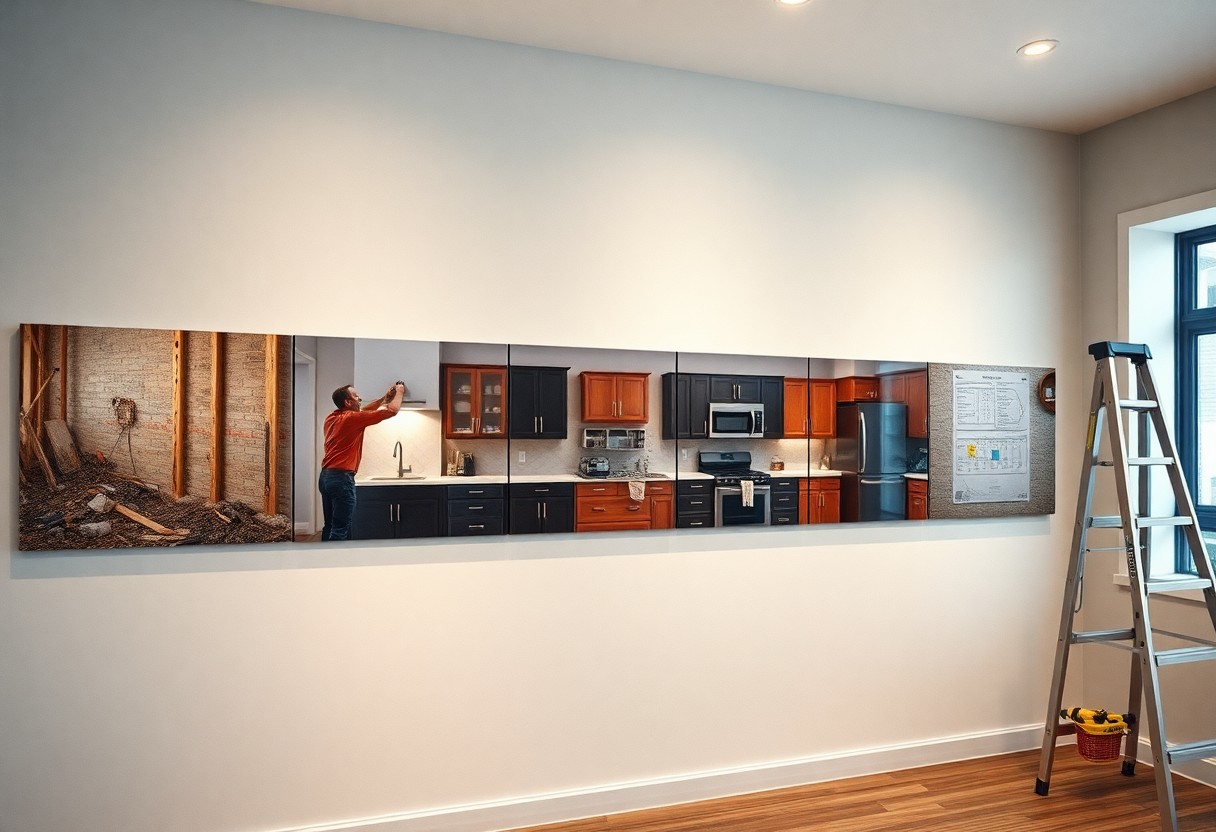
Many kitchen renovations follow a predictable flow from design and permits to demolition, installation and finishing, and you should plan for unavoidable delays and the dust and disruption of demolition; maintain clear communication with your contractor to manage your budget and decisions, allow extra time for inspections and deliveries, prepare a temporary cooking area, and expect the final reveal to be highly rewarding when your new layout and finishes come together.
Understanding the Kitchen Renovation Process
Initial Planning and Design
During the 2-4 week planning phase you’ll settle layout, materials and schedules; designers typically produce 2-3 revisions before sign-off. Cabinet lead times often run 6-12 weeks, so ordering early speeds work. If you plan to move services, note that relocating a sink or electrical circuits can add several days of labour and specialised trades; moving a gas line must be done by a Gas Safe engineer and affects timelines and permits.
Budgeting for Your Renovation
Costs vary widely, but many UK projects fall between £8,000-£25,000 for mid-range renovations; allocate a 10-20% contingency for surprises. Typical breakdown: labour 30-40%, cabinets 25-35%, worktops 10-15%, appliances 10-15% and plumbing/electrics 5-10%. You should get at least three quotes and compare fixed-price estimates to avoid overruns.
For example, a 12 m² mid-range kitchen often totals around £12,000-£18,000: cabinets £4,000-£6,000, appliances £1,500-£3,000, worktops £1,000-£2,000. Keeping plumbing and gas in place can save £1,000-£3,000; conversely, moving a gas line can add £500-£2,000 and always requires a certified engineer. Prioritise structural and service work in your budget to avoid deferring necessary costs.
Selecting a Contractor
Balance quotes from at least three contractors, comparing timelines, materials and warranty terms; you should expect a typical full gut-and-refit kitchen to take 6-12 weeks. Verify licences and insurance, insist on a written schedule with milestones and staged payments (commonly 10-30% deposit), and read client case studies. For a practical timeline breakdown and preparation tips, see Your Kitchen Remodel Timeline: What to Expect and How to Prepare.
Researching Qualified Professionals
Check each tradesperson’s public liability insurance, current licence numbers and at least five recent projects in a similar style; industry bodies often list vetted members. Search online reviews, request three references and, when possible, visit a live site to assess workmanship and site management. Prioritise firms with established supply chains and local council experience to avoid permit delays and unexpected compliance costs.
Interviewing and Hiring
Ask specific questions about timeline buffers, subcontractor teams and change-order procedures; secure a fixed-price quote where possible and a clear payment schedule tied to completed milestones. Ensure the contract names who will be on-site, lists included materials by brand/model and provides a minimum warranty period. A signed contract plus proof of insurance is the single most protective step you can take before work starts.
Probe deeper: request three recent references and call them, view a finished job in person, and ask how the contractor handled delays or unexpected structural issues. Confirm who manages council inspections, who removes waste, and whether any temporary works (plumbing, electrical isolation) are subcontracted. Insist on sighting insurance certificates and ask for a breakdown of mobilisation costs; a reputable builder will provide these without hesitation.

Obtaining Necessary Permits
When you start, expect separate approvals for structural, electrical, gas and plumbing work; typical permit fees in the UK range from £50 to £500 and processing times often span 2-12 weeks. If you proceed without consent you may face enforcement notices, fines or have your insurance invalidated, and contractors may stop work until issues are resolved. Factor permits into both schedule and budget early.
Understanding Local Regulations
Many councils distinguish planning permission from building control: planning covers external changes and conservation areas, while building control approves structural and safety work. If your property is listed you will need listed building consent, which typically adds 6-12 weeks. Also check party wall requirements-neighbour agreements can add time and legal fees of £500-£2,000 in disputes.
Timeline for Permit Approval
Simple refurbishments (non-structural) often get building approval in 2-6 weeks, whereas major structural changes or projects in conservation areas commonly take 6-12+ weeks; some complex schemes require 3+ months. Approvals are sequential-planning first, then building control-and scheduled inspections can add days to weeks. Plan a minimum permit buffer of 2-4 weeks in your timeline.
To speed approval, submit full scaled plans, structural calculations and a drainage strategy; applications complete on first pass are often processed in half the time, while omissions typically add 2-6 weeks. You should expect statutory consultees (environmental health, highways) to review larger jobs, and an asbestos survey or party wall award can extend approval by several weeks. Keep clear communication logs with the council to avoid repeated resubmissions.
Demolition and Preparation
During demolition you should plan for 1-3 days in a typical 10-12 m² kitchen, with contractors removing cabinets, worktops and tiles while you keep the site ventilated. Prioritise isolating electricity and gas before work starts and, if your property predates 1990, arrange an asbestos survey. Waste removal often needs skip hire or builder’s waste collections scheduled in advance to avoid delays.
Removing Old Fixtures and Materials
When removing cabinets, sinks, appliances and floor tiles, expect around 300-500 kg of mixed waste from a medium kitchen; two people can strip a standard layout in a day. You should salvage reusable items like door fronts or appliances for resale, and be cautious of sharp edges and heavy lifts-use hoists or team lifts for worktops exceeding 30 kg per metre.
Preparing for New Installations
Once stripped out, your walls and floors must be made plumb and level: plasterers may take 1-2 days to flatten walls, joiners check subfloor and joist levels, and plumbers reroute supplies to planned appliance positions. Ensure your contractor confirms unit layouts to ±2 mm and that service points are marked before cabinet installation begins.
For fitted elements you will need precise templates: stone or quartz fabricators typically template after units are fixed, then allow 1-2 weeks for manufacture and 1 day for installation. Keep appliance dims to hand-standard base units are 600 mm wide and worktop height is usually 900 mm-and note that hobs often need a 30-32 A supply while ovens may require a dedicated circuit; coordinate electricians and plumbers to avoid rework.
Installation Phase
During installation you’ll see cabinets fitted (typically 3-5 days), worktops templated and installed (1-3 days), and appliances connected over 1-2 days; flooring sequence depends on scope. Check benchmark schedules such as Kitchen Remodel Timeline & Tips. Expect coordinated trades, sealed inspections and final snagging to add a few days to the finish.
Layout and Structural Changes
When you alter the layout, installing an RSJ or moving a load‑bearing wall can extend the schedule by 1-2 weeks, including structural drawings and building control approval. Measure precisely; for example, opening a 3 m wall typically needs temporary propping for 2-3 days before the beam is craned in, and delays often come from steel fabrication or inspection slots.
Plumbing, Electrical, and HVAC Work
Rough‑in services usually take 3-7 days: new water runs, soil stack adjustments, additional circuits and consumer unit upgrades, plus extractor ducting and ventilation checks. Any gas work must be completed by a registered engineer and signed off. You should expect pressure tests, RCD commissioning and airflow verification before finishes begin.
When you relocate appliances note typical requirements: ovens commonly need a 32A dedicated circuit, induction hobs may demand 40A, while dishwashers and waste disposers often use a 13A fused spur; moving a sink more than 2-3 metres can require new soil piping or a macerator. Also allow for condensate management, ducting for extractor fans and permit checks by Gas Safe engineers and building control, since ventilation faults and incorrect circuit sizing are frequent causes of remedial work.
Finishing Touches
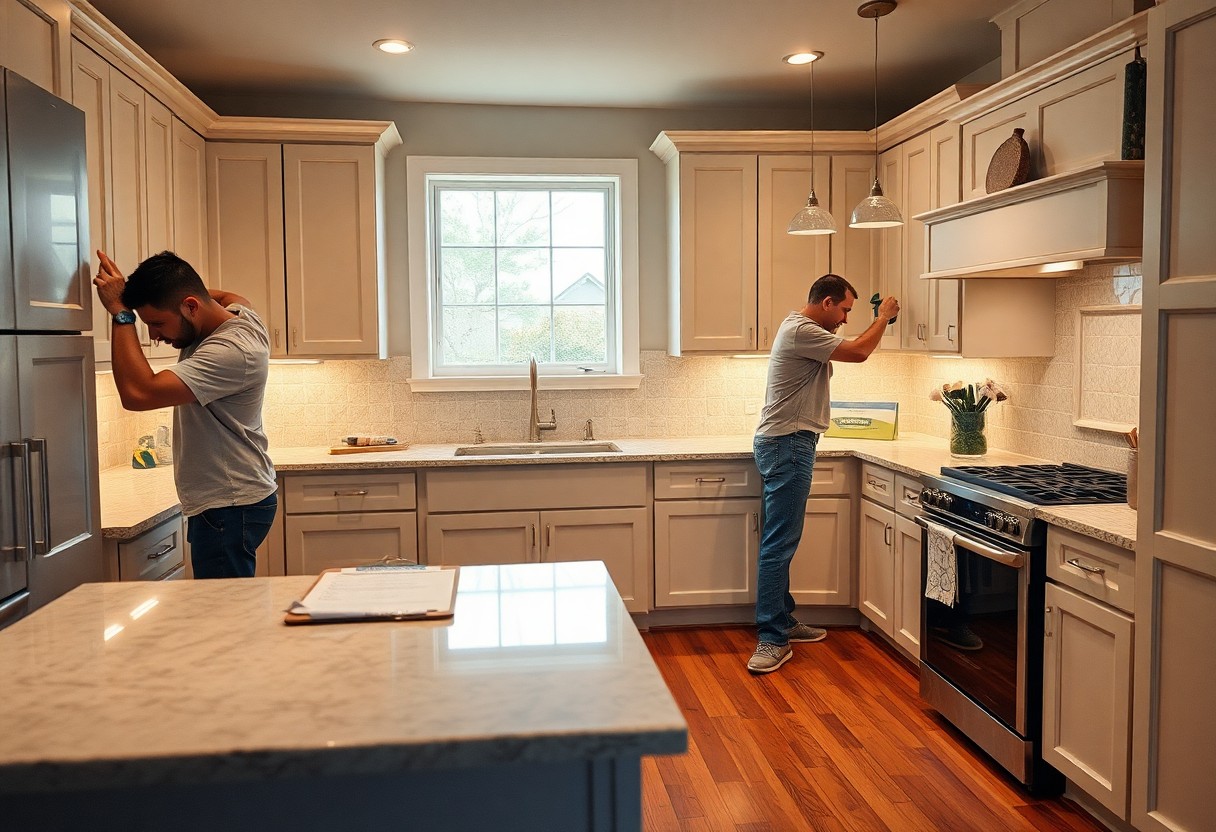
Punch-list completion, appliance commissioning and a professional clean typically occupy the final days; expect punch-list items to take 1-3 days and a deep clean 4-8 hours. You’ll do a 30-60 minute walkthrough with the contractor and receive warranties and manuals at sign-off. If gas or hardwired appliances remain, engage registered engineers-unauthorised DIY on gas or electrics is hazardous-and arrange any outstanding remedial work within 7-14 days.
Cabinetry, Countertops, and Flooring
Cabinet adjustments and final hardware fitting often precede templating, which fabricators schedule about 7-14 days later; a typical 3m stone countertop install takes 1-2 days including seam work. You should acclimatise engineered timber for 48-72 hours before fitting and allow 48-72 hours for adhesives and grout to cure. Tile labour for a medium kitchen commonly takes 2-4 days. Address any subfloor or alignment faults now, as poorly aligned cabinets or unstable subfloors cause long-term failures.
Lighting and Final Decor
Choose layered lighting-task, ambient and accent-with LEDs at 2700-3500K for warm to neutral tones and aim for 300-500 lux on worktops. Position pendants 700-800mm above the benchtop for islands and use dimmers to create scenes. LEDs typically use around 75% less energy than incandescent bulbs, lowering running costs; have a registered electrician complete wiring and dimmer commissioning because incorrect wiring is dangerous.
Specify CRI ≥90 for accurate colour rendering and ensure dimmers are LED-compatible to avoid flicker. For under-cabinet lighting, plan 400-800 lumens per metre and consider 2-4 recessed downlights per 3m run depending on beam angle. Smart controls and scene-setting improve usability for cooking versus entertaining. Always use certified trades for hardwired work-incompatible drivers or poor installation can cause flicker, premature failure or fire risk.
Conclusion
Ultimately you should expect a phased process: planning and design, permits and ordering, demolition and structural work, mechanical and electrical rough-ins, installations, finishing and snagging, followed by final checks; typical projects take several weeks to a few months depending on scope. Be prepared for temporary disruption, make timely decisions, allow contingency time and budget, and stay engaged with your contractor to keep the programme on track.
FAQ
Q: What is a typical kitchen renovation timeline?
A: A straightforward kitchen renovation often takes 6-12 weeks from site preparation to handover. Phases typically include planning and design (2-6 weeks), procurement of fixtures and long‑lead items (4-12 weeks, often overlapping with design), demolition and structural work (a few days to 2 weeks), mechanical and electrical rough‑ins (1-2 weeks), cabinetry installation (3-7 days), worktops and tiling (1-2 weeks after cabinets), final finishes and appliances (1 week), then snagging and handover (1-2 weeks). Larger projects or those requiring structural changes, extensive rewiring, bespoke joinery or planning permission can extend to 3-6 months or more.
Q: What should I expect during the planning and design phase?
A: Expect an initial briefing, accurate measurements, concept drawings and at least one round of revisions to refine layout, lighting and storage. You will select materials, finishes and appliances and be given lead times and cost estimates. Allow time for contractor quotes, ordering bespoke items (cabinets, worktops) and any planning or building control applications. Build a contingency of around 10-20% of the budget for unexpected costs and to cover longer lead times for custom items.
Q: How disruptive are demolition and on‑site construction, and how long do they last?
A: Demolition is noisy and dusty and usually takes a few days to a week depending on complexity. Structural alterations, relocating services or creating openings can extend that to several weeks. Trades work (plumbers, electricians, plasterers, tilers) creates intermittent disruption; expect daily activity while on site. Protect floors and adjacent rooms, arrange a temporary cooking area or alternative accommodation if you cannot tolerate the noise and lack of facilities for several weeks.
Q: What common delays should I plan for that affect the timeline?
A: Common delays include permit and inspection wait times, long lead times for bespoke cabinets or imported appliances, discovery of hidden issues (rot, damp, or outdated wiring), tradespeople scheduling conflicts, and late changes to scope. Seasonal demand and supply‑chain problems can also add weeks. Allow extra time in the schedule and avoid making late design changes once orders are placed.
Q: What happens during finishing, snagging and handover?
A: Finishing includes final painting, sealing worktops, fitting splashbacks, connecting appliances and commissioning services. After installation there is a snagging stage where faults or incomplete items are recorded in a punch list; trades return to rectify these issues. Once remedial work is complete, a final inspection is carried out, warranties and care instructions are handed over, and final payments are settled. This stage typically takes 1-2 weeks but may be longer if substantial snagging items are found.