
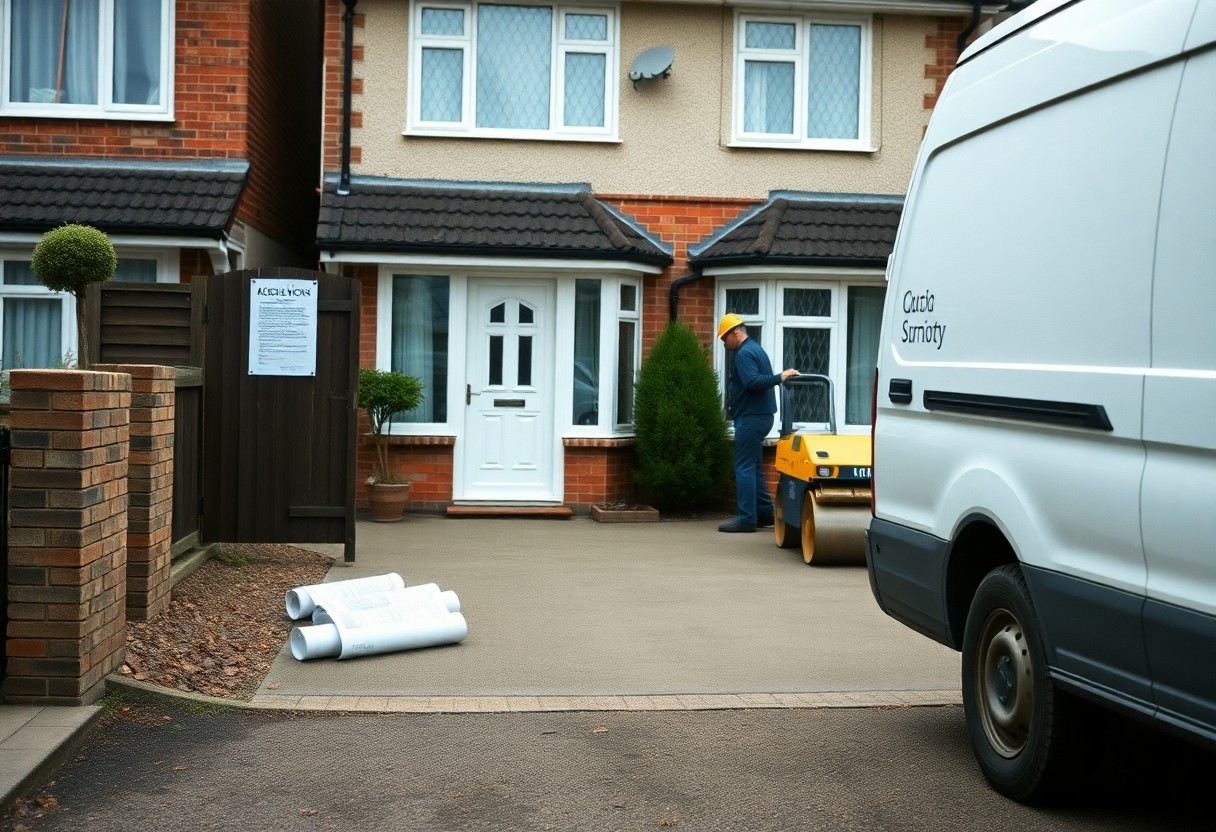
Many homeowners want to extend their driveway, and you need to check planning permission or permitted development rights, apply for a dropped kerb if required and confirm surface drainage so you do not incur fines or enforcement notices; follow council guidance, consult a neighbour and hire a reputable contractor to ensure safety and access, which can deliver increased property value and improved kerb appeal.
Understanding Legal Requirements
Planning Permissions
When laying a new driveway, permitted development lets you install hard surfacing up to 5 square metres without planning permission, provided the surface is permeable or drains to a permeable area; otherwise you must apply. You also need a dropped kerb licence from your local council to alter the footway – fees typically range from about £100 to over £1,000 – and properties in conservation areas or listed buildings often require formal consent.
Building Regulations
Driveway surfacing alone usually falls outside Building Regulations, but rules apply if you construct retaining walls, ramps or structures that support land or carriage loads; Parts A (structure) and H (drainage) are commonly relevant. You should consult local Building Control or an approved inspector before work, because non-compliance can trigger enforcement and costly remedial action.
For practical compliance, you’ll often need structural calculations for walls and a SuDS-compliant drainage solution: use a sub-base of MOT Type 1 (typically 150-200mm for domestic driveways) and consider permeable paving, attenuation or a soakaway sized per BRE 365 after an infiltration test. Councils may charge inspection fees (£200-£1,000 depending on scope), and failing to follow guidance can force you to remove work at your expense.
Assessing Your Property
Measure your intended area precisely – typical single-car driveways are 2.6-3.6m wide while double driveways run about 5-6m. Check gradient (steep slopes over 1:8 often need engineer input), surface water run-off routes and proximity to trees or drains. Obtain a topographical or site survey and ask utility companies for service plans so you avoid hitting cables or pipes. You should also note sightlines to the road and any local highway access constraints before drawing up plans.
Boundary Lines
Start with your HM Land Registry title plan to see registered boundaries, but accept it is indicative rather than definitive; you should get a measured boundary survey if there’s any doubt. Speak to neighbours early and, if necessary, appoint a RICS chartered surveyor to identify ownership and to draft a boundary agreement. If a dispute looks likely, seek written consent or a formal boundary deed so you avoid costly legal challenges later on.
Land Use and Restrictions
Check whether your property sits in a conservation area, is a listed building, or is covered by an Article 4 direction, because those factors commonly remove permitted development rights and force you to apply for planning permission. Also verify restrictive covenants in the deeds and any Tree Preservation Orders (TPOs) that could prevent works. For highway safety, consult the local authority about visibility splays – guidance often expects around 2.4m x 43m on 30mph roads.
Contact your local planning officer early and provide scaled plans showing surfacing type, drainage proposals and boundary treatments; councils typically favour permeable surfaces or SuDS-compliant drainage to limit run-off. You should obtain written confirmation about covenant restrictions and highways requirements before contracting works, since non-compliance can lead to enforcement notices or demands to reinstate the original state at your cost.
Preparing for the Extension
Before you begin, map boundaries, check Title Deeds and carry out a utility search to locate drains, gas and telecoms; a missed service can cause major delays and dangerous costs. Measure and mark the proposed area, note levels and neighbour access, and allow for surface water run-off-adding a permeable finish often avoids planning issues. Typical driveway costs range widely, so obtain at least three quotes to gauge realistic budgets.
Necessary Documents
Gather your Title Deeds, an up-to-date site or block plan (commonly at 1:500 or 1:1250 scale), planning history, and contractor quotations. Also include any previous planning decisions and a copy of your council’s dropped-kerb application form. If your property is listed or in a conservation area, include heritage paperwork; for shared access, include neighbour consent or an access deed to prevent later disputes.
Consulting Professionals
Engage a chartered surveyor or planning consultant early: they’ll advise whether your scheme is Permitted Development and handle submissions. Contact your council’s highways team for a dropped-kerb licence; typical fees range from £100-£600. If trees or retaining walls are involved, instruct an arboriculturalist and structural engineer to produce reports and designs that reduce the risk of enforcement or structural failure.
More on Consulting Professionals
A surveyor can produce a topographical plan and legal boundary advice, while a planning consultant interprets local policies and completes applications-turnaround often 2-6 weeks. An arboricultural report to BS5837 protects trees and informs root protection zones; a structural engineer designs any retaining walls and drainage to Building Regulations. Using accredited professionals reduces the chance of refusals or costly remedial works and gives you written records for your council application and contractors.
Tips for a Smooth Process
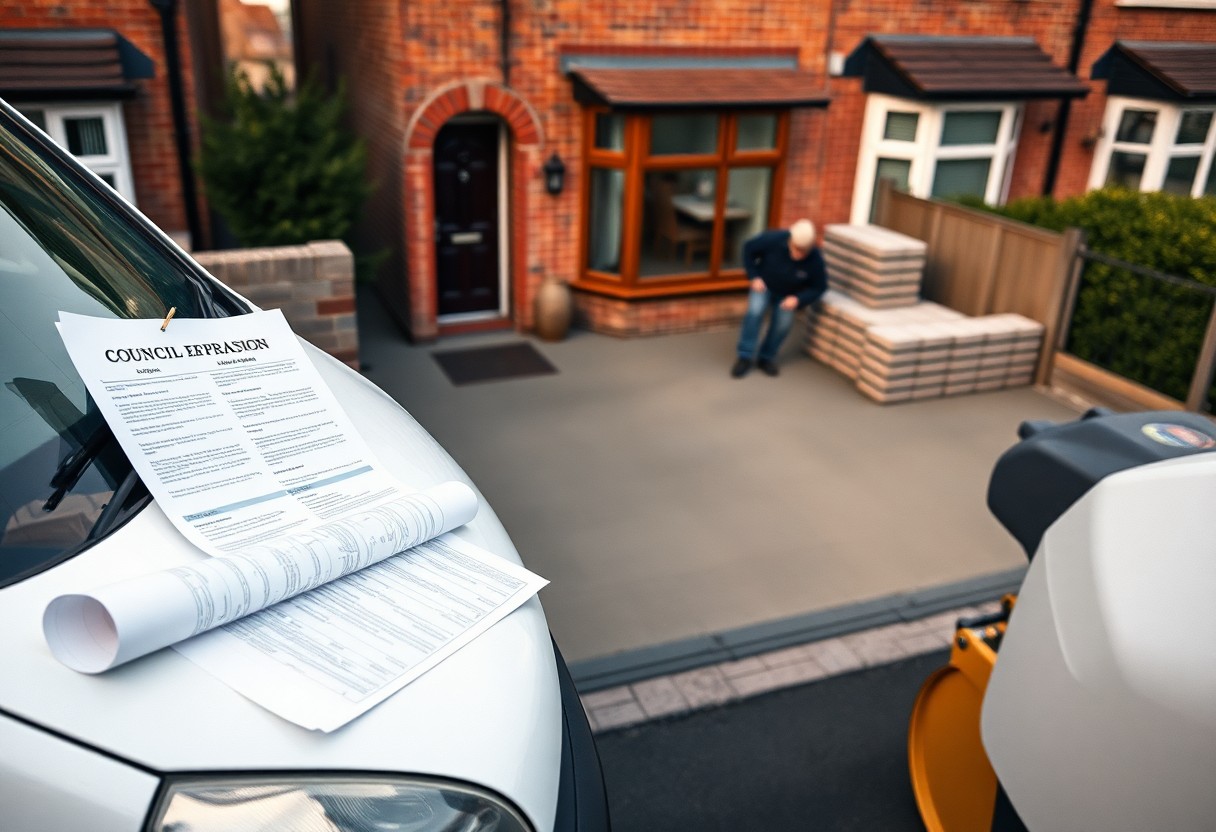
Survey your frontage and measure the area; if over 5 m² of new hard surfacing you may need planning permission, and councils expect permeable paving or sustainable drainage. Apply for a dropped kerb licence from the local council-fees typically range £100-£500 and works may take 4-12 weeks. Ensure you do not block the pavement or utilities; blocking public footpaths can incur fines. Recognizing that early checks on planning permission and dropped kerb licences prevents costly revisions.
- Obtain at least one written pre-application response from the council about planning permission.
- Choose permeable paving or connect to a sustainable drainage system to avoid refusals.
- Apply for the dropped kerb licence before contractors start work.
- Check for conservation area or listed-building restrictions early.
- Record any neighbour agreements in writing to reduce objection risk.
Communicating with Neighbours
You should inform neighbours early with a clear plan that shows boundaries, vehicle turning arcs and proposed materials (ideally a 1:100 scaled drawing). Include start and completion dates and allow at least 2-4 weeks for feedback; planning consultations commonly run for 21 days. Offer a site meeting to resolve concerns and get any permissions in writing, since formal objections may trigger delays or require an appeal process.
Hiring the Right Contractors
Get at least three written quotes, verify the company number on Companies House and insist on public liability insurance of at least £5 million. Check trade body membership such as BALI, request a written contract with start/completion dates and a minimum 5-year guarantee on surfacing, and confirm who will secure the dropped kerb licence.
Ask to visit a recent completed site and speak to past clients from the last 12 months, demand a method statement and risk assessment, and obtain a materials specification. Negotiate a payment schedule with no more than 30% upfront and hold final payment until snagging is signed off; ensure the contractor provides a Waste Carrier registration number for legal spoil disposal.
Factors to Consider Before Extending
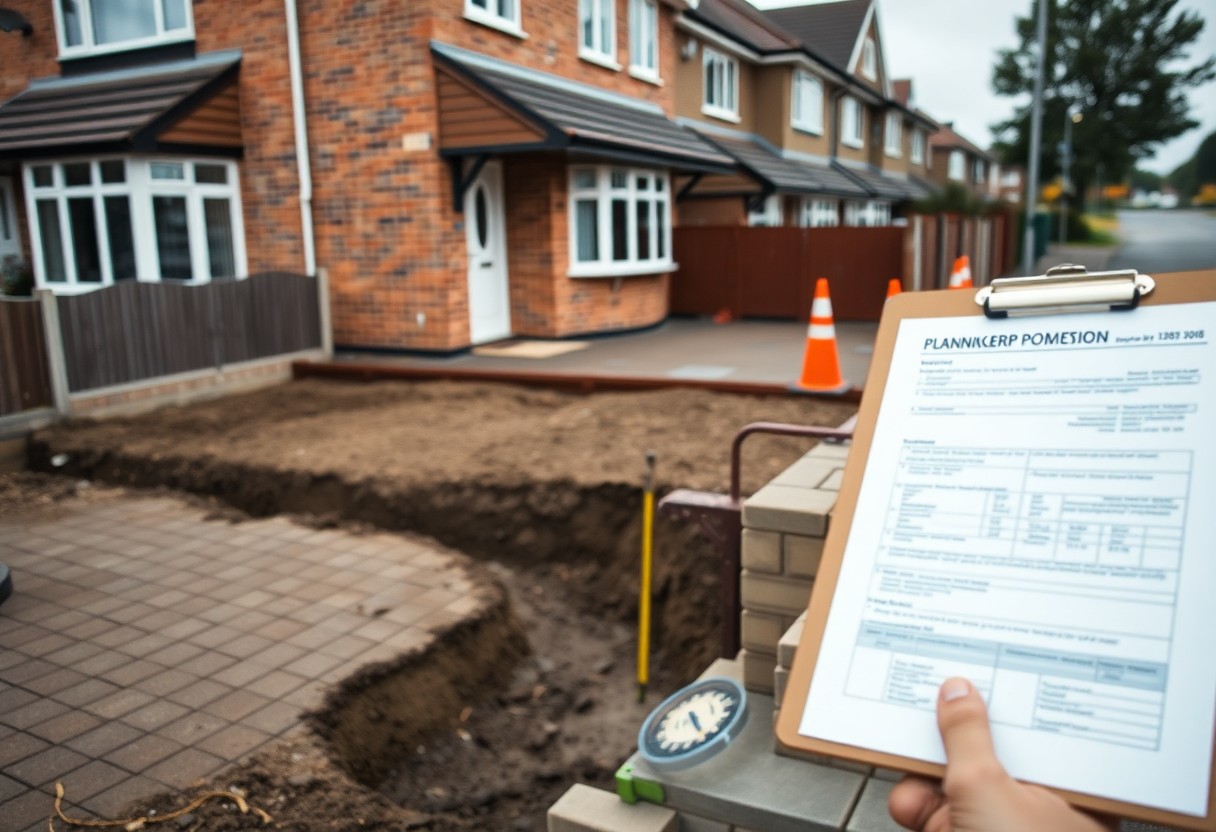
You must check planning permission and permitted development rules first: non‑permeable front gardens over 5 m² often trigger a requirement for consent or SUDS measures. Expect a local authority planning application fee around £206 in England and a typical drop kerb installation to cost £300-£1,000 plus contractor charges. Assess utility locations, trees and covenants, and note that councils can issue fines for unauthorised works. After contacting your council for highways and drainage guidance.
- Planning permission and permitted development limits
- Permeable surfacing versus non‑permeable options
- Drop kerb and highway consent
- Utilities and service diversion risks
- Covenants, neighbours and party wall matters
Cost Involvement
You should budget realistically: simple gravel can be £20-£40/m², tarmac £40-£70/m² and block paving £60-£120/m² installed. Factor in a drop kerb (£300-£1,000), drainage works or a permeable sub‑base (£500-£2,000), and potential planning application fees (~£206). Labour, VAT and removal of existing hardstanding can add 20-40% to estimates, so get at least three written quotes and check supplier references.
Environmental Impact
You should favour permeable surfacing or SuDS (soakaways, attenuation crates, swales) to reduce runoff and local flood risk; permeable paving often cuts surface discharge substantially and helps with stormwater management. Consider tree root zones, local biodiversity gains from porous materials, and how non‑permeable areas can increase flood risk and neighbour nuisance.
For more detail, carry out a percolation test before planning a soakaway and specify appropriate SuDS: permeable block paving with a granular sub‑base, resin‑bound surfaces, or geocellular attenuation can be used. Councils frequently require design drawings showing storage and outfall; an engineered solution may include a 150-300 mm voided sub‑base or attenuation tank sized by runoff calculations. You should also check for protected trees and integrate soft landscaping to offset impermeable area loss and encourage drainage into garden soils.
Applying for Permissions
Check whether your work falls under Permitted Development; if the new hard surface exceeds 5 square metres it must be permeable or drain to a soakaway, otherwise you need full planning permission. You must apply to your local planning authority if the property is listed or in a conservation area, and obtain highways consent for any dropped kerb. Doing work without permission can lead to an enforcement notice and orders to reinstate.
Submission Process
You should start by gathering a scaled site plan, block plan, photos, a specification of surfacing and drainage calculations or soakaway details. Submit via your council’s planning portal using the Householder form and pay the typical fee of £206 in England, or tick Permitted Development if applicable. Apply separately to the highways authority for a dropped kerb; they often require a site inspection before authorisation.
Timeline Expectations
Permitted Development lets you proceed immediately if conditions are met; a householder planning application normally has an 8-week decision period, while highways approval for a dropped kerb typically takes 6-12 weeks. You should expect longer where conservation or listed-building issues arise. Ignoring permissions risks an enforcement notice and costly reinstatement.
You should factor in requests for amended drawings-officers commonly ask for revisions within 2-4 weeks, which delays determination-and public consultation may extend the process if objections appear. Appeals and referrals can turn timelines into several months, contractors often book 4-8 weeks ahead, and seasonal weather can add further delays, so plan your project timetable accordingly.
Final Words
The easiest way to extend your driveway legally is to check permitted development rights and whether your council requires planning permission, especially if you live in a conservation area or have a listed building. Use a permeable surface or install drainage to avoid needing permission for front hardstanding, obtain a vehicle crossing (dropped kerb) licence from your local council, consult neighbours about boundaries and party‑wall matters, and get written approval for any deviation from local planning rules.

FAQ
Q: Do I need planning permission to extend my driveway?
A: In most cases you will not need planning permission if the new surface is permeable or if surface water is directed to a permeable area within the property. If the proposal uses non‑porous materials and causes runoff to the public highway you will usually need planning permission from the local planning authority. Properties in conservation areas, listed buildings or other protected locations often require planning permission regardless, so check the Planning Portal and consult your local authority before starting works.
Q: Do I need permission to drop the kerb or cross the pavement?
A: Yes – altering the kerb or crossing a footway requires permission from the local highways authority (council) and sometimes a licence; councils commonly require an application, fee and either carry out the work themselves or approve an accredited contractor. Do not alter the public highway without consent, as unauthorised works can be removed and fines issued. Allow time for the council to process the application and for any temporary traffic management they may impose.
Q: What drainage and SuDS requirements must I meet?
A: Surface water must be managed so it does not flood the pavement or road; preferred solutions are permeable paving, gravel with an appropriate sub‑base, or directing water to a soakaway or landscaped area within the property. Connecting surface water to the public sewer generally needs consent from the local water company and is normally discouraged. Follow Sustainable Drainage (SuDS) principles and obtain technical advice on ground conditions and soakaway sizing where infiltration is proposed.
Q: Do I need to worry about boundaries, covenants or neighbour consent?
A: Yes – check title deeds for restrictive covenants that may prohibit changes to the forecourt or access; extending across land you do not own will require the neighbour’s legal agreement or an easement. If work affects a shared driveway, party structures or boundary features you may need formal consent under property law. For disputes or complex title issues it is advisable to obtain solicitor advice before proceeding.
Q: What practical steps, timescales and costs should I expect?
A: Practical steps: check the Planning Portal and local guidance; inspect title deeds for covenants; apply to the highways authority for a dropped kerb if needed; obtain quotes from reputable contractors who will check underground services; choose permeable materials or a SuDS solution; obtain any necessary consents. Timescales vary: highways consent can take several weeks, planning decisions up to eight weeks if required, and installation from days to a few weeks depending on complexity. Costs vary widely by material and location – expect a dropped‑kerb application fee and installation costs for a single‑car permeable driveway typically ranging from low thousands to several thousand pounds; obtain multiple quotes and written estimates before committing.