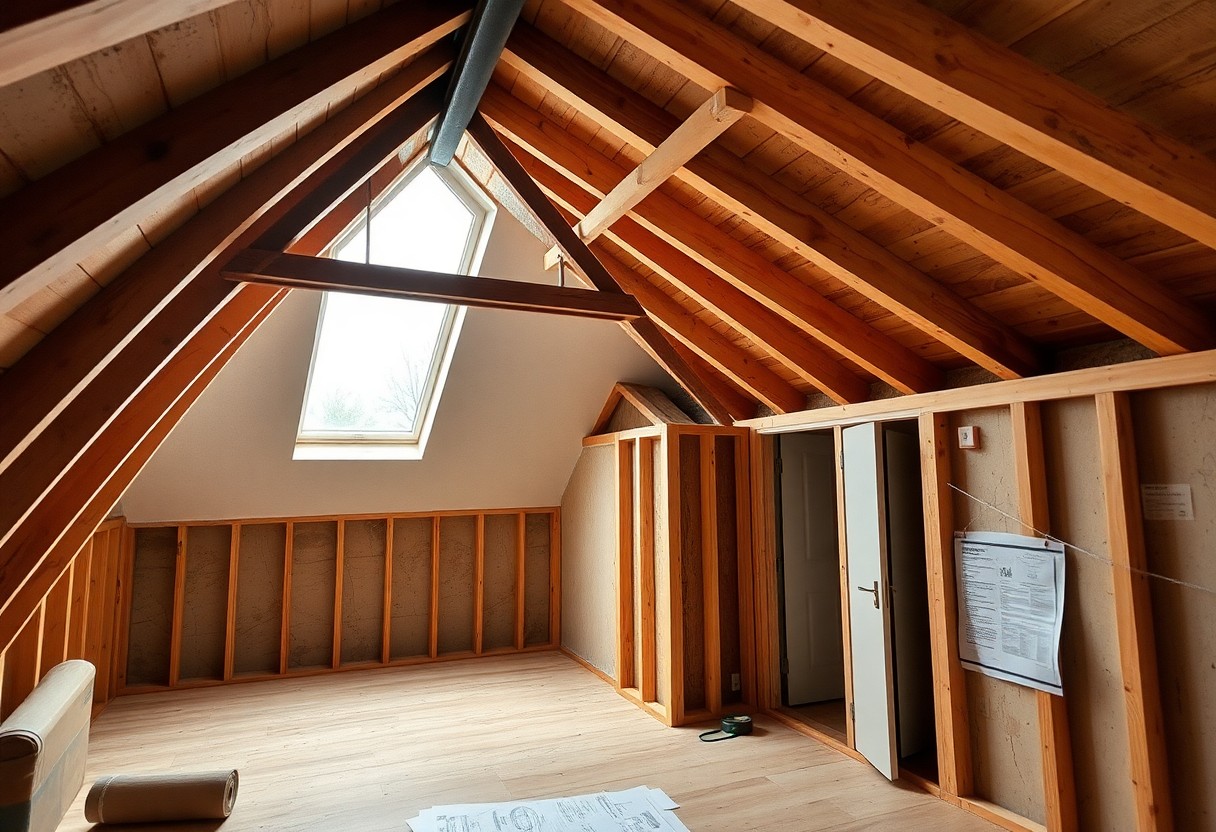
You must check whether your loft conversion falls under permitted development rights or requires planning permission, and ensure compliance with building regulations covering structure, insulation and fire safety; non‑compliance can create dangerous hazards and legal issues. You should also address party wall matters, neighbour consultation and access for inspections, while noting the positive gains of… Loft Conversion Regulations Every Homeowner Should Know
You must check whether your loft conversion falls under permitted development rights or requires planning permission, and ensure compliance with building regulations covering structure, insulation and fire safety; non‑compliance can create dangerous hazards and legal issues. You should also address party wall matters, neighbour consultation and access for inspections, while noting the positive gains of extra living space and increased property value when work is done correctly.
Understanding Loft Conversion Regulations
When you assess options, note that both planning rules and Building Regulations always apply – the latter govern structure, insulation, fire separation and stair dimensions. Local planning policy, neighbour amenity and conservation status directly affect what you can build; for example, councils typically decide householder applications within 8 weeks, and refusals often cite overlooking or harm to the street scene. You should factor in party wall agreements and costs for structural work early on.
Planning Permission Requirements
When your proposed loft exceeds permitted development limits, affects the principal elevation or lies within a conservation area, you must apply for planning permission. Councils usually issue decisions in 8 weeks for householder applications. Conditions can demand changes to materials or window treatments, and refusals commonly hinge on loss of privacy, visual impact or overshadowing; you can seek pre-application advice or lodge an appeal if refused.
Permitted Development Rights
Permitted Development lets you add loft space without full planning in many cases: up to 40 m³ for terraced houses and 50 m³ for semi‑detached or detached properties, with dormers not extending beyond the original roof plane on the principal elevation. Windows facing a neighbour must be obscure‑glazed and non‑opening below 1.7 m, and materials should match the existing roof to avoid enforcement action.
Be aware that Permitted Development can be withdrawn in conservation areas, Areas of Outstanding Natural Beauty, National Parks, World Heritage Sites or where an Article 4 direction has been applied; many urban councils have used Article 4s to control roof alterations. You can obtain a lawful development certificate to confirm rights before starting work; Building Regulations and Party Wall Act obligations still apply, and failing to check can lead to enforcement or costly alterations.
Building Regulations Compliance
When converting your loft you must satisfy Building Regulations such as Part A (structure), Part B (fire), Part K (protection from falling) and Part L (energy). Submit plans to Building Control or an Approved Inspector; many homeowners use a full plans application though a building notice is faster. For example, achieving a roof U‑value of 0.18 W/m²K and meeting ventilation standards often form part of sign‑off. Non‑compliance can lead to enforcement, fines or demolition.
Structural Considerations
Assessing load paths means you must engage a structural engineer to check existing rafters, joists and walls; typical imposed floor load for a habitable room is 1.5 kN/m². Often you’ll need an RSJ or reinforced joists to span new openings and avoid sagging; an engineer specifies sizes and connections. For example, retrofitting a steel beam and strengthened floor can cost around £1,000-£3,500. Incorrect cuts or unsupported loads risk collapse, so don’t proceed without calculations.
Fire Safety Standards
You must provide adequate escape and detection: install mains‑powered, interlinked smoke alarms to BS 5839‑6 (Grade D), place alarms on each storey and circulation spaces, and protect the new stair with a 30‑minute fire‑resisting enclosure (FD30) or alternative escape route. Doors on escape routes often need FD30 rating and self‑closing devices. Poor fire protection dramatically increases risk to occupants, so compliance is non‑negotiable.
For example, an escape window should provide at least 0.33 m² openable area with a minimum dimension of 450 mm unless a protected stair is provided; if you rely on a stair, create a continuous protected route to a final exit. Also install mains‑interlinked smoke alarms with battery backup, implement compartmentation and fire‑stopping around new services, and line stair enclosures with two layers of 12.5 mm plasterboard or an approved FD30 system. Inspectors commonly require these measures before sign‑off.
Key Design Regulations
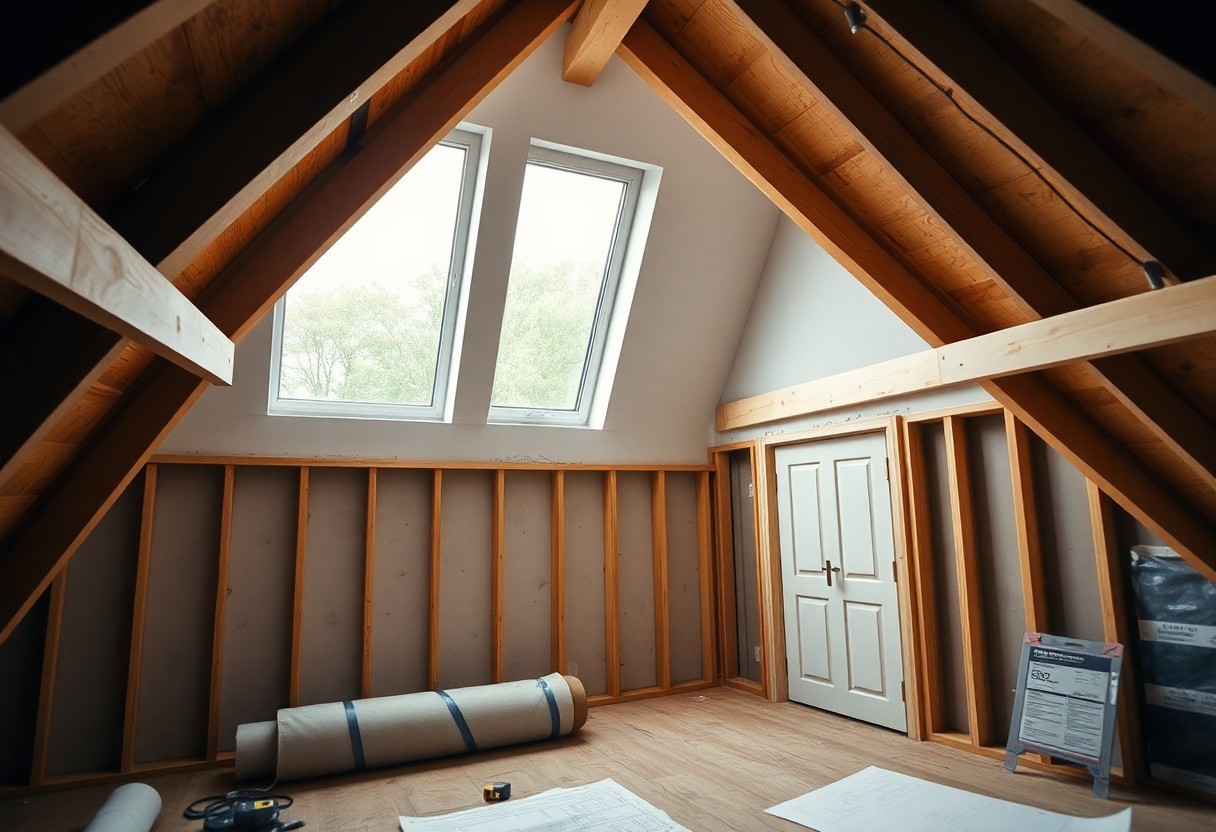
When planning your conversion you must balance structure, safety and usability: lofts generally need a minimum clear headroom of about 2.2 metres, adequate fire escape routes, and insulation to Part L standards. Surveys often reveal joist strengthening or steel beams are required to meet loadings, while party-wall agreements may be needed if altering shared supports. You should budget for sound insulation between floors and ensure any dormers or rooflights comply with permitted development or planning permission limits.
Window and Natural Light Requirements
You’ll need to provide sufficient daylight and means of escape: a common rule is glazed area of at least 10% of the room’s floor area, while an escape window must offer a minimum clear openable area of around 0.33 m² with at least one dimension not less than 450 mm. Rooflights positioned on the pitch increase light and ventilation, but check sightlines and privacy for neighbouring properties.
Headroom and Space Standards
You should aim for a minimum clear headroom of about 2.2 metres across the main usable area to make the space genuinely habitable; sloping ceilings will reduce usable floor area, so plan furniture and circulation accordingly. Paying attention to stair geometry and landing space avoids cramped access and helps meet building-regulation expectations for safe egress.
For greater detail, measure headroom from the finished floor to the lowest point of the ceiling or rafters and ensure at least 2.0 metres of head clearance over the stair pitch line to prevent knocks or obstructions. Consider creating built-in eaves storage where ceiling height falls below usable limits, and model the room using section drawings so you can calculate the actual usable floor area before submitting plans or applying for building control approval.
Neighbourhood Considerations
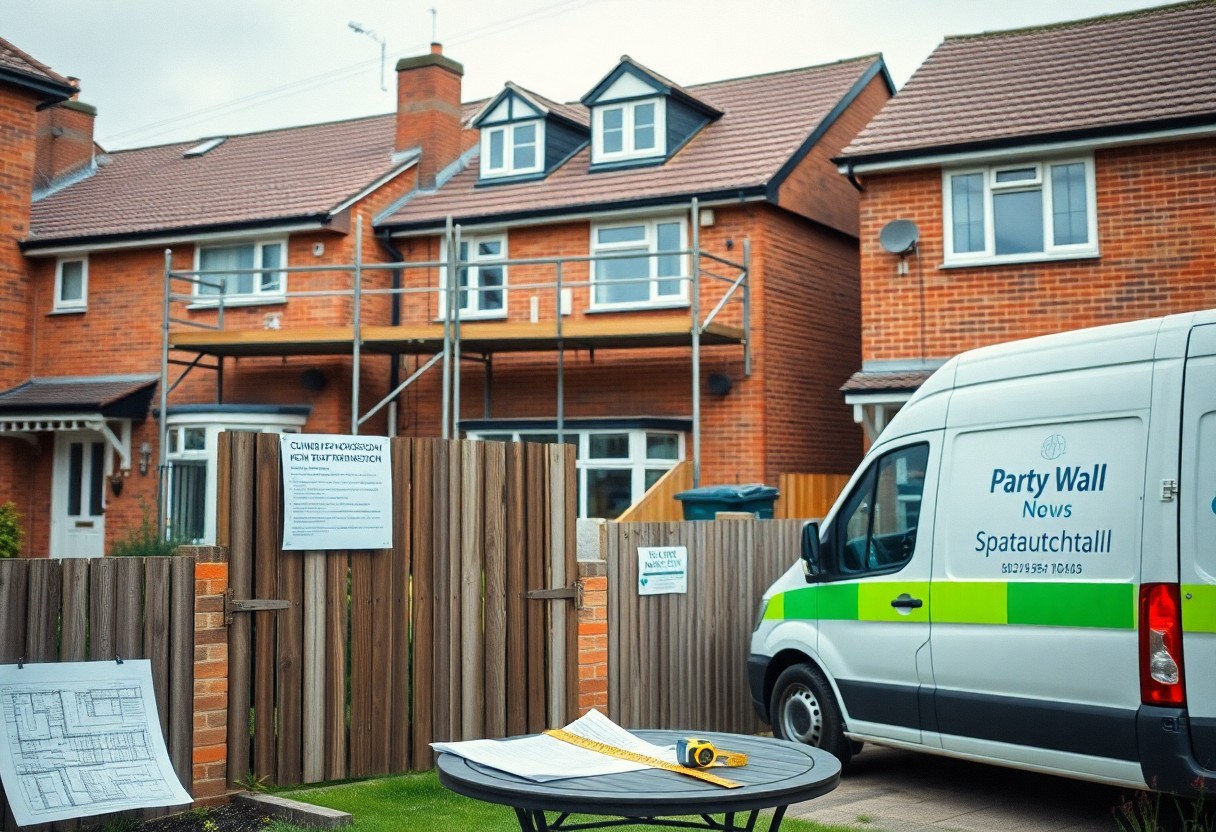
When planning a loft conversion you must assess how the works will alter the street scene, roofline and access, since councils often impose stricter controls in conservation areas or on listed buildings. You should check local planning policies and the Party Wall Act requirements early, because disputes or enforcement notices can add months and unexpected costs to your project.
Impact on Neighbours and Privacy Issues
Overlooking from new dormer windows or a Juliet balcony is a frequent cause of objections; councils commonly apply the informal 45° rule when assessing loss of light and privacy. You can reduce risk by fitting obscure glazing, raising cill heights, setting dormers back from boundaries or installing evergreen screening to minimise complaints and potential planning hurdles.
Consultation and Community Engagement
You should engage neighbours early: write to immediate households, seek pre-application advice from the local authority and note that most councils run a public consultation of around 21 days. Serving a Party Wall notice will usually need to be done at least two months before works commence; early dialogue often prevents formal objections that delay approval.
For best results, you should prepare a clear timeline: notify neighbours and submit a pre-application enquiry (fees typically £50-£200), allow 21-28 days for responses, and serve any required Party Wall notices at least two months ahead. You ought to share measured plans, street elevations and simple 3D visuals with the four most affected properties and keep a written log of meetings and agreements to strengthen your position if disputes arise.
Environmental Considerations
When converting your loft you must align with policies that limit energy use and protect local ecosystems; for example, Part L of the Building Regulations governs thermal performance and may require insulated roofs to reach U‑values typically around 0.13-0.18 W/m²K. You should plan for at least 270mm of loft insulation where possible, install airtight detailing around dormers and rooflights, and consider solar PV or a green roof to reduce running costs and local flood risk.
Sustainability Standards
You can meet local sustainability standards by specifying certified materials and low‑impact systems: choose FSC or PEFC timber, low‑VOC paints and reclaimed bricks where feasible, and include rainwater harvesting or permeable landscaping to lower surface water runoff. Many councils now ask for a short sustainability statement with planning applications showing measures for waste reduction, embodied carbon and biodiversity net gain – citing suppliers and product declarations speeds approval.
Energy Efficiency Regulations
Approved Document L (existing dwellings) will often be the compliance route for loft conversions, requiring improved fabric performance and reasonable provision of low‑energy services; you may need to upgrade glazing to U‑values near 1.4 W/m²K and ensure continuous insulation at junctions. Non‑compliance can trigger an enforcement notice and delay completion certificate, so build thermal bridging details into your drawings and specification from the outset.
In practice, you meet Energy Efficiency Regulations by combining fabric upgrades with efficient services: increase loft insulation to ~270mm, install insulated loft hatches, and consider mechanical ventilation with heat recovery or a heat pump with a COP of around 3-4 to offset added heat loss from new volume. Air‑tightness detailing around the dormer and tested connections at completion provide evidence for Building Control and avoid costly retrofits later.

Common Pitfalls to Avoid
You can fall into costly mistakes by assuming rules that don’t apply to your property, underestimating structural work or neglecting fire escape and insulation standards. For example, aiming for a usable room without providing at least 2.2 metres of headroom or failing to factor in party wall work often forces redesigns. Prioritise planning permission and building regulations checks early, because enforcement or rework can add months and thousands to your budget.
Misunderstanding Regulations
You might think a dormer automatically fits under permitted development, yet volume limits are 40 cubic metres for terraced/semi-detached and 50 cubic metres for detached houses, and those rights vanish on designated land. Building regulations still apply regardless of planning status, covering structure, insulation and fire safety, so relying solely on an online guide without council confirmation leaves you exposed to enforcement or failed inspections.
Ignoring Local Council Advice
You risk delays and enforcement if you ignore council guidance; most householder planning applications are decided within 8 weeks, and pre-application advice can halve redesign time. Councils frequently flag issues-roofline breaches, conservation-area constraints or inadequate escape routes-that, if missed, trigger formal action.
Councils can serve an enforcement notice requiring alterations or removal, commonly allowing around 28 days to comply, though periods vary. Non-compliance may lead to prosecution, fines or forced remedial work that often costs thousands, and unresolved breaches can complicate mortgage approval or a future sale. Use pre-application advice and written approvals to avoid these outcomes.
To wrap up
Hence you should check whether planning permission or permitted development rights apply, comply with building regulations (fire, insulation, structural calculations) and consider party wall agreements, access and neighbour notification; listed buildings or conservation areas may impose extra controls. Engage an architect or structural engineer, obtain written approvals and certificates, and ensure adequate escape routes, ventilation and load-bearing alterations so your loft conversion is safe, lawful and adds value to your home.
FAQ
Q: Do I need planning permission for a loft conversion or are there permitted development rights?
A: Many loft conversions fall under permitted development, but there are strict limits: roof additions must usually stay within the permitted development volume allowance (commonly up to 40m³ for terraced houses and 50m³ for detached and semi‑detached houses), must not extend beyond the existing roof plane at the front, and must meet conditions on materials and window placement. Permitted development does not generally cover flats, maisonettes or Listed Buildings, and local planning authorities can remove these rights by Article 4 direction or within conservation areas. Always check with your local planning authority before starting work to confirm whether a full planning application is required.
Q: What Building Regulations apply to loft conversions and how do I comply?
A: Loft conversions must comply with Building Regulations covering structural stability, fire safety (means of escape, fire doors, protected routes), thermal performance (insulation and ventilation to meet Approved Document L), sound insulation (Approved Document E), and safe access (stairs and headroom – commonly around 2.2 m where practicable) and glazing safety. Compliance is obtained via building control either through your local authority or an approved inspector; plans and calculations from a structural engineer and relevant specialist certificates (electrical installation, ventilation) are typically required. A completion certificate is issued when the work meets the regulations.
Q: When is a Party Wall Agreement needed and what about structural work?
A: If the conversion involves work to, against or near a shared wall, boundary or party structure (for example lowering floor joists, altering chimney breasts, or cutting into roof timbers), the Party Wall etc. Act 1996 may apply. You must serve a party wall notice on affected neighbours and, if they dissent, appoint a surveyor or agree on one; dispute resolution can be required before work begins. Structural alterations typically need a structural engineer’s design and calculations to ensure joists, rafters and new openings are safe and adequately supported.
Q: How do conservation area status and Listed Building designation affect loft conversions?
A: Conservation area status and Listed Building designation impose additional controls. In a conservation area you may lose permitted development rights and need planning permission for roof extensions, and design will be closely scrutinised to protect the area’s character. For Listed Buildings, any alteration affecting the building’s historic fabric or appearance requires Listed Building consent, even if planning permission is not needed; proposals must conserve historic features and amendments may be required by heritage officers or conservation architects.
Q: What certificates, inspections and insurance should I obtain on completion?
A: Obtain a building control completion certificate for regulatory compliance; an electrical installation certificate from a registered electrician and any gas safety certificates if relevant; and, where necessary, warranties for structural work or a latent defects insurance policy. Inform your mortgage lender and insurer about the conversion and update home insurance. Retain drawings, calculations and certificates for future sale or enforcement enquiries; without proper documentation you may face enforcement action or difficulty selling the property.