

Most of the time you can carry out minor loft conversions under permitted development rights, but rules vary by council and the nature of the work; structural alterations, enlargements and changes to roofline typically require planning permission, while simple dormers or internal works may not. You should check your local authority, party wall obligations and building regulations to ensure your conversion is legal and safe.
Permission to convert your loft often qualifies as permitted development, but you must check limits, roof alterations and location; if you exceed limits or are in a conservation area you will need planning permission. You must also manage dangerous structural work, fire safety and party wall implications and comply with building regulations, while noting a loft conversion can add valuable living space and property value.
Understanding Planning Permission
What is Planning Permission?
You need planning permission from your local planning authority to change your building’s use or appearance; it’s the statutory consent under the Town and Country Planning Act. It assesses visual impact, neighbour amenity and highway safety. For loft conversions, some works fall under permitted development, but others require full planning. Decisions for householder applications are typically made within 8 weeks, so factor that into your project timetable.
When is Planning Permission Required?
You must apply when your loft work exceeds permitted development limits-generally 40m3 for terraced houses and 50m3 for semi‑detached/detached. Also, any increase to ridge height, extensions beyond the plane of the existing roof slope to the principal elevation, or alterations on the front roof slope usually need consent. Listed buildings, properties in conservation areas or areas with Article 4 directions often lose permitted rights, forcing a full application.
When consent is required you’ll often face additional constraints: dormers that extend beyond the allowed 40m3/50m3 thresholds, raised roofs or balconies can trigger a planning application and neighbour notifications. In many London boroughs, Article 4 has removed PD rights for whole streets, so your project must go through the full process. You should also factor in a party wall award and compliance with building regulations, which are separate from planning but equally binding.

Understanding Planning Permission
What is Planning Permission?
Planning permission is the formal consent from your local planning authority (LPA) for building work or change of use; many small loft conversions fall under Permitted Development but limits apply: 40m³ for terraced and 50m³ for detached/semi‑detached houses. You should expect a householder planning application to be decided within 8 weeks and use the Planning Portal for guidance. Listed buildings always need listed building consent, while Building Regulations approval remains separate and mandatory.
When is Planning Permission Required?
You will need full planning permission if your loft conversion exceeds Permitted Development limits, alters the roofline facing the highway, or creates a separate dwelling; front dormers and increases above the ridge often trigger applications. Also, properties in conservation areas or subject to an Article 4 direction commonly lose PD rights, and listed buildings always require consent. Councils can issue enforcement notices and require removal or modification if you proceed without permission.
Even if your scheme fits the 40m³/50m³ Permitted Development envelope, you must meet detailed conditions: the addition cannot exceed the highest part of the roof, side‑facing dormers are restricted, and materials should match the existing house. You may need a Party Wall award and Building Regulations approval for structure, fire safety and stair access. A retrospective application or enforcement appeal can take months and incur significant costs.
Converting Your Loft: The Basics
When you convert a loft you must plan for structural alterations, a new staircase and minimum internal headroom of around 2.2 metres in many cases; typical costs range from £20,000-£60,000 depending on type, and Permitted Development often covers small projects (roughly 40m³ terraced, 50m³ semi‑detached/detached) without planning. You should check Party Wall agreements, building control routes and factor in fire safety and insulation upgrades.
Types of Loft Conversions
You commonly choose between rooflight, dormer, mansard, hip‑to‑gable and modular conversions; each changes yields, cost and planning likelihood, and you must weigh roof pitch, ridge height and neighbour impact.
- Rooflight – minimal build, lowest cost
- Dormer – added floor area, common choice
- Mansard – maximises space, often needs planning
- Hip‑to‑gable – enlarges footprint on hipped roofs
- Modular – quicker build, higher material cost
Assume that you match type to budget, planning risk and required space.
| Rooflight | Low cost, retains roofline, adds light but little height |
| Dormer | Creates usable floor area; typical rear dormer adds 6-12m² |
| Mansard | Largest volume gain, often needs planning permission |
| Hip‑to‑gable | Good for hipped roofs, increases floorplan width |
| Modular | Off‑site sections reduce on‑site time but cost more |
Potential Building Regulations
You will face Building Regulations on structure (calculations and works), fire safety (escape, alarms and separation), stairs and headroom, sound insulation and energy performance (insulation and ventilation). Local authority or an approved inspector will inspect stages and sign off compliance; non‑compliance can lead to enforcement or mandatory remedial works.
In practice you should expect stage inspections for foundations or party wall works, structural floor insert, waterproofing and insulation, and final completion; mains‑linked smoke alarms and adequate means of escape are commonly required, and designers must supply structural calculations and construction details to Building Control. You will often need to provide thermal bridging details, acoustic partitions where rooms are let separately, and drainage alterations if creating a bathroom; hiring an experienced architect or surveyor reduces the risk of costly rework and ensures compliance.

Converting a Loft: Key Considerations
Types of Loft Conversions
You’ll choose from several common forms: a dormer to maximise floor area, a mansard to create near‑full storey space, hip‑to‑gable for detached or semi‑detached properties, rooflight conversions for minimal intrusion and a Velux option for lowest cost and disturbance. Dormers typically provide 2-3m headroom and costs generally range from £20,000 to £60,000 depending on complexity. Assume that your roof structure, access and local restrictions will dictate feasibility and final cost.
- Dormer
- Mansard
- Hip-to-gable
- Rooflight
- Velux
| Dormer | Adds significant headroom; common on terraced houses; typical cost £20k-£45k. |
| Mansard | Creates almost a full extra storey; higher cost and greater visibility; often needs planning. |
| Hip-to-gable | Best for detached/semi properties; converts hip roof into gable to gain width. |
| Rooflight | Least invasive; keeps original roofline; cheaper (£5k-£15k) but gives less floor area. |
| L‑shaped / Combined | Used for corner properties or large rear returns; complex design raises costs and timelines. |
Factors Affecting Permitted Development
You must assess volume limits – up to 40 m³ for terraced homes and 50 m³ for detached/semi‑detached – alongside height restrictions, roofline set‑backs and whether your property is in a conservation area or is listed. Prior approval processes usually run to a 56‑day decision period and neighbour objections can trigger full planning scrutiny. Perceiving that an Article 4 direction will remove your permitted development rights entirely.
- Volume limits
- Height & set‑back
- Conservation area
- Article 4 direction
- Listed building
You’ll also need to factor in building regulations compliance (structure, insulation, stairs), party wall agreements for shared walls, and fire safety separation if you add a bedroom; structural surveys often add £500-£1,500 to upfront costs. Case examples show councils refusing PD where measured volume exceeded limits by a few cubic metres, forcing a full planning application and extra fees. Perceiving that early pre‑application checks and a structural engineer report reduce delay and dispute risk.
- Building regulations
- Party Wall
- Structural survey
- Prior approval
- Neighbour objections
Permitted Development Rights
Permitted development lets you carry out many loft conversions without full planning permission, so long as you meet statutory limits and conditions. For example, adding a rear dormer within size limits or installing rooflights is often covered, but you must still gain building regulations approval and check for local restrictions. If you ignore rules you risk an enforcement notice, and Article 4 directions or designated areas can remove your rights entirely.
What Are Permitted Development Rights?
Under Class B of the General Permitted Development Order you can alter a roof within defined parameters: typically up to 40 cubic metres for terraced houses and 50 cubic metres for semi‑detached or detached homes. Dormers set within the roof slope, velux‑style rooflights and modest extensions often qualify. Flats, maisonettes and listed buildings are excluded, and many councils impose limits in conservation areas or by Article 4 directions.
Conditions for Permitted Development
Conditions include not exceeding the specified volume, keeping work within the existing roof plane that faces the highway, using materials that match the original roof, and avoiding verandas, balconies or raised platforms. Any new side‑facing windows must be obscure‑glazed and non‑opening below 1.7 metres. If your property sits in a National Park, AONB, World Heritage Site or conservation area, permitted development is often restricted or removed.
More detail matters when measuring volume: you calculate the additional cubic metres of enclosed space created by the conversion, excluding existing roof voids used for storage. Many homeowners seek a Lawful Development Certificate from the council to confirm rights before work begins; this protects you against later enforcement and provides certainty for resale or mortgage purposes.
Permitted Development Rights
What are Permitted Development Rights?
Under the General Permitted Development Order (GPDO) – specifically Part 1, Class B – you can often alter or add to your roof without full planning permission, so many loft conversions proceed under PD. You must still meet detailed limits on size, position and external appearance, and comply with building regulations. Using PD typically saves time and cost compared with a full planning application, but the work must fall squarely within the GPDO conditions.
Limitations and Exceptions
Permitted development does not apply if your property is a listed building, or located in a conservation area, national park, Area of Outstanding Natural Beauty or World Heritage Site; local authorities can also remove PD rights via Article 4 directions. Flats, maisonettes and properties created through recent permitted development conversions are commonly excluded, so you must check your local planning map before assuming PD applies.
More detailed limits include design constraints: roof additions must not exceed the height of the existing roof or materially alter the principal elevation facing a highway, and side-facing windows often need to be obscure-glazed to protect neighbours’ privacy. If you proceed where PD doesn’t apply you risk enforcement action, fines or being required to remove the works, and you will still need building regulations and, usually, a Party Wall agreement.
Common Myths About Loft Conversions
Many believe you always need planning permission for a loft conversion, but for houses you can usually proceed under permitted development up to 40 m³ for terraced and 50 m³ for semi‑detached/detached properties; flats, listed buildings and many conservation areas are excluded. You should also expect building‑regulation approvals, possible Party Wall agreements and neighbourhood disputes; examples show projects stalled when owners ignored Article 4 directions or failed to consult neighbours.
Misconceptions About Planning Permission
People often assume neighbours can always force you to apply for planning, yet in practice their recourse is limited unless your works exceed PD limits, alter the roofline beyond the existing plane or breach ridge height. You must check if your street is under an Article 4 direction or within a conservation area, and if your property is a listed building you will need listed‑building consent regardless of PD allowances.
Clarifying the Role of Building Regulations
Building regulations are separate from planning and focus on safety, structure and energy: compliance with Part A (structure), Part B (fire), Part L (energy) and Part M (access) is commonly required for loft work. You must secure approval via your local authority or an approved inspector, provide structural calculations and install compliant insulation, windows and smoke alarms even when planning permission isn’t needed.
For example, loft stair enclosures often require a 30‑minute fire resistance on the escape route and mains‑wired interlinked smoke alarms, while structural changes demand engineer‑signed calculations and joist reinforcements. You should expect an inspection programme during works; failure to comply can lead to enforcement notices, costly remedial works or difficulty selling the property.
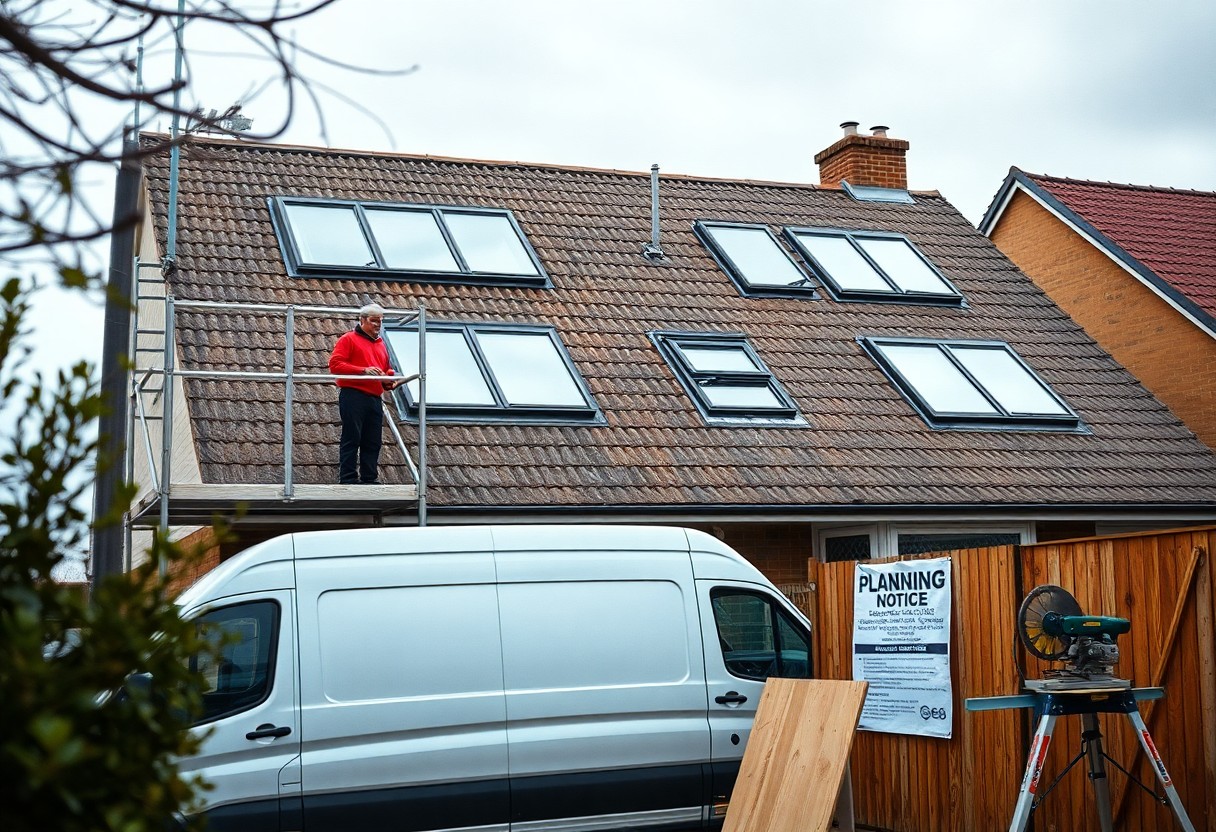
The Role of Building Regulations
Building regulations ensure loft conversions meet safety, structural and energy standards and they apply whether or not you need planning permission. You must submit a building control application or use a competent‑person self‑certification route for some works; common requirements include installing an RSJ to support new openings and meeting Part L thermal performance. Non‑compliance can create dangerous defects and invalidate your insurance, so building control sign‑off is necessary.
Importance of Compliance
If you ignore building regulations you face enforcement notices, costly retrospective alterations and potential refusal of mortgage offers. Local authorities can insist on remedial work and you may not receive a building‑regulations completion certificate, which solicitors and lenders typically require on sale. Also, non‑compliance can put occupants at risk from fire, structural failure or unsafe electrics, so following the rules protects both value and safety.
Differences Between Planning Permission and Building Regulations
Planning permission deals with appearance, volume and neighbour impact-such as dormer size or overlooking-whereas building regulations focus on structure, fire safety, insulation and services. For instance, a dormer might be allowed under permitted development but you still need building control approval for the new floor, stair and electrical work. They are distinct processes: one manages planning impact, the other ensures the conversion is safe and compliant.
To be specific, Part A (structure) may require an RSJ, Part K demands safe stair design with around 2.0 m headroom, Part B expects fire separation often with a 30‑minute fire resistance for escape routes, Part L covers insulation and energy performance, and Part P mandates certified electrical work. Consequently, you will usually need both planning checks (or confirmation of permitted development) and full building control sign‑off.
The Application Process
You apply to your local planning authority with detailed plans, elevations and a design and access statement; most decisions for householder applications are made within 8 weeks, though extensions are common. Expect fees (householder fee is around £206) and neighbour consultation; some projects may instead fall under permitted development. For international context see Do people in the US need planning permission to convert …. Knowing the timetable helps you coordinate contractors and surveys.
Steps to Apply for Planning Permission
Start with a pre-application enquiry to your local authority, commission scaled plans and a site location plan from an architect, then submit the application form, plans, a design and access statement and the fee (typical householder fee ~£206). Decisions normally take 8 weeks; allow extra time if consultations are required and inform neighbours early to reduce objections. Knowing the sequence prevents costly delays.
Key Considerations and Tips
Check if your loft conversion qualifies as Permitted Development, obtain a structural survey and factor in building regulations issues such as stairs, insulation and fire safety; aim for at least 2.2 m of usable headroom where feasible. Expect party wall notices under the Party Wall etc. Act 1996 and budget a contingency of about 5-15% of the build cost for surprises. Knowing these points reduces enforcement and redesign risk.
- Permitted Development: may avoid full planning but has limits on volume, height and position.
- Party wall: neighbours can serve notices and require an award; disputes add time and cost.
- Building regulations: structural calculations, stair dimensions and fire precautions are commonly required.
Knowing you should factor these into your project schedule.
If your property is in a conservation area or is listed, plan for additional consents and specialist reports; for example, inner-London terraces often face restrictions on visible dormers and windows, which can add 4-6 weeks to the timetable. Typical structural engineer reports cost between £300-£800, and you should allow a professional to prepare details for building regs approval. Knowing these constraints helps you manage budget, timetable and neighbour relations.
- Conservation area: stricter aesthetic controls and higher likelihood of refusal for external alterations.
- Listed building: requires listed building consent as well as planning permission.
- Costs: structural reports £300-£800; set a contingency of 10-15%.
Knowing these will influence your procurement and contractor selection.
Tips for a Successful Loft Conversion
Plan tightly: check permitted development limits (up to 40m³ for terraced and 50m³ for semi‑detached/detached in England), secure a structural survey, and aim for a minimum internal headroom of about 2.2m where possible; typical costs range from £20,000-£60,000 depending on finish and complexity. Factor in early party wall discussions, build a contingency of at least 10-15%, and schedule building regulations checks into your timeline. The earlier you resolve these items the smoother the project will run.
- planning permission
- permitted development
- building regulations
- party wall
- head height
- roof strengthening
- natural light
- value uplift
Design Ideas
A dormer conversion typically delivers around a 30-50% increase in usable floor area, while a mansard can create almost a full additional storey; choose rooflights such as two 78×118cm units for quick daylight gains or a full-height glazed gable for a dramatic effect. Consider built-in storage to maximise headroom, use acoustic insulation between joists for quieter bedrooms, and plan the staircase to save at least 0.5-1m² of floor space.
Working with Professionals
Engage a RIBA-registered architect and a structural engineer early; architects commonly charge 5-10% of build cost and structural calculations typically cost £500-£1,500. Expect 2-4 building control site inspections and allow for a 6-12 week build for a basic dormer, longer for complex mansards. You should confirm expertise in loft conversions and check previous projects.
Ask potential contractors for fixed‑price quotes, a clear payment schedule (often 10% deposit then staged payments), and at least three recent references; always request proof of public liability and employer’s liability insurance. Obtain a written party wall agreement before works start if required, require detailed drawings and structural calculations, and include fire escape and insulation specifications to meet Part B and Part L of the Building Regulations; typical warranties or insurance-backed guarantees add extra protection for up to 10 years.
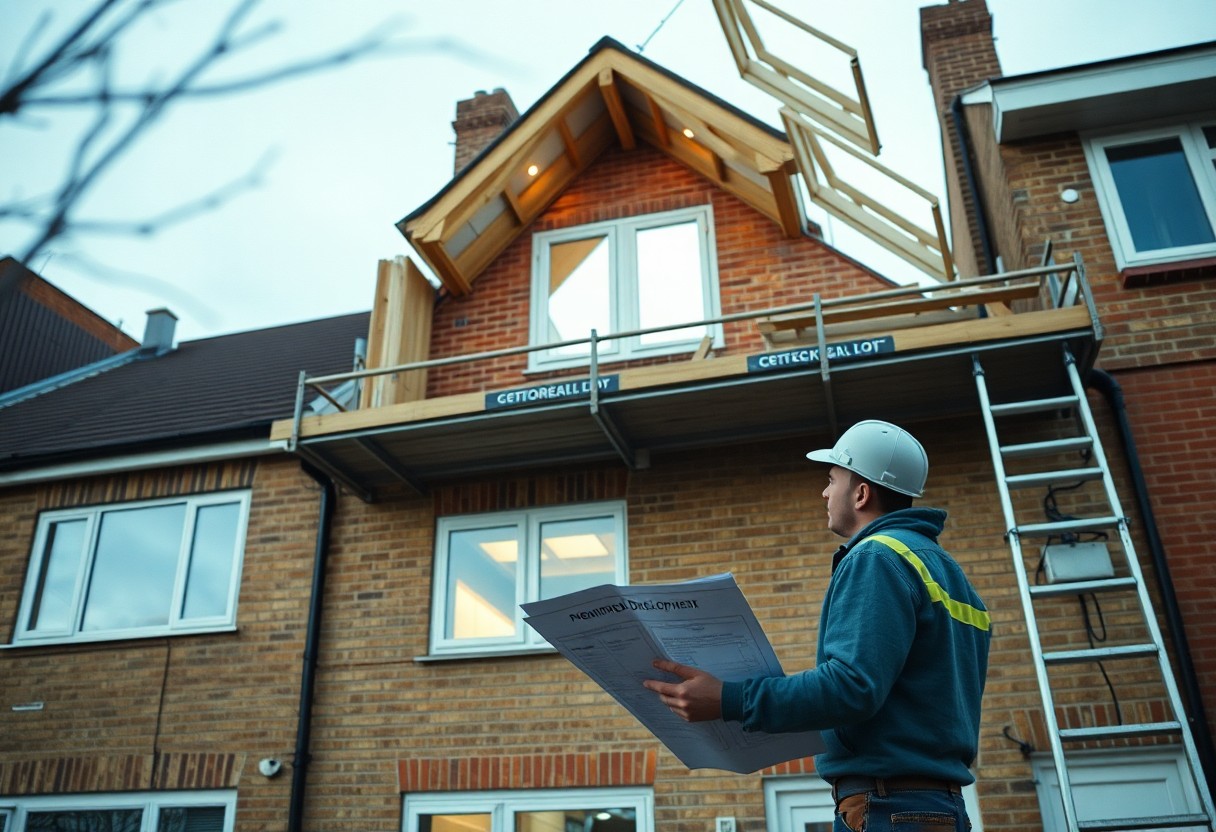
Alternatives to Planning Permission
When full planning isn’t an option you can often use Planning Permission – Loft conversion guidance to check permitted development limits – typically 40m³ for terraced and 50m³ for semi‑detached or detached houses – and pursue Building Regulations only, a Certificate of Lawfulness, or a householder application if neighbours object; you must still satisfy party wall requirements and structural design by an engineer.
When to Consider an Alternative Approach
If you plan to exceed the PD volumes, raise the ridge, live in a conservation area or a listed building, or intend to create a separate dwelling (eg a self‑contained flat), then you should pursue full planning; Article 4 directions can also remove PD rights in some areas, and strong neighbour objection or complex roof geometry often makes a formal application the safer route.
Potential Risks and Benefits
You can save time and the typical householder planning fee (around £206) by using permitted development, and avoid the standard 8‑week planning decision timescale, but you face risks such as enforcement notices, being required to remove work, insurance or mortgage complications, and reduced resale confidence if the conversion is unauthorised.
More detail: enforcement action can lead to formal notices, legal costs and delays to sale, and party‑wall disputes often add months and extra fees; therefore you should get a structural survey, comply with Building Regulations (fire alarms, stair access, insulation) and consider applying for a Certificate of Lawful Development if doubt exists to protect your investment.
Consequences of Ignoring Planning Regulations
Legal Implications
An enforcement notice or stop notice can be served by your local planning authority if your loft conversion breaches regulations, requiring alteration or removal; failure to comply may lead to prosecution and significant fines or injunctions. Appeals are possible but time‑limited, with enforcement action often barred after about four years for unauthorised building works and sometimes ten years for certain changes of use, so you must assess timescales quickly.
Potential Costs and Remedial Actions
Submitting a retrospective planning application may resolve some breaches, but you could be forced to carry out remedial works or full demolition if permission is refused, especially when you exceed permitted development limits of 40 cubic metres (terraced) or 50 cubic metres (semi‑detached/detached). You should budget for contractor, surveyor and legal fees, and anticipate delays to occupation or sale.
Remedial costs vary widely: minor compliance work might cost a few thousand pounds, whereas structural alterations or demolition commonly run from about £10,000 to over £50,000 depending on complexity; additionally, you risk mortgage complications, insurance refusals and a fall in resale value if unauthorised works remain on the title, so factor long‑term financial exposure into your decision.
Final Words
With these considerations you can often convert a loft without planning permission if the work falls within permitted development – for example modest roof extensions and rear dormers that meet size, height and materials limits – but you must check whether your property is a listed building or in a conservation area, comply with building regulations, address party wall and neighbour issues, and obtain lawful development certificates when in doubt.
Final Words
Upon reflecting, you can often convert a loft without planning permission under permitted development rights if size, roofline and external changes stay within limits, but you must secure building regulations approval and check for restrictions (conservation areas, listed status or article 4 directions); consult your local planning authority and a qualified surveyor to avoid enforcement action.
FAQ
Q: Can you convert a loft without planning permission?
A: Many loft conversions fall under permitted development rights and do not need full planning permission, provided they meet the conditions set out in the General Permitted Development Order. Typical requirements include staying within size limits, not extending beyond the existing roof plane that faces the highway, and using materials that are similar in appearance to the existing house. Even where planning permission is not required, other approvals such as building regulations or prior approval may still be necessary.
Q: What are the main permitted development limits for loft conversions?
A: For typical houses the maximum additional roof volume allowed under permitted development is 40 cubic metres for terraced houses and 50 cubic metres for semi‑detached or detached houses. The extension must not exceed the height of the existing roof, must not extend forward of the principal elevation or the side elevation facing a highway, must not increase the height of the eaves, and must avoid balconies or raised platforms. Side‑facing windows must be obscure glazed and non‑opening below 1.7 metres above the internal floor level. Local Article 4 directions and other restrictions can remove these rights.
Q: When is prior approval or planning permission required instead of relying on permitted development?
A: Prior approval to the local planning authority is required where the permitted development class specifies it – commonly to assess impacts on neighbours (overlooking, overshadowing, visual intrusion) or on highways. If the proposed works exceed the permitted development limits or fall foul of specific exclusions (for example forward of the principal elevation), full planning permission will be needed. The prior approval process typically has a statutory decision period (usually 56 days) during which the council can grant or refuse consent or impose conditions.
Q: Do conservation areas, listed status or Article 4 directions affect loft conversions?
A: Yes. An Article 4 direction can remove permitted development rights for your property, requiring planning permission for works that would otherwise be permitted. Listed buildings always require listed building consent for alterations affecting the fabric, irrespective of permitted development. Special designations such as national parks, Areas of Outstanding Natural Beauty or conservation areas may also restrict or remove permitted development rights, so check with the local planning authority before proceeding.
Q: What other legal and practical matters should I consider before starting a loft conversion?
A: Building regulations approval is normally required for structural changes, insulation, fire safety, means of escape, staircases and glazing. The Party Wall Act may apply where work affects shared walls or neighbouring property, requiring notices and possibly agreements. Structural surveys and detailed plans from an architect or structural engineer are advisable. Consider access for construction, potential disturbance to neighbours, impact on daylight and privacy, and the risk of enforcement if works exceed permitted limits – retrospective planning applications can be refused and require removal of unauthorised work.