
There’s a straightforward path to reduce your energy use and improve comfort in an older home: start by sealing draughts, upgrading insulation and fitting efficient heating controls, while having any old wiring inspected for safety; you should also consider double glazing or secondary glazing to cut heat loss and expect noticeable bill savings within months, but ensure professional installation for complex work and prioritise fixing any electrical hazards before carrying out other upgrades.
Understanding Energy Efficiency
You can reduce running costs in older dwellings by addressing both building fabric and services: poor insulation, gaps around doors and windows, and an ageing heating system typically drive the largest losses. For example, increasing loft insulation to recommended depths or upgrading an inefficient boiler often delivers measurable savings within 2-5 years, while switching lighting to LED cuts lighting consumption by up to 80%. Perceiving where your home leaks heat lets you sequence improvements for fastest payback.
- insulation
- heating system
- LED
- draught-proofing
Importance of Energy Efficiency
You benefit from lower bills, improved comfort and reduced carbon output when you prioritise efficient measures: a 20% drop in energy use can halve the period to recoup retrofit costs in some projects, and tenants often report fewer complaints after upgrades. Upgrading to a high-efficiency condensing boiler or adding 270mm loft insulation are typical cost-effective steps that also raise property value. Perceiving the combined financial and comfort gains helps you justify investment choices.
- condensing boiler
- loft insulation
- comfort
- payback
Key Factors Affecting Energy Consumption
You should assess the fabric (walls, roof, floors, windows), the heating and hot-water plant, controls and occupant behaviour: single glazing, holes in the thermal envelope and an old non-condensing boiler each add significant kWh use. For instance, improving cavity wall or loft insulation often reduces space-heating demand by a third in uninsulated stock, while programmable controls cut wasted heating hours. Perceiving which factor dominates in your home directs the most effective intervention first.
- walls
- roof
- controls
- boiler efficiency
You can quantify measures: UK guidance recommends around 270mm loft insulation, aiming for low U‑values in walls and windows; replacing a pre-2005 boiler with an A-rated condensing boiler typically trims heating bills by 15-30%; switching to LED lighting and smart thermostats delivers immediate savings and better control. Perceiving these measurable targets makes planning and measuring retrofit success straightforward.
- 270mm loft insulation
- condensing boiler
- LED lighting
- smart thermostat

Conducting an Energy Audit
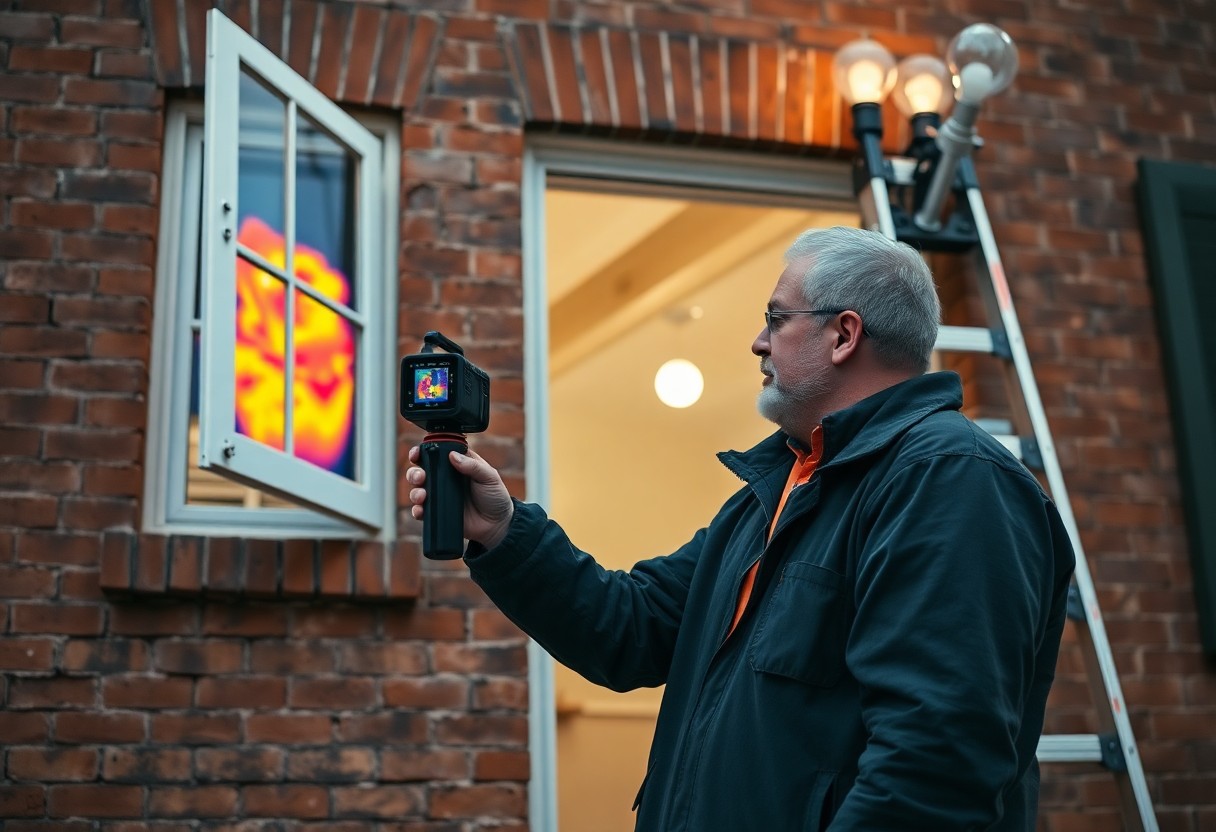
You should map where heat is lost by checking loft insulation, wall construction and window seals, using simple tools like an infrared thermometer or hired thermal camera; a blower door test quantifies airtightness. Expect draughts and poor loft insulation to account for the largest losses-often up to 30% of heating energy in older homes. Also inspect for gas leaks and exposed wiring before work begins to avoid hazards.
DIY Energy Audit Tips
You can perform low-cost checks: feel for draughts around skirting and windows, measure loft insulation depth, and time how long radiators take to warm. Use a thermometer to compare room-to-room temperatures and note irregularities, then prioritise fixes by cost.
- Insulation
- Draught-sealing
- Thermal imaging
- Window performance
Perceiving cold spots with a hand-held camera or thermometer pinpoints where to focus immediate improvements.
When to Hire a Professional
You should engage a professional if your home has solid walls, unclear loft construction, suspected damp or asbestos, or if you plan major upgrades like heat pumps. A qualified assessor will run a blower door test and thermal imaging, produce an EPC and quantify expected savings and payback, while a Gas Safe-registered engineer handles combustion appliance checks.
When you commission an expert they’ll combine airtightness tests, thermal surveys and boiler efficiency checks to produce a ranked list of measures-cavity or external wall insulation, loft top-ups to the recommended 270mm, or glazing upgrades. Typical survey fees range around £100-£400, and many recommended measures show payback in roughly 3-10 years depending on energy prices and available grants; if asbestos or structural issues surface the assessor will flag hazards and advise on licensed remediation.
Insulation Improvements
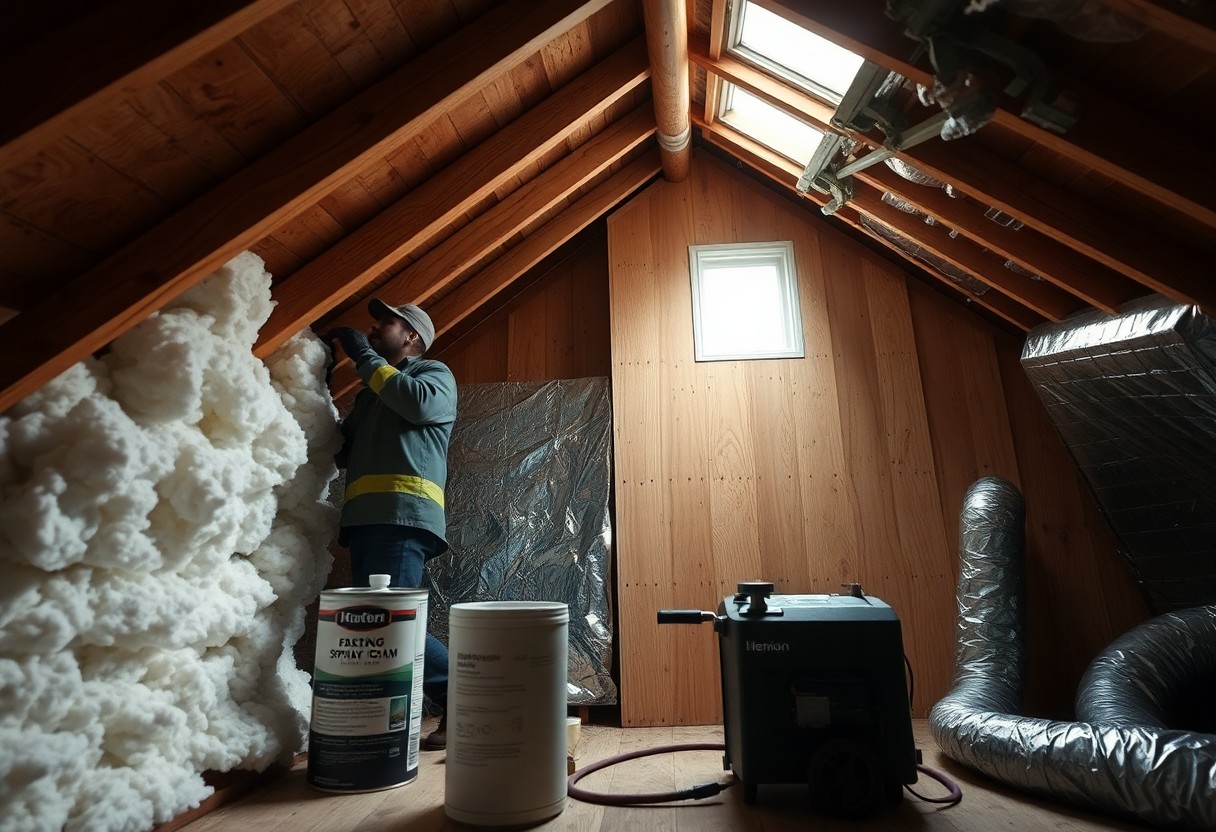
You can immediately cut heat loss by targeting lofts, walls and suspended floors; adding 270 mm of loft insulation and insulating cavity walls often reduces heating demand by up to 25%, while improving airtightness and draught-proofing multiplies benefits. Survey first for damp and asbestos in older homes, and prioritise measures that offer the best payback for your property type.
Types of Insulation
You’ll choose between bulk materials and boards: mineral wool for lofts, PIR or phenolic for flat roofs and floors, cellulose blown into voids, cavity wall beads or foam, and external wall boards for solid walls; note that spray foam can seal well but presents health risks during application.
| Mineral wool (loft) | Good value, non-combustible, install to 270 mm depth for best performance and ~R≈3.0 per 100 mm. |
| PIR / foam boards | High R-value per mm, ideal for limited depth in floors or roofs; more costly but space-saving. |
| Blown cellulose | Effective for irregular voids and lofts, recycled content, requires sealing to avoid moisture migration. |
| Cavity wall fill | Fast installation, typical payback in 3-7 years for semi-detached houses; check walls are dry and cavities clear. |
| External solid-wall | Largest thermal gain but highest upfront cost; often reduces heat loss by >50% from walls when done correctly. |
- Loft insulation
- Cavity wall insulation
- Solid wall insulation
- R-value
- Asbestos checks
How to Retrofit Insulation
You should start with a full fabric survey: measure existing depths, check for interstitial condensation, and test wall cavities. Prioritise loft and cavity fills for rapid payback, seal loft hatches and pipe penetrations to preserve airtightness, and stage work to avoid thermal bridging at eaves, chimneys and party walls; always budget for vapour control where needed.
Any time you retrofit, you must have an asbestos check completed by a licensed surveyor if your home predates the mid-1980s, ensure adequate ventilation to avoid moisture problems, and hire a competent installer so your investment delivers the promised cost savings and safety.
Upgrading Windows and Doors
Windows and doors often account for up to 25% of heat loss in older homes. You should target replacements with modern units: single‑glazed panes typically have U‑values around 5.7 W/m²K, while quality double glazing sits near 1.2-1.6 W/m²K and triple glazing about 0.8 W/m²K. Upgrading can halve transmission losses and cut heating demand significantly; typical installation costs per window range from £300-£800, with payback via reduced bills and improved comfort over a decade or less.
Choosing Energy-Efficient Windows
You should pick frames and glazing based on performance: uPVC gives low maintenance and good thermal breaks, timber offers better insulation when well sealed, and aluminium must include a thermal break. Specify low‑emissivity coatings and argon gas fills; argon reduces conduction by around 30% versus air and low‑E can cut radiative losses by 10-20%. Aim for a centre‑pane U‑value below 1.6 W/m²K to see clear savings and improved comfort.
Effective Door Sealing Techniques
Start with simple draught‑proofing: fit brush or rubber weatherstrips to jambs, install a threshold seal, and add a letterbox brush; DIY kits cost from about £10-£50. Good seals can reduce air leakage through doors by up to 50%, lowering your heating bills and eliminating cold spots. Choose durable materials like EPDM or silicone for longevity, and check compressions to avoid binding locks or preventing the door from closing properly.
You should measure gaps carefully, then select compression or magnetic seals for different clearances; use expanding foam only for structural gaps and avoid sealing airways on fire doors or vents required for combustion appliances. Test sealing with a candle or smoke pencil to find leaks, and consider professional fitting for external doors where thresholds and sill drainage must be preserved to prevent water ingress.
Heating and Cooling Solutions
When upgrading an older home you should prioritise systems that cut losses from leaky envelopes and dated controls; replacing an inefficient boiler or introducing a heat pump after improving insulation often yields the best returns. For example, swapping a 20‑year‑old gas boiler for a modern condensing unit or an air‑source heat pump can reduce heating energy use by 20-30%, while adding zoning and improved duct sealing can trim distribution losses by up to 15%.
Energy-Efficient HVAC Options
Consider air‑source heat pumps with a COP of 3.0-4.0 for mild UK climates, ground‑source heat pumps where you have land, and high‑efficiency condensing boilers with > 90% seasonal efficiency for retrofit scenarios; ductless mini‑splits work well in room‑by‑room upgrades. Hybrid systems that combine a heat pump with a gas boiler for peak demand can cut seasonal bills while maintaining comfort, and upgrading to mechanically ventilated heat recovery (MVHR) recovers up to 70% of heat from exhaust air.
Smart Thermostat Installation
Smart thermostats typically deliver 10-12% savings on heating bills by optimising schedules, learning household patterns and enabling remote control; pairing them with wireless temperature sensors improves zoning accuracy by room. You should check compatibility with your boiler or heat pump beforehand, and where wiring is absent you can use battery models or a power adaptor to avoid costly rewiring while still gaining automated control and energy insights.
Installation best practice: have a Gas Safe or qualified HVAC engineer verify connections on gas boilers and integrate the thermostat with existing controls so you avoid control conflicts. Expect device costs of about £100-£250 and typical professional installation of £60-£150; with the stated savings many households see payback within 1-3 years. Use remote sensors, geofencing and schedulers to reduce wasted heating when you’re away.
Sustainable Energy Options
When upgrading an older house, prioritise reducing demand before adding generation: good loft and wall insulation plus draught-proofing can cut heating need by up to 50%. Then compare solar PV, air-source heat pumps, small wind and biomass against roof orientation, available land and up-front costs. A whole-house strategy helps you avoid oversizing and ensures any renewable installation delivers meaningful savings rather than unnecessary expense.
Solar Power Considerations
A typical 4 kW rooftop PV system in southern England produces around 3,500-4,000 kWh/year, often covering a household’s electricity use; you should check roof age, pitch and shading first. If your roof is south-facing and unshaded you’ll maximise yield, while a structural survey prevents surprises. Consider a 5-10 kWh battery to store excess generation and sign-up to the Smart Export Guarantee for any exported power.
Wind Energy Potential
Small domestic turbines need clear wind exposure and a hub height of roughly 6-10 metres to work well; average wind speeds below 5 m/s typically make them uneconomic. A 6 kW turbine can deliver about 4,000-6,000 kWh/year at 6-7 m/s, but planning permission and neighbour impacts such as noise and visual intrusion are common constraints you must factor in.
Micro‑siting is important: turbulence from trees or buildings can cut yields by as much as 30%, so commission a professional wind survey (£500-£1,500) before committing. Maintenance and connection costs mean payback often falls in the 10-20 year range; pairing a turbine with PV and a 10-15 kWh battery, as many rural retrofitters do, can reduce grid imports substantially and smooth variable output.
Conclusion
Considering all points, you can substantially reduce your energy use in an older home by insulating walls and lofts, draught-proofing gaps, upgrading to high-efficiency boilers and smart thermostats, switching to LED lighting and double-glazing where feasible, and adopting sensible behavioural changes; prioritise measures with best payback and consult a certified assessor for targeted improvements.
FAQ
Q: How can I improve insulation in an older home without disturbing original features?
A: Start with the least invasive options: add or top up loft insulation to at least 270 mm, insulate the hot-water cylinder and pipework, and fit draught-proofing to windows, doors and chimneys. For walls, carry out a survey to establish whether cavity walls exist; if so, have cavity wall insulation installed by a qualified installer. For solid walls, consider internal or external insulation-internal insulation with insulated plasterboard preserves the external appearance but reduces room size slightly, while external insulation maintains internal space but alters the façade and may need planning consent in conservation areas. Insulate suspended timber floors with mineral wool or breathable boards, taking care to maintain ventilation. Use breathable materials and vapour-control layers where needed to avoid condensation in older building fabrics.
Q: Are replacement windows worth the cost, or should I use secondary glazing?
A: Secondary glazing is often the best option for period windows: it improves thermal performance and reduces noise while retaining original timber frames and character, and is usually less expensive than full replacement. Where windows are beyond repair or energy loss remains high, consider sympathetic double-glazed units designed to match historical styles. Ensure new frames are well sealed and that trickle vents and adequate ventilation are provided to prevent moisture problems. For listed buildings, check with the local conservation officer before replacing windows; secondary glazing commonly avoids objections.
Q: How can I make the heating system in an older house more efficient?
A: Begin by optimising controls: fit a programmer or smart thermostat, use thermostatic radiator valves (TRVs) on individual radiators, and zone the heating so you heat only required areas. If the boiler is more than 10-15 years old, replacing it with a modern high-efficiency condensing boiler or, where suitable, an air-source heat pump will reduce energy use; ensure the system is correctly sized and radiators are sufficient for lower-temperature heat pumps. Flush and balance the system to remove sludge and improve heat distribution. Insulate pipework, and consider weather-compensating controls or hot-water timers to reduce wasteful heating schedules.
Q: What low-cost or behavioural changes will cut energy use quickly?
A: Switch to LED bulbs, fit smart plugs or energy-monitoring devices to identify high consumption appliances, and use energy-efficient settings on washing machines and dishwashers. Lower the thermostat by 1-2°C and wear warmer clothing to save significantly on heating demand. Draft-proof letterboxes and gaps under doors, use heavy curtains or thermal linings at night, and cover unused fireplaces with draught excluders or insulated panels. Reduce hot-water temperature slightly and fit aerating taps or low-flow showerheads. Small measures combined often yield marked savings.
Q: Can I add renewable energy to an older property, and what planning or technical issues should I consider?
A: Solar photovoltaic (PV) panels are usually feasible on roofs with good solar exposure; check roof condition and orientation first. Battery storage increases self-consumption of generated electricity. For listed or conservation-area properties, concealed or building-integrated solutions may be required and planning permission or listed-building consent might be necessary. Ground-source or air-source heat pumps can replace boilers but need space for equipment and adjustments to heating distribution. Always commission a survey from a qualified installer, check for available government grants or incentives, and ensure interventions are paired with proper fabric improvements to maximise effectiveness.