

It’s important that you work through a thorough checklist for your new build, verifying planning permissions, contracts and structural safety, inspecting for health and safety hazards, confirming warranties and insurance, testing heating, electrics and energy efficiency, completing snagging lists, and securing final certification so you protect your investment and ensure occupant safety.
Many stages of your new build demand rigorous oversight; you must prioritise site safety and independent structural inspections, prepare a thorough snagging list, confirm valid warranties and guarantees, verify energy performance and building regulation compliance, and organise documentation, finances and final handover to protect your investment and wellbeing.
Understanding Your Needs
Start by listing daily routines and long‑term plans: how many bedrooms do you need now and in five years, whether you require a dedicated home office, and how much outdoor space suits your lifestyle. Consider resale value-many buyers seek 3-4 bedrooms and good natural light-and practicalities like storage, parking and accessibility. Use concrete examples (e.g. a two‑storey, 120m² layout with a south‑facing garden) to make decisions tangible and avoid scope creep.
Defining Your Budget
Break costs into land, construction, professional fees and connections, then add a 10-15% contingency for overruns. Expect construction to vary widely by region; as a rule allow for £1,200-£2,500/m² for build works depending on spec. Factor VAT, stamp duty, legal costs and an allowance for landscaping-together these can add thousands-then set a clear maximum budget you will not exceed.
Identifying Must-Have Features
Decide which features you will not compromise on-examples include a ground‑floor bedroom, EV charging point, high‑performance glazing, or a dedicated office. Prioritise energy measures such as high insulation and mechanical ventilation with heat recovery if you aim for an EPC A rating. Balance what you want now against future adaptability so every retained item delivers ongoing value.
Use a scoring matrix to compare features by cost, impact and longevity: score each from 1-10 and calculate the budget impact. For instance, adding an extra bedroom typically adds around £10,000-£30,000, PV panels cost roughly £3,000-£8,000, and whole‑house underfloor heating can range £4,000-£12,000 depending on area. This approach clarifies trade‑offs and prevents expensive last‑minute changes that cause overruns.

Planning Your New Build
When you plan, schedule the timeline: local planning decisions commonly take 8-13 weeks, site investigations and surveys add 2-4 weeks, and a 120 m² two- to three-bedroom house typically requires 6-12 months on site. Check utilities, access and any flood risk or underground easements early, and factor in allowances of at least 10-15% contingency for unforeseen groundworks or specification changes.
Choosing the Right Location
Prioritise transport and services: you should aim for under 30 minutes commute to work, schools within 2 kilometres, and local shops or GP within a short walk. Ensure you assess planning constraints like conservation areas, Tree Preservation Orders, and floodplain mapping; soils such as clay can add significant piling or drainage costs. Use an environmental search and a topographical survey to uncover ground contamination or access limitations before you commit to a plot.
Setting a Realistic Budget
You should estimate core build costs at roughly £1,400-£2,200/m² for typical quality, add professional fees of 8-12%, and set a contingency of at least 10-15%. Include site-specific extras like groundworks (£5,000-£30,000), connections to mains, and VAT where applicable, so you avoid late-stage overspend and can adjust scope rather than finance mid-build variations.
Break your costs into land, build, professional fees and contingencies; for example, a 150 m² build at £1,800/m² totals £270,000, add fees (10% = £27,000) and contingency (15% = £40,500) giving you a budgeted figure near £337,500 before land and services. Ask for detailed bills of quantities, obtain at least three fixed-price tenders, and consider a staged self-build mortgage or retaining 5-10% to protect against defects. Factor in VAT and allow separate sums for landscaping, appliances and any party-wall or highways works.
Choosing the Right Location
If your build sits in a low-lying area, flood risk and higher insurance premiums can erode value; check Environment Agency maps for Flood Zones 2-3. Factor in a 20-30 minute commute to employment hubs, recent house-price growth (areas with >10% over five years often outperform), local council tax band and noise from nearby motorways or rail lines when comparing plots.
Evaluating Neighbourhoods
Visit at least three times-weekday morning, evening and a weekend-to gauge traffic, noise and community life. Use police.uk for crime rates per 1,000 residents and Ofsted reports for schools; a nearby school rated Outstanding or Good often increases demand. Speak to neighbours, check parking provision and local planning applications to avoid unwelcome future developments.
Proximity to Amenities
You should aim for a rail station within 1,200 metres (15-20 minute walk) or regular bus services within a 5-10 minute walk, supermarkets within 1 kilometre and primary healthcare under 3 kilometres. Strong public transport and local shops boost daily convenience and resale value, while being adjacent to major roads can introduce noise and pollution.
Quantify priorities: prioritise a daily shop within 800 metres and a secondary school within 2 kilometres; cycle routes under 5 kilometres to employment centres widen commuting options. Verify peak-hour travel times-if your commute routinely exceeds 45 minutes, that will affect affordability and long‑term satisfaction.
Selecting a Builder
You should prioritise builders with verifiable credentials: ask for an NHBC 10-year Buildmark or equivalent warranty, public and employers’ liability insurance, and at least three recent references. Visit a minimum of two live sites to assess workmanship and site management, compare fixed-price versus cost-plus quotes, and flag any builder asking for an upfront deposit over 10% or refusing a written contract as a significant risk.
Researching Potential Builders
Start by checking Companies House for trading history and any insolvency markers, then review FMB membership, online reviews and planning records to verify past projects. Request a portfolio of at least five completed jobs from the last three years, confirm completion dates and contact details, and visit 2-3 live sites to inspect quality, punctuality and site tidiness before shortlisting.
Asking the Right Questions
Ask directly about insurance (request certificates), who will manage the site daily, the detailed build programme with milestones, and how variations are priced; probe typical deposit levels (generally 5-10%) and retention (3-5%). Seek confirmation of a written contract, dispute resolution process and warranty terms to avoid surprises like open-ended variations or uninsured subcontractors.
When they reply, demand copies of their insurance certificates, a sample contract and a Gantt-style programme showing key milestones and completion dates. Insist on a payment schedule tied to measurable stages, obtain three reference visits, and check the defects liability period (commonly 12 months) alongside the long-term warranty (for example, NHBC 10 years); evasive answers here should raise immediate concerns.
Selecting a Builder
Selecting a builder shapes your home’s quality, timeline and warranty. You should visit at least two live sites and two completed homes, ask for portfolios and contact a minimum of three client references. Check that the firm carries public liability and employer’s liability insurance, holds a 10-year NHBC or equivalent structural warranty, and provides a clear stage-payment schedule (deposits typically 5-10%). Avoid builders who cannot show recent project lead times or insolvency records.
Researching Quality Builders
You should compile a shortlist from local FMB members, NHBC register and planning portal searches, then inspect work in person. Ask for full addresses of three recent sites, note workmanship on rooflines, brick coursing and drainage, and compare quoted timelines. Use Google Reviews and Trustpilot for trends, but place most weight on direct site inspections and contractor-provided references. Avoid firms without verifiable sites or consistent five-star histories.
Evaluating Credentials and Reviews
Verify credentials through Companies House for trading history, confirm VAT and insurance certificates and ask to see the named site manager’s CSCS card. Demand proof of public liability insurance (ideally £5m+) and a 10-year structural warranty. Cross-check Google/Trustpilot reviews against three client references and the local authority planning records for any enforcement notices; a builder with fewer than two years’ trading and no insurances is a high risk.
You should dig into Companies House for director changes, insolvency events and turnover trends; a sudden fall can indicate risk. When you analyse reviews, flag patterns: if over 30% mention delays or poor finishes, ask for explanations. Also request material warranties (windows, roofing) and have your solicitor confirm contract terms, deposit protection and the defects rectification period before signing.

Design Considerations
You should orient main living glazing within 30° of due south to maximise passive solar gain, pair that with a high-performance envelope meeting Part L to cut heating demand, and plan roof and wall depths for future PV or external shading. Also assess site wind, overshadowing and access for builders; a 10-15% contingency in the budget for unexpected ground or service diversions is common on new builds.
Importance of Functionality
Prioritise movement and storage: aim for 900mm minimum circulation with 1,200mm for accessible routes, and allocate at least 10-15% of floor area to storage. In the kitchen, keep work-triangle legs between 1.2-2.7 metres; in bathrooms allow 750mm clear in front of fixtures. These specifics reduce rework, improve daily flow and avoid costly retrofits.
Incorporating Personal Style
You can use the interior design 60:30:10 rule-60% dominant tones, 30% secondary and 10% accents-to create cohesion while testing finishes at scale. Select durable, low-maintenance materials for high-traffic zones and reserve bolder choices for movable elements like soft furnishings so you refresh style without structural change.
Test samples in the actual light: install 300mm-wide paint and tile samples and view them at morning and evening, and choose lighting colour temperatures to match function-around 2,700-3,000K for living areas and 3,000-4,000K for task zones. Prefer brushed or matte metal finishes to hide wear, avoid low-grade heat-sensitive laminates near ovens to prevent delamination, and set pendant heights over islands at approximately 750-900mm above the worktop for both form and function.
Designing Your Home
When you orientate living spaces to the south you capture solar gain and cut heating bills; place bedrooms on the quieter north side and use buffer zones for noise. Factor in service runs, waste access and Part L compliance from the outset. Expect 8-13 weeks for planning decisions and set aside a 10-15% contingency for design-driven changes. Use 1:50 plans and 3D BIM to resolve clashes before excavation.
Working with Architects and Designers
Appoint an architect with clear scope and you’ll typically face fees of 5-15% of construction cost or a fixed fee; require the RIBA Plan of Work (Stages 0-7) to define deliverables. Check portfolios for local planning approvals, request client references and confirm Professional Indemnity and CDM competence. Insist on staged sign-offs and a written contract to reduce on-site variations and keep your budget under control.
Customization Options
You can customise kitchens, joinery and services extensively; expect a bespoke kitchen to range from £10,000-£40,000 and a 4kW photovoltaic array around £5,000-£8,000. Consider underfloor heating, smart controls and an EV charger (£600-£1,200 installed). Prioritise measures that raise energy performance like triple glazing or MVHR to lower running costs and add long‑term value.
Choose custom finishes carefully and ensure you factor in lead times and technical consequences: bespoke joinery commonly takes 8-12 weeks, made-to-measure windows 10-16 weeks. Structural alterations such as removing load-bearing walls require engineer calculations, a Party Wall Agreement where relevant and building control sign-off, which adds time and cost. Phase high-impact items-insulation, MVHR and PV-first, then allocate remaining budget to finishes to maximise performance and resale appeal.
Navigating Permits and Regulations
You must map planning permission, Building Regulations and Party Wall requirements against your programme early; councils typically determine householder applications in 8 weeks and major schemes in around 13 weeks. Expect staged building control inspections (foundations, drainage, superstructure, completion) and potential Section 106 or CIL obligations on larger sites. Non-compliance can lead to enforcement notices, insurance issues and costly remediations, so schedule approvals into your critical path from day one.
Understanding Local Building Codes
You should check national Building Regulations (e.g. Parts B, L, M) and local amendments before finalising specifications; Part L targets energy performance and often implies wall U-values around 0.18 W/m²K and airtightness aims near ≤5 m³/h·m²@50Pa. Contractors will need to demonstrate compliance via SAP or SBEM calculations, ventilation strategies and fire-separation details. Failing Part B fire requirements is especially dangerous and will halt sign-off.
Securing Necessary Permits
You should pursue planning consent, then either local authority Building Control or an Approved Inspector for Building Regulations approval; submit detailed drawings, specifications and drainage plans. Pre-application advice from the council reduces refusals, and conditions often require further submissions-discharge can add weeks. Serving Party Wall notices two months prior is common where you work near a neighbour to avoid appeals and delays.
You can speed approvals by preparing a complete pack: site plan, elevations, structural calculations, SAP report, and ecology or flood-risk surveys if required. Councils may request amended plans during determination; keep a log of revisions. For Building Regulations choose staged inspections (foundations, DPM/drainage, superstructure, pre-plaster, completion) and book them early. Using an Approved Inspector sometimes shortens turnaround, but ensure certificates are lodged promptly to protect warranties and mortgage conditions.
Permits and Regulations
Understanding Local Codes
Different councils enforce varying standards, so you must align designs with national Building Regulations (for example Part L for energy and Part M for accessibility) and local planning policies such as conservation area controls or listed building requirements. Many local plans specify setbacks, ridge heights or permitted development limits; consult the council’s Approved Documents and request pre-application advice to confirm specific numeric thresholds before finalising drawings.
Navigating the Permit Process
Begin with a pre-application meeting to flag issues early, then submit your planning application (statutory target: 8 weeks for most householder cases) alongside Building Regulations submissions. You’ll also need party wall agreements and utility connection consents; fees vary-householder planning fees are often about £200-so factor processing times and costs into your build programme to avoid delays.
Prepare scaled site plans, a Design and Access Statement, structural calculations, drainage strategy and SAP/energy reports, and order any required surveys (tree or flood assessments). Book inspections at key stages-foundations, damp-proof course, first‑fix services, pre‑plaster and final-to obtain the Completion Certificate. Starting work without approvals risks enforcement notices, substantial fines or having to alter or remove work, so keep all approvals and records ready for inspectors.

Managing the Construction Process
Timeline Expectations
Expect a typical three-bedroom detached to take roughly 6-9 months from groundworks to handover; groundworks commonly run 2-6 weeks, timber or steel framing 2-8 weeks, roofing and external finishes 2-6 weeks and internal fit-out 8-16 weeks. Weather, planning conditions or long lead items (kitchens, bespoke windows) can add weeks to months, so build contingency into your schedule and track milestone dates in the contract.
Communication with Your Builder
Arrange a single point of contact and agreed update cadence-weekly site meetings plus a written progress note work well; require photos and short reports for key milestones. Insist that all changes are issued as signed variation orders with clear cost and time impacts, as variations commonly add 10-20% to scope costs. Use email for records and a messaging app for day-to-day photos, but keep formal decisions documented.
Maintain a communication log where you file weekly minutes, RFIs and signed variations; ask the builder to reply to RFIs within 48-72 hours to avoid work stoppages. For any variation above £500, obtain at least two quotes and have the builder confirm revised completion dates in writing. Consider a third-party stage inspection at slab, frame and pre-plaster to catch defects early, and hold back a retention (commonly 3-5%) until snagging is resolved.
Construction Process
During the build you’ll move through foundation, framing, services and finishes; foundations typically take 2-4 weeks, timber or steel framing 1-3 weeks, services 2-6 weeks and finishes 4-8 weeks, giving an average project of 6-12 months. Supply-chain shortages can add 10-15% to lead times and adverse weather may extend work by 2-4 months; monitor for structural faults and water ingress at every stage.
Timeline Expectations
You should expect a detailed build programme with milestone dates and a contingency of 4-8 weeks; for example a 36-week project might allocate 4 weeks slab, 3 weeks frame, 6 weeks services and 12 weeks finishes. Insist on fortnightly updates and a Gantt chart showing float, because delays from weather or materials often occur and will affect handover dates and cashflow.
Regular Inspections
Schedule inspections at foundation, damp-proof course, pre-drywall, pre-plaster and pre-handover; you’ll want weekly site visits by the contractor and independent checks at the pre-drywall and snag stages. Use a written checklist covering structure, electrical, plumbing and insulation to reduce post-handover defects and ensure compliance with building regulations.
Engage a clerk of works or independent surveyor at £150-£300/day to carry out thermal imaging, moisture readings (aim for cavity moisture <18%) and gauge tolerances (eg. level within 5mm per 3m); a missed DPC or incorrect fall can cost thousands-one project required £7,000 remedial works-so early detection saves time and money. Record findings with photos and dated reports to enforce rectification promptly.
Interior Finishes and Upgrades
Selecting Materials
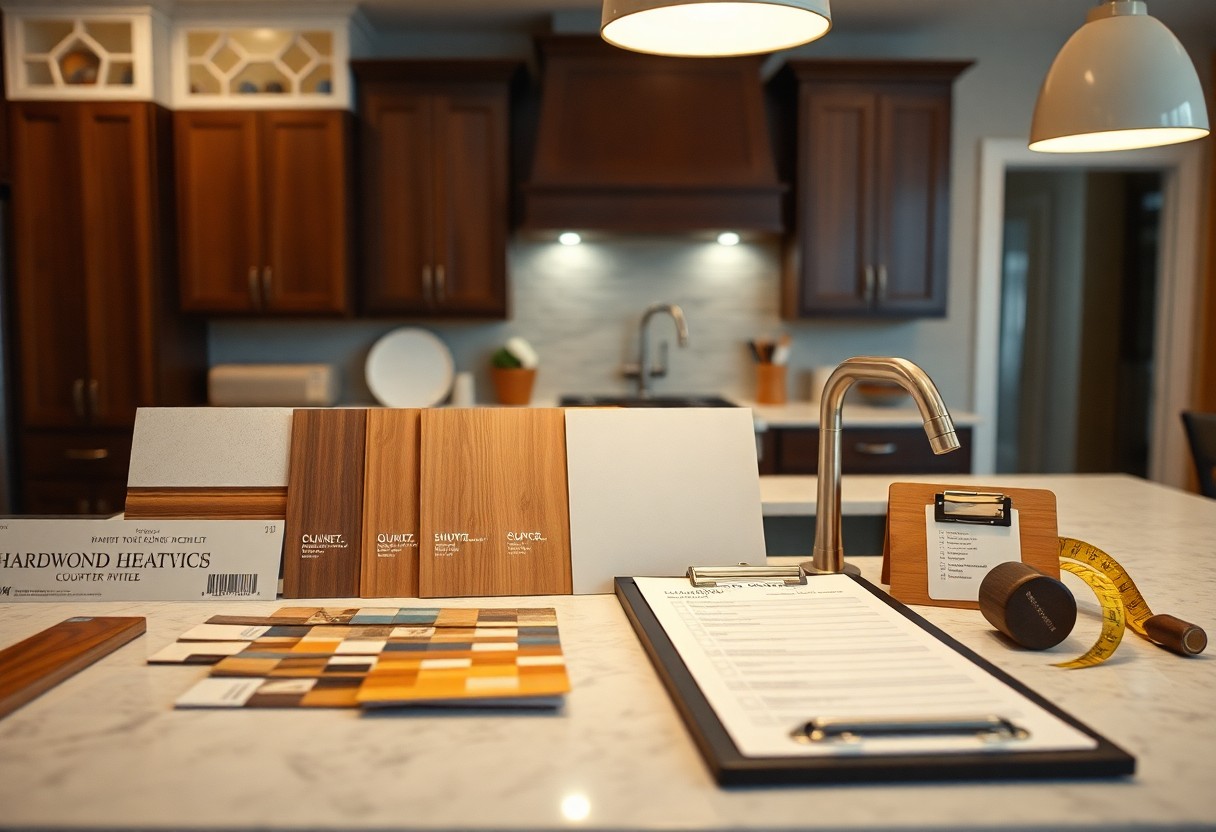
You choose finishes for durability and low maintenance: specify engineered oak or high‑grade porcelain in high‑traffic zones, and quartz or Dekton worktops for kitchens to resist stains and heat. For wet rooms, insist on cementitious backer boards and tanking. Also favour low‑VOC paints and moisture‑resistant joints to avoid condensation and mould; engineered timber often outlasts laminate, lasting 25+ years when installed correctly.
Prioritising Energy Efficiency
Prioritise glazing and insulation: aim for window U‑values around 0.8 W/m²K with triple glazing, and external wall targets near 0.18 W/m²K. Combine with airtightness of ≤5 m³/h·m² at 50 Pa and LED lighting (<10W per fitting) to cut heating demand; a heat pump with COP 3-4 typically halves fossil‑fuel consumption compared with boilers.
Mechanical ventilation with heat recovery (MVHR) at about 85% heat recovery preserves indoor air while reducing heat loss; fit units sized to your floor area and insist on proper commissioning to avoid noise and performance loss. Also consider solar PV arrays of 3-6 kWp to offset electricity, and stage insulation works-MVHR plus loft and wall insulation commonly reduces energy bills by 20-40%.
Final Walkthrough and Closing
Preparing for the Final Walkthrough
Bring a printed snag list, the builder’s contact details and a torch, and plan for about 60-90 minutes to inspect every room and external works. Check HVAC, boiler pressure, taps for leaks, electrics, window seals, door alignment, appliances and floor finishes; photograph any defects and note their locations. Prioritise safety hazards such as gas leaks or electrical faults, record meter readings, and confirm builders will sign a dated punch list for outstanding remedies.
Closing the Deal
Expect your solicitor to present a completion statement detailing conveyancing fees, SDLT and lender charges, and to coordinate fund transfer; signing typically takes 30-60 minutes while bank-to-bank settlement can take a few hours. Collect keys only after cleared funds and Land Registry submission; if agreed, you may hold a small 1-5% retention against unresolved defects until remedied. Ensure meter readings are recorded and date of legal possession is confirmed.
Your solicitor will lodge the transfer at the Land Registry and confirm mortgage redemption or new charge; anticipate closing costs often between £1,000-£3,000 depending on lender and searches. Ask for a final written completion statement, keep warranties and appliance manuals, and verify any agreed snag rectification deadlines with dates and penalties in writing to avoid disputes after handover.
Final Inspection and Closing
When you reach completion day, focus on the practical: final payments, solicitor sign-offs, utility transfers and the handover pack. Expect a snag list of 20-50 items in many new builds and a developer handover with appliance manuals, warranties and certificates. Ensure you receive the builder’s completion certificate and any warranty documentation such as NHBC 10-year Buildmark or equivalent, and log all defects with dated photos before signing for keys.
Conducting a Walkthrough
Start by testing services: run hot water for 10 minutes to reveal leaks, switch on all lights and sockets and trip the RCD to confirm protection. Inspect for cracks over 3mm, floor level variances greater than 5mm over 2m, and misted double glazing; photograph and timestamp each fault. You should compile a clear snag list, discussing realistic repair timescales-typical developer responses range from 7 to 28 days for minor fixes.
Understanding Your Warranty
Check the warranty structure: many UK developers use a 1-2-10 system-1 year for finishing defects, 2 years for systems like electrics and plumbing, and 10 years for structural faults under schemes such as NHBC Buildmark. Make sure your warranty documentation names the provider, outlines claim procedures and states any homeowner responsibilities that could void cover, such as unauthorised alterations.
Keep the handover pack, commissioning certificates (gas, electrical), building control sign-off and appliance receipts in a single folder; these are often required to validate claims. When reporting a defect, send date-stamped photos, a clear description and keep written correspondence; warranty administrators commonly acknowledge claims within 7-14 days and schedule repairs within 28-56 days. Avoid DIY alterations before claims are assessed, and consider registering extended appliance guarantees where available.
FAQ
Q: What pre-build checks should I complete before work starts?
A: Verify planning permission and any condition discharges, commission a topographical survey and ground investigation, confirm boundary lines and obtain any necessary party wall awards, check for protected trees or conservation area constraints, obtain quotes and a written contract with a clear programme, ensure contractor’s liability and contractors’ all risks insurance are in place, arrange utility connection enquiries and provisional connection dates, budget for contingencies and set a practical completion target.
Q: Which statutory approvals and certificates will I need during and after construction?
A: Obtain building control approvals with stage inspections and a final completion certificate, secure any required planning compliance certificates, register an NHBC or equivalent warranty if desired, collect electrical installation certificates (EICR) and Gas Safe certificates for gas works, acquire an Energy Performance Certificate (EPC) and drainage approval or adoption confirmation from the water authority, retain party wall awards and any highways or environmental permits.
Q: What inspections, tests and quality checks should be carried out while the build progresses?
A: Carry out inspections at foundation and drainage stages to confirm levels and falls, check damp-proof membrane and insulation installation, verify structural connections and steelwork, test roof and window weatherproofing, perform electrical and plumbing pressure tests, arrange a blower‑door airtightness test and any required acoustic tests, commission heating and MVHR systems and obtain commissioning certificates, and keep photographic records and as-built notes at each stage.
Q: What should be included in the handover package and documentation?
A: Provide as-built drawings and specification, operation and maintenance manuals for boilers, HVAC, MVHR and appliances, guarantees and manufacturer warranties for windows, roof covering and fittings, copies of EICR, Gas Safe, EPC and building control completion certificate, warranty registration documents (NHBC or similar), contact details for contractors and subcontractors, servicing schedules and instructions for external works and drainage.
Q: How should I manage snagging, defects and the defects liability period after completion?
A: Commission a thorough snagging inspection soon after occupation, list defects with photographic evidence and categorise by safety, weatherproofing and cosmetic priority, issue the list to the contractor under the contract terms and agree rectification timescales, withhold retention funds until completion if applicable, log all communications in writing, follow up with the warranty provider for unresolved structural issues during the guarantee period, and schedule a final inspection before release of any remaining retention.