
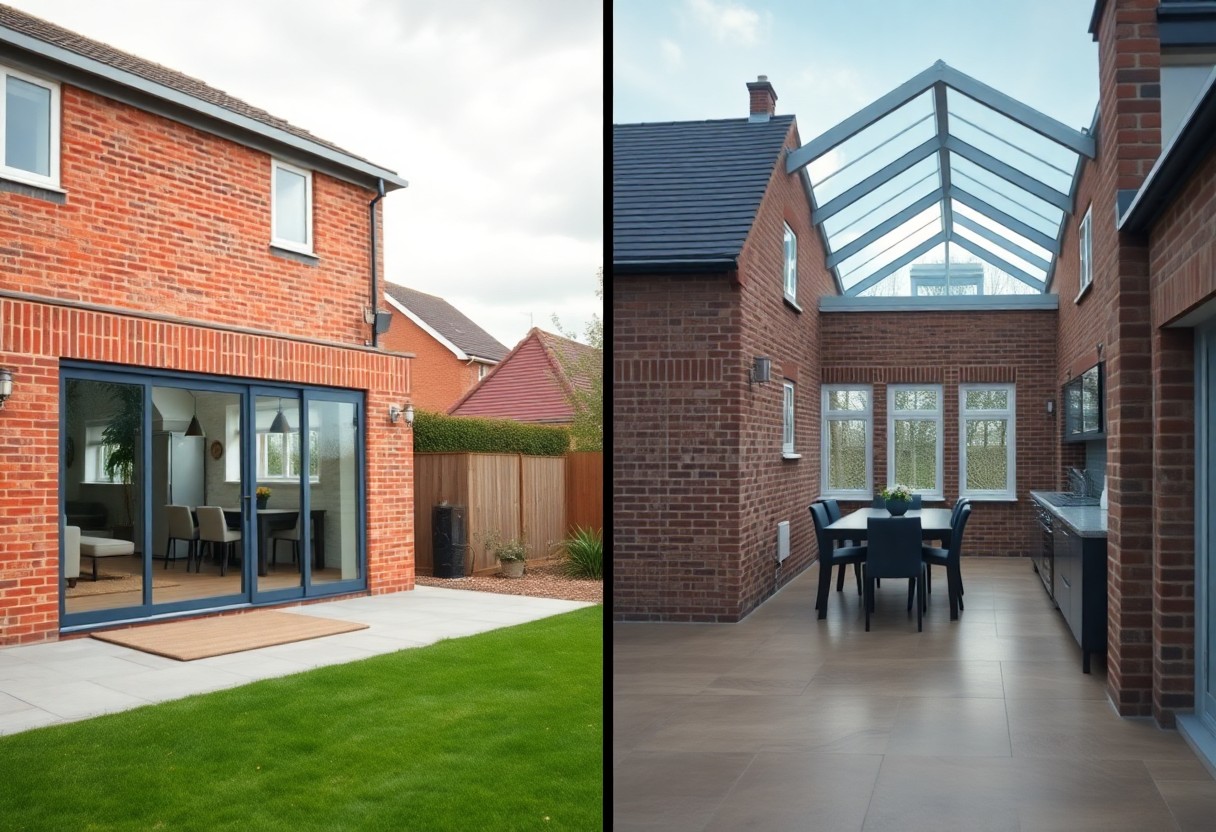
Many homeowners weigh whether a rear or side-return extension will best expand your living space; a rear extension often delivers a seamless kitchen-diner and higher resale value, whereas a side-return can be more cost-effective and preserve garden width. You must factor in planning restrictions, structural complexity and party-wall disputes that can cause delays and extra costs, so assess your plot, budget and lifestyle to choose the right option.
Understanding Rear Extensions
Definition and Features
A rear extension is an addition built onto the back of your house to increase ground-floor living space, commonly single-storey but sometimes two-storey. You’ll often see extensions of about 3-6 metres depth, glazed doors or full-height windows to maximise light, and finishes that match existing brickwork or contrast with contemporary glazing. Structural work may include steel beams, underpinning or new foundations depending on soil and span.
Benefits of Rear Extensions
You gain usable, flexible space for a kitchen-diner, family room or home office, often improving natural light and garden connectivity. Typical single-storey projects add 10-30 m² of floor area and commonly cost between £20,000-£60,000 depending on size and finish. Good design can transform circulation, sightlines and social use of your ground floor.
Well-executed rear extensions can add 10-15% to your property’s market value in many areas, though returns vary by neighbourhood and quality of finish. You must also factor in permissions and legal risks: Party Wall agreements, building regulations and neighbour consultation can delay or add cost, and inadequate detailing on drainage or insulation will reduce long-term benefits. Consider professional surveys and a clear brief to protect your investment.
Exploring Side-Return Extensions
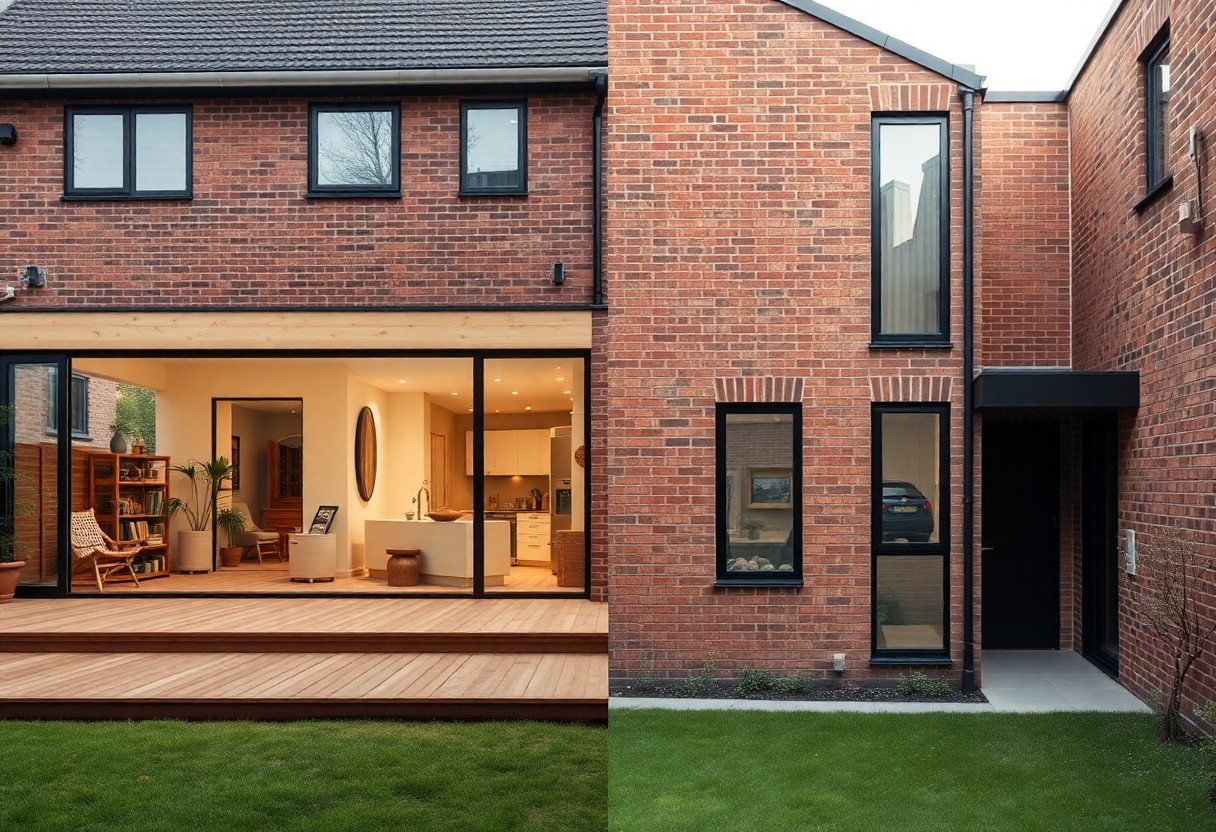
Often the side-return exploits the narrow gap between your house and the boundary to add a single-storey or two-storey space that broadens your kitchen or creates a utility area. Typical widths range from 0.9-2.0 metres, producing an extra 8-20 m² in many terraces; average build costs commonly sit around £1,500-£2,500/m². You should factor in party wall agreements and drainage changes, as these can delay the project and add costs.
Definition and Features
Often squeezed into the alley beside your property, a side-return extension reconnects rooms with an open-plan layout, glazed roofs or lanterns, and a steel-bearing opening where walls are removed. Many Victorian terraces benefit most, where side returns of 1-1.5 metres allow a structural beam and full-width glazing, improving light and flow without extending far into the garden.
Benefits of Side-Return Extensions
Compared with a traditional rear extension, a side-return can maximise footprint while preserving garden length, typically delivering more usable floor area per metre of disturbance and shorter build times of around 8-12 weeks for single-storey works. You’ll often see lower costs than a full-width rear rebuild and an immediate improvement to circulation, daylight and resale appeal.
For example, a London terrace converted a 15 m² side-return for roughly £35,000 (~£2,333/m²), creating an open-plan kitchen-diner and boosting market appeal; conversely, watch for party wall awards, neighbour light loss claims and relocated drains, which commonly add several weeks and a few thousand pounds to timelines and budgets.
Key Differences Between Rear and Side-Return Extensions
Rear extensions typically extend 3-6 metres from the back of the house, often adding c.15-30m² of usable space, while side-return infills a narrow alleyway, commonly adding c.6-12m² and increasing internal width by 0.6-1.5m. You should weigh flexibility and light gains of a rear build against the space-efficiency and lower footprint of a side-return, plus differing planning and structural implications for each option.
Space Utilisation
When you need an open-plan kitchen-diner or a space for a kitchen island, a rear extension is usually better because you’ll typically have the 3m+ depth and room to create zones; an island needs c.3m clear width to work comfortably. Conversely, a side-return suits a galley kitchen, utility, boot-room or snug, making the most of a narrow footprint without the expense of widening the whole rear elevation.
Design and Aesthetic Considerations
You’ll find rear extensions offer greater freedom with roof forms (pitched, lantern, flat) and full-width glazing such as bi-folds that commonly span 2-6m, while side-returns demand careful detailing to avoid a claustrophobic corridor feel and to match existing brickwork and fenestration. In conservation areas or where brick bond matters, matching mortar and coursing is often important.
When specifying finishes, you should balance appearance and performance: reclaimed brick or a sympathetic mortar colour can preserve a Victorian terrace look, while modern aluminium glazing improves sightlines. Pay attention to roof drainage and party-wall ties, since poor detailing can cause damp or thermal bridging; also consider glazing U‑values (modern units often c.1.0-1.4 W/m²K) to cut heat loss and running costs.
Cost Implications
Costs vary widely: a rear extension often runs between £1,200-£3,000/m² depending on finish, while side-returns typically sit lower per square metre but can attract extra fees for party wall work. You should factor in planning or permitted development fees, party wall awards, VAT, and unexpected groundworks such as hidden drains or poor foundations, which commonly add 10-30% to budgets. Accurate quotes and contingencies will prevent overruns.
Budgeting for Rear Extensions
For a modest single-storey rear extension of 12m² you might estimate roughly £18,000-£36,000 including structure, glazing and basic finishes; high-spec kitchens and bi-folds push costs toward the top end. You must include structural engineer fees (£500-£1,500), party wall agreements if relevant, and an allowance of at least 10-15% contingency for drainage, utility diversions or unforeseen structural work.
Budgeting for Side-Return Extensions
Side-return projects often cover 8-15m², with overall costs typically between £10,000-£25,000 depending on complexity and location. You will face higher costs where access is restricted, or where underpinning and neighbour approvals are needed; party wall awards can add £1,000-£5,000. Factor in bespoke joinery or structural steel if you remove shared walls, which elevates the budget quickly.
In practice, you can reduce costs by keeping services simple and reusing existing foundations where safe; for example, a London terrace conversion kept to a snug, 10m² side-return with standard finishes came in at ~£15,000 after a £2,200 party wall charge and a 12% contingency, illustrating how tight planning and realistic finishes control final spend.
Planning Permission and Regulations
Permitted Development Rights
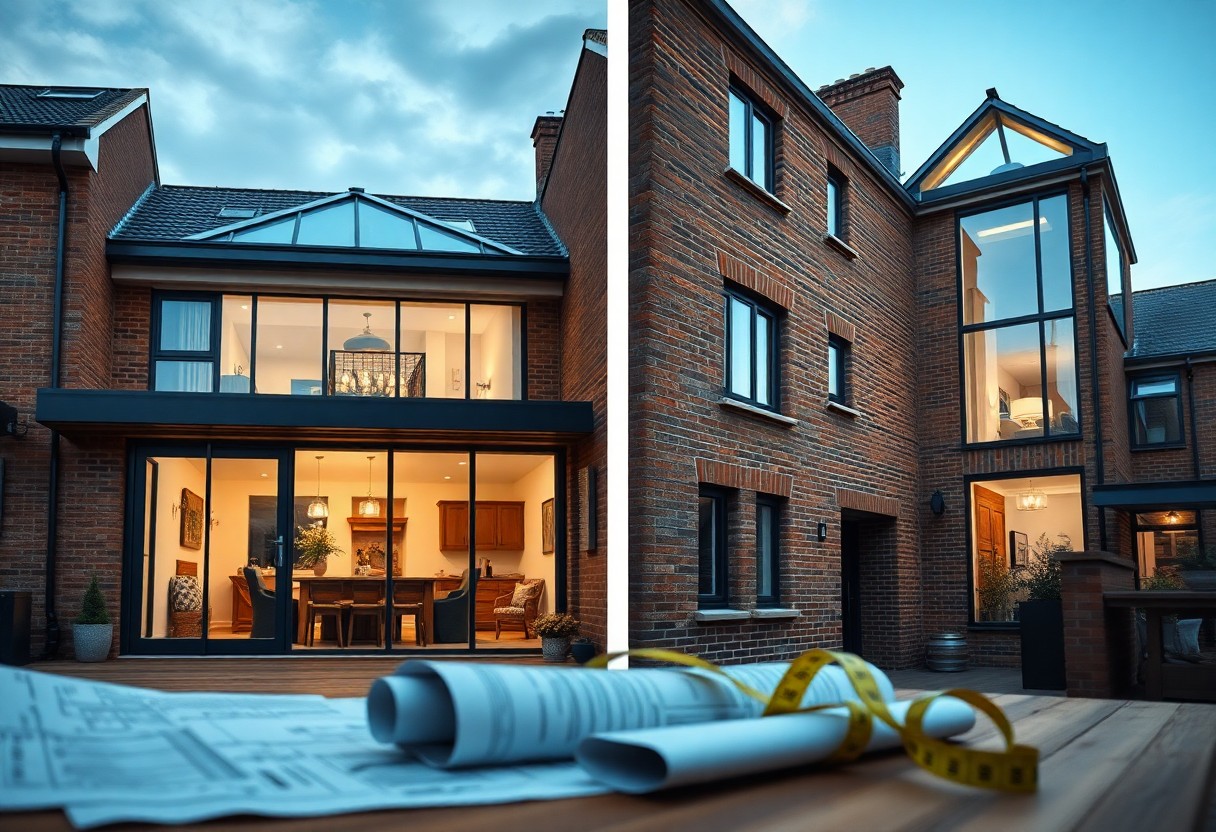
For many houses, permitted development (PD) allows a single-storey rear extension without full planning if you stay within size and height limits: typically up to 3m for terraced/semi‑detached and 4m for detached, with the larger‑home ‘prior approval’ route sometimes permitting 6-8m. If your property is listed or in a conservation area, PD normally does not apply and you’ll need full planning consent.
Necessary Permissions for Each Extension Type
Rear extensions often fall under PD or require a Lawful Development Certificate when within limits, so you may avoid a full planning application. Side‑return works, however, frequently change the side elevation or street scene and usually require full planning permission. You must also comply with Building Regulations and the Party Wall Act where you adjoin a neighbour.
Check with your local planning authority early: householder planning applications are typically decided within 8 weeks, while prior approval/notification decisions usually take about 42 days. Apply for a Lawful Development Certificate if relying on PD to reduce future risk; proceeding without correct permissions risks enforcement action and possible demolition, so consider a pre‑application meeting and professional drawings to safeguard your project.
Case Studies and Real-Life Examples
- Case 1 – Rear extension: Victorian terrace, 21 m2 open-plan kitchen-lounge, build cost £42,000, timeline 12 weeks, added an estimated 15% to sale value; you faced a party wall award and installed a 6m RSJ at £2,200, planning granted under permitted development with conditions.
- Case 2 – Side-return extension: mid-terrace, 9 m2 utility and dining space, cost £18,500, 8-week build, increased usable floor area by 20%; you avoided full planning but needed drainage diversion and neighbour agreement.
- Case 3 – Hybrid rear + side-return extension: semi-detached, 35 m2, cost £78,000, 16 weeks, value uplift 22%; you required party wall, structural steel (£3,800) and bespoke bi-folds for natural light.
- Case 4 – Large rear extension: detached, 45 m2 single-storey, cost £110,000, 20 weeks, planning approved, energy upgrade added; you achieved an EPC improvement from D to B and reclaimed VAT on renovation works.
- Case 5 – Tight side-return extension: narrow plot, 6 m2 breakfast area, cost £12,000, 6 weeks, minimal disruption; you used steel micro-piles and saved £4,000 by reusing existing foundations.
Successful Rear Extension Projects
Several projects show that a well-planned rear extension can deliver substantial returns: a 21 m2 build often costs between £1,800-£2,500/m2, with typical timelines of 10-14 weeks and average value uplifts of 15-25%. You should expect structural work such as RSJs and party wall agreements; when managed well, the extra space and improved EPC ratings drive resale appeal and daily living benefits.
Successful Side-Return Extension Projects
In constrained urban plots a side-return extension frequently offers the best space-for-cost ratio: 6-12 m2 additions commonly cost £1,500-£2,000/m2, build in 6-10 weeks, and raise usable ground-floor area by 15-30%. You’ll often avoid full planning, but drainage, neighbour access and light wells can determine feasibility and cost.
Further detail shows you can save by retaining existing walls and choosing lightweight roofs; one London case cut costs by £6,500 using a mono-pitched roof and steel micro-beams, while another achieved a 20% value uplift by combining bespoke joinery with an integrated kitchen layout that maximised the new footprint.
To wrap up
So you need to weigh site, light, budget and planning: a rear extension typically maximises usable space, garden connection and natural light, while a side‑return suits narrow plots, preserves garden width and often costs less; privacy, orientation and access will determine value for your household. Assess your existing layout, consult a designer and check local planning to decide which solution best meets your lifestyle and investment goals.
FAQ
Q: What are the main differences between a rear extension and a side-return extension?
A: A rear extension projects straight out from the back of the house, usually across all or most of the property’s width, increasing floor area in a rectangular footprint. A side-return extension infills or extends the narrow strip of land between the side of a terraced or semi-detached house and the neighbouring boundary, producing a narrower but often longer space. Rear extensions typically offer greater usable floor area and simpler roof solutions; side-returns are more constrained by party walls, boundary access and width, and frequently rely on roof lanterns, glazed walls or clever planning to maximise light and perceived space.
Q: Which option gives better natural light and internal flow?
A: Rear extensions normally deliver better flow and light when they open across the full width of the house into the garden via large bi-fold or sliding doors, creating a direct connection between interior and exterior. Side-return extensions can achieve excellent daylight if designed with rooflights or a full-width glazed elevation at the rear, and they can improve circulation by reconfiguring kitchen and dining areas. The result depends on orientation, proportions and how much glazing you can place on walls facing the garden or courtyard.
Q: How do costs, building regulations and planning permission compare for each type?
A: Costs vary by size, complexity and site access. Rear extensions, especially full-width builds, usually cost more in absolute terms because of greater footprint and finishing. Side-returns can be cheaper per square metre but often require careful structural work near party walls and may need underpinning or specialist drainage, raising costs. Both require building-regulation approval; planning permission may not be needed under permitted development rules for single-storey rear extensions within set limits, but side-return infills on terraced properties still need checks for party-wall matters and may be restricted in conservation areas or if permitted development rights have been removed. Always check local planning guidance and consult a structural engineer and a surveyor for party-wall agreements.
Q: Which extension type typically adds more value to a property?
A: Value uplift depends on quality of design, the area and buyer expectations. A well-executed full-width rear extension that creates a generous, light-filled kitchen-diner often has broad market appeal and can add significant value. A sensitively designed side-return can also enhance value in dense urban terraces by improving functionality and flow without requiring a large garden depth; however, very narrow or poorly lit side-returns may be less attractive. Buyers prioritise usable, well-lit living space and good indoor-outdoor connection, so design execution matters more than the label.
Q: How should I decide which is best for my home?
A: Start by measuring your garden depth and width, checking boundary constraints and access for builders. Consider your priorities: do you want a wide open-plan space or better circulation from a kitchen into a dining area? Assess orientation for sunlight, consult your local planning office about permitted development and conservation rules, and obtain a party-wall survey if you share boundaries. Get initial sketches from an architect or experienced designer, request structural advice on foundations and drainage, and compare detailed cost estimates and timelines. Choose the option that fits your budget, planning constraints and long-term use of the space.