
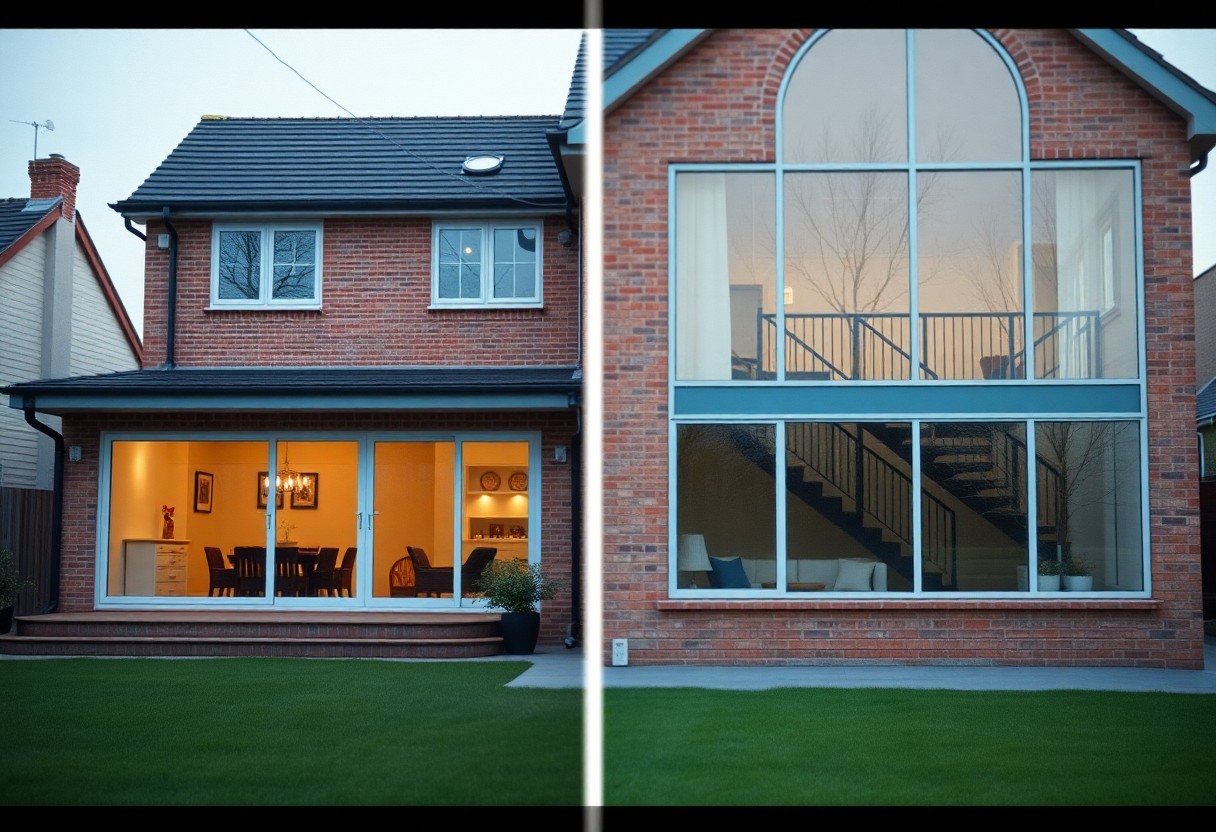
Most homeowners weigh space, cost and disruption when deciding between extensions; you should consider that a single-storey offers lower cost, quicker build and less upheaval, while a double-storey provides far greater additional living space and increased value but brings higher expense and more complex planning and structural work that can be disruptive to your household.
Overview of Single-Storey Extensions
Often spanning 10-30 m², single‑storey extensions are the quickest way to add ground‑floor living and typically cost between £20,000-£50,000 depending on size and finish. You get simpler foundations and fewer structural complications than with a double‑storey, but party wall issues and hidden drains can cause delays and extra expense. Many projects increase usable floor area by 20-40% while improving garden access and natural light.
Definition and Features
Built at ground level, single‑storey extensions use roof types such as pitched, flat or lantern and commonly provide internal heights of 2.4-2.7 m; widths are often 3-6 m. You’ll see masonry, timber frame or SIPS construction and steel beams where loadbearing walls are removed. Expect integrated services, high‑performance glazing and continuous insulation to achieve modern comfort and lower running costs.
Common Uses and Applications
Typical uses include open‑plan kitchen‑diners, home offices, snug areas, accessible ground‑floor bedrooms and garden studios. You can convert a rear yard into a 15-25 m² kitchen extension or add a 3-4 m projection on terraced plots to create family living. On‑site programmes usually run 6-12 weeks, so disruption is limited compared with two‑storey works.
For example, a semi‑detached property installed an 18 m² rear extension as an open kitchen‑diner for £28,000, completing in eight weeks; planning wasn’t required under permitted development in that case, though party wall awards and drainage relocations added about £3,000. You should weigh the typical 5-10% uplift in local market value against these potential extra costs when assessing viability.
Advantages of Single-Storey Extensions
You’ll gain usable ground-floor space with lower cost and minimal disruption compared with a two-storey build; typical modest projects of 15-25m² are often completed in 4-10 weeks. You can create open-plan kitchens or accessible living areas that improve flow to the garden while avoiding the extra structural work, staircases and party-wall complications a second storey demands.
Cost-Effectiveness
You save on foundations, staircases and expensive steelwork-single-storey extensions are typically 20-30% cheaper than equivalent two-storey increases in floor area. For example, a 20m² rear extension might range from £15,000-£35,000 depending on finish levels; getting three detailed quotes and specifying standardised doors/windows can trim costs significantly.
Simplicity of Planning and Construction
You’ll often find planning is straightforward because many single-storey works fall within Permitted Development when they meet size and neighbour consultation limits, and structural demands are simpler so trades coordinate faster; this reduces inspections and often shortens the programme compared with adding a full extra floor.
In a recent semi‑detached project in Manchester a 25m² rear extension finished on site in 6 weeks: two days of excavation, a week for slab curing, three weeks for walls and roof and ten days of finishes; you could adopt pre-approved joinery packages and PD-compliant designs to save roughly £5,000-£7,000 versus a full planning route.
Enhanced Natural Light
You can incorporate large glazed doors, full-height windows and rooflights to flood the ground floor-schemes commonly use a 2.5-3m folding door or 2-3 rooflights to significantly lift daylight levels, which improves ambience and can reduce artificial lighting costs while making spaces feel larger and more inviting.
You can specify low‑e glazing and rooflights with U-values around 1.2 W/m²K for efficient daylighting or opt for triple glazing nearer 0.8 W/m²K for better insulation; if you orient glazing southwards expect higher solar gain and plan for opening windows, mechanical extract or external shading to manage overheating and comply with building regulations.

Disadvantages of Single-Storey Extensions
Single-storey additions often bite into limited garden space, typically adding between 10-30 m² on suburban plots of 10-15 metres depth, which can leave you with a cramped outside area and reduced amenity. They also tend to offer less flexibility than a double-storey option, can cause overshadowing of neighbouring gardens, and invite objections during planning or party wall procedures – neighbour disputes are a common, costly consequence.
Limited Space and Functionality
When you add a single-storey extension you frequently face tight footprints: a 20-25 m² rear extension may only suit an open-plan kitchen-diner or small family room, not both. In practice this limits sleeping arrangements, storage provision and future adaptability, so families of four often find they still need loft conversions or outbuildings to meet space needs.
Potential for Overlooking Privacy Issues
Windows at ground level can still create privacy problems, especially where neighbouring properties have raised ground levels or balconies; planning guidance often expects about 21 metres between facing habitable-room windows. You may find neighbours more sensitive to loss of privacy than loss of light, raising the risk of complaints or pre-application objections.
Mitigation measures you should consider include angled windows, high-level glazing, obscure glass for side-facing openings and 1.8 metre boundary fencing, but these can alter daylight and aesthetics. Planting fast-growing hedging, specifying rooflights instead of full-height glazed doors, or re-siting glazing to face private patios often avoids formal objections; failing to address overlooking early can lead to planning refusals or expensive retrospective alterations.
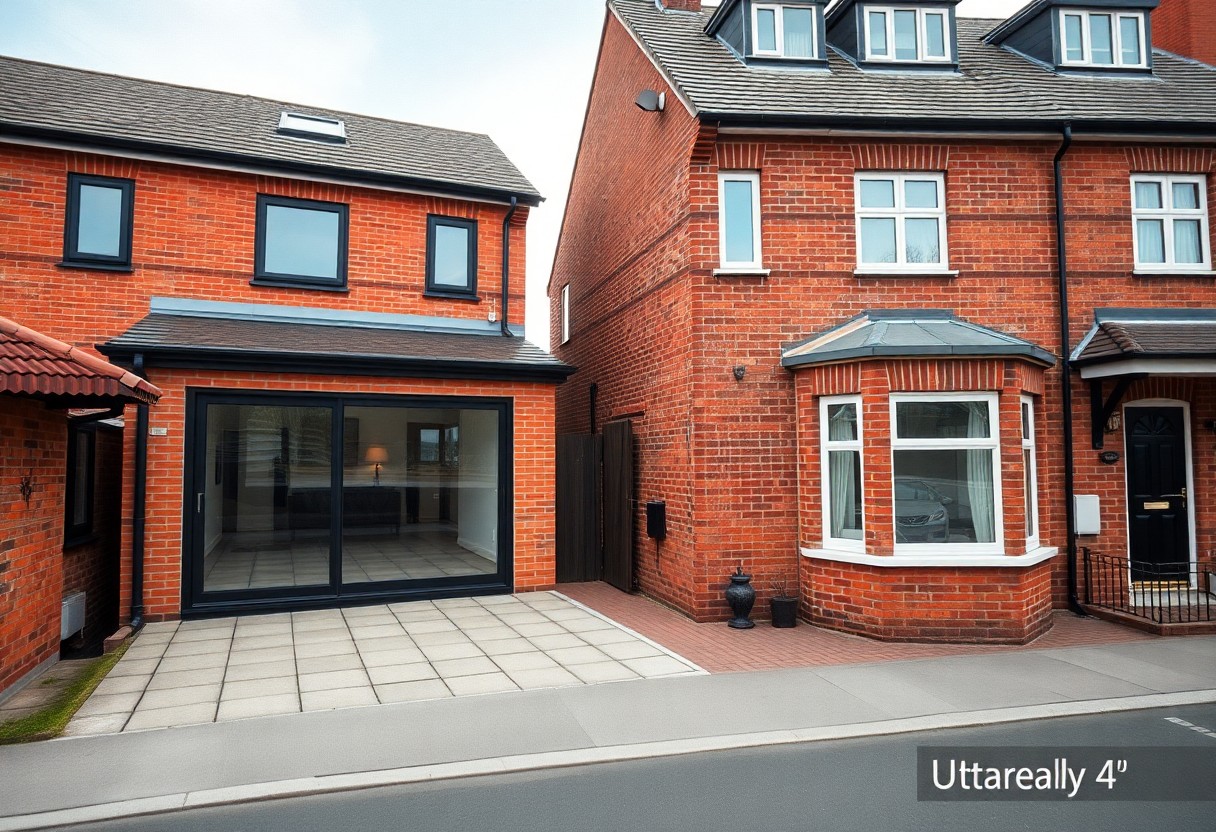
Overview of Double-Storey Extensions
Double-storey extensions typically add a whole extra floor above the existing footprint, often increasing usable space by 30-60% depending on depth and layout. You should expect higher costs and longer build time than single-storey projects, with UK budgets commonly ranging from £1,200-£2,000 per m². Because they involve planning permission and major structural alterations, they deliver significant value uplift but also cause notable disruption during construction.
Definition and Features
A double-storey extension is an upward and outward build that creates a new upper level over the footprint; you typically use the ground floor for enlarged living or kitchen space and the first floor for extra bedrooms or a study. It commonly requires deeper foundations, load-bearing changes and a revised roofline, plus compliance with party wall and building regulations; ceiling heights normally stay around 2.4-2.6m to match existing dwellings.
Typical Design Options
Common approaches include a full-width rear two-storey (typically 3-4m depth) to add two bedrooms and an en-suite, a side-return stack to create an annex above a larger kitchen, or an L-shaped layout to improve light and circulation. You can choose pitched roofs to match eaves or contemporary flat roofs with large glazing; material choices and fenestration strongly affect cost, planning risk and thermal performance.
For example, a 3m rear two-storey on a 1930s semi often yields roughly 12-16m² extra per level, creating two usable rooms upstairs and an open-plan kitchen-diner below. When you opt for a matching pitched roof you reduce planning objections, whereas a flat-roofed contemporary aesthetic maximises headroom and glazing but may need approval in conservation areas; always commission a structural engineer and party wall award early in the process.
Advantages of Double-Storey Extensions
You gain significant additional habitable space while preserving your garden, often adding between 20-50 m² depending on roofline and depth. Shared foundations and services typically make the cost per m² lower than building an equivalent single-storey annexe, yet the work involves substantial structural intervention – beams, load transfers and scaffolding – which affects programme and budget and may require Party Wall agreements and planning consent.
Maximizing Living Space
Instead of expanding your footprint, you can stack functions: for example, adding ~25 m² upstairs can create two double bedrooms and a bathroom while the ground floor opens into a 35 m² kitchen-diner. You therefore keep outdoor amenity, improve room separation for noise control and flexibility, and create distinct family and sleeping zones that suit modern household routines and resale preferences.
Increased Property Value
Estate agents often report a 10-20% uplift in market value for well-executed double-storey extensions that add bedrooms and bathrooms; converting a 3-bed to a 4-bed can materially widen buyer interest. You should expect the greatest returns when the extension improves layout flow, adds an en-suite or enhances energy performance, all of which buyers prize in competitive suburban markets.
Value is driven by tangible factors: an extra bedroom typically increases appeal, an en-suite can command a premium of several thousand pounds, and improving your EPC from D to B frequently shortens time on market. You therefore should focus on quality finishes, compliant structural works, and smart space planning – these elements convert construction cost into clear saleable uplift in specific postcode areas.
Disadvantages of Double-Storey Extensions
While double-storey extensions deliver extra space, they bring greater disruption, longer build times and a higher risk of neighbour disputes over privacy and light; costs and complexity rise sharply. You may face party wall notices, deeper foundations and more intrusive scaffolding, increasing on-site time by weeks or months. In practice, owners often see a 25-50% price premium over a single-storey option and greater long-term maintenance, so you must weigh space gains against these tangible downsides.
Higher Costs
You should expect structural elements-steel beams, reinforced foundations and extended roofing-to add substantially to budgets, with studies showing a typical 25-50% premium versus single-storey builds. Scaffolding and access works alone can run from about £2,000-£6,000, while specialist contractors and M&E works push totals higher; plus standard VAT at 20% applies to most domestic projects. Concrete example: a modest two-storey rear extension often moves a project from mid-five figures into the low six-figure bracket.
More Complex Planning and Permitting Processes
Double-storey designs commonly fall outside permitted development rights, so you’ll usually need full planning permission and Building Regulations approval; a householder planning decision is typically determined within eight weeks, but additional conditions can extend this. Neighbour objections, conservation-area restrictions and listed-building consents further complicate matters, and failure to obtain proper approvals can result in enforcement notices, fines or orders to alter or remove the extension.
In practice, you should budget time and fees: a planning consultant often charges £500-£3,000 and a party wall surveyor £800-£2,500. Ecological or archaeological surveys can add weeks and costs-bat surveys and mitigation may cost £2,000-£10,000 and are seasonal-so early pre-application advice and thorough site surveys can prevent costly delays and disputed planning conditions.
Summing up
Conclusively, you should weigh single‑storey extensions for lower cost, quicker build and easier access, while double‑storey options deliver more living area and greater value for a smaller footprint; your choice depends on budget, garden space, planning constraints, disruption tolerance and future needs, so opt for the solution that best balances immediate utility with long‑term resale and lifestyle flexibility.
FAQ
Q: What are the main advantages of a single-storey extension?
A: Single-storey extensions are typically less expensive and faster to build than double-storey alternatives because they involve simpler structural work and shallower foundations. They integrate well with ground-floor living, improve accessibility for people with limited mobility, and provide direct, level access to the garden. Planning requirements can be less onerous for modest single-storey additions, and they cause less disturbance to upstairs rooms during construction.
Q: What are the main advantages of a double-storey extension?
A: Double-storey extensions deliver more usable floor area without consuming as much garden space, which is valuable on smaller plots. They allow you to add bedrooms and bathrooms upstairs while expanding living space below, offering a better area-to-footprint ratio. A well-designed two-storey extension can increase property value significantly, provide improved privacy for sleeping areas, and create opportunities for higher ceilings or enhanced views from the upper level.
Q: What are the drawbacks of single-storey extensions?
A: Single-storey extensions can reduce garden space substantially and may limit future exterior landscaping options. They offer less overall additional floor area compared with a two-storey solution, so their return on investment per square metre can be lower. Large single-storey roofs can reduce natural light to neighbouring properties and may require rooflights to achieve adequate daylight, which can add cost. For families needing extra bedrooms, a single-storey layout can be less space-efficient.
Q: What are the drawbacks of double-storey extensions?
A: Double-storey extensions are generally more expensive and take longer to build because of additional structural requirements, deeper foundations and staircase installation. They are more likely to trigger formal planning permission and neighbour objections due to potential overshadowing and privacy impacts. Construction causes greater disruption to occupants and may involve party wall agreements. Ongoing maintenance and heating of a larger volume can also increase running costs.
Q: How should I decide between a single-storey and double-storey extension?
A: Base the choice on budget, plot size, intended use of space and long-term plans. Choose single-storey if accessibility, lower cost and rapid completion are priorities or if you have ample garden. Choose double-storey to maximise internal area when the plot is limited or when adding bedrooms is a priority. Check planning policy and seek an architect or structural engineer to assess impact on neighbours, structural feasibility and energy performance. Factor in disruption, future maintenance and resale potential before deciding.