
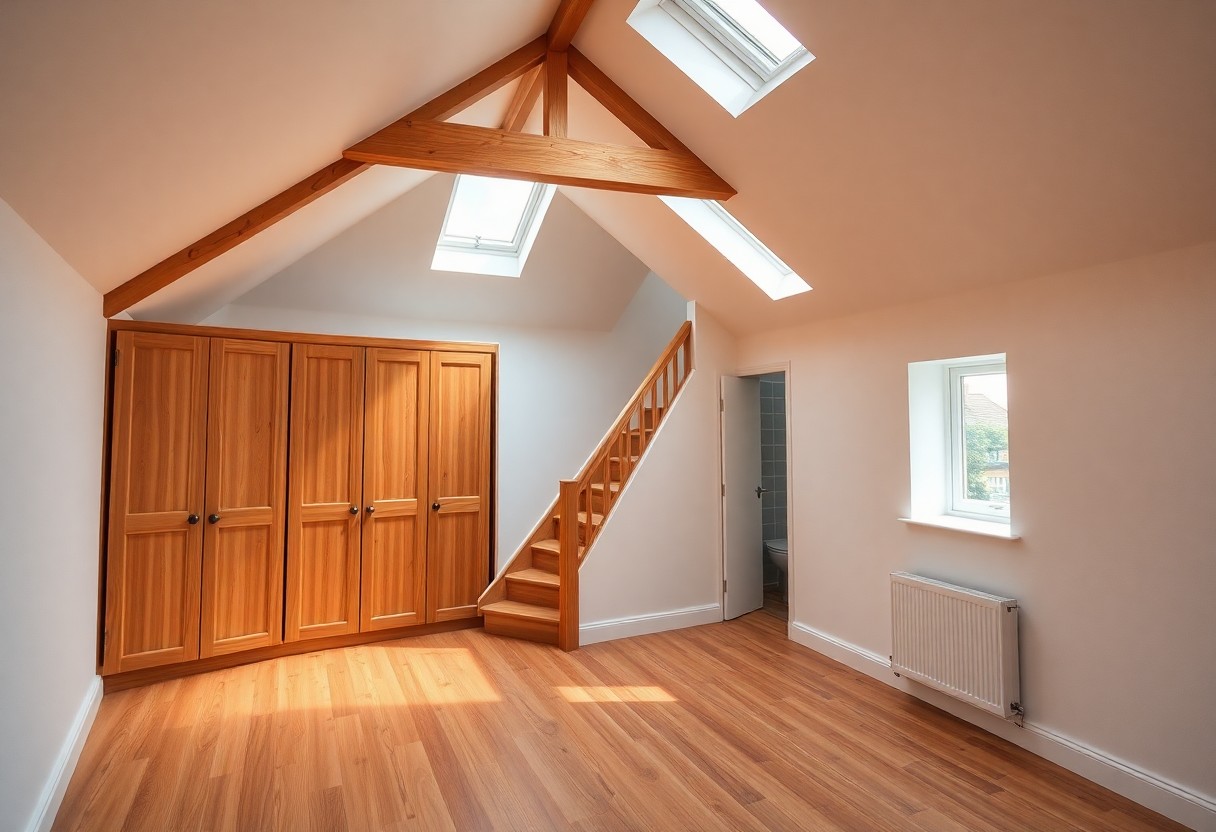
You get a fully formed room created by strengthening roof timbers, installing new floors and stairs, and adding insulation, windows and electrics; structural alterations and electrical work are hazardous and must be carried out by qualified trades, while the build also includes heating, ventilation and fireproofing to meet building regulations. You gain valuable extra living space, increased property value and more natural light, plus any planning or party‑wall arrangements required.
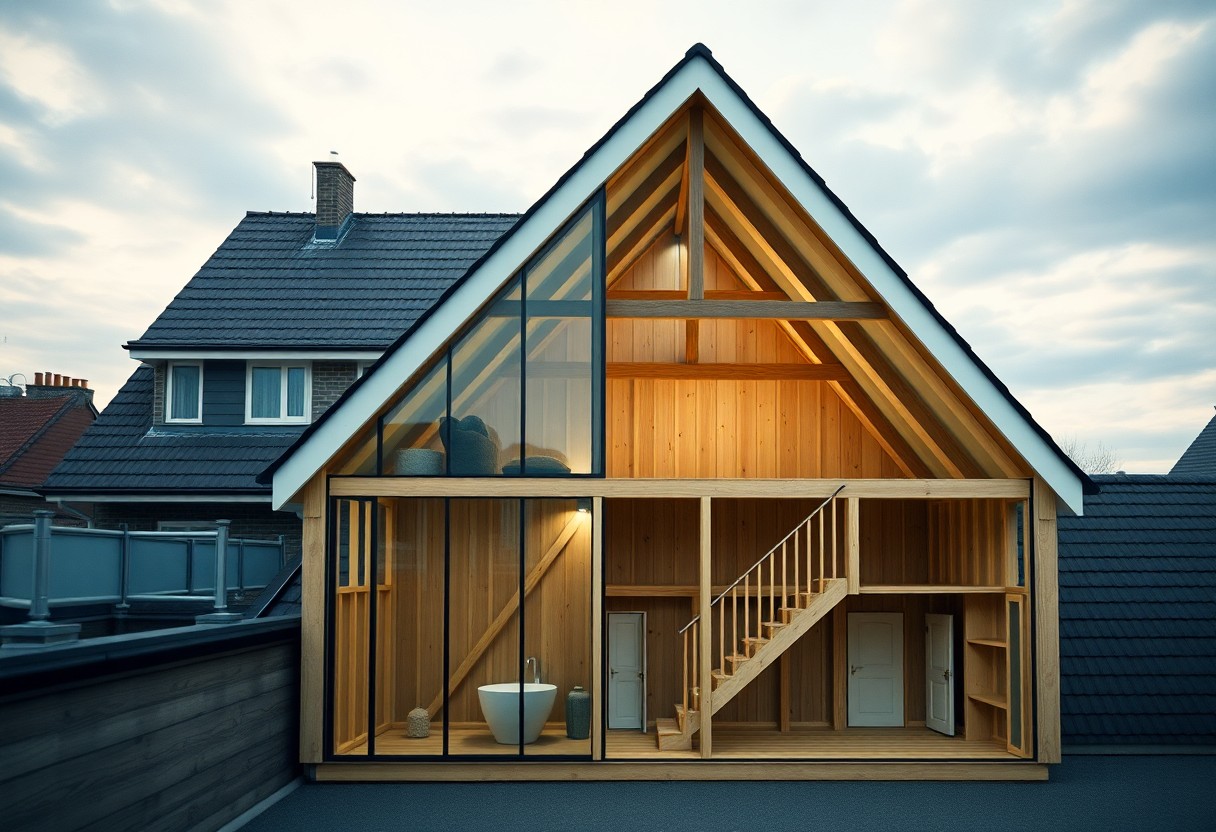
Types of Loft Conversions
| Velux | £15,000-£40,000; minimal structural work, typically 2-4 weeks on site |
| Dormer | £30,000-£70,000; adds usable floor area, construction ~4-8 weeks, may need planning |
| Mansard | £50,000-£120,000; maximises headroom and space, often requires planning permission |
| Hip-to-Gable | £35,000-£80,000; converts hipped roofs to gable ends, common on semi-detached houses |
| L-shaped | £40,000-£90,000; combines rear dormer with side extension for larger footprints |
- Velux
- Dormer
- Mansard
- Hip-to-Gable
- L-shaped
Velux Roof Conversions
For a Velux conversion you fit rooflights into the existing slope, keeping disruption and cost down; typical projects cost between £15,000-£40,000, require around 2.2m+ of headroom, and often fall under permitted development so you avoid full planning applications; many clients complete works in 2-4 weeks, gaining bright rooms ideal for home offices or guest bedrooms while preserving original roof lines.
Dormer Conversions
A rear dormer creates vertical walls to add floor area-expect typical builds to cost £30,000-£70,000 and take 4-8 weeks; you should check headroom (usually at least 2.2m), party wall agreements if adjoining neighbours are affected, and potential planning if the dormer alters ridge height or overwhelms the street scene, while benefits include a full-sized double bedroom and en-suite.
In practice, a modest rear dormer of about 4m x 3.5m on a London terrace often costs ~£35,000 and yields a large bedroom plus en-suite; you must instruct a structural engineer for new beams, allow scaffolding for 1-2 weeks, and install adequate insulation (typically ~270-300mm in the roof) and roof ventilation; ensure you address party wall matters and provide suitable fire egress. Assume that you budget an extra 10-15% contingency for unexpected structural work and legal fees.
Planning Permissions and Regulations
Planning permission isn’t always required for loft work: under Permitted Development you can add up to 40m³ for terraced/semi-detached or 50m³ for detached houses without full planning consent, but building regulations always apply. If you’re in a conservation area, own a listed building, or exceed those volumes or roof-height limits you’ll need permission; party wall notices and ecology surveys may also be necessary – see Can You Convert Your Loft? The Essential Loft Conversion ….
Understanding Permitted Development Rights
Permitted Development allows modest roof alterations but comes with conditions: the added volume limits (40m³/50m³) must be met, the roof’s height cannot be raised beyond the highest part, and materials should be similar to the existing roof. Any side-facing windows must be obscure glazed and non-opening below 1.7m. Article 4 directions can remove these rights locally, particularly in conservation areas, so check with your local planning authority first.
Obtaining Necessary Permissions
If your design breaches Permitted Development, involves a listed building or sits in a conservation area you must apply for planning permission; a typical householder application is decided in about 8 weeks. Building regulations approval is separate and covers structural calculations, fire safety, insulation and stair compliance. You’ll often need a structural engineer’s report and Party Wall agreements if you share walls with neighbours.
Costs and timelines vary: the householder planning fee is usually around £206, building-regulation charges depend on scope and inspections, and party wall surveyors charge per surveyor or as a percentage of project value. Allow at least 2-3 months to secure permissions and factor in potential enforcement risk – if you build without consent a local authority can serve an enforcement notice requiring alteration or removal, which can be very costly.
Structural Considerations
Assessing Roof Space
If your existing roof has at least 2.2 m of headroom and a pitch between roughly 30-45°, a standard loft conversion is far simpler; roofs below 2.0 m often need ridge-raising by 300-600 mm or lowering the ceiling below. Party walls, chimney stacks and hipped roofs reduce usable volume, so you should measure clear headroom across the span and check if a dormer or mansard will deliver the extra usable floor area you need.
Reinforcement Needs
Often the existing ceiling joists cannot take the new live and dead loads, so you’ll usually need floor strengthening to meet the domestic design load of 1.5 kN/m², plus concentrated loads. Common solutions include adding new timber joists, installing a steel support (an RSJ) across the span, or using flitch beams; spans over 3-5 metres are the point where steel supports are frequently required.
Structural calculations from an engineer will specify beam size, bearing lengths and padstones; for example, a 5.5 m clear span in a 1930s terrace might require a 254 mm deep RSJ bearing onto 150 mm padstones and connected down to foundation level. You should expect temporary propping during works and possible opening up of the party wall, which may trigger a Party Wall Award. Pay attention to load paths – if new steel transfers load to foundations not designed for it, you’ll need underpinning or widened footings to avoid foundation overload, and ensure the contractor sequences works to maintain stability with temporary propping in place.
Essential Elements of a Loft Conversion
Insulation and Ventilation
When insulating your conversion, aim for a roof U‑value of around 0.18 W/m²K; typical solutions are 100mm PIR boards for a warm roof or ~150mm mineral wool between rafters. You must also provide a continuous ventilation gap of about 25-50mm behind breathable membranes and at eaves/ridge to avoid condensation, which can cause rot and mould. Proper detailing reduces heat loss, improves comfort and lowers running costs, so inspect junctions around dormers, skylights and the stair aperture carefully.
Staircase Design
Space planning starts with headroom of at least 2.0 metres and stairs that meet Building Regs: maximum riser 220mm and minimum going 220mm, with handrail height around 900-1,000mm. You can choose straight, L‑shaped or space‑saving alternatives; spiral or alternating‑tread stairs save floor area but are less comfortable for everyday use. Leave a clear structural opening – typically about 2.2m by 0.9m – and factor in landing and guarding for safety.
For greater detail, consider structural support and finishes: a new steel beam or well‑supported timber stringer may be needed to carry a staircase, and acoustic insulation under treads reduces noise transfer. If the loft becomes a bedroom, ensure either a protected escape route or a window with a clear opening of at least 0.33m² (no dimension under 450mm), and budget typically between £1,500-£4,000 for a quality install depending on design and materials.
Interior Finishes and Layout
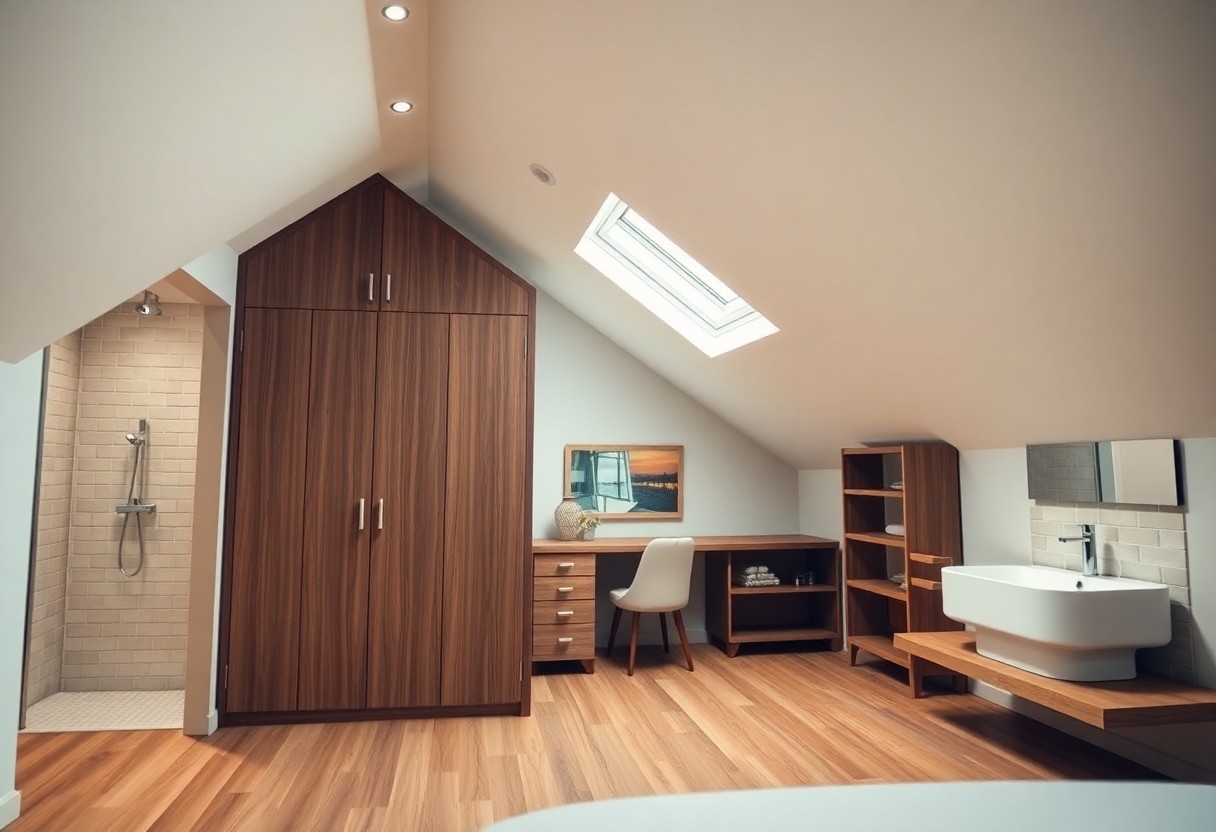
You’ll get a full fit-out: stud walls, plasterboard/skim, insulation, new stairs and floor decking (typically 18mm tongue‑and‑groove plywood), electrics, and plumbing for an ensuite. Allocate about 20-30% of your loft budget to finishes-on a £40,000 conversion that’s roughly £8,000-£12,000 for floors, joinery and fixtures. Prioritise fire protection with fire‑rated plasterboard and mains‑wired alarms; see The Essential Guide to Loft Conversions for detailed finish checklists.
Room Configurations
You can create a double bedroom with ensuite in a 30-35 m² roof space, or convert 20 m² into a large home office. Dormer or mansard conversions tend to give you the best usable floor area, while rooflight schemes suit open‑plan bedrooms. Aim for peak headroom of about 2.2-2.4 m to meet comfort standards and allow built‑in wardrobes or a small partitioned bathroom without feeling cramped.
Design Aesthetics
Natural light beats heavy ornamentation: install 2-4 rooflights depending on room size, use pale matt paints and concealed LED downlights to visually expand the space, and choose engineered oak or durable carpet for warmth underfoot. Exposed beams can become a strong feature-pair them with recessed storage to maximise floor area.
For more detail, balance aesthetics with performance: specify acoustic quilt insulation (min. 100 mm in partitions) to reduce noise transfer, choose engineered flooring 14-20 mm for stability, and design integrated wardrobes with a standard depth of 600 mm. Ensure all doors on escape routes are fire‑rated and that lighting circuits include dimmers and smoke‑alarm interlinking for safety and ambience.
Budgeting for a Loft Conversion
You should plan on a typical UK loft conversion costing between £30,000-£60,000, with simpler rooflight conversions at the lower end and full mansards toward the top; allocate a 10-20% contingency for unforeseen structural works or party-wall issues. Factor in 20% VAT where applicable, design and survey fees, and potential neighbourly party-wall awards. Getting three detailed quotes early helps you compare which trades include finishes, glazing and electrics so you can set a realistic, itemised budget.
Cost Breakdown
Expect labour and materials to form roughly 60-70% of the total, with design and structural calculations around 5-10%, and planning/building-regs fees typically £500-£2,000. Steel RSJs or beam works can be £800-£3,000+, a bespoke staircase £1,000-£4,000, and Velux windows about £300-£800 each; insulation, electrics and plumbing make up the rest. Knowing these line items helps you trim costs with spec choices rather than vague lump-sum bids.
Financing Options
You can fund a conversion by remortgaging to release equity, taking a second-charge mortgage, using a personal/home improvement loan, or dipping into savings; remortgaging usually offers the lowest rates but adds borrowing to your mortgage. Typical unsecured loan APRs vary widely, so compare APRs and fees, and be aware that borrowing will often increase your monthly payments and affect affordability assessments by lenders.
For example, if your house is worth £350,000 and you borrow £40,000 for the conversion, a 25-year remortgage at 3.5% would change payments differently than a 5-year personal loan at a higher APR; additionally, a well-executed loft conversion can often add around 15-20% to your property’s value, which may offset some or all of the cost. Obtain lender agreements in principle, get multiple finance quotes, and weigh long-term interest against short-term convenience.
To wrap up
As a reminder, a standard loft conversion typically delivers a boarded and insulated floor, structural reinforcement, access stairs, windows or rooflights, wiring and heating extensions, basic plastering and decoration, and optional en-suite plumbing and built-in storage; you should also expect compliance works (fire safety, insulation, building control) and final finishes that make the space ready for immediate use.
FAQ
Q: What does a standard loft conversion typically include?
A: A standard loft conversion usually comprises structural works (opening the existing ceiling, strengthening or replacing joists and installing steel beams where necessary), construction of a new floor, formation of a staircase, alterations to the roof (rooflight installations or a dormer), insulation and vapour control, plasterboarding and basic internal finishes, double‑glazed windows, electrical wiring for lighting and sockets, basic heating provision, and installation of fire safety measures such as smoke alarms and fire doors where required.
Q: Are planning permission and Building Regulations covered in a standard package?
A: Most reputable contractors include Building Regulations compliance-design drawings, calculations and submission, plus on‑site inspections and certification-in their standard service, but planning permission is not always required and where it is (for large dormers, conservation areas or listed buildings) it is usually treated as a separate cost or handled as an additional service. Party Wall agreements and neighbour notifications are commonly not included unless specified.
Q: Is insulation, ventilation and fire protection included?
A: Yes-standard conversions provide thermal insulation to roof and floor to current standards, vapour control layers, and basic ventilation (trickle vents or mechanical extract where needed). Fire protection measures required by Building Regulations-such as upgraded floor/ceiling fire resistance, interlinked mains‑powered smoke alarms and appropriate fire doors or protected stair enclosures-are normally included.
Q: What electrical, heating and plumbing works are typically provided?
A: Typical electrical work includes new lighting circuits, sockets, and any necessary consumer unit upgrades and certification. Heating is usually addressed by extending existing central‑heating pipes to a new radiator or fitting a dedicated heater; underfloor heating is available but often extra. Basic plumbing for an ensuite (hot and cold feeds, waste and soil pipework) can be included but full bathroom fittings, drainage connections and high‑level sanitaryware are frequently priced separately.
Q: What interior finishes and fixtures come as standard and what might cost extra?
A: Standard finishes generally cover plasterboarding and a basic plaster skim, finished floorboards or chipboard sub‑floor, painted skirting boards and a standard staircase and balustrade. Extras often include fitted wardrobes, bespoke joinery, tiling, high‑spec flooring, decoration to a decorator‑finish, fitted bathrooms, luxury glazing, bespoke staircases and any customised electrical or heating upgrades; these are normally chargeable as options.