
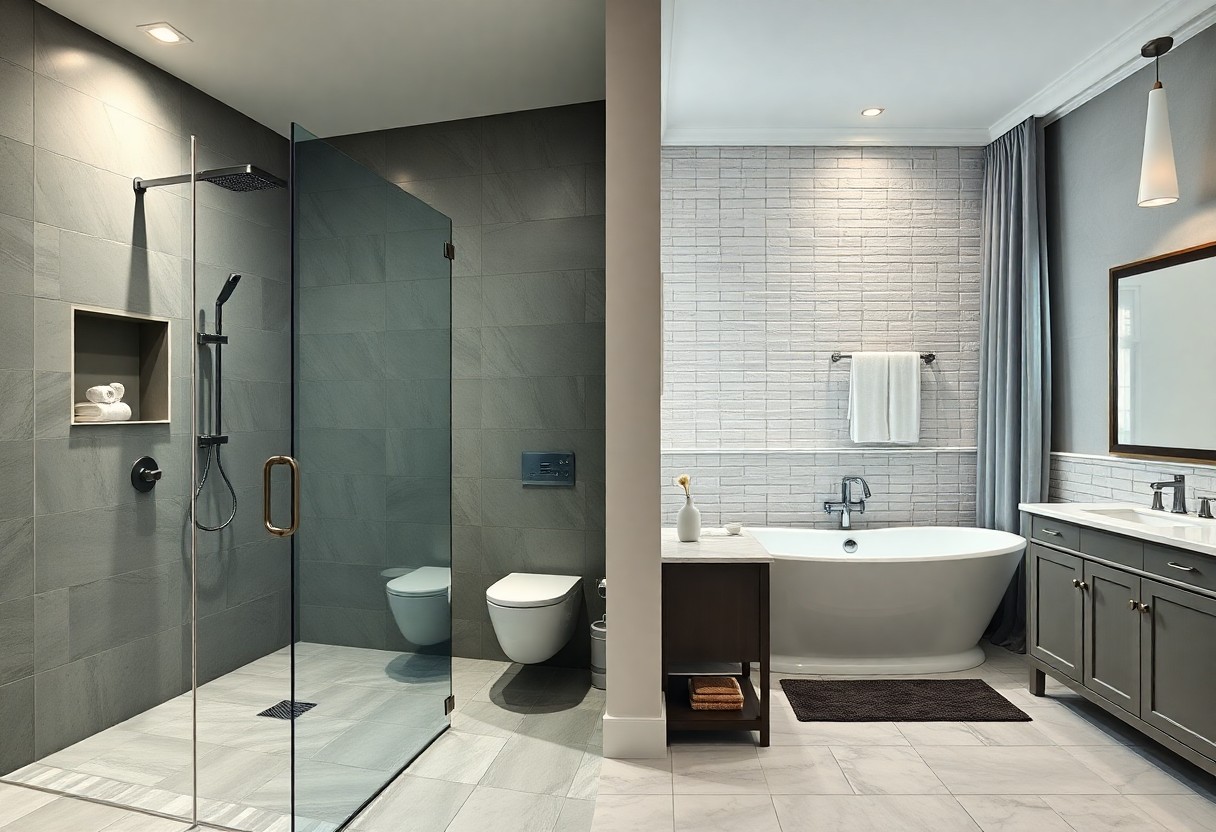
Comparison: When deciding between a wet room and your traditional bathroom, you must weigh how a wet room offers space-saving, level-access and contemporary styling but increases risk of slipping and costly waterproofing failure, while a conventional bathroom contains water more easily, often simplifies plumbing changes and can limit damp spread; assess your budget, mobility needs, floor gradients and maintenance tolerance so you choose the option that best protects your property and users.
Overview of Wet Rooms
Moving into specifics, a wet room is a bathroom area made fully waterproof with no shower tray so water drains across a sloped floor into a gully or linear outlet. You gain level access that suits mobility needs and small footprints, and often easier cleaning, but you must specify anti-slip tiles and professional tanking to avoid leaks. Typical retrofit costs vary from about £2,000 for a basic fit to over £10,000 for high-end schemes; poor detailing can cause expensive water damage.
Definition and Features
In practice, a wet room combines a continuous waterproof membrane (liquid or sheet BS EN 14891-compliant) with a floor fall, commonly between 1:80 and 1:60 per metre, directing water to a point or linear drain. You’ll often specify anti-slip tiles with a PTV ≥36 for barefoot areas, underfloor heating to speed drying, and sealed door thresholds or flush thresholds for accessibility; the finish can be fully tiled or use large-format, sealed panels.
Design Considerations
When planning, you must size drainage to the shower flow and provide adequate falls, ventilation (intermittent extract around 15 L/s), and a robust tanking detail; substrate build-up, waste routing and threshold details determine whether adjacent rooms require ramping or a step. You should also factor installation time-tanking and a 24-48 hour flood test are standard-and allocate contingency for unforeseen substrate works.
For example, in a 2.0 × 2.5 metre conversion a 1:60 fall toward a 700 mm linear drain typically prevents pooling, whereas retrofit attempts that skimp on membrane laps or use smooth, low-friction tiles often lead to slipping and leaks. You should plan heating and extraction controls to limit condensation, route the waste with at least a continuous fall to the soil stack, and commission a water-tightness test. Hiring a qualified installer registered with a recognised trade body and documenting the tanking system and test results reduces the risk of long-term water ingress and costly repairs.
Overview of Traditional Bathrooms
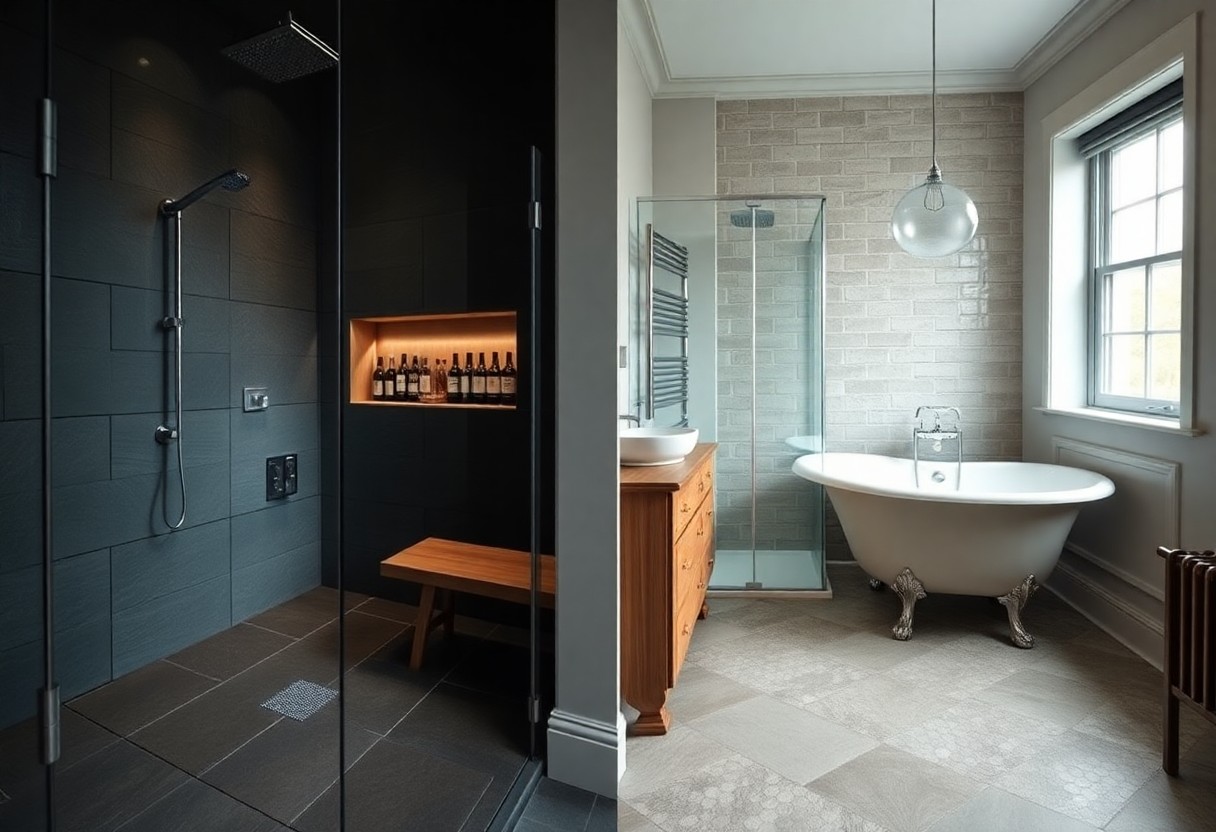
Traditional bathrooms typically separate the wet areas from dry zones with a bath or enclosed shower, basin and WC arranged within defined floor plans; family bathrooms often measure around 4-6 m² while ensuites are commonly 2-3 m². You benefit from clear wet/dry separation, conventional waterproofing methods and widespread fixture compatibility, yet you must manage grout lines and sealed joins to limit leaks and mould in older fittings.
Definition and Features
Traditional bathrooms usually feature a fitted or freestanding bath (commonly 1500-1700 mm), a shower cubicle or over-bath shower, tiled splash areas up to about 1.5-1.8 m and storage vanities; you’ll find extractor fans and sealed membranes behind tiles to control moisture. Proper falls to drains and well-sealed pipework are important to prevent leaks, while heated towel rails and underfloor heating are popular upgrades for comfort.
Design Variability
Styles range from Victorian with cast-iron baths and metro tiles to sleek contemporary suites with frameless screens, large-format tiles and recessed niches; you can choose standard shower trays (800×800 or 900×900 mm) or space-saving quadrant units. You’ll be able to match finishes to period detail or modern minimalism, and mix materials-porcelain, natural stone or acrylic-depending on budget and maintenance preferences.
For example, converting a compact 1700 mm bath layout into a shower-led bathroom often frees up 0.5-1 m² for storage or a larger vanity; typical shower installations cost between about £1,000-£3,500 depending on fittings. You should weigh resale appeal-many buyers expect a traditional bath-and address ventilation upgrades when changing materials, since inadequate airflow increases mould and rot risk.
Pros of Wet Rooms
You gain an immediate sense of openness and practical benefit; removing enclosures often frees 0.5-1.5 m² in small bathrooms and allows uninterrupted sightlines that boost perceived space by roughly 20-30%. Designers report easier cleaning cycles, fewer mould hotspots when waterproofing is correctly installed, and an aesthetic that appeals to buyers seeking modern, accessible homes-factors that can improve resale desirability.
Space Efficiency
By ditching bulky trays and screens you reclaim floor area and can fit additional fixtures: for example, replacing a shower cubicle can create room for a 600 mm vanity or extra storage. Clever layouts squeeze in recessed shelving and wall-hung units, and you can achieve a neater plan in rooms under 4 m². Small gains of 0.5-1.2 m² often make the difference between cramped and comfortable.
Accessibility and Modern Appeal
Level-access showers eliminate thresholds, reducing trip hazards and making bathing easier for elderly or mobility-impaired users; many wet rooms are designed to accommodate a 1.5 m turning circle for wheelchair access. Contemporary fittings-frameless glass, linear drains and wall-mounted thermostatic mixers-also deliver a sleek, hotel-like look that appeals to modern tastes and universal-design standards.
For practical implementation you should specify a fall of around 1:80-1:60 to channel water towards a linear drain and use non-slip finishes with a Pendulum Test Value (PTV) of 36+ for barefoot safety. Adding grab rails, a fold-down seat and thermostatic valves increases usability, while certified waterproof membrane systems and upstands of at least 150 mm prevent water ingress and meet common building-regulation expectations.
Cons of Wet Rooms
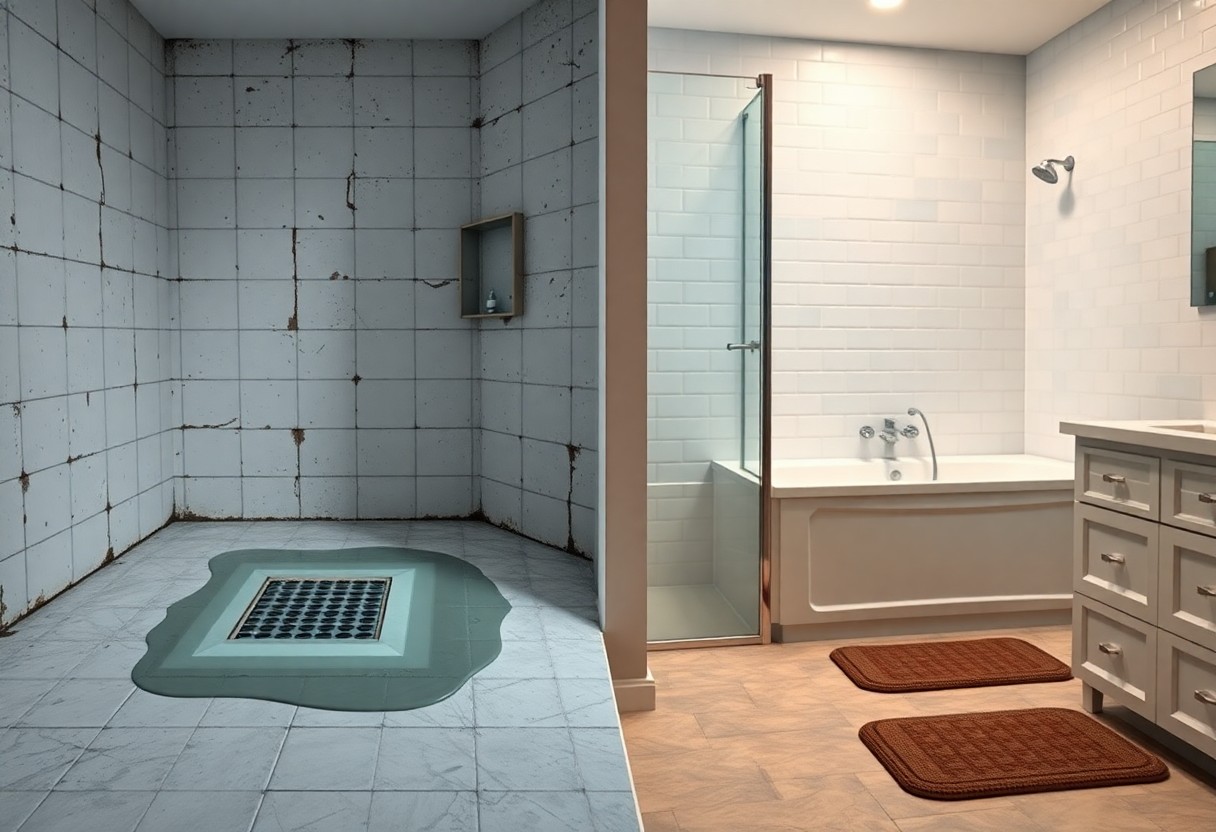
You get a sleek, accessible design, but wet rooms bring downsides: they frequently cost more to install, can allow moisture to spread into adjacent rooms if detailing is poor, and create a higher slip and mould risk than contained showers. They also reduce privacy and can complicate future layout changes, potentially affecting resale appeal. Specialist waterproofing, precise falls and correctly sited drainage are required to avoid long-term failures and costly remedial work.
Cost Considerations
You should budget noticeably more for a wet room; typical UK installations range from £4,000-£12,000 depending on tanking, drain choice and underfloor heating, whereas a standard bathroom commonly costs £2,000-£6,000. Linear drains, stainless components and skilled trades for waterproof membranes push prices up. Labour can be 30-50% higher than fitting a shower enclosure, so obtain at least three detailed quotes to compare scope and guarantees.
Maintenance Challenges
You’ll face regular maintenance: grout and sealant demand attention to prevent leaks and mould, with silicone joints often requiring replacement every 12-24 months and grout resealing every 1-2 years. Drains need frequent clearing-hair traps checked weekly-to avoid blockages, and any sign of tile movement or damp should prompt immediate inspection of the waterproof membrane. Choose accessible gulleys and anti-slip finishes to reduce long-term upkeep and safety issues.
Natural stone tiles will need sealing every 6-12 months, whereas glazed ceramics are lower maintenance but still benefit from grout seals; choosing timber-effect finishes requires a water-resistant substrate. Underfloor heating accelerates drying but electrical or wet systems should be serviced annually. Without these measures, wet-room failures often appear within 3-7 years, and remedial repairs can exceed £1,500-£4,000, so design for easy access-removable grates and inspection chambers-to keep routine tasks straightforward.
Pros of Traditional Bathrooms
Familiarity and Comfort
You benefit from tried-and-tested layouts: a standard bath (typically 1700×700mm) plus an 800×800mm shower tray fits most UK family bathrooms of 3-6 m². You’ll find bathing is often easier for children and elderly, and installers commonly add grab rails to improve access. Because water is contained within an enclosure or bath, you reduce the floor-wide slip risk compared with open wet rooms and make cleaning more straightforward.
Versatile Design Options
You can mix a freestanding tub, tiled alcove and separate glass shower to match traditional, Victorian or contemporary tastes. Suppliers offer thousands of fixtures and tile formats – from 100×100mm mosaics to 600×600mm slabs – so you tailor textures, colours and fittings precisely. Many homeowners also integrate built-in storage, vanity units and layered lighting to balance form and function in a compact 3-6 m² footprint.
When you plan a redesign, expect modular options: a new shower enclosure typically costs from around £500-£2,000 while a freestanding bath ranges £300-£1,500; tiling and labour push full refits to £2,000-£8,000. Installers usually complete a small update in 3-7 days, whereas comprehensive remodels take 2-3 weeks. Sourcing specific taps, wastes and concealed cisterns lets you control longevity, maintenance and resale appeal.
Cons of Traditional Bathrooms
Space Limitations
Traditional bathrooms pack fixed items-1700mm baths, 800×800mm shower trays and 600mm vanities-into compact rooms, so if your room is a typical small UK bathroom of 2.5-4 m² you can be left with only 0.5-1 m² of clear floor space. This forces compromises: you may have to drop storage, choose narrow sanitaryware or accept cramped circulation, and accessibility for older users or wheelchairs becomes far harder to achieve without major remodelling.
Potential for Water Damage
Traditional wet zones concentrate plumbing, so a failed seal, cracked grout or ageing pipe joint can send water behind tiles and into timber, creating hidden leaks, mould growth and structural rot. You’ll frequently see damage develop over months; for example, a persistent bath seal failure can lead to joist decay within 6-12 months, often triggering repairs that escalate quickly if left untreated.
Detection can be tricky: water often tracks laterally, so your visible repair bill may be the tip of the iceberg. Using moisture meters or thermal imaging usually costs around £150-£400, while repair bills commonly range from a few hundred pounds for regrouting to £1,000-£3,000+ when plaster, floorboards or joists need replacement; insuring against escape of water is therefore advisable.
To wrap up
Presently you must weigh space, cost and lifestyle when choosing between a wet room and a traditional bathroom: a wet room gives you a seamless, accessible, easy-to-clean area that maximises space and looks modern but requires comprehensive waterproofing, good drainage and higher initial installation costs; a traditional bathroom offers separation, simpler retrofits, better privacy and lower humidity risk for fixtures, though it can feel smaller and demands more cleaning of individual surfaces; choose based on your budget, usage and resale goals.
FAQ
Q: What is the main difference between a wet room and a traditional bathroom?
A: A wet room is a fully waterproofed bathroom where the shower area is level with the rest of the floor and drains directly into a central or linear drain; there is no separate shower tray or enclosure. A traditional bathroom usually contains distinct fixtures-bath, shower tray and enclosure-so water is contained within these areas and the remainder of the room remains dry. Wet rooms require a continuous waterproof membrane, careful falls to the drain and often different ventilation strategies, whereas traditional bathrooms rely on compartmentalised waterproofing around wet zones.
Q: What are the advantages of choosing a wet room?
A: Wet rooms provide a contemporary, open-plan look and can make a small bathroom feel much larger because there is no shower enclosure. They are highly accessible for users with mobility issues since there is typically a level, step-free entry, and they allow for flexible layouts and bespoke design. Wet rooms can be easier to clean as there are fewer nooks and frames for mould to gather, and underfloor heating or a heated floor finish can improve comfort and speed drying. When properly installed they can add perceived value to a modern property, particularly for ensuite or master bathrooms.
Q: What are the disadvantages and risks of a wet room?
A: Wet rooms have higher initial installation costs due to the need for full-room waterproofing, skilled labour, and possibly structural adjustments to create adequate falls to a drain. Poor installation or inadequate ventilation can lead to persistent damp, mould or water ingress into adjacent rooms or floor structures, especially in multi-storey properties where joists and ceilings below are vulnerable. They also require careful choice of finish materials and non-slip flooring; otherwise there is an increased slip risk. Some buyers may view wet rooms as a niche feature, so resale appeal can be variable.
Q: What are the pros and cons of a traditional bathroom compared with a wet room?
A: Traditional bathrooms are generally simpler and cheaper to install and repair because waterproofing is limited to specific wet zones (around baths, showers and basins). They confine water to designated areas, reducing the risk of widespread damp and making ventilation demands less stringent. Traditional layouts can be more familiar to buyers and easier to adapt in older properties. However, they may offer less usable floor space, are less accessible for people with mobility difficulties due to trays or raised baths, and framed shower enclosures can collect grime and require more frequent cleaning.
Q: How should I decide which option is best for my home?
A: Base your decision on budget, building constraints, intended users and long-term maintenance: choose a wet room if you prioritise accessibility, a modern aesthetic and have the budget for professional waterproofing and ventilation. Opt for a traditional bathroom if you need a lower-cost, lower-risk solution, are retrofitting in a property where altering falls or joists is difficult, or prefer clearly separated wet and dry areas. Consult a qualified installer or surveyor to assess floor structure, drainage capability and ventilation requirements before committing, and consider how the choice will affect resale in your local market.