Just consider that a timber frame home uses exposed heavy timbers for structure, giving you open interiors and fast construction; it can be energy-efficient and long-lasting, often adding market value, but it also carries a higher upfront cost and requires attention to detailing. You should weigh aesthetics, sustainability and maintenance, since poorly insulated or detailed… What Is a Timber Frame Home and Is It Worth It?
Just consider that a timber frame home uses exposed heavy timbers for structure, giving you open interiors and fast construction; it can be energy-efficient and long-lasting, often adding market value, but it also carries a higher upfront cost and requires attention to detailing. You should weigh aesthetics, sustainability and maintenance, since poorly insulated or detailed frames can be susceptible to moisture and pests; if you prioritise character and efficiency, a timber frame can be worth it for your lifestyle.
Definition of Timber Frame Homes
You’ll find timber frame homes use a visible skeleton of large squared timbers-typically posts and beams of about 150-300 mm section-joined by traditional mortise-and-tenon or modern steel connectors; the frame bears the loads so your interior can have long, open spans and exposed timbers. Contractors commonly pair the frame with insulated panels, brick or render. Frames often exceed 100 years with proper maintenance, but you must control moisture and pests to protect the structure.
History and Origin
Emerging in medieval Europe and mirrored in Japanese vernacular buildings, timber framing became ubiquitous for its material efficiency; numerous Tudor houses from the 1500s still stand as evidence. You can trace refined joinery techniques over centuries, and many surviving examples are over 500 years old, showing how the method adapted to diverse climates and construction needs.
Modern Applications
Contemporary use spans bespoke rural homes, barn conversions and multi-storey hybrid projects that combine glulam or CLT with traditional post-and-beam work-see the Stadthaus in Hackney, a landmark nine-storey timber apartment block. Developers favour the approach for faster erection times and reduced site waste, and you’ll often see prefabricated frames integrated with airtight, high-performance envelopes.
Manufacturers typically prefabricate panels off-site so your on-site frame can be raised in days or a few weeks, substantially shortening programmes. Performance-wise, pairing frames with high-spec insulation and airtight detailing can achieve U-values below 0.20 W/m²K in many projects, but poor moisture control and flawed junction detailing are the primary risks to long-term durability.
Benefits of Timber Frame Homes
Timber frames give you a blend of speed, efficiency and character: prefabricated panels can reduce on-site build time by 30-50%, and lifecycle studies typically show 30-50% lower embodied carbon compared with concrete or steel. You benefit from high airtightness and achievable wall U-values around 0.15-0.18 W/m²K, plus design flexibility for large open-plan spaces and simpler future extensions.
Sustainability
Wood locks away carbon-about 0.9 tonnes of CO₂ per cubic metre-so timber-frame construction often delivers substantially lower embodied emissions. You should insist on FSC/PEFC certification and short transport distances to avoid contributing to deforestation. At end of life most timber elements are reusable or recyclable, which reduces long-term landfill and lifecycle impact.
Aesthetic Appeal
Exposed posts and beams give your home immediate warmth and architectural drama; engineered glulam can span 10 m+ for uninterrupted interiors, while traditional oak or Douglas fir sections (roughly 150-300 mm) provide authentic character. You can pair timber with large glazing to create a striking modern-rustic aesthetic that consistently appeals to buyers and designers.
Specifying reclaimed oak or visible mortise-and-tenon joinery enhances patina and provenance, whereas glulam and CLT offer clean lines and long spans; architects often use oak posts of ~200×200 mm for statement features. You must detail moisture control and finishes-untreated exposed timber can suffer decay or insect attack-so plan ventilation, preservative treatments and maintenance into your design.
Construction Process
Once your foundations are prepared, most timber frames move from factory to site quickly: foundations often take 2-4 weeks, while the frame can be erected in as little as 3-7 days. Panels and beams arrive pre-cut to ±1 mm, so you avoid prolonged wet-site work and reduce waste. You should still allow time for airtightness detailing, window installs and services; on a typical 150 m² build you can expect the envelope to be weather-tight within 1-3 weeks of delivery.
Design Considerations
You’ll need to decide spans, insulation and services early: glulam beams commonly span 6-12 metres for domestic buildings, enabling large open-plan spaces without intermediate columns. Specify insulation and airtightness targets-U‑values below 0.2 W/m²K are achievable with a timber-frame plus external insulation, and aiming for n50 ≈ 1.0 will support MVHR performance. Also plan window placement, service chases and foundation loading to match the lighter, point‑load behaviour of timber.
Building Techniques
You can choose traditional scribed post‑and‑beam, factory panelisation or CLT/SIPs hybrid systems: scribed frames give aesthetic authenticity, while panelised systems cut on-site labour by up to 50%. Joinery varies from pegged mortise‑and‑tenon to stainless steel connectors and metal plate fasteners; each affects tolerances, maintenance and thermal bridging. Be aware that untreated timber and poor detailing increase moisture and fire risks, so specify preservative treatment and compliant fire strategies.
In practice, panelised builds use CNC‑cut components for repeatability and speed-one Devon example raised a 200 m² house in four days-whereas scribed frames need skilled carpenters and more on-site time. You should factor in MVHR installation to control moisture and meet performance targets, and choose breathable membrane sequences when using external insulation. Finally, ensure connection design handles point loads (use steel shoes or pad footings) and specify stainless fixings for coastal exposures to avoid long‑term corrosion.
Cost Analysis
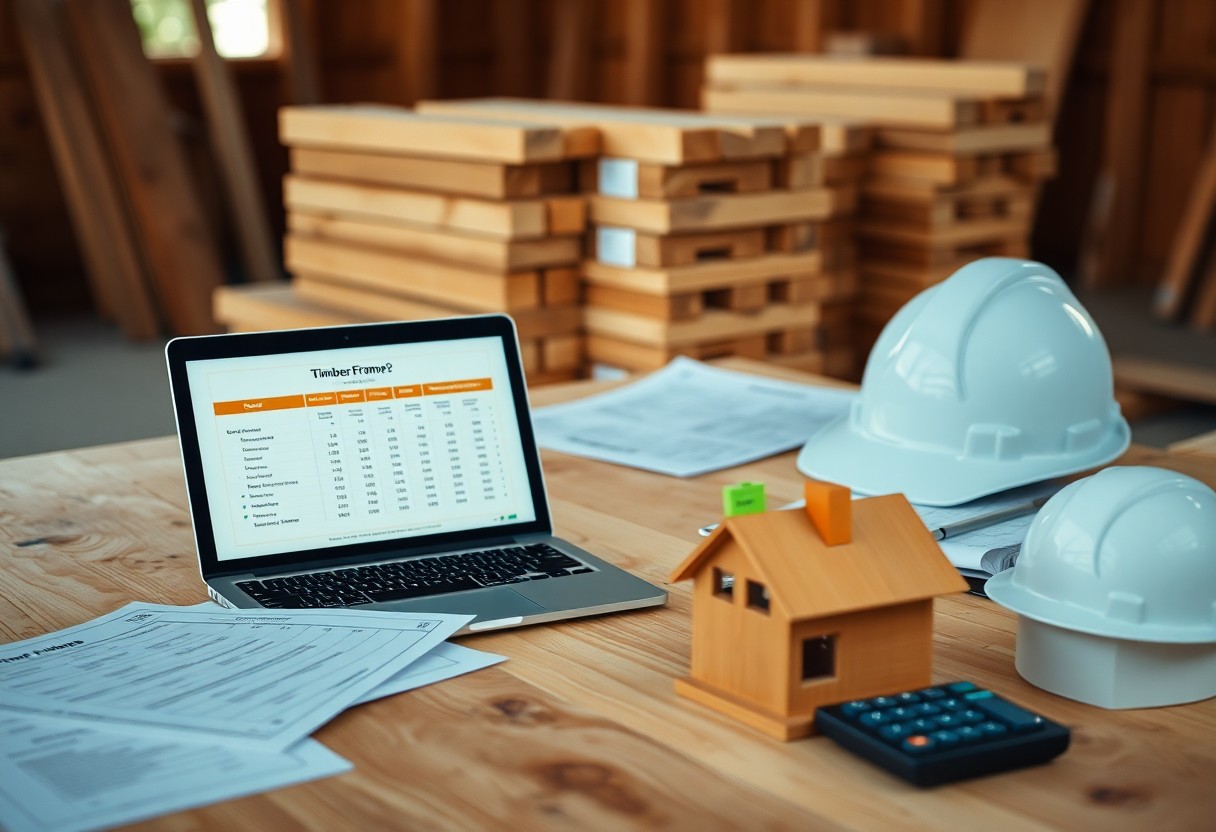
You’ll find timber-frame pricing varies by design and finish: while raw material costs can be competitive, bespoke joinery and high-spec insulation often push the overall budget up. Off-site manufacture commonly shortens the build by up to 30%, cutting labour time and on-site contingencies – see What Are the Benefits of Timber Frame Homes? for builder-specific figures and examples.
Initial Investment
You should budget for a typical premium of about 5-15% over standard masonry on comparable specifications, depending on cladding and finishes; for example, a 150 m² home might show an extra £8,000-£20,000 in build cost if you opt for exposed beams and higher-spec glazing. Off-site savings can offset some of that upfront spend.
Long-term Value
Your ongoing costs often fall because timber-frame construction supports better airtightness and insulation, frequently improving EPC ratings and cutting heating bills by roughly 20-40%. That performance can make your home more attractive to buyers, potentially enhancing resale value.
For instance, if your annual heating runs at £1,500 and you achieve a 30% saving (£450/yr), over 25 years that’s £11,250; against a £12,000 premium the payback sits in the region of 20-25 years, shorter if you secure higher energy savings or a stronger market premium for sustainable build quality.
Comparing Timber Frame Homes to Other Construction Types
Compared to traditional framing, log cabins and masonry, timber frame homes typically offer wider clear spans and faster on-site assembly, with exposed beams defining interiors. You may pay roughly 10-20% more upfront for precision joinery and factory panels, yet you gain lower on-site labour and reduced programme risk-factory precision often trims build time by 30-50%. The trade-offs centre on maintenance regimes and moisture management.
| Cost | Timber frame: higher initial joinery costs; Traditional: typically 10-20% cheaper; Masonry: higher groundwork costs |
| Build time | Timber frame: factory panels shorten on-site time by 30-50%; Traditional: longer weather-dependent phases |
| Thermal performance | Timber frame: excellent with insulated panel design; Log: needs 200-300mm for thermal mass; Masonry: needs thicker insulation to avoid thermal bridging |
| Durability & maintenance | Timber frame: requires moisture control and preservative strategies; Masonry: lower routine upkeep but higher embodied carbon |
| Aesthetics & value | Timber frame: exposed timber adds premium appeal and resale value; Traditional/Masonry: more conventional finishes |
- You gain faster delivery with pre-cut panels and less on-site labour.
- You secure larger open-plan spaces without internal load-bearing walls.
- You should plan for active moisture management and periodic timber inspection.
Traditional Framing
In practice, traditional framing uses standard studs and joists and is often the most economical route for straightforward builds or extensions; you can expect roughly 10-20% lower upfront costs versus bespoke timber frames. You’ll trade off for narrower clear spans and the need to add significant insulation thickness to meet modern U-values, and your layout flexibility will be more limited than with engineered timber frames.
Log Cabins and Masonry
Log cabins with 200-300mm section thickness provide strong thermal mass and rustic character but can suffer settlement and air leakage unless engineered; you’ll need skilled joinery to manage shrinkage. Meanwhile, masonry offers superior fire resistance and acoustic performance and often outlasts timber structures, with many masonry homes lasting 50-100+ years when well maintained.
For log construction you must factor in seasonal movement, tight joint design and annual inspections to avoid rot, whereas masonry demands robust foundations and damp-proofing that can increase groundworks by a noticeable margin; you’ll also weigh the higher embodied carbon of concrete/brick against masonry’s low maintenance and fire resilience when deciding which suits your site and lifecycle priorities.
Common Myths and Misconceptions
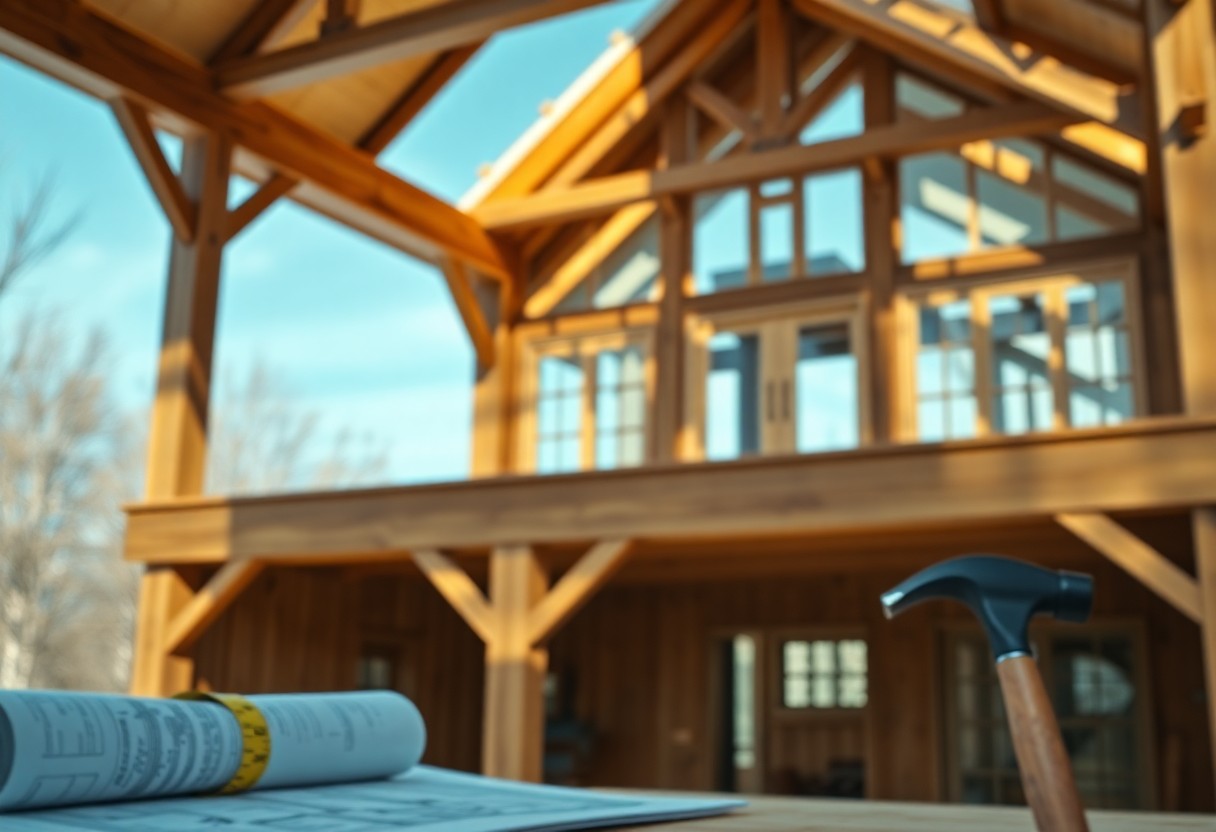
You often hear timber frames called flimsy, fire-prone or high-maintenance. In practice engineered frames and heavy oak have produced houses that last centuries-some English examples exceed 500 years-and modern mass-timber chars predictably to protect structure in fires, so timber is not inherently less fire-resistant. Costs and energy performance are comparable or better; good design can cut heating use by 20-30%. See How To Choose A Timber Frame Home or Traditional Home.
Durability Concerns
You may worry about rot and insects; with correct detailing, pressure-treated or naturally durable species and ventilated cavities, those risks are managed. Glulam and C24-grade structural timber provide predictable strength, and many oak-framed buildings in Britain exceed 300 years. The main danger is poor moisture control, so make sure flashings, DPCs and generous eaves are specified to avoid trapped water.
Maintenance Requirements
You should expect routine checks rather than constant work: inspect seals, coatings and joints annually, clear gutters twice yearly and recoat external timber every 7-15 years depending on exposure. Minor resealing and prompt repair of flashings usually prevent major intervention; a well-detailed timber home can need less ongoing structural maintenance than some masonry properties.
Beyond those basics, use stainless-steel or hot-dip galvanised fixings to prevent corrosion and staining, and choose breathable microporous paints or oil finishes on exposed timbers. Replace silicone or polyurethane sealants typically every 10-15 years, maintain ventilation at eaves and under floors to reduce condensation, and keep an annual checklist for damp at junctions, paint failure and gutter performance. Case studies show homeowners who follow these steps often keep maintenance bills modest while preserving structural timber for decades.
To wrap up
Summing up, a timber frame home uses heavy timbers for structure, offering excellent thermal performance, rapid construction and striking architectural flexibility; you may pay more upfront but gain long-term energy savings, sustainability and durable value if you prioritise bespoke design and environmental credentials, so it’s worth considering for many homeowners.
FAQ
Q: What exactly is a timber frame home?
A: A timber frame home uses a structural skeleton of large, load-bearing timber members (posts, beams and trusses) joined by engineered joints or metal connectors, instead of relying on load-bearing masonry. The spaces between the frame are filled with insulation and panels (such as structural insulated panels, timber studs with insulation, or traditional infill), and an external cladding or masonry skin is often added for weather protection and appearance. Modern timber frames are frequently prefabricated off-site to tight tolerances, speeding construction and improving quality control.
Q: How does building a timber frame home differ from conventional brick-and-block construction?
A: Timber framing is generally faster on-site because large components are manufactured off-site and assembled quickly, reducing wet trades and exposure to weather. Foundations and groundworks are similar, but the erection phase is shorter and less labour-intensive; following erection, trades fit insulation, services and internal linings. Timber frames require careful detailing for airtightness and moisture management, and coordination between supplier, builder and designer is important to avoid site delays.
Q: Are timber frame homes energy-efficient and environmentally friendly?
A: Yes, when well designed they are highly energy-efficient: the frame allows continuous insulation and excellent airtightness, and prefabrication reduces waste. Timber has lower embodied carbon than steel or concrete and is a renewable material when sourced responsibly, which improves a building’s environmental credentials. Considerations include thermal mass (timber stores less heat than masonry, which can affect summer cooling) and ensuring ventilation and shading are designed appropriately.
Q: What about durability, maintenance and risks such as rot, pests or fire?
A: Timber frame homes can last centuries if detailed and maintained correctly; modern frames use kiln-dried, graded timber and preservative treatments where appropriate, and designs keep structural timber dry with good flashing, ventilation and suitable external cladding. Pests and rot are managed through specification and site practice rather than being inevitable problems. Fire performance is addressed by design, fire-graded linings and compartmentation; insurers may consider construction type but many timber-framed homes attract standard cover once properly specified.
Q: Are timber frame homes more expensive and is choosing one worth it?
A: Initial costs vary: bespoke heavy-timber frames can be pricier than simple brickwork, but prefabricated systems often reduce labour time and waste, offsetting material costs and shortening finance charges during build. Long-term benefits include lower running costs from good insulation and airtightness, design flexibility for open-plan layouts, and strong market appeal for energy-conscious buyers. Whether it is worth it depends on priorities-if speed, sustainability, architectural flexibility and controlled quality matter, a timber frame is often a very good choice.