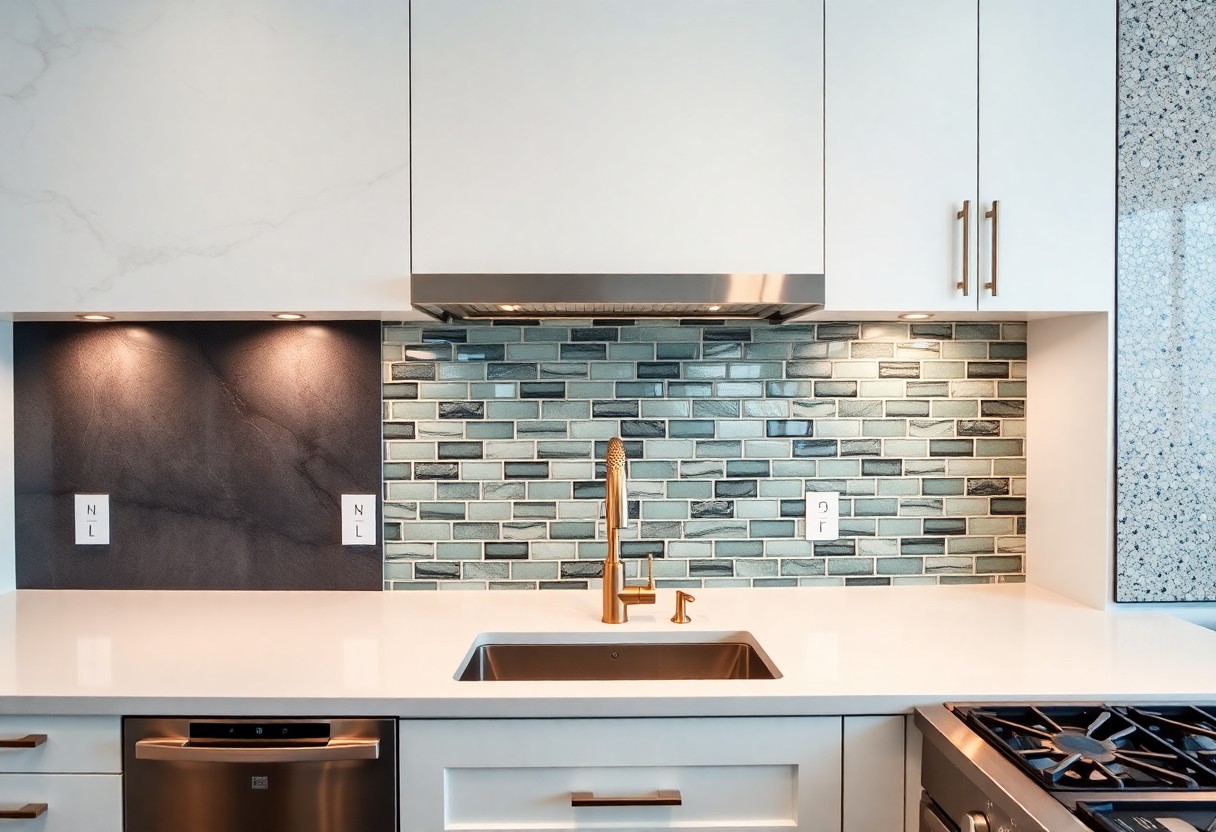
With the 2026 trends, you should prioritise splashbacks that combine durability, easy maintenance and modern aesthetics; choose toughened glass or porcelain for high-heat zones to avoid fire and heat damage, and consider anti-bacterial finishes for hygiene. You can use bold colours or metallics to make a positive design statement while matching countertops, and integrate LED… Best Splashback Ideas for 2026
With the 2026 trends, you should prioritise splashbacks that combine durability, easy maintenance and modern aesthetics; choose toughened glass or porcelain for high-heat zones to avoid fire and heat damage, and consider anti-bacterial finishes for hygiene. You can use bold colours or metallics to make a positive design statement while matching countertops, and integrate LED lighting or textured tiles for longevity and resale value, ensuring your kitchen is both safe and stylish.
Top Trends in Splashback Designs for 2026
Expect a mix of functional innovation and expressive aesthetics: manufacturers now supply 6mm toughened glass panels and full-height porcelain slabs up to 3.2×1.6 m, while stainless steel (1-1.5 mm) remains popular for professional kitchens. You’ll see more digital-print glass, terrazzo resurging in large-format slabs, and integrated LED-lit splashbacks. Practical details matter – heat resistance, seam placement and ease of cleaning determine whether a design works in daily use.
Sustainable Materials
Recycled glass splashbacks made from bottle cullet and porcelain with water absorption ≤0.5% are rising in popularity; you can also specify panels with FSC-certified timber veneers or bio-based resin finishes. Suppliers increasingly offer products with environmental declarations (EPDs) and BREEAM- or Cradle-to-Cradle-aligned options, so you can quantify embodied-carbon reductions and choose low-porosity, low-VOC materials that withstand kitchen conditions.
Bold Patterns and Colours
Designs favour large-scale marbles, geometric mosaics and high-definition printed glass so you can make a statement without clutter. Deep jewel tones such as teal and burnt ochre pair well with neutral cabinetry, but be cautious: busy patterns can visually shrink small kitchens, so you should balance scale and contrast to retain a sense of space.
When you explore bold patterns, consider tile sizes and seam strategy: mosaics (30×30 mm) add texture, whereas 300×600 or 600×300 tiles and single porcelain slabs minimise grout lines. For authentic veining choose book-matched porcelain or digital-print glass; for example, using a single 3.2×1.6 m slab across a 3 m run removes vertical joins and showcases continuous veining. Also factor in finish – high-gloss glass wipes clean easily, while textured tiles hide splashes but require more intensive cleaning – and match fixture finishes (brass, chrome, matte black) to your dominant colour to keep the scheme cohesive.
Innovative Technology in Splashback Solutions
You can combine materials and electronics now: from toughened glass and glass-ceramic panels to switchable smart glass and integrated OLED displays, plus sensors that monitor heat and humidity. Manufacturers offer panels conforming to BS EN 12150 for safety and IP-rated electronics for splash resistance. Expect features like feed-from-phone recipe displays, timed extraction triggers and antimicrobial surface treatments that substantially reduce bacterial load in busy kitchens.
Smart Splashbacks
Several suppliers now offer interactive glass panels that serve as displays, control hubs and mood lighting; you can get panels with full-HD resolution, RGB LEDs and compatibility with Alexa or Google Assistant. Prioritise products with an IP54-IP66 ingress rating and separate the electronic module from the hottest cooking zones to avoid heat damage. Installers often recess or ventilate control modules to meet warranty terms and maintain reliability.
Easy-Clean Technologies
Hydrophobic nano-coatings, oleophobic layers and photocatalytic TiO2 finishes reduce staining and make grease wipe away faster, with many commercial coatings lasting 12-24 months under normal use. You should prefer factory-applied treatments over DIY sprays for durability, and combine them with low-iron toughened glass or glass-ceramic panels for best long-term clarity and stain resistance.
For maintenance, you should clean coated splashbacks with a soft microfibre and pH-neutral cleaner; abrasive pads, bleach or ammonia-based products will degrade coatings and shorten service life. Professional re-coating intervals typically range 12-24 months depending on cooking frequency, and installers can test coating condition using contact-angle measurements or simple water-sheeting checks to confirm performance.
Classic vs. Modern Splashback Styles
You can contrast traditional choices like 75×150mm subway tiles or Carrara marble with modern options such as large-format porcelain slabs (commonly 1600×3200mm) or toughened glass (4-6mm). Heritage finishes favour grout lines, mouldings and brass trims that age well, while contemporary approaches reduce joints for lower maintenance. Consider that marble is porous and needs sealing every 6-12 months, whereas porcelain is highly scratch- and stain-resistant.
Timeless Elegance
Subway tiles in 75×150mm or herringbone layouts deliver period charm and you can pair them with traditional bead mouldings or brass trims for authenticity. Marble veining like Carrara or Calacatta offers unique patterning, though you should expect to reseal natural stone roughly every 6-12 months and use pH-neutral cleaners to avoid etching. Tile grout gives texture but will require occasional regrouting in high-use kitchens.
Contemporary Chic
Modern schemes favour seamless surfaces: large porcelain slabs (6-12mm thickness) and back-painted toughened glass (4-6mm) reduce visible joints and reflect light to enlarge compact spaces. You’ll find matte porcelain in 600×300mm or full-slab formats and mirrored glass or smoked finishes for dramatic impact. Minimal silicone joints of 2-3mm keep the look clean while making routine wiping far quicker than tiled alternatives.
For installations behind high-output hobs, specify toughened glass at 6-8mm or heat-rated porcelain slabs and insist on certified installers to bond panels with appropriate silicone and stainless fixings. Stainless steel splashbacks are typically 0.9-1.2mm, grade 304, offering hygiene and heat tolerance but can show scratches; glass and porcelain avoid corrosion yet need correct support to prevent cracking.
Eco-Friendly Options for Splashbacks
You can reduce your kitchen’s embodied carbon by choosing materials like recycled glass, reclaimed stone or low-VOC porcelain tiles; specify low-VOC adhesives and grouts to limit off-gassing during installation. Sourcing locally salvaged tiles cuts transport emissions and often costs less, while specifying salvaged or certified reclaimed stone gives unique patina and durability. Consider lifecycle impacts-installation methods and maintenance frequency both affect your long-term sustainability and performance.
Recycled Glass and Tiles
Recycled glass tiles often contain 70-100% post-consumer glass, reflect light to brighten small kitchens and resist staining as a non‑porous surface; you should expect minimal maintenance and good heat resistance. Installation typically uses standard tile adhesives or epoxy grout, but you must hire an experienced fabricator because cutting can create sharp shards and edges that need correct sealing to prevent chipping.
Bamboo and Natural Materials
Bamboo panels and laminated veneers offer a rapidly renewable alternative-bamboo matures in about 3-5 years-and strand‑woven products deliver durability comparable to hardwoods; you should always specify a water‑resistant finish because unfinished bamboo will swell. Use sealed panels behind sinks and stoves only when finished with high‑quality marine or polyurethane coatings to ensure longevity and hygienic performance.
For added protection, choose strand‑woven bamboo with a factory-applied marine varnish or two‑pack polyurethane and plan to reseal or oil high‑splash zones every 1-3 years, depending on use. You should also check for FSC or equivalent certification to avoid poor sourcing practices, and avoid placing bamboo directly behind open flames unless a heat‑resistant barrier is specified by your installer.
DIY Splashback Ideas
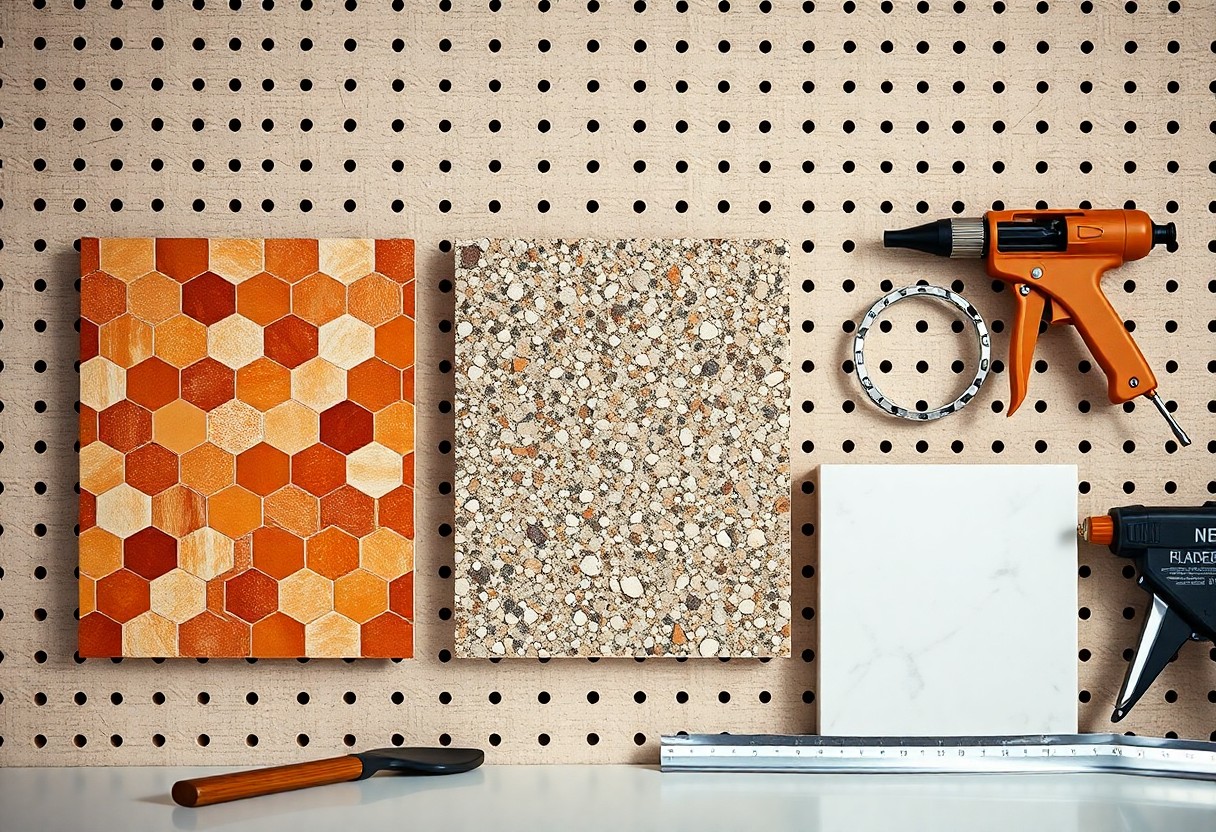
You can transform a kitchen quickly with peel-and-stick tiles, painted glass or acrylic sheets; peel-and-stick ranges from about £10-£30 per m², acrylic sheets are typically 3-5mm thick and glass panels from £50-£120 per m². Try 300×300mm ceramic tiles or 10×10mm glass mosaics for texture. Use a good quality silicone sealant for edges and a tile adhesive rated for wet zones. Wear eye protection and a mask when cutting tiles or glass to avoid silica dust and shards.
Budget-Friendly Solutions
If you want low cost, use vinyl splashback film, tile stickers or surplus tiles from reclamation yards; individual ceramic tiles can be as cheap as 50p-£3 each. A 1.5m×0.6m area can often be completed in an afternoon with tile adhesive or strong double-sided adhesive strips, keeping labour minimal. Expect projects under £100 for small areas, though solvent fumes from some adhesives mean you should ventilate the space while you work.
Creative Techniques
Try mosaics made from broken crockery, mirrored tile grids, metallic paint panels or LED-backlit acrylic for drama; small glass tesserae (10-20mm) give rich patterning, while a 3mm acrylic backlit with 12V IP65 LED strips adds depth. Use grout joints of 1-3mm for mosaics and neutral-cure silicone for natural stone. LED-backed acrylic creates striking depth, and cutting glass requires gloves and respiratory protection.
For mosaics, fix tiles with thinset mortar and grout with a polymer-modified grout, sealing grout afterwards; for reverse-painted glass, apply artist-grade enamel to the rear of 6mm toughened glass then fit with neutral silicone. When using LED lighting, mount strips in aluminium channels and power with a 12V transformer; have any hardwired electrical work completed by a qualified electrician to meet safety standards.
Installation Tips for Homeowners
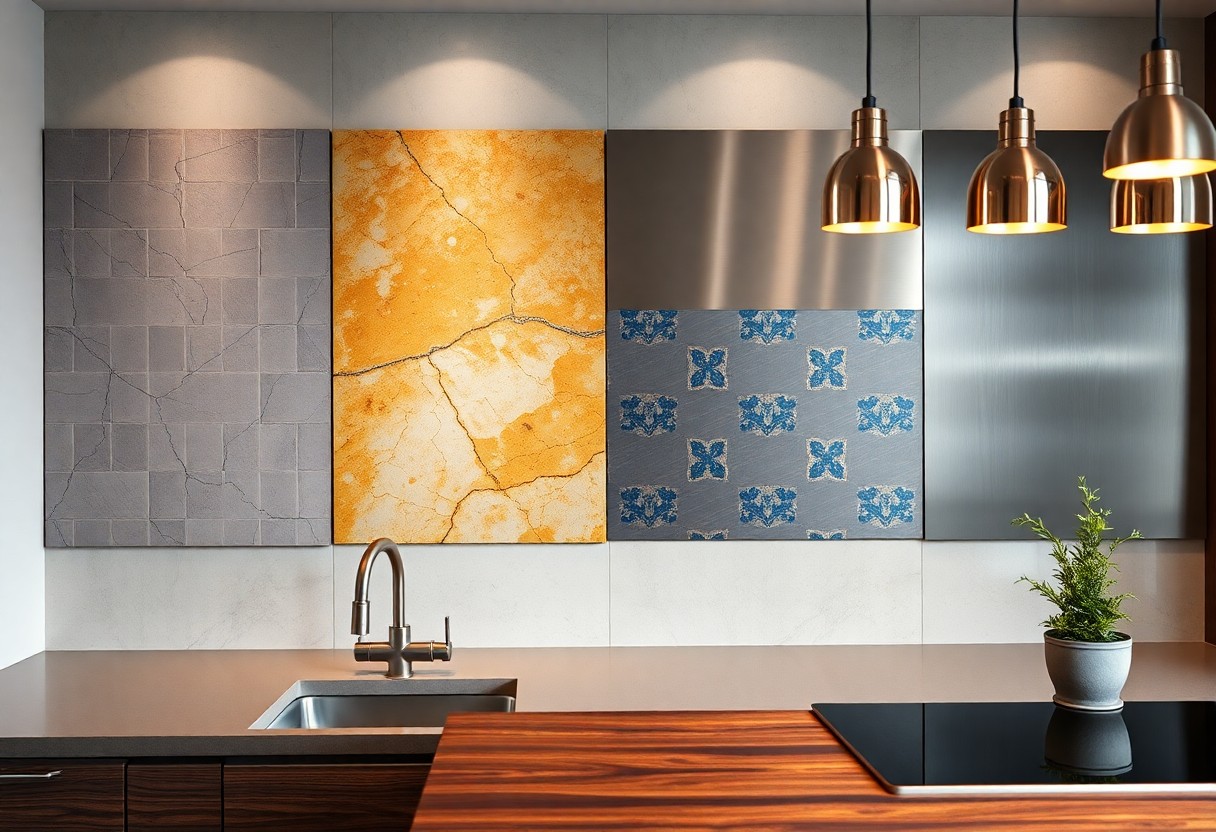
Measure twice and plan for a standard 600mm splashback height behind the hob; allow a 2-3mm expansion gap and use a spirit level when you fix a panel. For glass, choose 6mm toughened glass for most hobs and seal stone edges with silicone sealant. Use a backing board where walls are uneven and the correct adhesive for your material. Any final checks should include testing for secure fixings and clean, even joints.
- Splashback
- Installation
- Glass
- Tile
- Marble
Professional vs. DIY Installation
If you choose heavy or bespoke materials you should hire a tradesperson: professionals often charge between £150-£500 depending on finish and complexity. You can save money installing acrylic or peel‑and‑stick options yourself, but mishandling glass is hazardous and may void warranties. Weigh the time and skill required against the potential cost of mistakes to your property.
Common Mistakes to Avoid
Not levelling the wall, using the wrong adhesive and failing to seal around the hob are frequent errors that lead to mould and water damage; when you cut glass without a specialist tool you risk chips and cracks. Ensure you turn off gas and electricity near appliances and never rely on mirror adhesive for heavy stone; use a backing board for uneven surfaces and check alignment with a spirit level before fixing.
If you mis‑measure, replacement costs can run to hundreds of pounds, so you should measure wall heights at three points and have complex cuts done by a glazier or waterjet. For tiles use a flexible, polymer‑modified adhesive and 2-3mm spacers; for glass choose a neutral‑cure silicone and stainless‑steel fixings. When gaps appear, pack behind the panel rather than masking over with excess sealant.
To wrap up
Ultimately you should choose a splashback that balances style and practicality for 2026: consider durable, easy‑clean surfaces like treated porcelain or tempered glass, bold colour or textured tiles for personality, integrated smart glass for adaptability, and sustainable materials to future‑proof your kitchen-prioritise cohesion with your cabinetry and lighting to achieve a refined, long‑lasting finish.
FAQ
Q: What are the top splashback trends for 2026?
A: Large-format porcelain slabs and single-piece glass continue to dominate, offering near-seamless surfaces that reduce grout lines and make cleaning simpler. Sustainable options such as recycled glass and composite panels are increasingly popular. Textured 3D tiles and tactile finishes add depth, while metallic and iridescent mineral glazes create a premium, contemporary look. Integrated LED lighting and backlit glass provide mood and task illumination, and bold, saturated colours or soft tonal gradients pair with neutral cabinetry to create striking focal points.
Q: How do I choose the right splashback material for different cooktops?
A: Match material performance to cooking habits: stainless steel, porcelain and toughened glass are best for high-heat zones such as gas hobs because they resist heat, stains and impacts. Induction and electric hobs produce less radiant heat, so engineered stone and sealed natural stone are acceptable with appropriate clearance and sealing. Avoid untreated timber or delicate laminates directly behind cooking surfaces. Ensure materials are non-combustible where required, use heat-resistant adhesives and leave recommended clearances around open flames; for gas, consider a stainless steel or tiled panel behind the hob for durability.
Q: What splashback ideas work best in small or open-plan kitchens?
A: To maximise perceived space, choose reflective or light-coloured surfaces such as gloss glass or pale large-format slabs to bounce light. Extending the splashback to full height or running it along the same plane as surrounding cabinetry creates continuity and a feeling of openness. Vertical patterns or long horizontal slabs can visually elongate the room. For open-plan layouts, coordinate the splashback with adjacent finishes-either match the worktop tone for harmony or select a single accent strip to delineate the kitchen without overwhelming the living area.
Q: How should I care for and clean different modern splashback finishes?
A: Clean glass and porcelain with a mild detergent or a diluted vinegar solution and a soft cloth; avoid abrasive pads. Stainless steel responds well to specialist cleaners or a microfibre cloth with warm soapy water, wiping with the grain to avoid streaks. For natural stone use pH-neutral cleaners and reseal annually to protect against staining. Grit or grease in grout lines can be treated with a soft brush and oxygen-based cleaner; avoid strong acids on marble and some limestones. For textured surfaces, a steam cleaner or soft-bristled brush helps remove debris from crevices without damaging the finish.
Q: What should I consider for budgeting and installation in 2026 designs?
A: Costs vary widely: bespoke printed glass and large-format porcelain slabs are higher-end and may incur longer lead times, while standard tiles and stainless steel panels are more economical. Factor in professional templating and installation for heavy or bespoke materials, specialist adhesive and edge profiling, and any electrical work for integrated lighting. Allow contingency for site adjustments, seals and trims. Check warranties, thermal and fire-safety requirements, and confirm compatibility with your extractor and hob; DIY is possible for small tiled splashbacks but seek professionals for full-height slabs, toughened glass or complex cut-outs.