
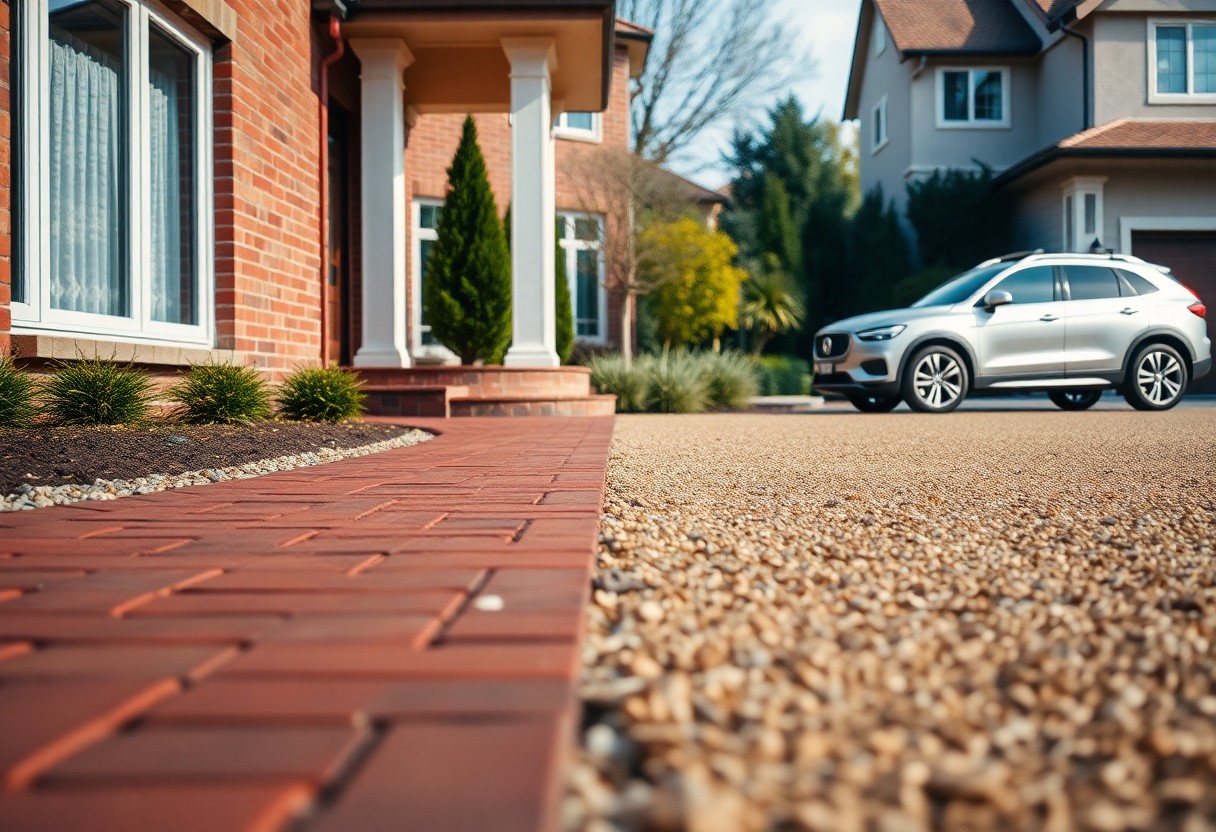
Over the past decades, when choosing between block paving and resin driveways you should weigh durability, appearance, cost and maintenance: block paving offers long-term strength and easier patch repairs, while resin gives you a smooth, low-maintenance finish and faster installation; however, resin can be slippery when wet and may need anti-slip treatments, so base your decision on your budget, usage and aesthetic priorities to ensure the best outcome for your property.
Overview of Block Paving
When you assess block paving, you’ll find a proven, long-lived surfacing option commonly used for driveways, patios and pedestrian areas; typical installations last 25-40 years with correct preparation. You’ll notice both conventional and permeable systems: the latter helps manage surface water to meet SuDS requirements. Installation demands a compacted sub-base and accurate edging, but the result offers high compressive strength and wide design flexibility, from herringbone patterns to reclaimed stone finishes.
Composition and Materials
You’ll encounter three main material types: concrete, clay and natural stone, with common block sizes around 200×100×50mm. Concrete blocks are cost-effective and colour-stable, clay offers superior durability and fade resistance, and natural stone commands a premium for aesthetic quality. Sub-base layers typically use MOT Type 1 or similar, topped with coarse sand for bedding and compacted edge restraints to prevent lateral movement.
Advantages of Block Paving
You gain excellent repairability-if a unit fails you can replace individual blocks without redoing the whole area-and strong load-bearing capacity suited to cars and light vans. You’ll also benefit from vast pattern and colour options, with permeable variants reducing surface runoff. Routine upkeep is straightforward, making block paving a versatile, long-term choice for most domestic driveways.
Because blocks interlock and distribute loads, you’ll typically avoid surface cracking common to rigid finishes; this is why local authorities and estate developers often specify interlocking block systems for driveways and access roads. In practical terms you can remove and relay a small patch within an hour or two, keeping repair costs low. Additionally, permeable block installations can provide retention of rainwater within the sub-base, helping you comply with planning conditions in flood-prone areas.
Disadvantages of Block Paving
You should expect ongoing maintenance: joint sand will migrate and weeds or moss can appear in gaps, creating a trip hazard if left unchecked. Installation is labour-intensive and demands a well-prepared sub-base; poor workmanship often causes uneven settlement. Initial install costs can be higher than some alternatives due to time and skilled labour requirements.
In practice you may need joint re-sanding every 3-5 years and occasional power-washing to prevent staining and algae. If the sub-base isn’t correctly compacted you’ll see rutting or edge failure under repeated heavy loads, so spec and workmanship matter. Permeable block systems also require periodic vacuuming to avoid pore-clogging, otherwise drainage performance and SuDS compliance can be compromised.
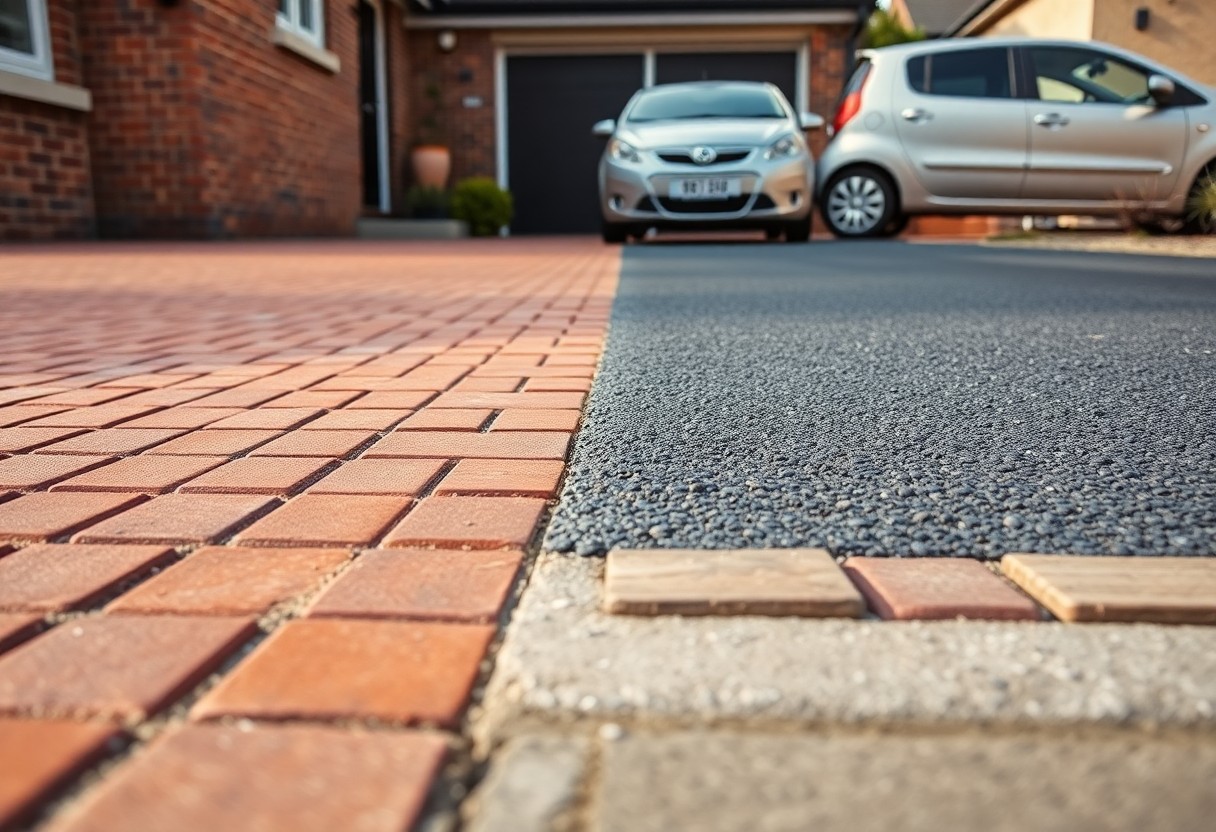
Overview of Resin Driveways
Composition and Types
Resin driveways mix a clear polyurethane or epoxy resin binder with graded decorative aggregate to form either resin bound (fully mixed) or resin bonded (applied over existing surface) finishes; installation normally uses a compacted sub-base or concrete upstand, and permeable variants meet SUDS targets for drainage.
- Resin bound
- Resin bonded
- Polyurethane resin
- Epoxy resin
- Permeable surface
| Binder | Polyurethane or epoxy resin |
| Aggregate | 4-6 mm decorative chippings |
| Permeability | Permeable if resin bound; resin bonded is less so |
| Lifespan | 8-15 years depending on UV exposure and traffic |
| Typical installed cost | £40-£90 per m² (site-specific) |
Benefits of Resin Driveways
You get a seamless, low-porosity finish that resists weed growth and requires minimal routine maintenance; quick installation often sees a 20m² driveway completed in 1-2 days, and the surface offers excellent colour variety and a permeable option for SUDS compliance.
For higher-traffic areas, resin bound systems typically offer a durable wearing surface with good tyre grip and reduced water pooling; installers report typical lifespans of 10-12 years with light maintenance and wash-downs every 6-12 months for best appearance.
Drawbacks of Resin Driveways
Your surface can be sensitive to installation conditions: temperatures below 5°C or wet weather increase failure risk, and cheaper resins may yellow under UV, so choose a UV-stable product; also heavy point loads from sharp objects can cause local damage that is visible.
Repairs to small sections are possible but matching aggregate and finish can be difficult, and long-term resilience under frequent heavy goods vehicle use is limited compared with concrete or block paving; slipperiness when contaminated by diesel or algae is a safety concern. Knowing how local climate, traffic and maintenance affect performance helps you decide.
Cost Comparison
You’ll find costs vary significantly by material, complexity and site access; typical installed ranges are roughly £60-£120 per m² for block paving and £50-£100 per m² for resin-bound driveways, with edging, drainage and base preparation often adding 10-30% to estimates for either option.
Cost comparison at a glance
| Block Paving | Resin Driveway |
|---|---|
| Initial cost: £60-£120 per m² (installed) | Initial cost: £50-£100 per m² (installed) |
| Typical lifespan: 15-30 years with repairs | Typical lifespan: 10-20 years; resin-bound often 15+ |
| Maintenance: joint sand, weed control, occasional relay | Maintenance: pressure wash, occasional reseal, UV can fade pigments |
| Vulnerabilities: sinking, trip hazards if base shifts | Vulnerabilities: surface staining, surface cracking if base fails |
Initial Installation Costs
Your upfront spend chiefly covers excavation, a compacted sub-base and surfacing; for a 50m² driveway expect about £3,000-£6,000 for block paving and roughly £2,500-£5,000 for resin, although complex drainage, retaining walls or steep gradients can push either well above those figures.
Long-term Maintenance Expenses
You’ll typically spend less on routine upkeep for resin where annual power-washing and a reseal every 5-8 years (approx. £500-£1,200) suffice, while block paving demands periodic joint re-sanding (£20-£60), weed control and occasional re-laying of settled areas, which can cost hundreds to thousands depending on extent; the risk of trip hazards from settled blocks can make repairs urgent.
To illustrate, on a 100m² drive a block-paved surface might cost £6,000-£12,000 initially; expect average annual maintenance of £100-£300 and a possible partial relay after 8-12 years costing £1,000-£3,000. By contrast a 100m² resin drive could be £5,000-£10,000 up front, with yearly cleaning at £50-£150 and a full reseal every 6-8 years around £800-£1,500; if the sub-base moves, however, resin can crack and require more costly replacement.
Durability and Longevity
Your choice affects how long the surfacing performs: block paving commonly lasts 25-50 years with periodic joint maintenance and re-sanding, while resin driveways generally provide 10-20 years depending on UV exposure and binder quality. Heavy vehicle traffic and poor base work cut service life quickly; conversely, a fully compacted, well-drained sub-base and prompt repairs extend longevity substantially. You should weigh typical warranty periods and real-world case studies when deciding.
Factors Affecting Lifespan
Installation quality dominates: a wrongly compacted sub-base or inadequate edge restraints will cause movement, and standing water accelerates joint loss and binder degradation. You must consider traffic type, maintenance frequency, and local climate; for example, commercial loads halve expected life versus domestic use. Recognizing these variables lets you target repairs and choose the system that meets your usage.
- Base preparation
- Drainage
- Traffic load
- UV exposure
- Maintenance
Weather Resistance
Resin surfaces can suffer UV discolouration and slight softening in prolonged high temperatures, whereas block paving tolerates heat but risks frost heave in freeze-thaw cycles if drainage or jointing fails. Many resin systems include a 10-year warranty for binder performance, while well-installed block paving backed by a quality sub-base resists wet winters and heavy rain better over decades.
In practice, you’ll find resin performs well in mild climates and on slopes that shed water quickly, yet prolonged sunlight in southern exposures accelerates binder ageing; conversely, in the UK’s freeze-thaw conditions block paving can shift where joints erode or sand is lost. Manufacturers’ technical data sheets and local installer case studies often report actual performance-use those to match the material to your site’s prevailing weather and maintenance capacity.
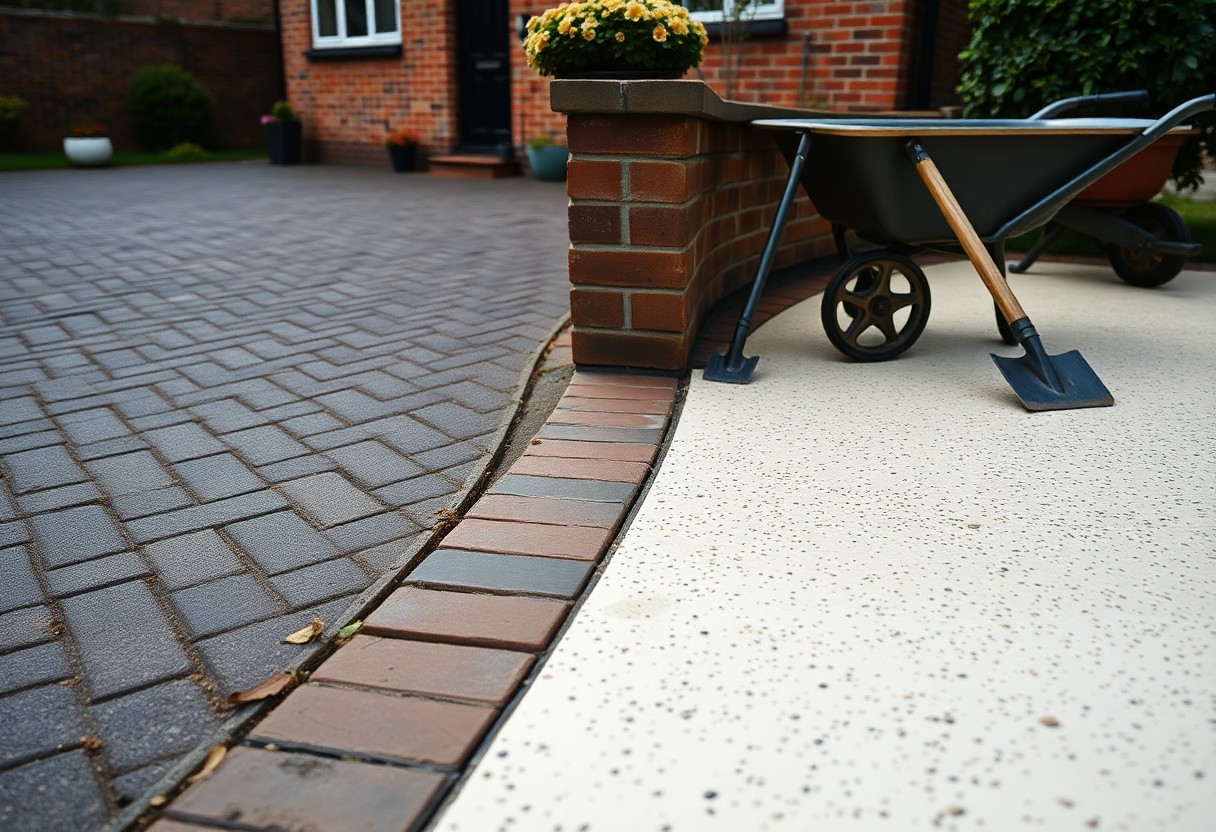
Aesthetic Considerations
Your choice shapes kerb appeal: block paving gives texture and pattern with traditional looks-herringbone, basketweave or stretcher bond-while resin delivers a smooth, seamless finish that highlights aggregate colour and produces clean lines. Blocks often sit 60 mm thick on a 100-150 mm sub-base so patterns read strongly, whereas resin mixes using 1-6 mm stone create a uniform surface; both offer wide colour ranges but differ in maintenance and repair approaches.
Design Options for Block Paving
You can specify concrete or clay units, reclaimed setts or tumbled finishes, plus borders, bands and contrasting soldier courses for definition. Common patterns-herringbone for strength, stretcher for economy-affect load distribution; use 60 mm blocks for private driveways and 80 mm for heavier use. Permeable block systems are available to meet SUDS, and you can replace individual pavers if staining or settlement occurs, though poor installation may create trip hazards.
Design Options for Resin Driveways
You’ll choose between resin bound (intermixed aggregate, permeable) and resin bonded (top-dressed, less permeable), with typical resin-bound depth around 12-18 mm using 1-6 mm aggregate for driveways. Colour blends, exposed aggregates and decorative inlays give contemporary looks, while seamless surfacing reduces weed growth; note that resin can stain from petrol and oils and some bonded systems may be slippery when wet, so specification matters.
Install times are usually quick-often 1-3 days for a 30-60 m² driveway-and UV-stable systems can last around 10-15 years with proper care. You can request specific aggregate sizes or custom colour blends to match brickwork or house colour; installers can also incorporate drainage channels, resin steps or integrated lighting for a tailored finish, but avoid low-grade resins that are prone to fading or binder failure.
Eco-Friendliness and Sustainability
Permeability, embodied carbon and lifespan determine which option suits your sustainability goals. Block paving often uses concrete or clay; concrete production contributes roughly 7-8% of global CO₂, while permeable block systems can cut surface runoff and help recharge groundwater. Resin surfaces use petrochemical binders but can be made porous when combined with open-graded aggregates, meeting SUDS if laid over a suitable sub-base. Consider lifecycle impacts: reclaimed blocks and recycled sub-bases frequently offset higher initial emissions.
Environmental Impact of Block Paving
Concrete block paving has a high embodied carbon footprint from cement, yet you can mitigate that by choosing permeable interlocking units, specifying reclaimed blocks and using locally sourced materials to cut transport emissions. Typical service life ranges from 25-40 years, and individual blocks are easily reclaimed and reused, lowering lifecycle impact. Poorly drained installations will increase urban runoff and surface heat, so appropriate jointing and a permeable sub-base are key to sustainable performance.
Environmental Impact of Resin Driveways
Resin driveways use polyurethane or epoxy binders derived from fossil feedstocks; manufacture and polymer wear can produce microplastic pollution, which you must factor into choices. Resin-bound systems that are porous and installed over a permeable sub-base can achieve SUDS compliance and typically carry 10-year warranties, with service lives of about 10-15 years. Opting for recycled aggregate and reputable installers reduces embodied carbon and the risk of premature failure.
For deeper evaluation, you should request BBA or ISO certifications and lifecycle assessments from suppliers. UV-stabilised formulations and correct mixing ratios reduce oxidation; poor installation dramatically increases microplastic shedding and premature degradation, whereas certified resin-bound systems with proper sub-bases show lower maintenance and predictable 10-15 year performance. Insist on test reports, warranties and a maintenance plan before committing to a resin surface.
Final Words
With this in mind, you should opt for resin if you prioritise low maintenance, rapid installation and a smooth, contemporary finish, while you should favour block paving if you need long‑term durability, simpler local repairs and a traditional, textured appearance; the best choice depends on your budget, site drainage and style preferences.
FAQ
Q: Which option is more cost-effective initially and over the long term?
A: Resin driveways typically have a lower initial installation cost on average because the material and labour can be less intensive than premium block paving. Long-term costs depend on lifespan and maintenance: block paving can last 25-40 years with occasional joint re-sanding and resetting, making it economical over decades; resin-bound systems generally last 15-25 years and may need more frequent local repairs or re-coating. Consider base preparation, drainage works and local labour rates when comparing total cost of ownership.
Q: Which is more durable and easier to maintain?
A: Properly installed block paving is highly durable under heavy loads and is forgiving for local repairs – individual pavers can be lifted and relaid if the base moves. Resin-bound surfaces provide a seamless, joint-free finish that resists weed growth and is easier to sweep and wash, but they are sensitive to substrate movement and may crack or require patching if the base shifts. Both benefit from periodic cleaning; block paving also needs joint maintenance to prevent weed ingress.
Q: How do they compare for aesthetics and design flexibility?
A: Block paving offers a very wide choice of colours, shapes, sizes and laying patterns, enabling traditional or highly bespoke looks, edging details and the ability to incorporate reclaimed or textured blocks. Resin driveways give a smooth, contemporary finish with many aggregate colour blends and a uniform appearance; they are particularly suited to modern or minimalist designs and provide a non-slip textured surface when specified correctly. Both can be colour-matched and integrated with surrounding landscaping.
Q: How long does installation take and how disruptive is it?
A: Block paving installation is typically more time-consuming: excavation, sub-base, laying, jointing and compaction can take several days to a week or more for a medium-sized driveway, so disruption is greater. Resin installations are usually quicker – often completed in one to three days for similar areas – but still require careful base preparation and dry weather conditions. Both methods require access for machinery and a period for curing or setting before use.
Q: Are there planning, drainage or environmental considerations I should be aware of?
A: Permeability and local regulations are important. Resin-bound surfaces are permeable and can help with Sustainable Drainage Systems (SuDS) compliance; some resin-bonded systems are not permeable. Block paving can be made permeable using permeable pavers or appropriate jointing. In many areas replacing a front garden with an impermeable surface may trigger planning or SuDS requirements if over a specified area, so check local council rules. Environmentally, choose permeable options and recycled aggregates where possible to reduce runoff and embodied carbon.