
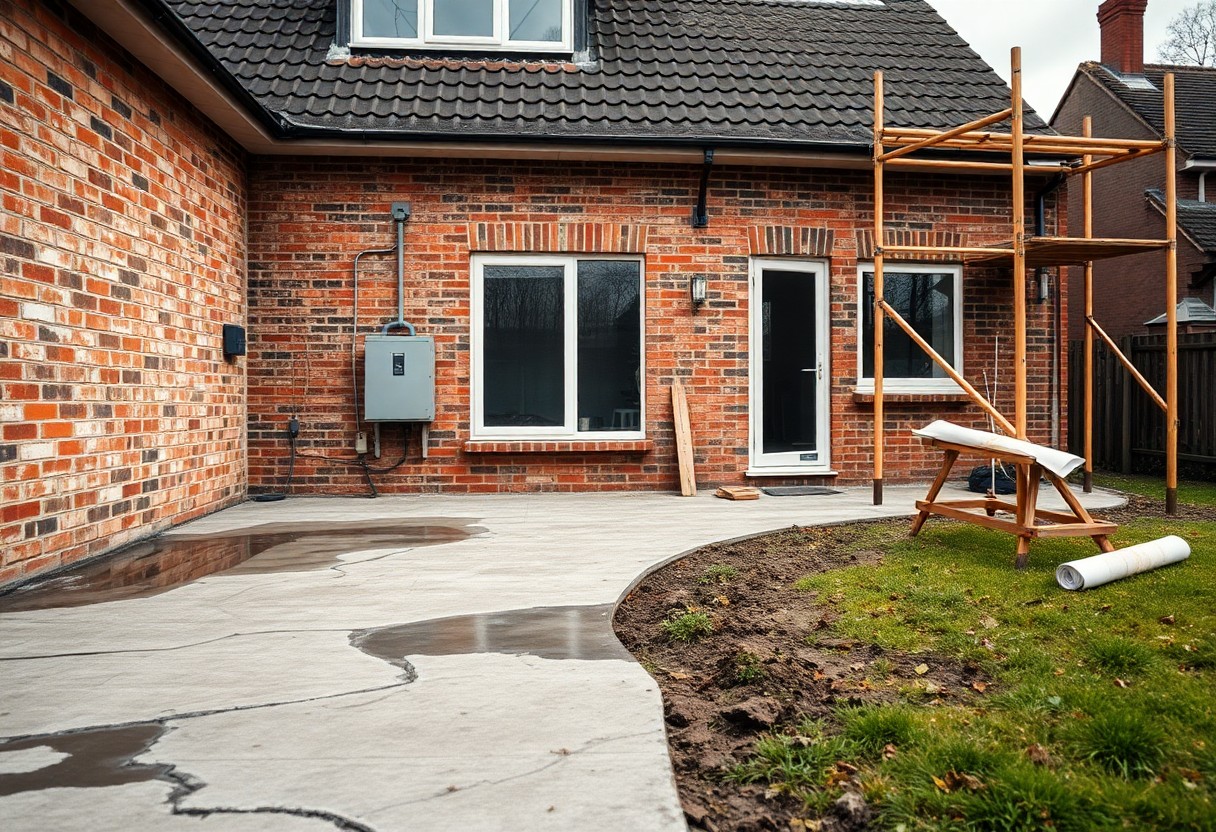
Just failing to plan properly can leave you facing planning permission delays, unexpected costs and design compromises; you must assess site constraints, budgets and timelines, avoid cheap trades that cause structural failures and poor finishes, and ensure insurance and warranties cover work. By consulting professionals early and setting realistic budgets and contingencies, you’ll protect your home and investment-hire reputable professionals to keep quality, safety and value intact.
Underestimating Budget and Costs
You can easily misjudge costs by overlooking contingency and scope creep; add at least a 10-20% contingency. Typical build costs range roughly £1,200-£2,000 per m², so a 20m² extension at £1,500/m² is about £30,000. Unexpected pauses or specification upgrades often force you to either cut quality or halt the project, so budget for finishes, fees and a buffer before work starts.
Hidden Expenses
When you plan, include non-construction sums: VAT (20%) on many works, party wall awards (£500-£3,000), building-control charges (£200-£1,500), skip and scaffold hire (£200-£1,200) and possible utility diversions. Structural surprises such as rotten beams or drainage works can add £5,000-£20,000, so excluding these is one of the most expensive mistakes you can make.
Financing Options
You can fund an extension by remortgaging to release equity, taking a secured second-charge mortgage, using a personal loan, or dipping into savings; each has trade-offs. Remortgaging can release tens of thousands at mortgage rates, while unsecured personal loans typically suit smaller sums. Avoid using credit cards for large bills-high interest makes them costly.
Compare offers thoroughly: check APRs, arrangement and valuation fees (often £150-£1,500), and any early-repayment charges. You should get quotes from a broker or lender, calculate total repayment costs over the term, and ensure the chosen product keeps your mortgage-to-value ratio acceptable; that prevents refinancing shocks and protects your long-term finances.
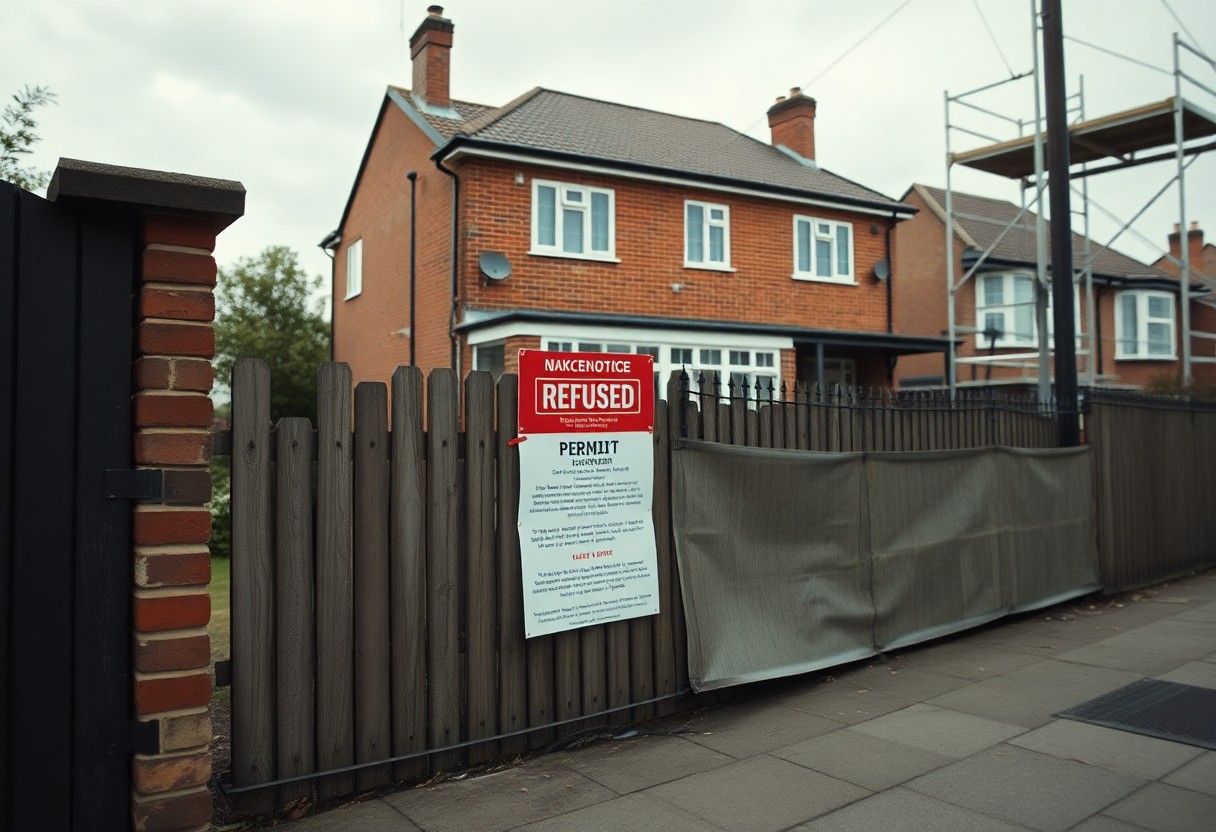
Failing to Research Local Regulations
Failing to check local rules can stall your build and leave you with an enforcement notice or forced demolition that costs far more than the extension itself. If your property lies in a conservation area, near a listed building, or under an Article 4 direction, you may lose permitted development rights and need formal approval. Often projects are delayed by weeks or months and end up costing an extra thousands of pounds to rectify compliance issues.
Permits and Zoning Laws
Permitted development covers many small extensions, but limits vary by location and property type; planning applications for householder schemes typically take around 8 weeks to determine and carry fees of a few hundred pounds. If you live in a conservation area or within an Article 4 zone, planning permission is usually required, and non-compliance can trigger neighbour objections, public enquiries or an enforcement remedy that adds significant delay and cost.
Building Codes
Building Regulations approval is separate from planning permission and focuses on safety, thermal performance and services-expect checks on structure, fire escape, insulation, drainage and electrics during the build. You will usually need a final compliance certificate for mortgage and insurance purposes; without it you risk refused mortgages, voided warranties or having to carry out retroactive works at considerable expense.
For instance, structural alterations demand calculations from a structural engineer-replacing a load-bearing wall may require an RSJ or steel beam-and typical engineer reports cost roughly £400-£1,000, while beam supply and installation can be £800-£3,000 depending on span. Additionally, gas work must be Gas Safe-certified and major electrical work should be completed or certified by a registered electrician so you secure the necessary completion certificates and avoid future legal or safety issues.
Neglecting Professional Help
Skipping professionals often leads to planning refusals, structural faults and party wall disputes; one London homeowner was ordered to demolish an unauthorised two-storey extension at a cost exceeding £30,000. You face the risk of enforcement notices and insurance being voided if Building Regulations aren’t met. Engage architects, structural engineers and planning consultants early to avoid major financial and legal exposure and to ensure designs are buildable and compliant from the outset.
Importance of Hiring Experts
Architects typically charge around 5-15% of construction costs for full design and specification, while a structural engineer’s fee often ranges from £500-£2,500 depending on complexity; a planning consultant may cost £300-£1,500 for submissions. You gain precise drawings, accurate costings, and compliance checks that reduce change orders; in one retrofit case detailed structural input cut remedial costs by an estimated 40% versus a make-do approach.
Managing Contractors
Insist on a written contract (JCT or equivalent), detailed schedule of works and fixed-price quotes where possible; avoid paying >30% upfront and beware contractors asking for full payment before completion. You should hold a 5-10% retention and define clear completion criteria to prevent disputes and ensure satisfactory finishes.
Establish a payment timetable-commonly 10% deposit, 40% on materials on site, 40% on practical completion and 10% retention-and run weekly site meetings, photo logs and a snagging list issued within seven days of practical completion. Make sure warranties are documented (for example, NHBC 10-year warranty where applicable) and any variations are agreed in writing to limit cost drift and legal headaches.
Ignoring Design and Planning
When you skip detailed design and planning you invite delays, neighbour disputes and costly reworks; extensions that exceed permitted development often require retrospective applications, adding 3-6 months and typically inflating budgets by 10-25%. Consider site orientation, drainage runs and structural load paths early: locating waste pipes near existing drains cuts contractor hours, while neglecting rainwater fall can lead to basement damp or boundary disputes that cost several thousand pounds to fix.
Functionality vs. Aesthetics
Prioritising looks over use leaves you with attractive but impractical spaces; ensure a kitchen island still allows at least 1.0-1.2 m circulation each side, specify sensible storage (a 0.6 m deep pantry, shelving heights) and plan heating zones so a glazed sunroom doesn’t turn into a cold box-poorly sited radiators or underpowered heating can increase energy bills by 15-30%.
Future-Proofing the Space
Prepare for changing needs by embedding services now: run two 20 mm spare conduits to the loft and externally, fit extra wiring space in a central distribution point and leave wall sections for later insulation upgrades; small upfront costs avoid disruptive rewiring or trenching later and make adapting to electric heating or additional circuits far easier.
Also consider accessibility and low-carbon readiness: install doorways at least 800 mm wide with step-free thresholds, allow space for a future heat-pump plant or battery (a cupboard ~1.2 x 0.8 m helps), and provision a dedicated radial circuit or spare consumer- unit capacity for a future 32 A / 7 kW EV charger. These measures typically add a modest percentage to initial costs but save you significant labour and expense when needs evolve.
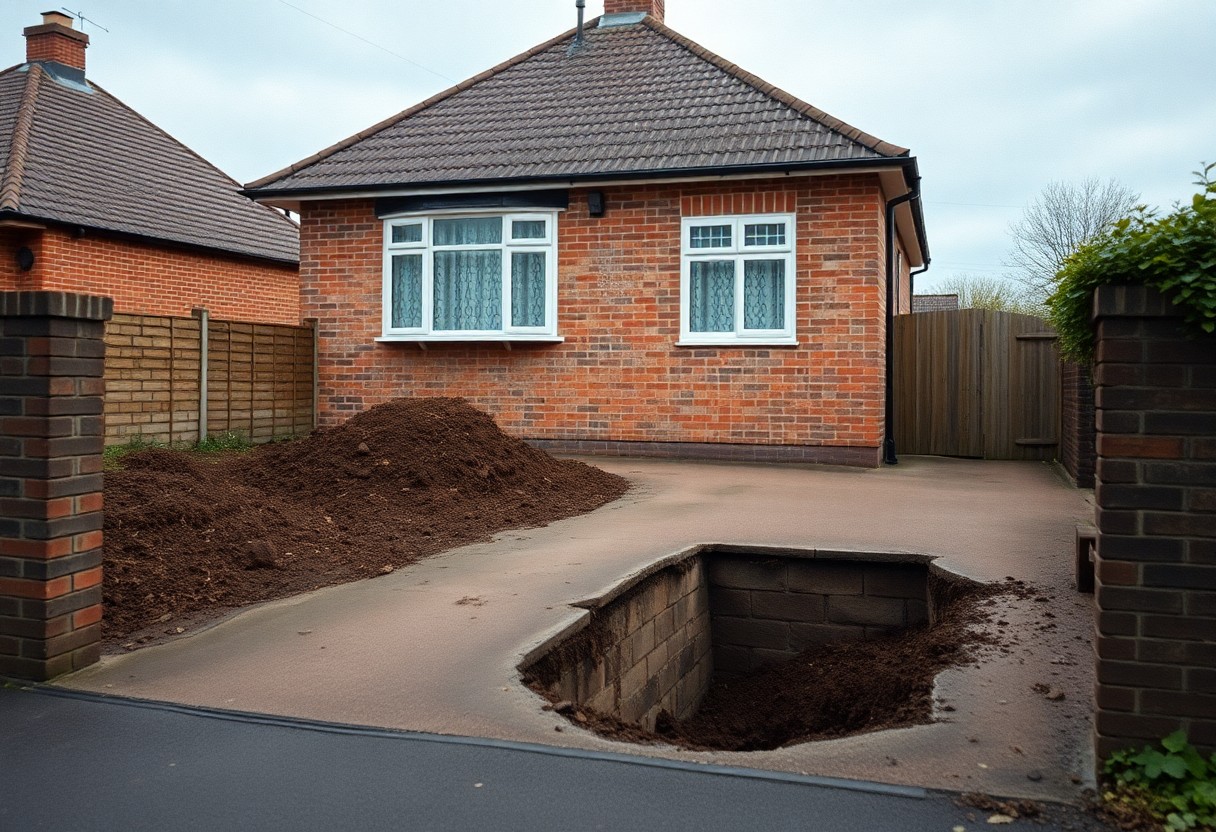
Disregarding Impact on Existing Property
You must consider how new works will affect the rest of your house: excavation can undermine existing foundations, piling vibrations may crack plaster and loosen services, and diverted surface water can cause damp in basements. Party Wall concerns often arise-under the Party Wall etc. Act 1996 you typically need to serve notice at least two months before adjoining works. Watch for movement indicators such as vertical cracks over 3mm; those are signs you need immediate professional assessment.
Structural Considerations
If you remove or alter a load-bearing element you’ll need calculations and drawings from a structural engineer and Building Regulations approval. Temporary propping during openings is imperative and underpinning may be required where new trenches come within the zone of influence of existing foundations. For example, spans over 3m frequently demand steel support rather than standard lintels; failure to follow engineered specifications risks progressive collapse or persistent settlement.
Aesthetic Cohesion
You should match scale, materials and fenestration so the extension reads as part of the property rather than an afterthought: brick type and bond, roofline and window proportions all matter. Small details such as mortar colour and joint width (typically 10mm) dramatically affect visual harmony, and using reclaimed bricks or a matched coursing can make a new elevation sit comfortably beside the old.
You can test aesthetic choices before committing by creating a 1m² sample panel on site to compare brick colour, bond and mortar shade in natural light; this prevents costly rework. Also align sill heights and string courses where possible-keeping differences within a few centimetres (about 20-30mm) preserves sightlines. Consult the local conservation officer if your property is period or in a conservation area to avoid designs that will be refused on visual grounds.
Overlooking Timeline Constraints
When you underestimate time, projects stall and costs rise. Planning decisions often take longer than you expect: statutory planning decisions typically take 8-13 weeks in the UK, while discharge of conditions can add weeks. Supply chains matter too – windows, kitchens and structural steel commonly have 6-12 week lead times. Factor in builder availability, neighbour agreements and weather; a sensible buffer of 20-30% on your programme avoids the most damaging delays.
Project Scheduling
You must map tasks to avoid idle trades and clashes. Use a detailed programme with milestones and float: steel installation before roofing, then first‑fix electrics, plastering and second fix. Order long‑lead items early – structural steel and bespoke windows often take 6-10 weeks, kitchens 8-14 weeks. Include a contingency of at least 2-4 weeks or 20% to cover procurement and labour gaps.
Seasonal Considerations
Season affects groundworks, finishes and delivery slots. Winter brings frost and saturated ground that can delay foundations by 2-6 weeks, while high summer can restrict site access during heatwaves and cause material shortages around holiday periods. Schedule high‑risk external work for late spring or early autumn and avoid starting excavation just before heavy‑rain months where possible.
If you must work in cold, protect pours with insulated formwork, heated enclosures or accelerants – concrete hydration slows markedly below 5°C, risking weak cures. Provide temporary drainage and raised storage for materials during wet seasons, and book deliveries to avoid bank‑holiday bottlenecks; contractors report that failing to secure a concrete wagon or craned delivery can add 3-7 days to a programme. Plan contingencies so your schedule survives seasonal shocks.
To wrap up
Now, when you build an extension you must avoid common errors: failing to secure planning permission and realistic budgets, selecting the wrong contractor, neglecting site constraints and insulation, and overlooking how design affects future resale and neighbour relations; plan thoroughly, obtain accurate quotes, check credentials, prioritise fabric performance and buildability, and set a realistic schedule so your project delivers lasting value without costly delays.
FAQ
Q: What planning and regulatory mistakes do homeowners commonly make when building an extension?
A: Many homeowners assume an extension is covered by permitted development and start work without checking planning permission or building regulations. Failure to obtain the correct approvals, to comply with building regulations or to serve party wall notices can lead to enforcement notices, costly remedial work, fines or complications when selling. Consult your local planning authority early, engage an architect or qualified agent, submit the proper applications and obtain building-control sign-off before completing major works.
Q: How does an unclear brief or inadequate budgeting derail an extension project?
A: A vague brief leads to scope creep and repeated redesigns; underestimating costs for structural work, specialist trades, services connections, finishes and contingencies causes budget overruns. Include professional fees, VAT and a contingency of at least 10-20%, prioritise important items, get detailed quotes rather than ballpark figures and agree fixed-price elements where possible to reduce financial risk.
Q: What are the pitfalls when choosing a contractor or design team?
A: Choosing on price alone, failing to check references, not verifying qualifications, insurance and memberships, and avoiding a clear written contract are common mistakes. These lead to disputes over quality, delays and uncovered liabilities. Obtain multiple detailed quotes, check insurers and professional bodies, insist on a contract with a programme, payment milestones and retention, and confirm warranties for work and materials.
Q: How do poor design choices and overlooking practical details affect the finished extension?
A: Ignoring orientation, natural light, insulation, ventilation, storage, access and service routes can produce an impractical, cold, overheated or dark space. Inadequate attention to thresholds, step heights, door swings and drainage creates daily frustrations and extra costs. Ensure the design addresses thermal performance, lighting, water management and storage requirements, and review detailed layouts and specifications with the builder and client before construction.
Q: What project-management mistakes lead to delays, neighbour disputes or extra costs?
A: Lack of a clear programme, poor site supervision, unrealistic timelines, failure to coordinate deliveries and trades, and neglecting neighbour liaison often cause delays and complaints. Not serving party wall notices or failing to communicate working hours can escalate into legal disputes. Appoint a responsible project manager or lead contractor, maintain a realistic schedule with contingencies, hold regular site meetings and keep neighbours informed of timings and disruptions.