
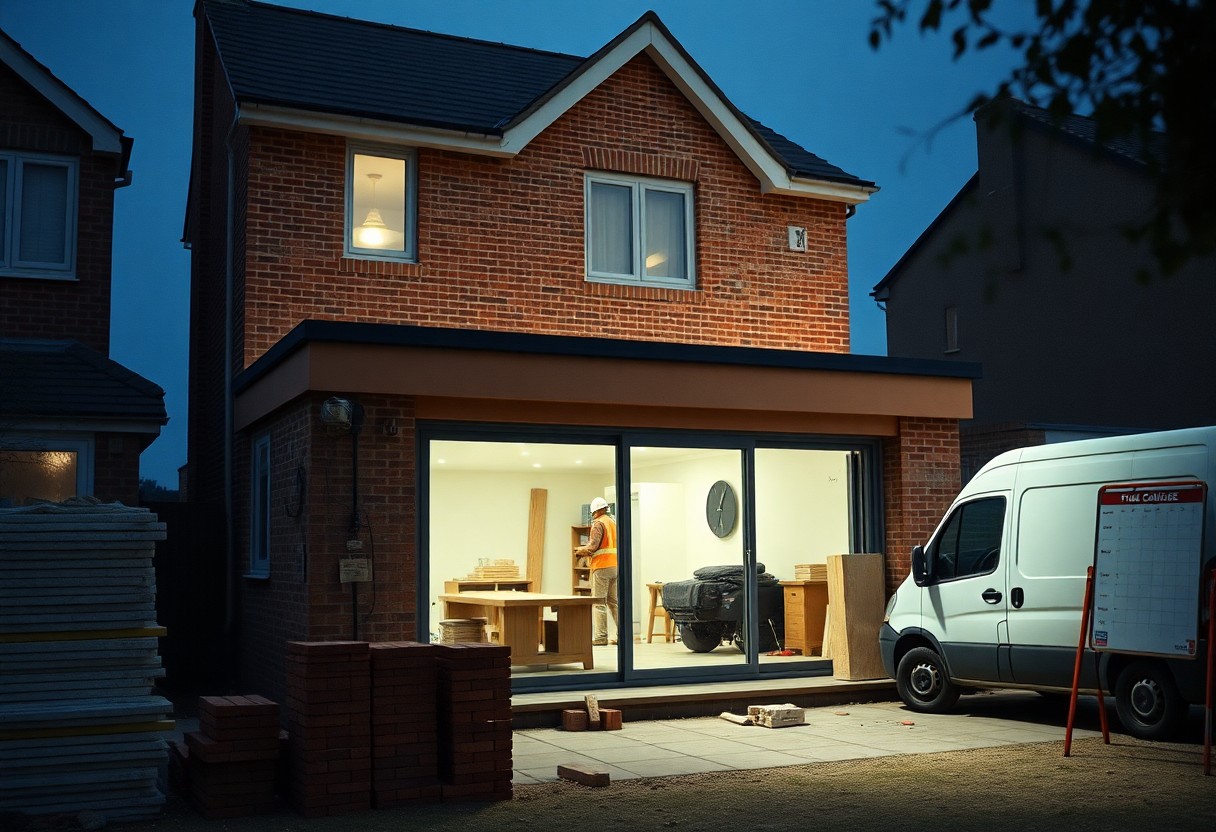
Extension timelines vary, but you should expect the process from design to completion to take several months; most straightforward single‑storey rear extensions take around 3-6 months, while larger or multi‑storey projects often run to 6-12 months. Your timeline depends on planning permission and building‑control delays, contractor availability and weather; unforeseen structural problems can add months. Stay involved, set a realistic contingency and budget for disruption to protect your investment and schedule.
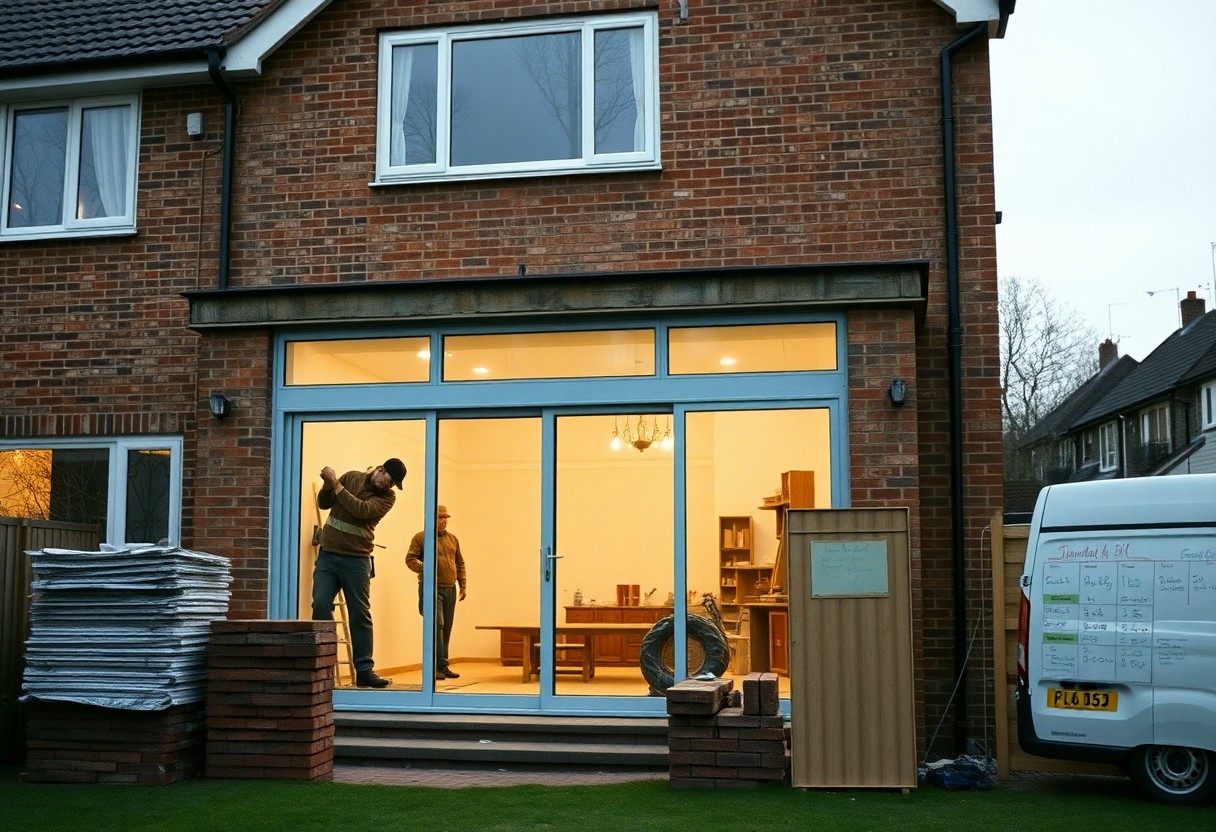
Understanding the Different Types of House Extensions
You’ll usually choose between a single-storey extension, double-storey extension, wrap-around or side-return; typical times are 2-6 months for single-storey and 4-9 months for double-storey, with rough costs of £20k-£60k and £60k-£150k respectively. Structural work and foundations often dictate schedule, and a party wall process can add weeks. Assume that complex sites need an extra 4-8 weeks for surveys and approvals.
- Single-storey extension
- Double-storey extension
- Wrap-around extension
- Side-return extension
| Single-storey extension | 2-6 months |
| Double-storey extension | 4-9 months |
| Wrap-around extension | 4-8 months |
| Side-return extension | 3-6 months |
| Rear extension | 2-5 months |
Single-Storey Extensions
If you choose a single-storey extension, expect a typical programme of about 2-4 months on standard plots: foundations 1-2 weeks, shell and roof 3-6 weeks, then internal finishes 3-6 weeks. You’ll save time and cost where works fall under permitted development, but watch drainage alterations and neighbour access for contractors; compact designs with simple pitched roofs often finish fastest.
Double-Storey Extensions
Opting for a double-storey extension usually pushes the work to around 4-9 months because you must strengthen foundations, install new stair cores and tie into the existing roof; planning permission is more likely and costs typically start from £60k. You’ll also face longer scaffolding periods and greater disruption to your living space.
On a recent Victorian semi project, adding a 12m² first-floor extension required piled foundations and took 32 weeks overall, including an 8-week planning delay; you should budget a 10-15% contingency and expect temporary loss of bedrooms during structural phases. For your project, ensure structural calculations and party wall agreements are ordered early, coordinate roofing and services in the first two months, and factor in neighbour liaison to reduce disputes.
Planning Permission and Regulations
Obtaining Planning Permission
You’ll usually submit a householder application for modest extensions, but if you exceed Permitted Development limits-such as a single‑storey rear extension deeper than 3m on a semi or 4m on a detached property-you must apply for full planning. Councils aim to decide householder applications within 8 weeks and full applications within about 8-13 weeks; using pre‑application advice and getting neighbours onside often reduces objections and speeds up decisions.
Understanding Building Regulations
Building Regulations approval runs separately from planning and requires stage inspections for foundations, drainage, first‑fix, pre‑plaster and final sign‑off; failing these checks can leave you with unsafe or unsellable work. You should notify building control early, provide structural calculations and compliance details for Parts B (fire) and L (energy), and schedule trades around inspections to avoid hold‑ups.
In practice you can expect multiple inspections-typically 3-5-and common issues are inadequate foundations, missing damp‑proof courses or insufficient structural calculations; these problems often add weeks and extra cost. Engaging a structural engineer for load‑bearing alterations, arranging an air‑tightness test where required, and obtaining completion certificates for electrics and gas gives you legal protection and smoother resale, while using an approved inspector can accelerate sign‑off.
The Extension Process Overview
Once the design is settled, the route typically runs through permissions, detailed drawings, on-site work and final inspections; for you that often means a total timeline from briefing to completion of about 3-6 months for modest single-storey work, or 6-12 months for larger or two-storey projects. For example, a 25 square metre kitchen extension commonly needs 8-12 weeks on site, with planning or party wall matters adding weeks off-site.
Initial Design and Planning
You should expect sketch design and measured surveys in the first 1-3 weeks, then detailed drawings and structural calculations over 2-6 weeks. If you require full planning the decision window is typically 8-13 weeks, whereas permitted development routes can shave weeks off. Party wall awards, building regulations applications and tendering can add another 4-8 weeks, so budget time and a clear brief to avoid revisions.
Construction Phase
On site, work usually follows mobilisation, foundations, superstructure, roof, then first- and second-fix trades and finishes; a small single-storey extension commonly takes 6-12 weeks on site. You must note that structural openings, temporary propping and rain exposure are the most dangerous risks to programme and budget, while efficient site management and ordering windows early are very positive mitigations.
As an example schedule for a 25 m² single-storey: foundations and drainage 7-10 days, blockwork and brickwork 2-3 weeks, roof including insulation 5-7 days, windows/doors 2-3 days, first fix services 7-10 days, plastering plus drying 10-14 days, then second fix and kitchen fit 2-3 weeks. You should also factor regular building control inspections and a contingency of 2-4 weeks for weather, unforeseen groundworks or latent defects; water ingress during roof delays is a common danger.
Factors Influencing Timeline
Delays often stem from specific bottlenecks: planning decisions can take 8-12 weeks, materials lead times vary from 2-8 weeks, and bespoke elements like structural steel can add 3-6 weeks. You will also face site-specific constraints such as restricted access or party-wall work that lengthen programmes. Contractors’ schedules create further variation – a busy builder may not start for 4-12 weeks. Thou should factor a contingency of at least 10-20% onto your estimated timeline to cover these risks.
- Size & complexity
- Planning permission
- Site constraints
- Materials availability
- Contractor availability
- Weather & environment
Size and Complexity of the Project
Smaller single‑storey rear extensions often complete in about 6-12 weeks, whereas two‑storey or wrap‑around projects commonly run 3-6 months4-12 weeks. If your design requires underpinning or long‑lead items (triple‑glazed units, bespoke kitchens) expect further delays, and factor in extra time for detailed structural calculations and inspections.
Weather and Environmental Considerations
Seasonality matters: heavy rain and prolonged cold slow groundwork and bricklaying, with winter months commonly adding 25-40% to external works. You should plan major external builds between late spring and early autumn where possible, and accept that coastal or flood‑risk sites will require additional protection and approvals that lengthen the schedule.
On-site weather impacts are specific: concrete foundations need stable temperatures for curing and may require heated enclosures when temperatures fall below about 5°C, while continuous heavy rainfall (>10-20mm/day) can halt excavation and bricklaying for days. You should budget for temporary measures-tarpaulins, sheltered scaffolding, or site drainage-to keep progress moving; these protections typically add both cost and 1-3 weeks to the programme. In exposed locations wind can prevent crane lifts or glazing installation, so your contractor will often schedule those high‑risk tasks for calmer forecast windows, which may introduce short, unavoidable pauses in the critical path. Thou should therefore monitor seasonal forecasts and build flexibility into your contract and planning permissions.
Project Management Tips
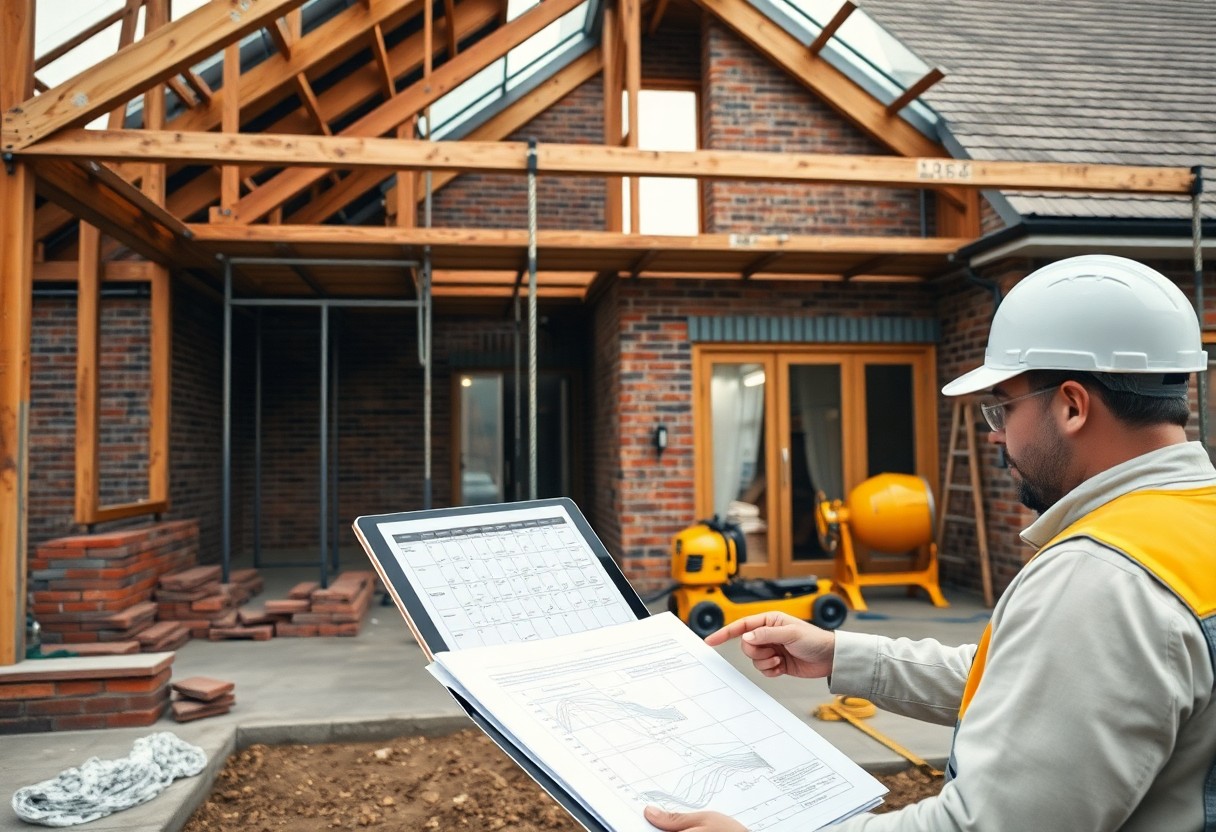
Tight scheduling, clear roles, and contingency funds reduce delays: set a realistic timeline, allocate a 10-15% contingency for unforeseen works, and log daily site progress so you can spot drift early. Use a simple Gantt chart or app to track milestones and ensure suppliers deliver on time. Thou keep an issue log and escalate any persistent late deliveries immediately.
- Define roles so you and the team know decision authority
- Confirm schedule with suppliers and set firm delivery windows
- Set payment milestones linked to inspected work to control cashflow
- Monitor quality with weekly snag rounds and photo records
Hiring the Right Professionals
You should obtain at least three quotes, check a minimum of five references, and confirm public liability insurance plus professional indemnity. Choose an architect registered with RIBA for complex designs and a structural engineer when spans exceed ~3m or when removing load-bearing walls; that typically adds 1-2 weeks to design time but prevents costly rework.
Effective Communication
You must set a simple communication plan: weekly progress meetings, a 15‑minute daily site briefing while work is active, and a single point of contact for decisions. Require responses within 24 hours for queries and insist on written change orders; projects with formal change control can reduce time and cost overruns by up to 30%.
You should use a shared cloud folder for current drawings, date‑stamped photos for progress, and a short RFI log to capture queries and answers. Adopt one app for updates (eg WhatsApp for quick checks, but store approvals in email) and set a KPI of 24‑hour response to keep the programme moving.
Common Delays and How to Avoid Them
Planning conditions and late permit approvals frequently add 2-6 weeks to your build; factor a minimum four-week buffer into the programme. Contractor shortages and poor scheduling can push completion back by another 2-8 weeks, while winter storms often cause 1-3 week stoppages. Order long-lead items early and tie payments to delivery milestones; using a retained contingency of 10-15% and a fixed logistics plan has saved projects in London and Manchester from significant overrun.
Supply Chain Issues
Timber, structural steel and bespoke glazing now commonly carry lead times: timber 2-8 weeks, steel 6-12 weeks and custom windows 8-16 weeks. If you wait to order, the build can stall for months. Mitigate by locking suppliers with deposits, sourcing alternative manufacturers, and scheduling critical deliveries to site rather than relying on daily drop-ins. Ordering finished goods at specification sign-off and keeping at least a 6-8 week procurement window will reduce risk.
Unforeseen Site Conditions
Hidden issues such as asbestos, ancient cellars or uncharted drainage commonly force stoppages. Asbestos removal typically adds 2-6 weeks and demands licensed contractors; encountering unstable ground or undocumented foundations can push you into piling works that add 2-6 weeks and fees from £5,000-£25,000. Ecology finds like bats or great crested newts may halt work seasonally, so factor in surveys and contingency time when you programme the build.
Commission a pre-start package: an asbestos survey (£200-£350), trial pits/ground investigation (£500-£2,000) and CCTV drain surveys to avoid late discoveries. You should also order ecology checks-desktop reports from £100 and full bat or newt surveys from £400-which can impose seasonal holds. Building in a 10-20% contingency and a 4-8 week schedule buffer turned what would have been a six-week overrun into a manageable two-week slip in a South London job where a buried cellar added £6,000 and three weeks.
Final Words
Conclusively, the duration of your house extension typically ranges from a few months for a simple single-storey project to a year or more for complex, multi-storey works that require planning permission and structural alterations. Timelines depend on design finalisation, approvals, ground conditions, contractor availability and weather; proactive project management and clear decisions from you can shorten delays and keep costs predictable.
FAQ
Q: What is the typical start-to-finish timescale for a house extension?
A: From first sketch to move-in, a straightforward single-storey rear extension typically takes 3-6 months overall when you include design, approvals and build. More complex projects such as two-storey or wrap-around extensions usually run 6-12 months. Large or technically challenging schemes, or those requiring Listed Building consent, can take a year or longer. These ranges assume no major planning refusals or unexpected site problems.
Q: Which stages make up the timeline and how long does each stage normally take?
A: Common stages are: concept and detailed design (2-8 weeks), planning application and decision (8-13 weeks for most local authorities), building regulations and technical approvals (2-8 weeks), procurement of materials and subcontractors (2-6 weeks depending on lead times), on-site construction (6-26 weeks depending on scale), and fit-out, snagging and certification (2-6 weeks). Some stages run in parallel to shorten the overall programme.
Q: What site or project factors most impact how long the build will take?
A: Key influences are planning requirements and any pre-application negotiations, ground conditions and foundations (e.g. poor soil, made ground or water can add weeks), party wall awards and neighbour access, the need for specialist trades (steelwork, underpinning), lead times for bespoke items (windows, kitchens), weather, availability of labour and materials, and client-led design changes during construction.
Q: How often do unexpected problems delay an extension and by how much?
A: Unforeseen issues are common. Typical delays include discovering poor ground or hidden services (2-6 weeks), asbestos removal (1-4 weeks), utility diversions (4-12 weeks) and longer-than-expected lead times for bespoke items (2-10 weeks). Combined, such issues can add several weeks or months; allowing a time contingency of 10-20% on the build programme is sensible.
Q: What practical steps speed up delivery without compromising quality?
A: Commission surveys (ground, structural, asbestos) and a detailed design package early, seek pre-application planning advice, procure long-lead items before demolition, appoint an experienced contractor or project manager with clear responsibilities, fix major design decisions before work starts, agree a realistic programme with milestones and payment linked to progress, and maintain good site access and communication. These measures commonly reduce delays and help keep the project within the expected timeframe.