
Slow infiltration
Clay or saturated ground may not recover quickly enough between storms.
Guildford-based • Serving Woking & Surrey
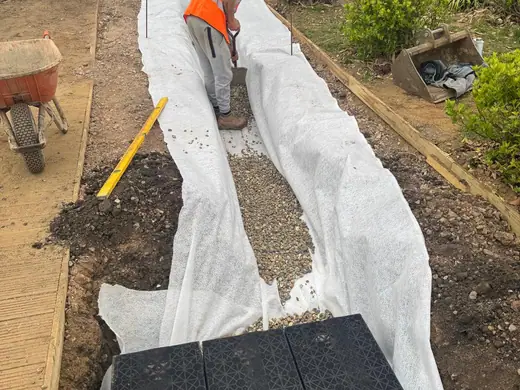
Storage is only useful when the ground can receive it
Survey-led soakaway installation, replacement and associated surface-water drainage across Surrey.
The direct answer
A soakaway can manage clean rainwater when infiltration, capacity, siting and groundwater conditions are suitable. It is not a universal cure for flooding; the collection route and the receiving ground both need to work.
Our first survey focuses on the variables that change method, risk and price. The written scope then states the included work, important assumptions and the information or approvals still required.
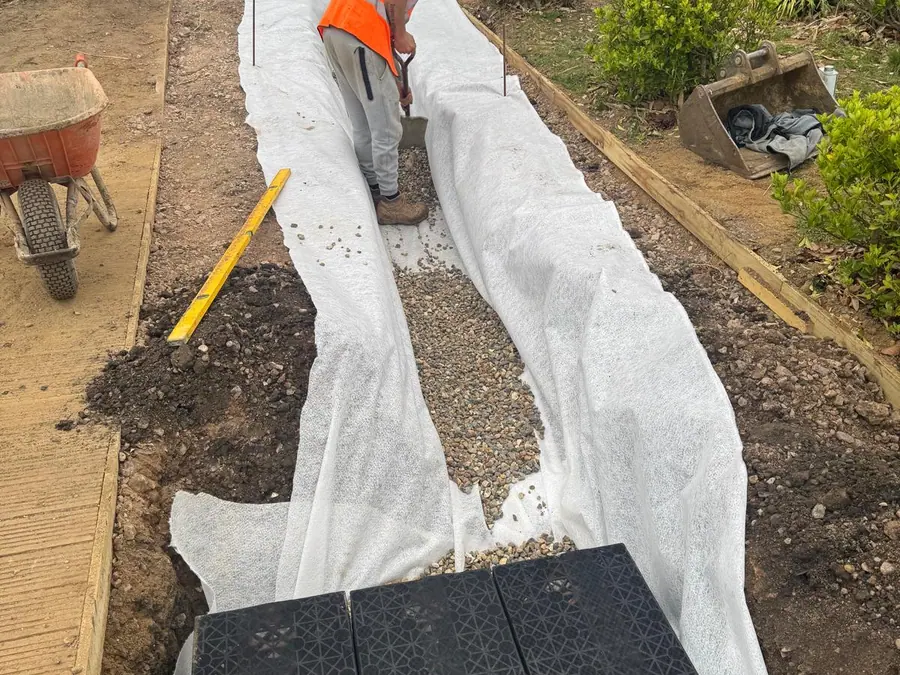 Real A Jones project photography
Typical scope
Every site is different. The quotation—not a generic web list—defines the final package.
Devil in the detail
Good planning makes risk visible while there is still time to change the method.
Clay or saturated ground may not recover quickly enough between storms.
Buildings, boundaries, slopes, trees, services and groundwater constrain location.
Sediment can reduce capacity and make the system difficult to maintain.
Every roof and hard surface feeding the system must be included in the design basis.
How the work progresses
The exact construction changes; the discipline of resolving information before burying it does not.
Map the water source and symptoms
Survey space, levels and access
Test or assess infiltration evidence
Define capacity and pipe route
Excavate and install the system
Flow-check, reinstate and record
Plan with better information
Our tools organise quantities and project details without pretending to be a quotation. Results make the first survey more useful.
Frequently asked
Clear answers before commitment make the survey, quotation and build easier to compare.
Yes where a soakaway remains the right strategy. We first assess the inlet, ground and siting so a new system does not simply repeat the old failure.
Straightforward domestic work may take a few days, while investigation, deep excavation, difficult access and substantial reinstatement add time.
Keeping gutters, channels and silt traps clean helps protect the system. Useful access and good upstream control are part of a maintainable design.
This service concerns clean surface water. Foul drainage has different regulatory and treatment requirements.
Plan the work
Understand the cost drivers, site evidence and approvals that matter before comparing quotations or starting work.
What changes the cost of investigation, excavation, storage, pipework and reinstatement—and why a crate-only price can be misleading.
Read guide Practical guidePercolation Tests for SoakawaysA plain-English guide to testing infiltration, interpreting variable Surrey ground and using results within a complete drainage design.
Read guide Practical guideGarden Drainage Problems & SolutionsUnderstand why gardens hold water and compare grading, soil improvement, land drains, soakaways and other site-specific drainage options.
Read guide Practical guideDrainage Problems: Early Signs & FixesSpot early signs of drainage failure around a home and understand when maintenance, investigation, repair or redesign may be required.
Read guideLocal service pages
These pages explain the access, ground, drainage and planning considerations that commonly affect work in each area.
Continue planning
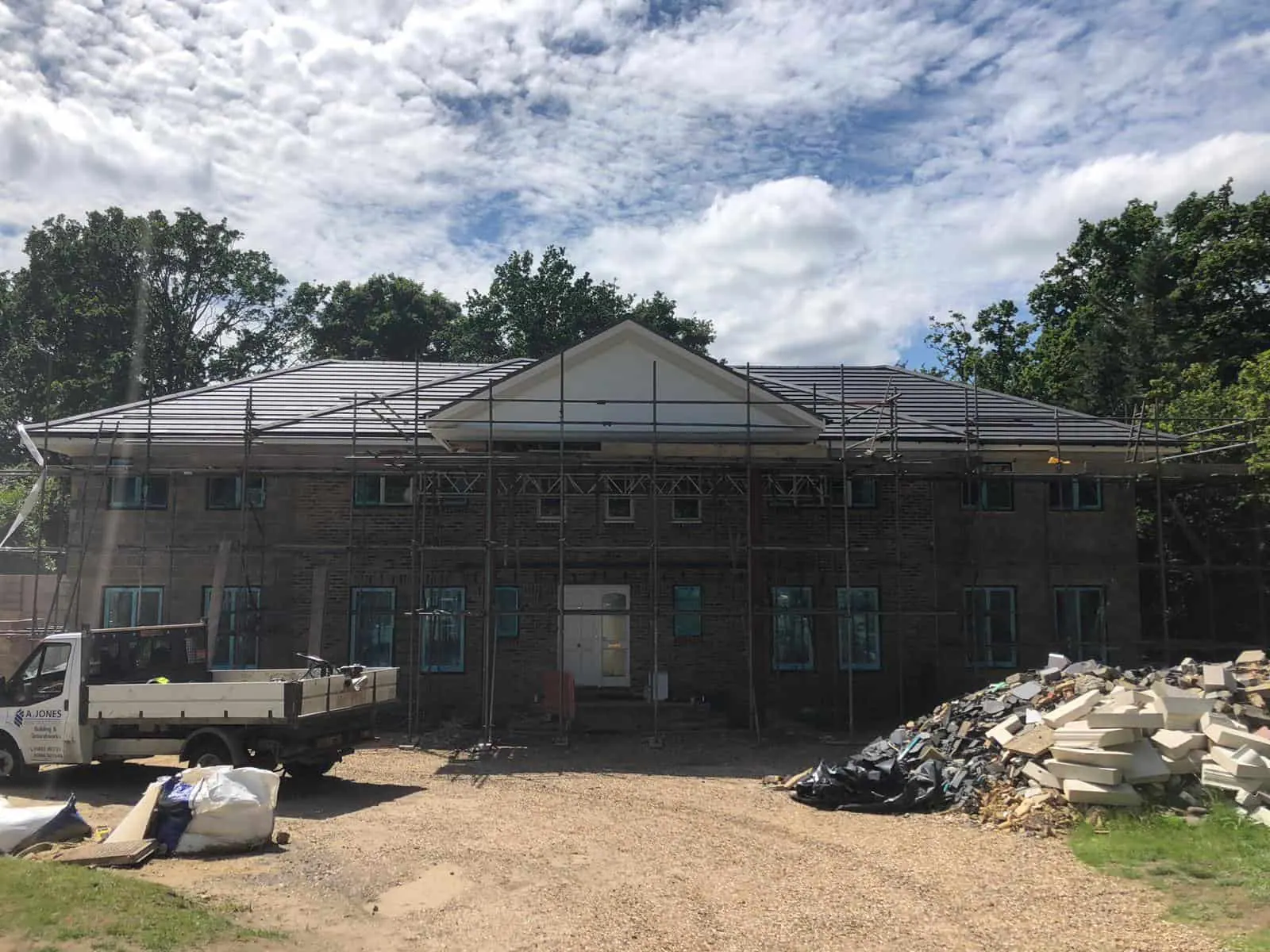
The next useful step
Send the property location, a few photos and any drawings. We will explain the most useful next survey.
Your project, at your pace
Saved on this device
Your starting brief. Not sent to us.
Tools work without an account. Save a brief only if you want to: it stays in this browser for up to 30 days and can be deleted here. Nothing is sent until you choose to contact us.